Mastering the Cheesy Beef and Spinach Penne Bake
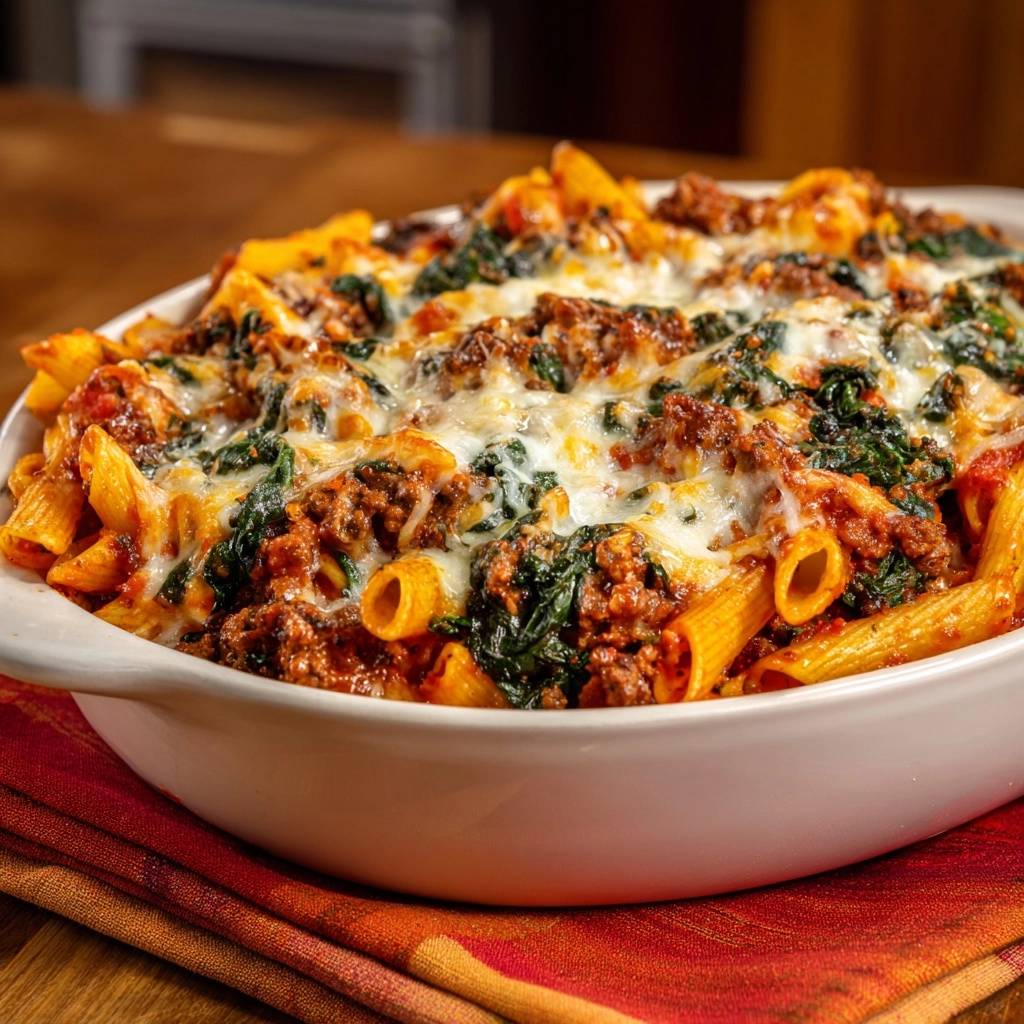
Nothing beats the comfort of a bubbling pasta bake pulled straight from the oven on a busy weeknight. However, most home cooks struggle with the dreaded “soggy noodle” syndrome, where the pasta turns into a mushy mess. This Cheesy Beef and Spinach Penne Bake solves that problem by focusing on structural integrity and a rich, concentrated sauce.
The secret lies in the balance between the savory, caramelized ground beef and the bright, fresh pop of baby spinach. Instead of a watery, loose casserole, you get a tight, cohesive dish where the cheese forms a golden crust over perfectly al dente tubes. It’s the kind of meal that feels like a warm hug but tastes like it came from a high-end Italian bistro.
I’ve found that the real trick to a professional-grade bake is the “barrier method.” By tossing your undercooked pasta directly into the thickened meat sauce before it hits the baking dish, you coat the starch. This prevents the noodles from drinking up too much liquid in the oven, ensuring they stay firm and flavorful rather than bloated and bland.
The Science of Al Dente Pasta Bakes
When you bake pasta, the oven acts as a second cooking phase. Most people boil their noodles until they’re soft, then wonder why the final dish feels like baby food. The pasta continues to hydrate by pulling moisture from your marinara sauce while it bakes. If the pasta is already fully cooked, it has nowhere to go but toward mushiness.
This is where the “4-minute rule” becomes your best friend. By boiling the penne for exactly four minutes less than the package’s al dente instructions, you leave the center of the noodle white and firm. This creates a vacuum effect, allowing the pasta to finish its cooking process by absorbing the savory beef juices and tomato acidity instead of plain water.
Carry-over cooking is a powerful force in a 375-degree oven. Even after you pull the dish out, the internal heat continues to soften the starch. Starting with a significantly undercooked noodle is the only mathematical way to ensure that by the time the plate hits the table, the texture is absolutely spot-on.
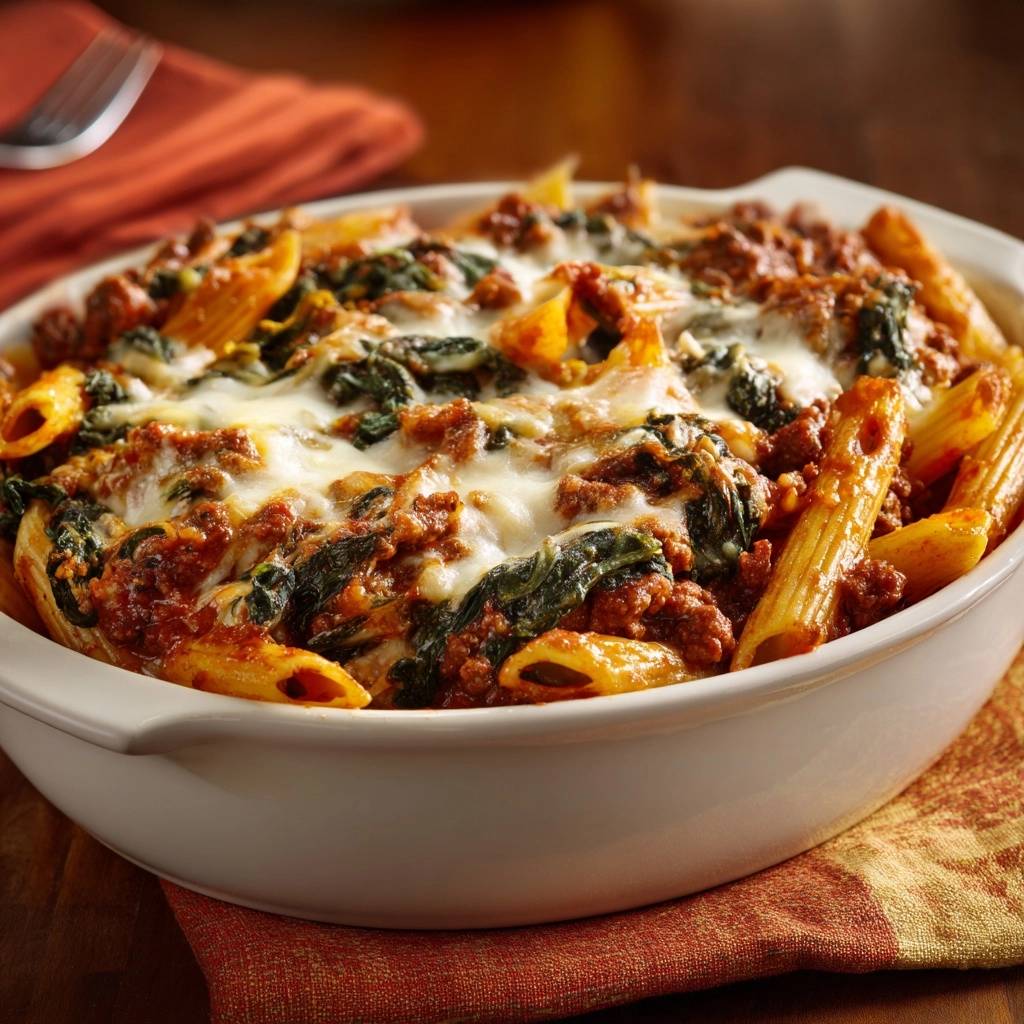
Why Starch Control Prevents Watery Casseroles
Surface starch is the glue that holds your casserole together. When you drain your pasta, don’t even think about rinsing it with cold water. That thin layer of starch on the outside of the penne is what helps the sauce cling to the noodle. Without it, the sauce will simply slide off and pool at the bottom of the pan.
Coating the penne in the skillet before baking creates a hydrophobic barrier. This means the sauce wraps around the tube, sealing the exterior. This prevents the spinach from releasing its natural moisture into the pasta itself, keeping the components distinct and the overall texture thick and luscious.
Essential Components for the Beef and Spinach Base
The foundation of this bake is the ground beef, and the fat ratio matters more than you might think. I recommend using an 85/15 or 90/10 blend. You want enough fat to brown the meat effectively and carry the flavor of the garlic, but not so much that the dish becomes a grease trap. Leaner beef ensures the mozzarella topping stays crisp rather than oily.
Since the sauce is a major player, don’t settle for a thin, watery marinara. Look for a high-quality jar that lists tomatoes and olive oil as the primary ingredients, not water or sugar. A thick, chunky sauce provides the necessary body to stand up to the heavy penne tubes and the volume of the spinach.
Freshly grated parmesan is another non-negotiable for me. The pre-shredded stuff in the green can or the bags is coated in potato starch to prevent clumping. That starch interferes with the melting process. Grating your own cheese ensures it melts into the beef and spinach, creating a silky mouthfeel that binds the whole dish together.
Selecting and Prepping Fresh Baby Spinach
Fresh baby spinach is vastly superior to frozen in this recipe. Frozen spinach is often blanched and compressed, which can lead to a stringy, metallic taste in a quick bake. Fresh leaves provide a delicate sweetness and a vibrant green color that makes the dish look as good as it tastes.
Five cups of spinach might look like a mountain on your counter, but don’t be intimidated. Spinach is mostly water, and it will wilt down to almost nothing once it hits the hot sauce. The key is the 45-second wilt. You want the leaves to just barely collapse so they retain their nutrients and don’t dump excess water into your sauce base.
The Role of Aromatic Spices and Garlic
Garlic is the aromatic backbone of this dish, but it needs to be handled with care. Adding it too early results in bitter, burnt bits. By adding the minced garlic to the beef after it’s browned, you use the residual beef fat to “bloom” the garlic. This releases the essential oils and creates a fragrant base for the marinara.
Dried oregano and red pepper flakes add the necessary “pizza parlor” nostalgia and a hint of heat. If you want a deeper flavor, rub the dried oregano between your palms before dropping it into the pan. This friction wakes up the dried herbs, making them taste much fresher and more potent in the final bake.
Step-by-Step: Preparing the Cheesy Beef and Spinach Penne Bake
Success with this recipe comes down to timing and temperature. You are managing three different textures: the firm pasta, the saucy beef, and the melty cheese. By following a specific order of operations, you ensure that no single component is overcooked while waiting for the others to finish.
Start by preheating your oven to 375 degrees. This relatively high heat is necessary to brown the cheese quickly before the pasta has a chance to over-soften. While the oven heats, get your pasta water going. Use a large pot so the penne has plenty of room to move, which prevents the tubes from sticking together.
Phase 1: Achieving the Perfect Par-Boil
Salt your pasta water until it tastes like the sea. This is your only chance to season the pasta itself. Drop the penne and set a timer for exactly 4 minutes less than the “al dente” time on the box. If the box says 11 minutes, pull them at 7. They should be quite firm, almost crunchy in the very center.
Drain the pasta immediately. Do not let it sit in the hot water for even an extra minute. Give the colander a good shake to get the water out of the inside of the tubes. Set it aside while you focus on the beef, but don’t worry if the noodles stick slightly; the hot sauce will loosen them right up later.
Phase 2: Caramelizing Beef and Thickening the Sauce
In your skillet, get the olive oil shimmering before adding the beef. You aren’t just graying the meat; you want a deep, dark brown crust. This is the Maillard reaction, and it’s where all the savory “umami” flavor lives. Once browned, drain the fat into a heat-safe container. A greasy sauce is the enemy of a good pasta bake.
After adding the garlic and spices, pour in the marinara. Let it simmer for about five minutes on low. This reduction step is vital. It concentrates the tomato flavor and ensures the sauce is thick enough to cling to the penne. Only then should you fold in the spinach, stirring just until it turns bright green and soft.
Phase 3: The “Rustic Mix” Assembly Method
Instead of layering this like a lasagna, we use the rustic mix method. Dump the undercooked penne directly into the skillet with the beef and spinach sauce. Stir it vigorously. You want the sauce to work its way into the hollow centers of the penne. This ensures every single bite is an explosion of flavor.
Transfer the mixture to your greased 9×13 dish. Don’t press it down too hard; you want some nooks and crannies on the surface. These little peaks of pasta will get slightly crispy in the oven, providing a wonderful textural contrast to the gooey cheese and soft spinach below.
Achieving the Golden Mozzarella Crust
The cheese topping is the crowning glory of this bake. I use a heavy hand with the mozzarella because it provides that iconic “cheese pull” that everyone loves. However, mozzarella on its own can be a bit mild. That is why the half-cup of grated parmesan is so important; it adds a salty, nutty punch that cuts through the richness.
When you sprinkle the cheese, make sure you cover the edges. The pasta near the sides of the dish tends to dry out first, so a protective layer of cheese acts as an insulator. Look for visual cues: you want the cheese to be completely melted, bubbly in the center, and sporting deep golden-brown spots around the edges.
Troubleshooting Common Pasta Bake Issues
If you pull your bake out and it looks a little watery, don’t panic. This usually happens if the spinach wasn’t drained well or the sauce was too thin. The best fix is the resting period. Let the dish sit on the counter for 10 minutes. As it cools slightly, the starches in the pasta will absorb that excess liquid, tightening the whole dish up.
If you accidentally overcooked your pasta during the boiling phase, reduce your oven time by 5 to 7 minutes. You want to get the cheese melted as fast as possible so you can get the dish out of the heat. In this case, you might even want to use the broiler for the last 2 minutes to brown the top without further cooking the interior.
Make-Ahead Strategies and Storage Logistics
This is a fantastic meal prep dish. You can assemble the entire bake up to 24 hours in advance. If you do this, make sure the sauce and pasta have cooled slightly before mixing them, then cover tightly with foil and refrigerate. When you’re ready to eat, just pop it in the oven, adding about 10 extra minutes to the bake time to account for the cold dish.
Leftovers are arguably even better the next day as the flavors have more time to marry. Store them in an airtight container in the fridge for up to four days. The pasta will continue to soften slightly over time, but because we started with such a firm par-boil, it will still have a much better texture than your average leftover pasta.
Freezing and Reheating Without Losing Texture
To freeze, I recommend portioning the bake into individual glass containers. It will stay fresh for up to three months. To reheat, avoid the microwave if possible, as it can make the cheese rubbery and the beef tough. Instead, cover a portion with foil and bake at 350 degrees until heated through.
If you must use a microwave, add a tiny splash of water to the container and cover it loosely. This creates a bit of steam that helps rehydrate the sauce without drying out the meat. Heat in 60-second intervals, stirring gently in between to ensure even temperature distribution.
Smart Pairings for a Balanced Meal
Because this bake is quite rich and cheesy, it pairs beautifully with something bright and acidic. A simple arugula salad with a lemon vinaigrette is my go-to. The peppery bite of the greens cuts right through the mozzarella. It cleanses the palate between bites of the savory beef.
For a perfect pairing, try our Cheesy Bell Pepper Bake: Never Watery, Always Flavorful!.
Roasted vegetables are another great option. Try some balsamic-glazed Brussels sprouts or roasted broccoli with a squeeze of fresh lemon. Avoid heavy sides like garlic bread unless you’re feeding a very hungry crowd, as the pasta itself is quite filling. Stick to crunchy, fresh elements to balance the plate.
Expert Tips for Customizing Your Bake
You can easily swap the penne for rigatoni or ziti. Any tubular pasta works well because it captures the meat sauce inside. Just remember to stick to the 4-minute under-boil rule regardless of the shape. Avoid long noodles like spaghetti or linguine, as they tend to clump together and lose the “bake” feel.
If you want to add more vegetables, mushrooms are a great choice. However, you must sauté them separately first to cook out all their water. If you dump raw mushrooms into the bake, they will release liquid and ruin that perfect sauce consistency we worked so hard to achieve.
Vegetarian and Protein Alternatives
For a meatless version, you can substitute the ground beef with plant-based crumbles or even cooked brown lentils. If using lentils, add a splash of soy sauce or Worcestershire sauce to the marinara to mimic the savory depth that the beef usually provides. The rest of the technique remains exactly the same.
Frequently Asked Questions
Can I use frozen spinach instead of fresh?
Yes, you can use frozen spinach, but you must be very careful with the moisture. Thaw the spinach completely and squeeze it in a clean kitchen towel until it is bone-dry. If you skip this, the excess water will turn your pasta bake into a soup. Use about 10 ounces of frozen spinach to replace the 5 cups of fresh.
Why is my pasta bake dry?
A dry bake usually happens if the pasta wasn’t undercooked enough or if the sauce-to-pasta ratio was off. Ensure you are using a full 24-ounce jar of sauce for one pound of pasta. If you like an extra-saucy bake, you can even add a half-cup of beef broth or water to the sauce before mixing in the pasta to provide a little extra hydration buffer.
Can I use a different pasta shape?
Tubular shapes like penne, rigatoni, or large macaroni are best because they have a hollow center to hold the sauce. Shells also work well as they act like little scoops for the beef. Avoid thin shapes like angel hair or flat shapes like fettuccine, as they lack the structural integrity to stand up to the heavy cheese and beef topping.
How do I get the cheese extra crispy on top?
If your cheese is melted but not as brown as you’d like, turn on the broiler for the last 2 to 3 minutes of cooking. Watch it like a hawk! The broiler can go from “perfectly toasted” to “burnt” in seconds. This technique creates those delicious, chewy cheese bits that everyone fights over at the dinner table.
Is it really necessary to salt the pasta water?
Absolutely. Since the pasta is only partially cooked in the water, this is your primary chance to season the noodle from the inside out. Without salt in the water, the pasta will taste bland, no matter how flavorful your beef and spinach sauce is. Aim for about one tablespoon of salt per gallon of water.
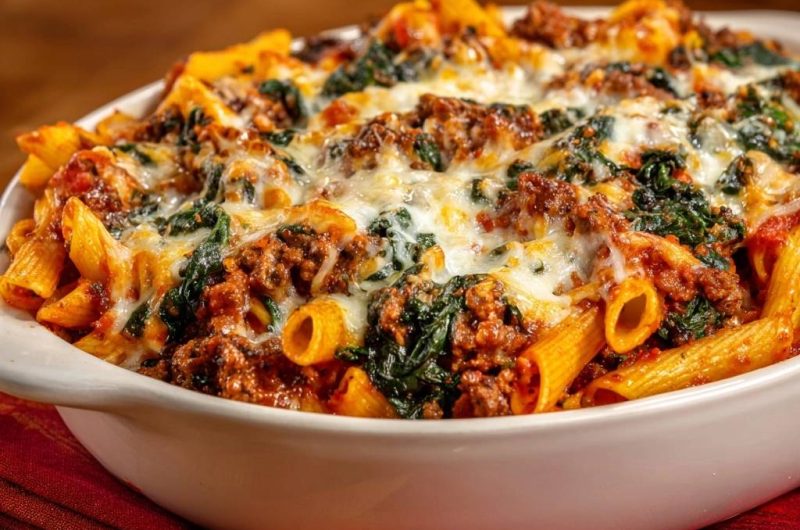
Cheesy Beef and Spinach Penne
Course: Main CourseCuisine: AmericanDifficulty: easy6
servings15
minutes25
minutes485
kcal40
MinutesThis hearty pasta bake combines lean ground beef, fresh baby spinach, and penne in a savory marinara sauce, topped with melted mozzarella and parmesan. The recipe focuses on preventing soggy noodles by undercooking the pasta and wilting the spinach directly into a thickened sauce.
Ingredients
1 pound penne pasta
1 pound lean ground beef (85/15 or 90/10)
1 jar (24 ounces) high-quality marinara sauce
5 cups fresh baby spinach (it will wilt significantly)
2 cups shredded mozzarella cheese
1/2 cup grated parmesan cheese
3 cloves garlic, minced
1 tablespoon olive oil
1 teaspoon dried oregano
1/2 teaspoon red pepper flakes (optional)
Salt and black pepper to taste
Directions
- Preheat your oven to 375 degrees F. Grease a deep 9×13 inch baking dish or a large oval ceramic casserole dish.
- To solve the soggy pasta problem, boil your penne in heavily salted water for exactly 4 minutes less than the package directions for al dente. The pasta should be firm and slightly undercooked in the center. Drain and set aside.
- In a large skillet or Dutch oven, heat olive oil over medium-high heat. Brown the ground beef until fully cooked and deeply caramelized, breaking it into small crumbles. Drain any excess fat thoroughly to prevent a greasy bake.
- Add the minced garlic, oregano, and red pepper flakes to the beef, cooking for 1 minute until fragrant.
- Stir in the marinara sauce and bring to a low simmer. Let the sauce simmer for 5 minutes to thicken slightly before adding the spinach.
- Add the fresh spinach to the sauce in batches. Stir for only 30-45 seconds until just wilted. This prevents the spinach from releasing excess water into the final dish.
- Toss the undercooked penne into the skillet with the meat and spinach sauce. Stir well so the sauce coats the inside of the tubes, which creates a barrier against over-softening.
- Pour the mixture into the prepared baking dish. Unlike layered lasagnas, this dish benefits from a rustic, mixed texture.
- Top the dish with the shredded mozzarella and parmesan cheese. Ensure the cheese covers the spinach and beef clusters to protect them from drying out.
- Bake for 20 to 25 minutes until the cheese is bubbly and shows golden-brown toasted spots.
- Let the dish rest for 5 to 10 minutes before serving. This allows the starches to set and the sauce to adhere to the penne, ensuring a clean, non-watery plate.
Notes
- To prevent soggy pasta, boil the penne for exactly 4 minutes less than the package directions. Let the dish rest for 5 to 10 minutes after baking to allow the sauce to set.