Mastering Pesto Mozzarella Roasted Chicken and Vegetables
Most sheet pan dinners promise a miracle but deliver a soggy, steamed mess. When you toss watery vegetables like zucchini and tomatoes onto a cold pan with chicken, they release their juices simultaneously, creating a puddle that prevents browning. This Pesto Mozzarella Roasted Chicken and Vegetables recipe solves that physics problem with a high-heat strategy that ensures every bite is caramelized and crisp.
The secret lies in the layering and the temperature. We are moving away from the “dump and bake” method toward a more intentional technique. By using a moisture-wicking cheese barrier and a preheated roasting surface, you get juicy chicken breasts topped with bubbly, golden mozzarella and vegetables that actually have a snap to them.
Expertise in the kitchen often comes down to moisture management. To make this dish truly stand out, you must pat the chicken bone-dry with paper towels before adding the pesto. If there is a film of water on the meat, the pesto will slide right off in the oven rather than baking into a savory crust. This small step ensures the herbaceous oils penetrate the protein deeply.
The Science of Preventing Soggy Sheet Pan Vegetables
Roasting is a dry-heat cooking method, but vegetables are mostly water. When you crowd a pan, the evaporating moisture from the zucchini and cauliflower gets trapped between the pieces. Instead of the air circulating and browning the exterior, the vegetables sit in a cloud of steam, which leads to that limp, gray texture everyone hates.
To achieve the Maillard reaction—the chemical process that creates those delicious brown, savory flavors—you need high heat and space. Setting the oven to 425°F triggers this reaction quickly. It allows the exterior of the vegetables to sear and the natural sugars to caramelize before the internal cell walls completely collapse and dump their water content onto the tray.
Airflow is your best friend here. If your baking sheet looks like a crowded subway car, you won’t get any roasting. Use two pans if you have to. Giving each cauliflower floret and zucchini round its own “personal space” ensures the hot air can hit every surface, evaporating moisture instantly and leaving behind a concentrated, sweet flavor.
Why Preheating the Baking Sheet is Mandatory
Think of your baking sheet like a cast-iron skillet. If you put a steak in a cold skillet, it won’t sear; it will just slowly turn gray. By placing the empty rimmed baking sheet in the oven while it preheats, you create a screaming-hot surface that provides immediate thermal shock to the vegetables.
The moment those oiled zucchini rounds hit the hot metal, you should hear a faint sizzle. This instant heat starts the searing process on the bottom side immediately. It cuts down on the total time the vegetables spend in the oven, which is the ultimate trick to keeping them tender-crisp rather than mushy.
Essential Components for Pesto Mozzarella Roasted Chicken
Quality ingredients make or break a simple roast. For the cheese, you must use low-moisture shredded mozzarella. Fresh mozzarella (the kind stored in water) is beautiful on a salad, but it is a disaster for roasting. It releases a massive amount of liquid as it melts, which will turn your pesto into a watery soup and ruin the texture of your chicken.
The dried oregano and garlic powder are also strategic choices. While fresh herbs are great for finishing, dried herbs stand up much better to the intense 425°F heat without burning. They bloom in the olive oil, infusing the vegetables with a deep, earthy Mediterranean aroma that permeates the entire kitchen.
Selecting and Preparing the Chicken Breasts
Chicken breasts are notoriously uneven, with one thick end and one thin “tail.” If you roast them as-is, the thin part will be dry as a bone by the time the thick part is safe to eat. Take a minute to pound them to a uniform one-inch thickness using a meat mallet or the bottom of a heavy skillet.
Uniformity is the key to even cooking. Once they are level, the “Pat Dry” rule becomes your top priority. Removing surface moisture allows the salt and pepper to grip the meat and ensures the pesto stays exactly where you put it. This preparation creates the perfect foundation for the flavor layers to follow.
The Role of High-Quality Basil Pesto
Pesto isn’t just a sauce here; it’s a protective coating. Because chicken breast is a very lean protein, it is prone to drying out in a hot oven. The olive oil and pine nut fats in the pesto act as a secondary fat source, basting the chicken as it roasts.
A high-quality pesto will have a vibrant green color and a thick, paste-like consistency. If your pesto is too runny, the oil will separate and pool on the pan. Look for a brand that lists basil and extra virgin olive oil as the primary ingredients to ensure the best flavor and structural integrity during the roast.
Step-by-Step: Engineering the Perfect Roast
Start by tossing your vegetables in a large bowl rather than on the pan. This ensures every single cauliflower floret and cherry tomato is thinly veiled in olive oil and spices. You want a light sheen, not a heavy coating, as too much oil can also contribute to a greasy, heavy finished product.
When you arrange the vegetables on the preheated pan, leave four clear “islands” for your chicken. This prevents the vegetables from being crushed under the meat. The cherry tomatoes will act as little flavor bombs, bursting during the roast and releasing a sweet acidity that balances the richness of the pesto and cheese.
Creating the Mozzarella Moisture Shield
The layering order is vital: Chicken, then pesto, then cheese. Think of the mozzarella as a heat shield. By mounding the cheese over the pesto and pressing it down slightly, you insulate the chicken breast from the direct, harsh heat of the oven’s upper heating element.
This shield allows the internal temperature of the chicken to rise gently while the cheese takes the brunt of the heat. The pesto becomes trapped between the meat and the melting cheese, essentially “steaming” the top of the chicken in its own herbaceous oils. This results in an incredibly tender texture that cuts like butter.
The Broiler Finish for Texture and Color
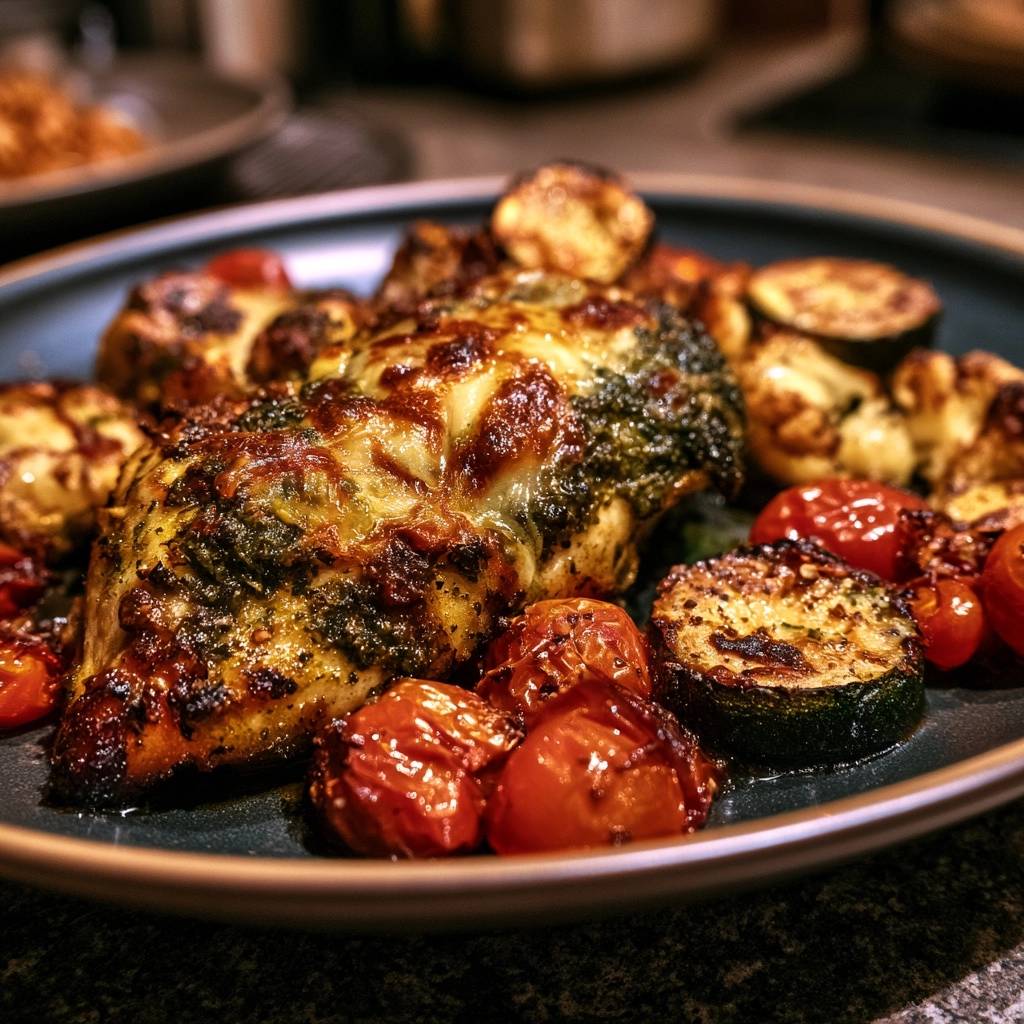
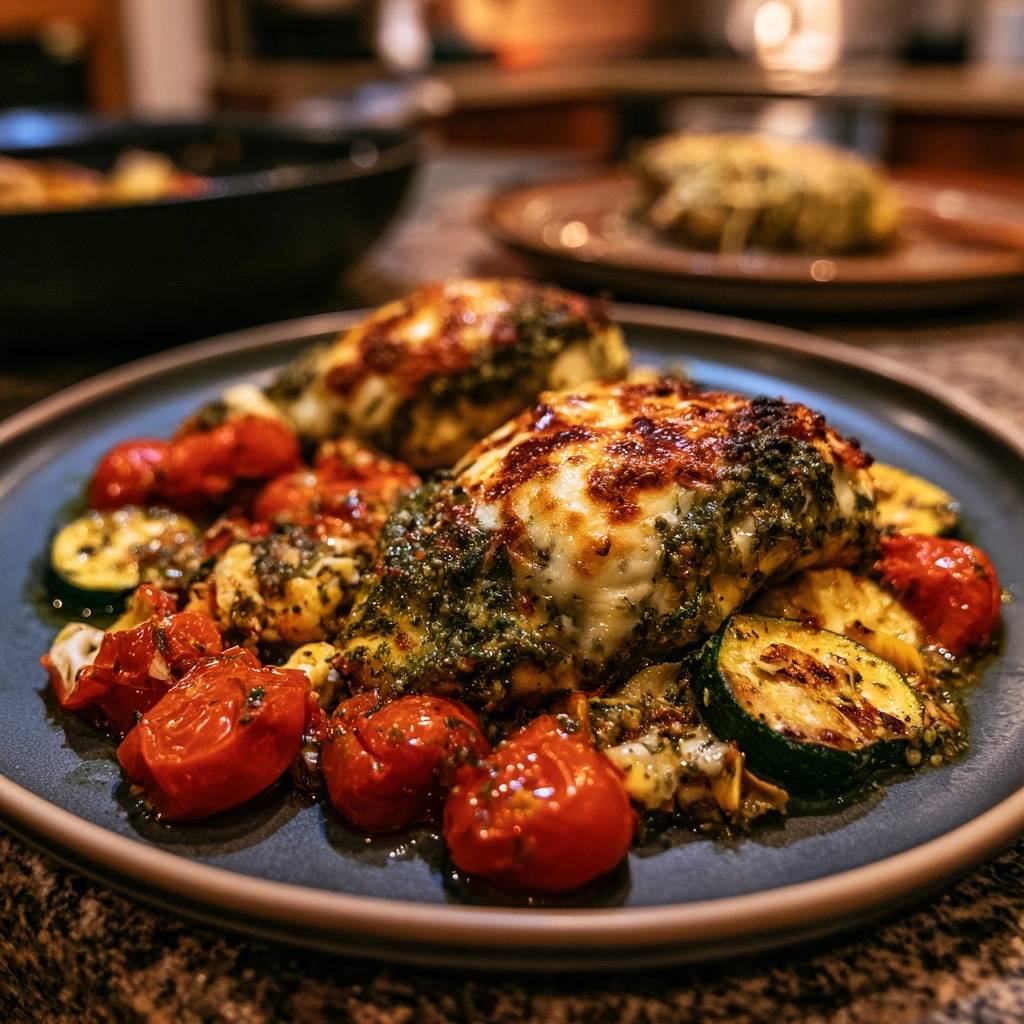
The final few minutes under the broiler are where the dish goes from “good” to “restaurant quality.” You are looking for “leopard spotting” on the mozzarella—those deep brown, toasted bubbles that provide a chewy, salty contrast to the melted cheese underneath.
Keep a very close eye on the oven during this stage. The transition from perfectly charred to burnt happens in seconds. You’ll know it’s ready when the cherry tomatoes have blistered and slightly deflated, and the zucchini edges show a dark, caramelized sear. The smell of toasted cheese and roasted garlic should be intense.
Troubleshooting Common Roasting Errors
If you find that your chicken is reaching 165°F but your cauliflower still feels too firm, you likely cut the florets too large. Next time, aim for bite-sized pieces. For now, you can remove the chicken to a plate to rest and pop the vegetables back in for another five minutes to finish softening.
The “Crowded Pan” syndrome is the most common pitfall. If you see liquid pooling on the pan halfway through cooking, your vegetables are steaming. Carefully drain the excess liquid or use a spatula to spread the ingredients across two pans. This will help the remaining moisture evaporate so the roasting process can actually begin.
Flavor Variations and Vegetable Substitutions
This formula works with many different vegetables as long as you respect their cook times. In the spring, try swapping the cauliflower for asparagus spears or snap peas. Since these cook faster, add them to the pan halfway through the chicken’s roasting time to prevent them from turning to mush.
For a winter version, broccoli or bell peppers work beautifully. Just remember the “Low-Moisture” rule. Avoid using high-water vegetables like mushrooms or spinach on the same pan as the chicken, as they will release too much liquid and ruin the “shield” effect we’ve worked so hard to create.
Optimal Pairings for Pesto Mozzarella Roasted Chicken
Since this is a complete meal on one pan, you don’t need much else. However, a light grain like quinoa or couscous is excellent for soaking up the stray juices and burst tomato nectar left on the plate. It adds a nice nutty element that complements the pine nuts in the pesto.
If you want something fresh, a simple arugula salad with a sharp lemon vinaigrette is the perfect partner. The peppery bite of the arugula and the acidity of the lemon cut right through the richness of the melted mozzarella. It cleanses the palate between bites of the savory, herb-crusted chicken.
Expert Tips for Meal Prep and Storage
This dish is a meal prep dream, but you have to reheat it correctly. If you use a microwave, the zucchini will become very soft and the chicken can turn rubbery. Instead, use an air fryer or a toaster oven at 350°F for about 5-7 minutes. This recrisps the cheese and keeps the vegetables from getting slimy.
Store leftovers in a glass airtight container for up to three days. If you are prepping this ahead of time, you can pound the chicken and toss the vegetables in oil and spices the night before. Just wait to add the pesto and cheese until right before you slide the pan into the oven for the freshest results.
Frequently Asked Questions
Can I use frozen vegetables for this recipe?
It is not recommended. Frozen vegetables, especially zucchini and cauliflower, have already had their cell walls damaged by freezing. They release a massive amount of water as they thaw, which will result in a soggy mess on your baking sheet. For the best results and that signature roasted char, stick with fresh produce.
How do I know the chicken is done if I don’t have a thermometer?
While a meat thermometer is the most reliable tool, you can check for doneness by pressing on the thickest part of the breast. It should feel firm to the touch, similar to the feel of your palm when you make a fist. Additionally, the juices should run clear, not pink, when the meat is pierced with a knife.
Can I use chicken thighs instead of breasts?
Yes, boneless skinless chicken thighs are a great substitution. They are more forgiving and stay very juicy due to their higher fat content. However, they may take 5-7 minutes longer to cook than pounded chicken breasts. Ensure you still pat them dry and follow the same layering technique with the pesto and mozzarella.
Is there a dairy-free mozzarella alternative that works?
You can use a plant-based mozzarella shred, but be aware that they often have different melting points. Look for a brand specifically labeled as “melting” or “pizza shreds.” These usually contain potato or tapioca starch which helps them brown under the broiler, though they may not get as bubbly as traditional dairy cheese.
Why did my pesto turn brown and bitter?
Pesto can turn brown if it is exposed to high heat for too long without protection. This is why the mozzarella “shield” is so important. The cheese protects the delicate basil in the pesto from oxidizing and burning. If your pesto still tastes bitter, ensure you are using a high-quality brand with extra virgin olive oil rather than a cheaper substitute like soybean oil.
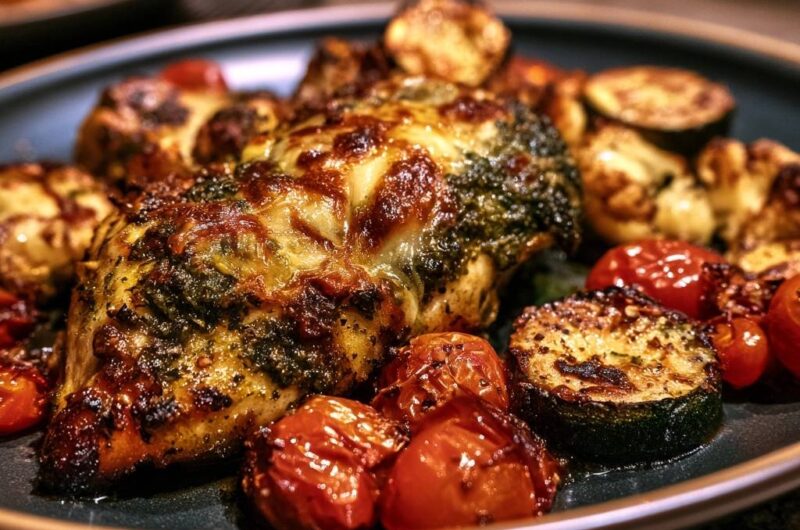
Pesto Mozzarella Roasted Chicken and Vegetables
Course: Main CourseCuisine: AmericanDifficulty: easy4
servings15
minutes25
minutes40
Minutes410
kcalAmerican
Ingredients
4 boneless skinless chicken breasts (pounded to even 1-inch thickness)
1/2 cup high-quality basil pesto
1.5 cups shredded low-moisture mozzarella cheese
2 medium zucchinis, sliced into 1/2-inch thick rounds
1 cup cherry tomatoes
2 cups cauliflower florets, cut small
3 tablespoons extra virgin olive oil
1 teaspoon garlic powder
1 teaspoon dried oregano
1/2 teaspoon red pepper flakes (optional, for visual garnish)
Kosher salt and cracked black pepper to taste
Directions
- Preheat your oven to 425°F (220°C). Place a large, rimmed baking sheet inside the oven while it preheats. A hot pan ensures the vegetables sear immediately upon contact, preventing sogginess.
- In a large bowl, toss the zucchini, cauliflower, and cherry tomatoes with olive oil, garlic powder, oregano, salt, and pepper. Ensure the vegetables are lightly and evenly coated.
- Pat the chicken breasts completely dry with paper towels. Season both sides with salt and pepper.
- Carefully remove the hot baking sheet from the oven. Arrange the vegetables in a single layer, leaving four distinct spaces for the chicken. Do not crowd the pan; use two sheets if necessary to ensure airflow.
- Place the chicken breasts in the designated spaces. Spread 2 tablespoons of pesto over the top of each breast.
- Top the pesto with a generous mound of mozzarella cheese. Press the cheese down slightly into the pesto to ensure it adheres and forms a protective “shield” that prevents the chicken from drying out under high heat.
- Roast for 18-20 minutes.
- Switch the oven to Broil for the final 3-5 minutes. Watch closely: the cheese should develop deep golden-brown charred spots, the zucchini should show visible sear marks, and the tomatoes should be blistered and slightly deflated.
- Remove from the oven. The internal temperature of the chicken should reach 165°F. Let the pan rest for 5 minutes before serving to allow the juices to set and the vegetable sugars to slightly thicken.
Notes
- Do not crowd the pan; use two sheets if necessary to ensure proper airflow and prevent steaming. The hot pan is essential for searing the vegetables immediately.