Mastering the Cheesy Beef and Spinach Crepe Bake

Nothing ruins a savory crepe bake faster than a mushy, water-logged bottom. Most recipes fail because the spinach and meat release moisture during baking, turning a delicate dish into a soggy mess. This Cheesy Beef and Spinach Crepe Bake solves that problem with a specific high-heat searing technique and a concentrated tomato-paste binder.
You’re looking for that perfect contrast between a tender, thin crepe and a hearty, savory interior. By focusing on moisture control, we bridge the gap between a refined French-style crepe and a comforting, cheesy casserole. It’s the kind of meal that feels fancy enough for guests but satisfies that deep craving for a warm, melty dinner.
The secret to success lies in the “bone-dry” filling method. I’ve found that frying the tomato paste until it turns a deep brick red creates a moisture barrier. This prevents meat juices from leaking into the crepe batter, ensuring every bite stays golden and crisp rather than wet and limp.
The Science of Moisture Control in Savory Crepes
When you roll a filling inside a crepe and put it in the oven, you’re essentially creating a steam chamber. Spinach and ground beef are notorious for holding onto water, which releases the moment heat hits them. If that liquid has nowhere to go, it soaks directly into the crepe, destroying its structural integrity.
To combat this, we use tomato paste as a molecular binder. When you sauté the paste with the browned beef, it coats the proteins and absorbs residual fats and juices. This creates a thick, concentrated filling that stays put instead of weeping liquid during the baking process.
Furthermore, the high-heat baking environment at 400°F is intentional. We want the exterior to crisp and the cheese to bubble before the internal ingredients have a chance to generate excess steam. It’s a race against physics that you’ll win every time if you follow the drying steps in the pan first.
Essential Components for the Beef and Spinach Filling
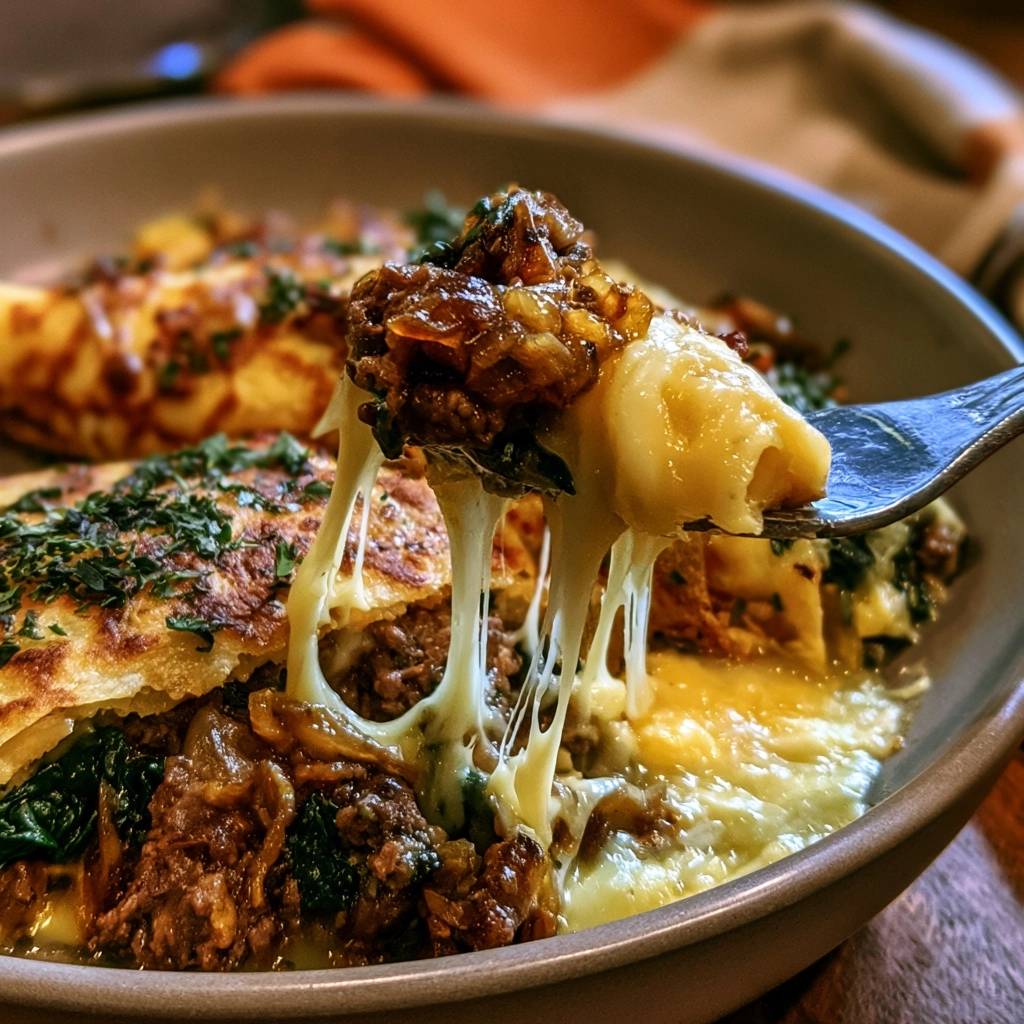
Quality ingredients make a massive difference when you’re working with such a simple flavor profile. I strongly recommend using lean ground beef, specifically a 90/10 or 93/7 blend. Higher fat content leads to grease pooling in the bottom of your baking dish, which is the enemy of a crisp crepe.
For the cheese, we use a blend of mozzarella and cheddar. The mozzarella provides that iconic, elastic cheese pull that everyone loves, while the cheddar adds a necessary sharp bite. If you can, grate your cheese from a block; pre-shredded versions are coated in potato starch that can prevent a smooth melt.
Fresh spinach is non-negotiable here. While frozen spinach is convenient, it carries far too much water for a delicate crepe bake. Fresh leaves wilt down quickly in the pan, allowing you to see exactly when the moisture has evaporated. You’ll start with a mountain of greens and end up with just enough to perfectly fleck the beef.
Selecting or Preparing the Crepe Base
If you’re buying pre-made crepes, check the label carefully for sugar or vanilla flavoring. Many store-bought options are intended for dessert and will clash horribly with garlic and beef. Look for “savory” or “plain” crepes that are thin enough to roll but sturdy enough to hold the filling.
For those making them at home, a neutral batter or a traditional buckwheat galette style works beautifully. Ensure your crepes are fully cooled before you start the assembly process. A warm crepe is more prone to tearing when you try to roll it tightly with the hot beef mixture.
Phase One: Searing Beef for Maximum Texture
The Maillard reaction is your best friend in this recipe. Don’t just gray the meat; you want to sear it until it’s deeply browned and slightly crispy. This isn’t just about developing a rich, umami flavor; it’s about structural integrity. Crispy beef bits add a necessary texture against the soft crepe.
Heat your skillet until the oil shimmers before adding the beef and onions. As the meat cooks, use a wooden spoon to break it into small, uniform crumbles. Once the beef is browned, you must drain every single drop of excess fat and liquid from the pan. The meat should look “bone-dry” before you move on.
After draining, push the beef to the edges and drop the tomato paste into the center. Let it fry for about a minute until it smells toasted and darkens in color. Stirring it into the beef now ensures every morsel is coated in a flavor-packed, moisture-locking seal.
Phase Two: Reducing Spinach and Concentrating Flavor
Spinach is mostly water, so your goal in this phase is a total volume reduction. When you add the chopped leaves to the pan, it will look like way too much food. However, within two minutes, it will wilt down into a manageable amount that integrates perfectly with the beef.
Continue sautéing the mixture until you see no liquid residue on the bottom of the pan. If you move the mixture aside with a spatula and see a pool of water, keep cooking. This “pan-drying” technique is the final safeguard against a soggy bake.
Add your minced garlic, oregano, and red pepper flakes only in the last minute of cooking. Garlic burns quickly and becomes bitter, so you just want to cook it until it’s fragrant. Once the filling is seasoned and dry, remove it from the heat immediately to prevent overcooking the greens.
Assembly: Rolling for Structural Integrity
To assemble, lay a crepe flat and place a generous spoonful of the beef mixture just below the center line. Sprinkle a tablespoon of mozzarella directly onto the hot meat so it starts to act as a “glue.” Roll the crepe tightly, tucking the edges if you prefer, though a simple cigar roll works best.
Place each roll seam-side down in your lightly greased baking dish. This is a technical necessity; the weight of the filling presses the seam against the dish, sealing it shut as it bakes. If you place them seam-side up, they will likely unfurl and spill their contents.
Don’t overstuff the crepes. It’s tempting to pile in the filling, but a roll that’s too thick will become doughy in the center. Aim for a balanced ratio where you get a bit of crepe and a bit of savory beef in every single bite.
The High-Heat Baking and Broiling Strategy
We bake these at 400°F because we want immediate action. A lower temperature would slowly steam the crepes from the inside out, leading to that dreaded mushiness. At this heat, the cheese melts rapidly and the tips of the crepes begin to brown and harden.
Before sliding the dish into the oven, brush the tops of the crepes with a little olive oil. This is the secret to that golden-brown, speckled crust. It helps the heat distribute evenly across the surface of the crepe, giving it a satisfying crunch that mimics a fried texture without the extra grease.
Finish the dish under the broiler for the last two minutes. Watch it like a hawk! You want the mozzarella and cheddar to bubble and develop those beautiful dark brown spots. This final blast of heat ensures the edges of the crepes are perfectly crisp when you pull them out.
Troubleshooting Common Crepe Bake Issues
If your crepes are tearing during the rolling process, they are likely too cold or too dry. Try warming them slightly between two damp paper towels in the microwave for 10 seconds to make them more pliable. Also, ensure you aren’t using crepes that are paper-thin, as they won’t hold the weight of the beef.
Finding liquid in the bottom of your dish after baking usually means the beef wasn’t drained well enough or the spinach wasn’t fully reduced. Next time, try pressing the spinach against the side of the pan with your spatula to squeeze out extra water before mixing it with the beef.
Rubbery cheese is often the result of using pre-shredded varieties that contain anti-caking agents. For the best melt, stick to high-quality block cheese. If the center of your bake is cold but the cheese is brown, your filling was likely too cold when you rolled it. Try to roll and bake while the beef mixture is still warm.
Optimal Side Dishes for Savory Crepes
Since this dish is rich with beef and melted cheese, you want side dishes that offer a bright, acidic contrast. A simple arugula salad tossed in a sharp lemon vinaigrette is my favorite pairing. The peppery greens and citrus cut right through the heaviness of the mozzarella.
Pickled red onions are another fantastic addition. You can pile them right on top of the baked crepes for a pop of color and a vinegar kick. The acidity balances the savory oregano and earthy spinach beautifully, making the whole meal feel much lighter.
Avoid serving this with heavy starches like mashed potatoes or pasta. The crepes already provide the necessary carbohydrates. Instead, look toward fibrous vegetables like roasted asparagus or a cold cucumber salad to keep the plate balanced and refreshing.
Make-Ahead Instructions and Storage Logistics
You can easily prep the beef and spinach filling up to 24 hours in advance. Store it in an airtight container in the fridge, but make sure to reheat it slightly before rolling. Rolling cold filling into crepes often results in a bake that is hot on the outside but chilly in the middle.
If you have leftovers, store them in a sealed container for up to three days. I don’t recommend freezing the fully assembled bake, as the crepes will lose their texture and become grainy upon thawing. However, the beef filling freezes beautifully for up to two months.
To reheat, skip the microwave if you want to keep the crunch. Place the crepes back in a 350°F oven for about 10 minutes. This helps recrisp the edges and melts the cheese without making the crepe base rubbery or tough.
Expert Tips for Customizing the Filling
If you want to add more depth, try sautéing some finely chopped mushrooms with the onions. Just remember the moisture rule; mushrooms release a lot of water, so you’ll need to sauté them until they are browned and dry. A pinch of freshly grated nutmeg is also a classic chef’s trick to elevate the flavor of spinach and cheese.
You can also swap the dried oregano for fresh thyme or rosemary for a more herbaceous, earthy profile. If you like a bit of heat, increase the red pepper flakes or add a dash of hot sauce to the beef while it’s browning. These small tweaks allow you to make the recipe your own while keeping the core “anti-soggy” techniques intact.
How do I prevent the crepes from getting soggy?
The key is moisture management. You must sear the beef until it is very brown and drain all excess fat. Additionally, sauté the spinach until all visible water has evaporated from the pan. Using tomato paste acts as a binder to lock in any remaining juices so they don’t soak into the crepe during baking.
Can I use frozen spinach instead of fresh?
You can, but it requires extra work. Frozen spinach contains a massive amount of water. If you use it, you must thaw it completely and squeeze it inside a clean kitchen towel until it is as dry as possible. Fresh spinach is generally easier to manage for this specific recipe because you can see the moisture evaporate in the pan.
What is the best way to reheat leftovers?
Avoid the microwave if you want to maintain the texture. The best way to reheat these crepes is in the oven at 350°F for 10 to 12 minutes. This allows the cheese to remelt and the crepe edges to stay crisp. If you must use a microwave, wrap them in a paper towel, but be aware the crepe will be much softer.
Can I make this recipe ahead of time?
Yes, you can prepare the beef and spinach filling a day in advance and keep it in the refrigerator. When you are ready to eat, simply roll the filling into the crepes and bake. I do not recommend assembling the crepes hours before baking, as the moisture from the filling will eventually soften the crepes even before they hit the oven.
Why did my crepes tear when I was rolling them?
Crepes usually tear because they are either too cold or too thin. If they are cold, they lose their elasticity. Try warming them for a few seconds to make them pliable. Also, ensure you aren’t overfilling them; too much pressure from the beef mixture will cause the delicate batter to burst.
Can I substitute the ground beef with something else?
Ground turkey or chicken works well as a leaner alternative. However, these meats can be drier, so you might need to be extra careful not to overcook them during the searing phase. Ground lamb is another flavorful option that pairs beautifully with spinach and oregano, though it may require more diligent draining of fat.
Cheesy Beef and Spinach Crepe Bake
Course: Main CourseCuisine: AmericanDifficulty: easy4
servings15
minutes25
minutes40
Minutes510
kcalAmerican
Ingredients
1 pound lean ground beef
4 cups fresh spinach, roughly chopped (it wilts significantly)
1 small onion, finely diced
2 tablespoons tomato paste (essential for binding moisture)
2 cloves garlic, minced
1.5 cups shredded mozzarella cheese
1/2 cup shredded cheddar cheese
8 savory crepes (store-bought or homemade)
2 tablespoons olive oil, divided
1 teaspoon dried oregano
1/2 teaspoon red pepper flakes (optional)
Salt and black pepper to taste
Directions
- Preheat your oven to 400°F (200°C). A higher temperature ensures the cheese melts and the crepe edges crisp before the filling can release steam.
- Heat 1 tablespoon of olive oil in a large skillet over medium-high heat. Add the ground beef and onion. To prevent sogginess, sear the beef until deeply browned and slightly crispy. Drain every drop of excess fat and liquid from the pan. Cook until no pink remains and it reaches 160°F (71°C).
- Push the beef to the sides and add the tomato paste to the center of the pan. Fry the paste for 1 minute until it turns a deep brick red, then incorporate it into the beef. This creates a barrier that prevents meat juices from leaking into the crepe.
- Add the garlic, oregano, and spinach. Sauté until the spinach is completely wilted and all visible moisture has evaporated. The pan should be “dry” with no pooling liquid. Season with salt and pepper.
- Lay each crepe flat. Place a generous spoonful of the beef and spinach mixture in the center and sprinkle with a tablespoon of mozzarella.
- Roll the crepes tightly and place them seam-side down in a lightly greased baking dish.
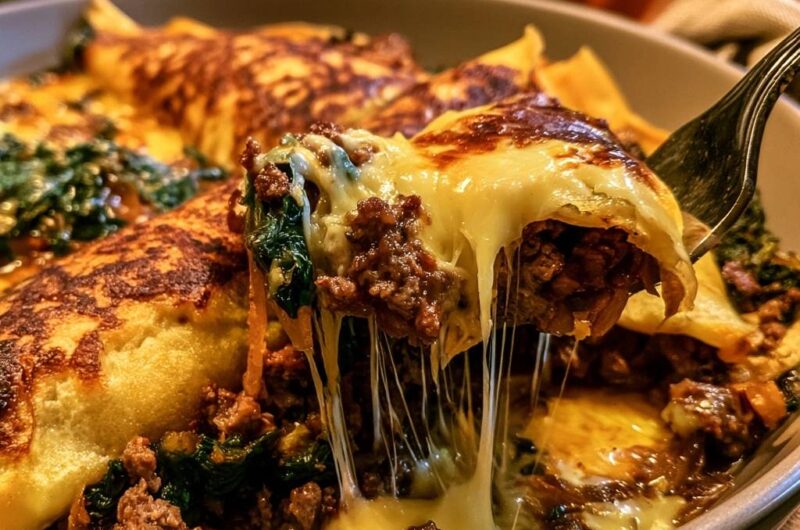
- Brush the tops of the crepes lightly with the remaining olive oil-this produces the golden-brown, speckled crust seen in the image. Top with the remaining mozzarella and cheddar cheese.
- Bake for 10-12 minutes, then finish under the broiler for 1-2 minutes until the cheese is bubbling with golden spots and the crepe edges are crisp. Serve immediately for the best texture and cheese pull.
Notes
- The tomato paste acts as a binder to lock in flavor and moisture, preventing the crepes from becoming water-logged during the baking process.