Mastering the Crunchy Ramen Cabbage Salad
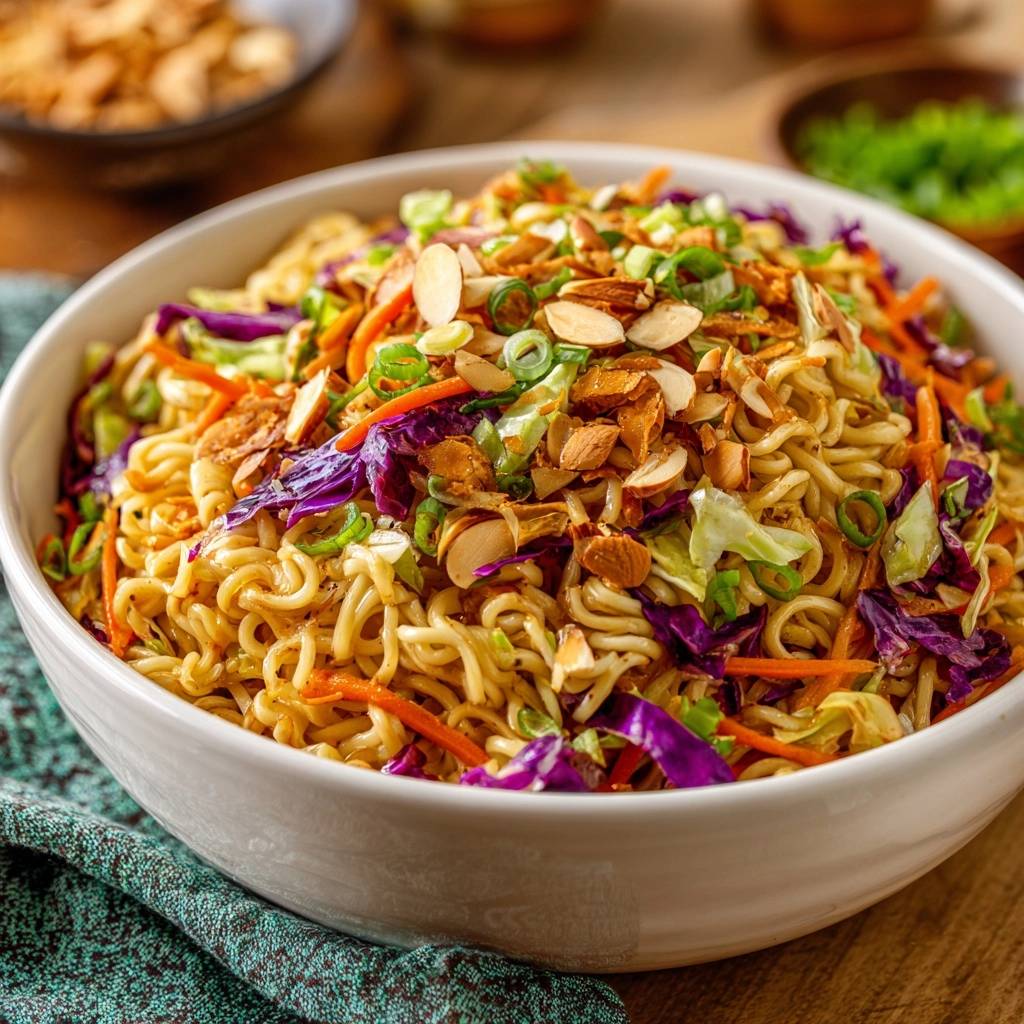
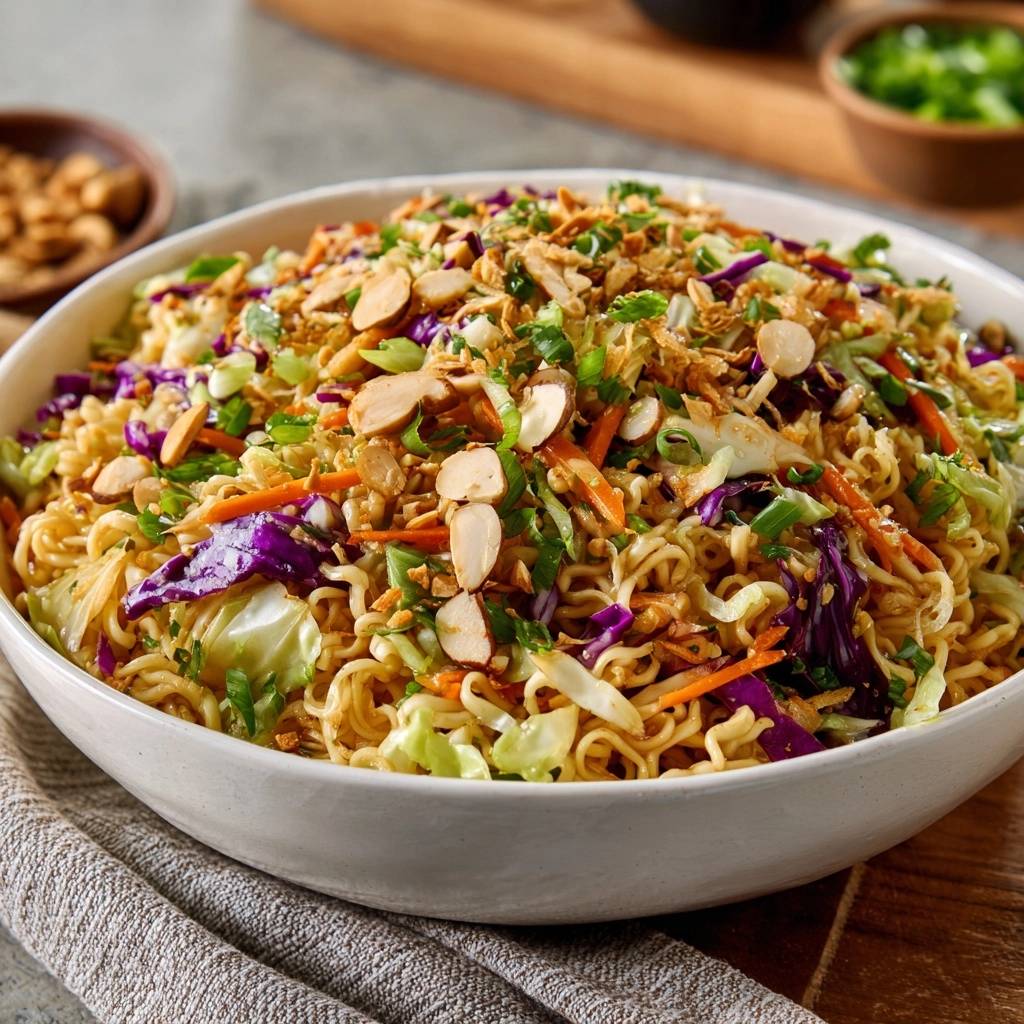
Imagine a forkful of vibrant, purple and green cabbage tangled with silky noodles that actually have some bite. Most potluck versions of this salad rely on dry, crushed ramen that feels like eating shards of glass, only to turn into a soggy disappointment an hour later. This recipe changes the game by focusing on a specific contrast of textures that stays fresh from the first bite to the last.
The secret lies in our “flash-softened” technique. Instead of leaving the noodles raw or overcooking them into mush, we give them a lightning-fast blanch. This creates a noodle that is supple enough to soak up the tangy dressing but firm enough to stand up against the hearty crunch of toasted almonds and sunflower seeds.
I’ve found that the biggest mistake people make is treating the ramen like a garnish rather than the star. By boiling the noodles for exactly 90 seconds and immediately shocking them in cold water, you remove excess surface starch. This prevents the salad from becoming a gummy mess and ensures every strand remains distinct and coated in flavor.
The Science of the 90-Second Blanch
When you drop dry ramen into boiling water, the starch molecules begin to gelatinize almost instantly. At the 90-second mark, the outer layer of the noodle has softened, but the core remains dense and “al dente.” This is the sweet spot where the noodle is flexible enough to mingle with the cabbage but hasn’t absorbed enough water to become fragile.
Stopping the cook time precisely is vital because ramen noodles are thin and porous. If you go even thirty seconds over, they lose their structural integrity. Therefore, you must have a colander ready in the sink before the noodles even hit the water. Speed is your best friend here to ensure that perfect, bouncy mouthfeel.
The cold-water shock is the final, essential step in this process. Rinsing the noodles under a cold tap washes away the loose starch that causes clumping. You’ll notice the noodles feel slippery and clean after the rinse. Shake the colander vigorously; you want them as dry as possible so they don’t dilute your delicious vinaigrette.
Why Raw Ramen Isn’t Always Better
Traditional recipes often tell you to just crush the dry noodles and toss them in. While this provides a temporary crunch, raw ramen is difficult to digest and often tastes like flour. Furthermore, dry noodles act like a sponge, sucking the moisture out of your vegetables and leaving the salad looking wilted and sad within twenty minutes.
Our blanched method allows the noodles to absorb the acidity of the apple cider vinegar without losing their shape. You get a much more sophisticated dish that feels like a deliberate pasta salad rather than a last-minute pantry toss-together. It’s the difference between a snack and a real meal.
Essential Components for Crunchy Ramen Cabbage Salad
The base of this salad relies on a mix of green and red cabbage. Green cabbage provides a classic, watery crunch, while red cabbage is denser and offers a beautiful peppery note. Using both ensures a variety of fiber densities that keep the salad interesting as you chew.
When it comes to the carrots, put away the box grater. Grated carrots release too much moisture and disappear into the dressing. Instead, julienne them into thin matchsticks. These long, sturdy strips “tangle” perfectly with the ramen noodles, ensuring you get a bit of everything in every single bite.
Selecting the Right Instant Ramen
Even though we are tossing the flavor packets, the quality of the noodle block matters. Most standard grocery store ramen is oil-fried, which gives it a richer flavor and a sturdier texture after blanching. If you use air-dried ramen, keep a close eye on the pot, as these can turn soft much faster than the fried varieties.
The Role of Toasted Aromatics
Sunflower seeds and sliced almonds provide the “high-frequency” crunch that makes this salad famous. However, raw nuts lack depth. Toasting them at 350°F triggers the Maillard reaction, transforming them from bland pantry staples into golden, fragrant flavor bombs.
Watch the oven closely during those last two minutes. Sliced almonds are thin and can go from perfectly toasted to burnt in a heartbeat. Once you smell that warm, nutty aroma and see a light golden hue, pull them out immediately. Let them cool completely on the tray to ensure they crisp up to their maximum potential.
Emulsifying the High-Acid Vinaigrette
This dressing is a powerhouse of balance. The high ratio of apple cider vinegar provides a sharp brightness that cuts through the richness of the ramen. When you whisk the sugar into the vinegar and oil, it creates a stable emulsion that coats the vegetables rather than just pooling at the bottom of the bowl.
The acidity serves a dual purpose. It acts as a “denaturant,” slightly softening the tough fibers of the raw cabbage so it’s easier to eat, while simultaneously “setting” the starch on the noodles. A splash of toasted sesame oil adds a smoky, aromatic depth that ties the soy sauce and black pepper together beautifully.
Step-by-Step: Preparing the Crunchy Ramen Cabbage Salad
Start by getting your oven preheated. Toasting the nuts is the first step because they need time to cool. If you add warm nuts to the cold salad, they will create steam and immediately lose their crunch. Spread them in a single layer to ensure even browning across the whole batch.
While the nuts cool, move to the stove. Use a large pot of water so the temperature doesn’t drop too much when the noodles go in. Once the 90 seconds are up, don’t just drain them—rinse them until they feel cold to the touch. This stops the residual heat from cooking the noodles further while they sit in the colander.
For a perfect pairing, try our Skillet Veggie Noodle Stir-Fry: Perfect, Non-Sticky Results.
Finally, prep your vegetables. Make sure your cabbage is sliced thinly and uniformly. When you combine everything in the large bowl, use your hands or large tongs to lift and fold the noodles into the cabbage. You want to ensure the ramen is evenly distributed so no one gets a bowl of just greens.
Phase 1: Achieving the Perfect Toast
Keep your seeds and almonds separate on the baking sheet if you can, as seeds often toast faster than almonds. You are looking for a uniform golden color. If the edges of the almonds start to look dark brown, they are done. Transfer them to a cool plate immediately to stop the cooking process.
Phase 2: The Precision Noodle Boil
Use a digital timer for this. It sounds fussy, but 90 seconds goes by fast when you’re multitasking. As soon as the timer beeps, pull the pot off the heat. The noodles should still have a slight “snap” when you pull one apart. That’s the secret to the silky texture we’re after.
Phase 3: Vegetable Prep and Integration
Dry your cabbage thoroughly after washing. If the vegetables are wet, the dressing won’t cling to them, and you’ll end up with a watery mess. When you pour the dressing over the mix, give it a good vigorous toss. The noodles might try to clump together at first, but the oil in the dressing will help them slide apart.
Avoiding Common Texture Mistakes
If you accidentally overcook your noodles, don’t panic. Rinse them in ice-cold water for an extra minute to firm up the exterior starch. If the salad feels a bit dry after sitting, it’s likely the noodles absorbed more dressing than expected. Simply whisk a tablespoon of oil and a teaspoon of vinegar together and toss it back in to refresh the shine.
The most common failure is adding the toasted nuts too early. Even the best-toasted almond will eventually succumb to the moisture in the dressing. Always keep your “crunch” elements in a separate container or bag and sprinkle them on literally seconds before the bowl hits the table.
Flavor Variations and Ingredient Swaps
If you want to swap out the white sugar, honey or maple syrup work beautifully, though they will make the dressing slightly thicker. For those who want a bit of heat, whisking in a teaspoon of red pepper flakes or some freshly grated ginger adds a sharp, spicy profile that complements the sesame oil perfectly.
To turn this side dish into a full meal, add some protein. Chilled edamame, grilled chicken breast, or even some pan-seared tofu cubes fit right in. Just remember to add a little extra dressing if you’re adding more “bulk” to the bowl so nothing ends up bland.
What to Serve with Crunchy Ramen Cabbage Salad
This salad is quite vinegar-forward, so it pairs excellently with rich, savory proteins. Think grilled chicken skewers, citrus-marinated beef, or even hearty roasted sweet potatoes. It acts as a brilliant palate cleanser that cuts through the fat of heavier main courses.
Because it’s so colorful and sturdy, it’s a favorite for outdoor gatherings. It won’t wilt in the heat like a mayo-based potato salad or a delicate lettuce salad. It stays bright, acidic, and refreshing, making it the perfect companion for anything coming off a hot grill.
Make-Ahead Strategies and Storage
You can absolutely prep this in advance, but you must use a “deconstructed” storage method. Keep the shredded cabbage and carrot mix in one large airtight container. Store the blanched noodles in a separate small bag with a tiny drop of oil to prevent sticking. The dressing can stay in a jar on the counter or in the fridge.
When you’re ready to serve, combine the vegetables, noodles, and dressing. This mixture actually tastes better after sitting for about 30 minutes as the flavors meld. However, the toasted nuts must stay in their own dry container until the very last moment. This setup keeps everything fresh for up to 3 days.
Expert Troubleshooting
Can I use pre-shredded coleslaw mix to save time?
Yes, you can use a store-bought mix, but be aware that those mixes often contain a lot of moisture or can be slightly dry depending on how long they’ve sat. I recommend giving pre-shredded mix a quick “fluff” and checking for any wilted pieces. You might need to add an extra julienned carrot to give it that fresh, homemade look.
Why did my dressing separate?
Dressing is an emulsion of oil and vinegar, which naturally want to stay apart. If your dressing separates, it usually means the sugar hasn’t fully dissolved to help bind the liquids. Give the jar a very vigorous shake right before pouring. If you’re making it in a bowl, whisk it rapidly until it looks uniform and slightly thickened.
Can I make this gluten-free?
To make this gluten-free, swap the wheat-based ramen for rice ramen or glass noodles (cellophane noodles). You must also use tamari instead of soy sauce. Rice noodles cook very differently, so follow the package instructions for an “al dente” texture rather than using the 90-second rule for wheat ramen.
How do I revive leftovers the next day?
Leftovers will naturally lose some of their “zip” as the cabbage releases water. To bring it back to life, add a “refresh” splash of apple cider vinegar and a tiny pinch of salt. If you kept your toasted nuts separate, adding a fresh handful of those will make the salad feel brand new again. Avoid freezing this salad, as the cabbage will become translucent and mushy once thawed.
Ramen Cabbage Salad
Course: SaladCuisine: Asian FusionDifficulty: easy6
servings15
minutes5
minutes285
kcal20
MinutesThis recipe elevates the classic ramen salad by briefly blanching the noodles for a tender-yet-firm texture. Combined with shredded cabbage, carrots, and a tangy soy-vinegar dressing, it is finished with toasted nuts and seeds for a lasting crunch.
Ingredients
2 packages instant ramen noodles (discard flavor packets)
1/2 cup sliced almonds
1/4 cup sunflower seeds
1/2 small head green cabbage, shredded
1/2 small head red cabbage, shredded
2 large carrots, julienned
4 green onions, thinly sliced
1/2 cup vegetable oil
1/4 cup apple cider vinegar
1/3 cup sugar
2 tablespoons soy sauce
1/2 teaspoon toasted sesame oil
1/2 teaspoon black pepper
Directions
- Preheat your oven to 350°F (175°C). Spread the sliced almonds and sunflower seeds on a baking sheet. Toast for 5-7 minutes until golden brown and fragrant. Set aside to cool completely; these are your primary “crunch” elements.
- Bring a large pot of water to a rolling boil. Drop the dry ramen noodle blocks into the water for exactly 90 seconds. You want them “al dente”-pliant and separated, but still firm to the bite.
- Immediately drain the noodles and rinse under cold running water to stop the cooking process. Shake off all excess moisture.
- In a small jar or bowl, whisk together the vegetable oil, apple cider vinegar, sugar, soy sauce, sesame oil, and black pepper until the sugar is fully dissolved.
- In a large mixing bowl, combine the shredded green cabbage, red cabbage, julienned carrots, and sliced green onions. Add the blanched, cooled noodles to the bowl.
- Pour the dressing over the noodle and vegetable mixture. Toss thoroughly. The acidity in the dressing will “set” the noodles, preventing them from becoming mushy.
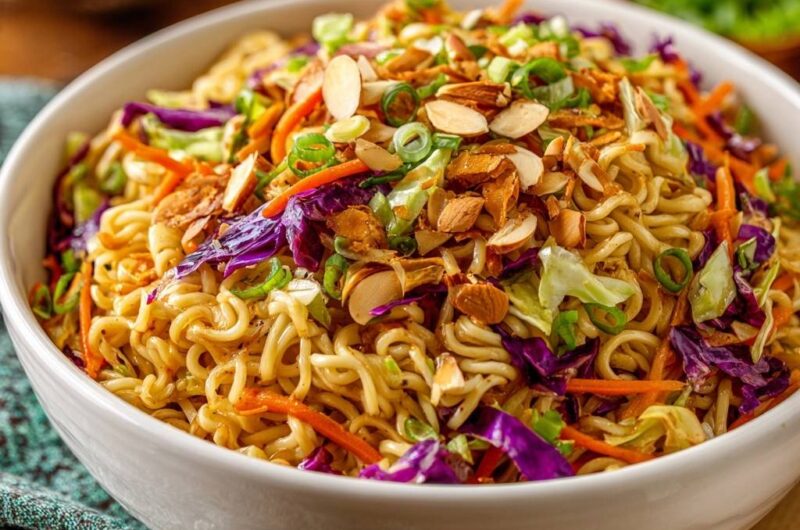
- Just before serving, top the salad generously with the toasted almonds and sunflower seeds. This ensures the nuts stay crispy while the noodles provide the substantial, silky texture seen in the photo. Serve immediately.
Notes
- To ensure the best texture, only add the toasted almonds and sunflower seeds immediately before serving. Discard the ramen flavor packets as they are not used in this recipe.