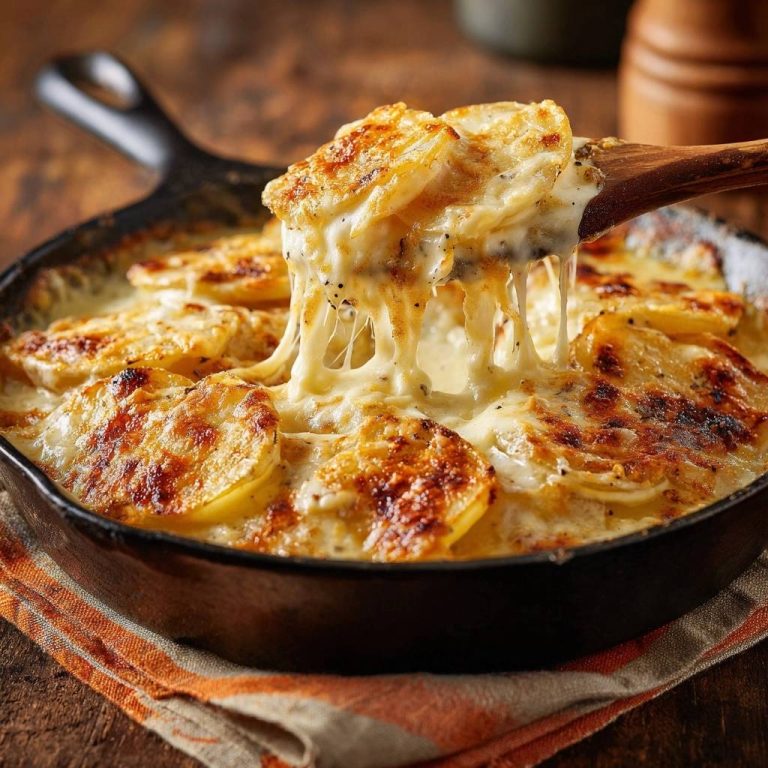
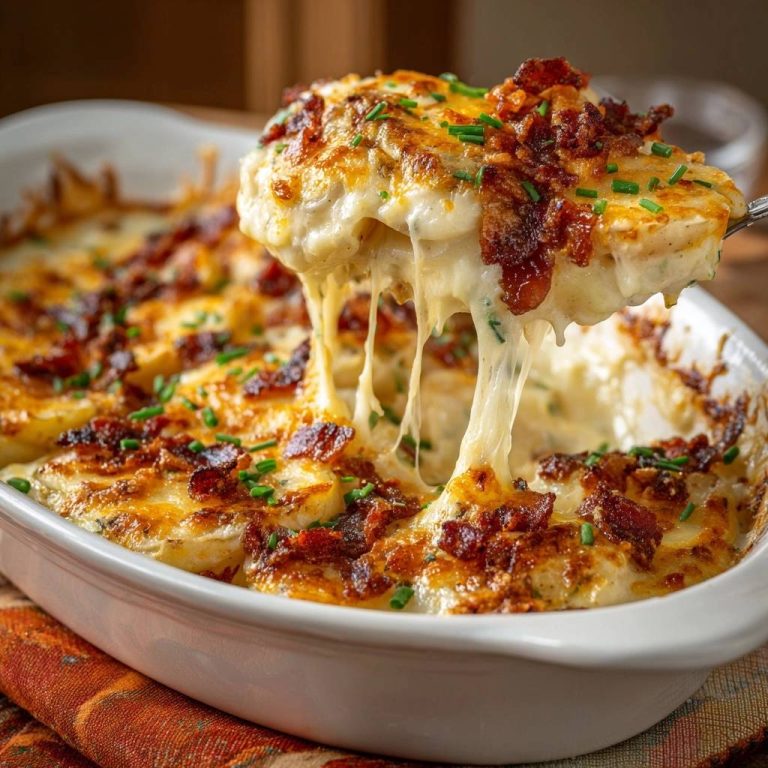
Mastering the French Onion Cheesy Potato Bake
Most potato gratins suffer from a fatal flaw: the dreaded soupy mess. You’ve likely experienced it before—a dish that looks beautiful on top but reveals a watery, bland puddle once you break the crust. This happens because raw potatoes are nearly 80% water, and as they cook in cream, they release that moisture, thinning your sauce into a grainy soup. This French Onion Cheesy Potato Bake solves that problem entirely through a specialized dual-heat method.
By par-roasting the potatoes before adding any liquid, we lock in the starch and evaporate excess water. This creates a structural integrity that allows each slice of Yukon Gold to remain tender yet distinct. When you combine that perfected texture with the deep, jammy sweetness of caramelized onions and the nutty melt of Gruyère, you aren’t just making a side dish. You’re creating a rich, velvety masterpiece that mimics the soul-warming experience of a classic French Onion soup.
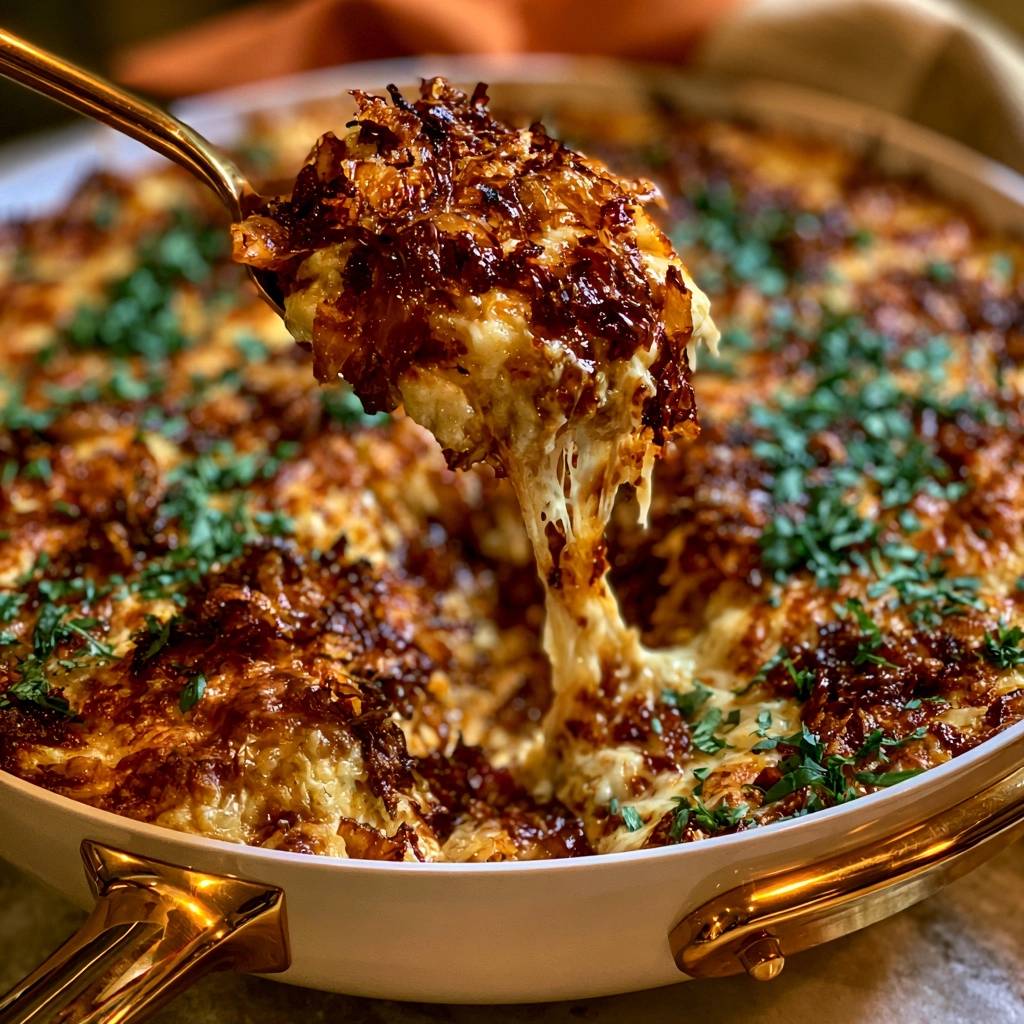
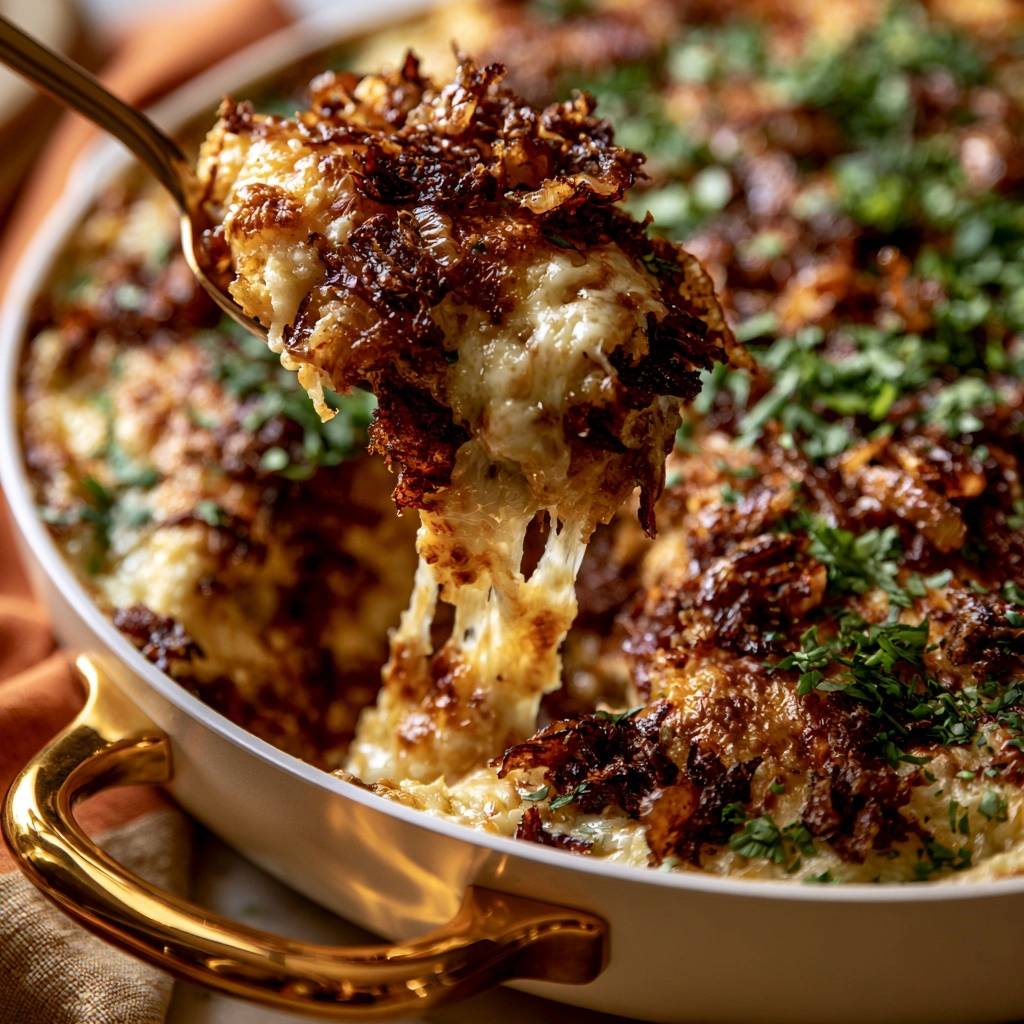
The secret to the professional-grade finish lies in the cream reduction. Instead of pouring cold cream over the vegetables, we simmer it with beef bone broth and aromatics first. This concentrates the flavors and ensures the sauce is already thickened before it even hits the oven. You’ll get a clean scoop every single time, with a mahogany-colored cheese crust that shatters perfectly under your fork.
The Science of the Anti-Soggy Potato Method
To understand why this method works, you have to look at the cellular structure of the potato. When you boil potatoes for a casserole, the cells swell with water, which eventually leaks out during the final bake. However, par-roasting at 400°F triggers a completely different reaction. The high heat causes the surface moisture to evaporate rapidly, creating a thin, sealed “skin” on every individual slice. This is the first step in preventing a watery bake.
Furthermore, this initial blast of heat kickstarts the Maillard reaction. While we aren’t looking for deep browning yet, the dry heat begins to convert the potato starches into sugars. This adds a layer of savory complexity that boiling simply cannot achieve. By the time you pour the cream over these par-roasted slices, the potatoes act like a sponge for the sauce rather than a contributor to the liquid volume.
This method also ensures that the potatoes are fully cooked by the time the cheese is browned. Nothing ruins a gratin faster than a beautiful crust hiding crunchy, underdone potatoes. The 20-minute par-roast gives the potatoes a head start, allowing the final 35-minute bake to focus on emulsifying the sauce and melting the cheese into every crevice. It is the ultimate insurance policy for a perfect texture.
Why Starch Content Dictates Your Results
Choosing the right potato is the difference between a cohesive bake and a pile of mush. Russet potatoes are very high in starch and tend to fall apart completely, which is great for mashed potatoes but poor for a structured bake. On the other end, Red Bliss potatoes are waxy and low in starch; they hold their shape but often feel “waxy” or slippery in a cream sauce because they don’t absorb the flavors well.
Yukon Golds are the “Goldilocks” of the potato world. They possess a medium starch content that provides a naturally buttery flavor and a creamy mouthfeel. Most importantly, they have enough starch to help thicken the surrounding cream sauce while maintaining their physical shape. For a French Onion Cheesy Potato Bake, the Yukon Gold is the only choice that delivers that signature velvety bite without dissolving into the sauce.
Essential Components for the French Onion Base
The flavor profile of this dish relies on high-quality fats and concentrated umami. While many recipes use standard beef stock, this version calls for beef bone broth. Bone broth has a higher gelatin content, which adds a luxurious body to the sauce and provides that deep, savory backbone essential to the French Onion experience. It mimics the richness of a soup that has simmered for hours.
The cheese blend is equally strategic. Gruyère is the traditional choice for its nutty, sophisticated flavor and excellent melting properties. However, adding low-moisture mozzarella provides the “stretch” and elasticity that makes the crust so satisfying. Using low-moisture mozzarella is vital; fresh mozzarella contains too much water and would undo all the hard work we did during the par-roasting phase.
Finally, don’t skimp on the heavy cream. This isn’t the place for half-and-half or milk. The high fat content in heavy cream is what prevents the sauce from curdling when it meets the salt and the heat of the oven. It creates a stable emulsion that coats the potatoes in a silk-like glaze rather than a broken, oily mess.
Selecting and Prepping the Aromatics
Yellow onions are the workhorse of this recipe for a reason. They have a higher sugar content than white onions and a more complex flavor than red onions when cooked down. As they caramelize, those sugars break down into a rich, jammy consistency that provides the sweetness needed to balance the salty cheese and savory broth.
Fresh thyme is another non-negotiable aromatic. While dried thyme works in a pinch, fresh leaves contain volatile oils that bloom beautifully when simmered in the cream. These oils infuse the entire dish with an earthy, floral scent that cuts through the richness of the dairy. When you mince the garlic, try to do it just before adding it to the cream to ensure the flavor remains pungent and bright.
Step-by-Step: Achieving the Perfect Par-Roast
When you arrange your potato slices in the skillet, don’t worry about making them look like a perfect rose just yet. The goal here is surface area. Spread them out so the heat can hit as many slices as possible. You’ll know they are ready when the edges look slightly matte and the centers no longer look “wet” or translucent. They should feel firm but give slightly when pressed.
This 20-minute window is your primary defense against sogginess. If you see any liquid pooling in the bottom of the dish after the par-roast, you can carefully blot it with a paper towel, though the high heat usually takes care of it. This step seals the starch inside the potato, ensuring that the final sauce stays thick and creamy rather than becoming diluted by potato juice.
The Art of Deep Mahogany Caramelization
Caramelizing onions is a lesson in patience, but the payoff is massive. You’ll start with a pan full of raw, pungent slices, but after 30 minutes, they will reduce into a small pile of dark gold. The key is to keep the heat at a steady medium. If the onions start to char or turn black at the edges, your heat is too high, and they will taste bitter rather than sweet.
As the onions cook, they will leave a brown film on the bottom of the pan called “fond.” This is concentrated flavor. Every few minutes, add a tablespoon of water and scrape the bottom of the pan with a wooden spoon. This process, called deglazing, incorporates that flavor back into the onions and helps them achieve that deep mahogany color. You are looking for a texture that is soft, jammy, and almost spreadable.
Don’t rush this. If you stop when the onions are merely translucent or light yellow, you’ll miss the depth of flavor that defines a French Onion dish. The onions should look like dark caramel. This sweetness is the perfect foil for the salty Gruyère and the earthy thyme, creating a balanced flavor profile that keeps you coming back for another bite.
Reducing the Infused Cream and Umami Broth
The reduction phase is where we build the “sauce” of the gratin. By simmering the heavy cream and beef bone broth together for about 8 minutes, we are evaporating a portion of the water content from the broth. This thickens the liquid naturally without the need for flour or cornstarch, which can sometimes make a potato bake feel heavy or pasty.
You are looking for a specific consistency: the sauce should coat the back of a spoon. If you run your finger through the sauce on the spoon, the line should stay clean. Be careful not to let the mixture reach a rolling boil, as extreme heat can cause the cream to separate. A gentle simmer is all you need to marry the garlic, thyme, and beef flavors into the cream.
Assembly Strategy for Maximum Crust Surface
Layering this dish is about more than just aesthetics; it’s about protecting the ingredients. We place the first layer of caramelized onions directly on the potatoes and then cover them with cheese. This “sandwiches” the onions, allowing their flavor to permeate the potatoes while the cheese protects them from the direct heat of the oven.
The final layer of onions goes on the very top, interspersed with the remaining cheese. This creates the “lid” effect. The onions on top will get slightly crispy and dark, mimicking the edges of the bread in a bowl of French Onion soup. Make sure to spread the cheese all the way to the edges of the dish. Those crispy, burnt-cheese bits at the edges are often the best part of the entire meal.
The Final Bake: Temperature Control and Timing
We drop the oven temperature to 375°F for the final bake to allow the flavors to meld without burning the top. During these 30-35 minutes, the par-roasted potatoes finally soften completely, absorbing the infused cream. You’ll see the sauce bubbling vigorously around the edges, which is a sign that the starches and fats are emulsifying into a thick glaze.
You’ll know the dish is done when the center feels tender when pierced with a knife and the cheese has turned a deep golden brown. If the potatoes are tender but the cheese looks pale, it’s time to use the broiler. However, if the cheese is browning too quickly before the potatoes are soft, simply tent the dish loosely with foil to protect the top while the interior finishes cooking.
Using the Broiler for the Signature Finish
The broiler is a powerful tool, but it requires your full attention. Switch it on for the last 2-3 minutes to get those iconic dark brown spots on the Gruyère. Stay right by the oven door. Gruyère has a high fat content and can go from perfectly bubbly to burnt in a matter of seconds. Rotate the pan halfway through to ensure the heat hits every corner evenly.
The 15-Minute Rest: Why Patience Prevents Soup
This is the most difficult part of the recipe, but it is the most important. When the dish comes out of the oven, the sauce will still look a bit loose. This is because the starches are still in a fluid state. As the dish rests for 15 minutes, “carry-over cooking” continues to soften the potatoes, and the starch molecules begin to set and bond with the cream.
If you cut into the bake immediately, the sauce will run to the bottom of the dish, leaving the top dry. If you wait, the sauce will thicken into a rich, custardy consistency that clings to every slice of potato. This rest period also allows the flavors to settle, making the beef and onion notes much more prominent. Use this time to finely chop your parsley and get the rest of your dinner ready.
Troubleshooting Your French Onion Cheesy Potato Bake
If your onions taste bitter, they likely cooked too fast or the pan got too dry. Next time, lower the heat and be more aggressive with deglazing. If the sauce looks oily or broken, the oven was likely too hot, or you used a lower-fat dairy. Stick to heavy cream to ensure a stable sauce that can handle the high heat of the oven.
If the potatoes are still firm after the allotted time, they were likely sliced thicker than 1/8-inch. You can fix this by covering the dish with foil and baking for an additional 10-15 minutes. Finally, if the dish tastes too salty, it’s often due to the broth reduction. Always use a low-sodium bone broth if you plan on reducing it significantly, as the salt concentrates as the liquid evaporates.
Flavor Variations and Ingredient Swaps
While Gruyère is the gold standard, you can swap it for Comté or Emmental for a similar Alpine flavor profile. If you want a bit more tang, a sharp white cheddar can be mixed in with the mozzarella. For an even deeper onion flavor, try adding a teaspoon of balsamic vinegar to the onions during the last five minutes of caramelization; the acidity cuts through the richness beautifully.
You can also experiment with the aromatics. Roasted garlic cloves mashed into the cream provide a mellow, sweet garlic flavor that complements the onions perfectly. If you want a bit of heat, a pinch of red pepper flakes in the cream reduction adds a subtle back-end warmth that balances the sweetness of the dish without overpowering the delicate potato flavor.
Make-Ahead Instructions and Storage
This is an excellent dish for entertaining because you can do most of the work in advance. You can par-roast the potatoes and caramelize the onions up to 24 hours ahead of time. Store them separately in the refrigerator. When you’re ready to serve, make the cream reduction fresh, assemble the dish, and bake as directed. You may need to add 5-10 minutes to the final bake time since the potatoes will be cold.
Leftovers store beautifully in an airtight container for up to three days. To reheat, avoid the microwave, which can make the potatoes rubbery. Instead, place a portion in a small oven-safe dish, cover with foil, and bake at 350°F until heated through. This preserves the texture of the sauce and keeps the cheese crust from becoming soggy.
Pairing Suggestions for a Rich Gratin
Because this dish is incredibly rich and savory, it pairs best with main courses that offer a bit of acidity or brightness. A simple roasted chicken with plenty of lemon and rosemary is a classic choice. The citrus cuts through the heavy cream and cheese, refreshing your palate between bites of potato.
A crisp green salad with a sharp vinaigrette or sautéed bitter greens like kale or broccoli rabe also works wonders. If you’re serving this for a holiday meal, it stands up beautifully next to a lean roast beef or a pan-seared steak. The “French Onion” profile naturally complements beef, making it a sophisticated alternative to standard mashed potatoes.
Expert Troubleshooting FAQ
Can I use a mandoline for the potatoes?
Yes, using a mandoline is actually recommended for this recipe. Uniformity is key to ensuring that every potato slice cooks at the exact same rate. Set your mandoline to 1/8-inch. Just be sure to use the safety guard, as potato starch can make the slices slippery and difficult to handle toward the end.
Why did my cream sauce separate?
Cream sauce usually separates for two reasons: excessive heat or low fat content. If the oven is too hot, the proteins in the dairy tighten and squeeze out the fat, leading to an oily look. Always use heavy cream rather than milk, as the higher fat content makes the sauce much more stable under high temperatures.
Can I use dried onions instead of fresh?
Strictly no. Dried onions or onion flakes cannot provide the jammy, caramelized texture or the natural sugars required for this dish. The entire “French Onion” profile relies on the slow breakdown of fresh onion fibers. Dried onions would remain gritty and would likely burn before the potatoes finished cooking.
Is there a vegetarian substitute for beef bone broth?
To keep the deep umami flavor without using meat, use a high-quality mushroom bouillon or a concentrated vegetable stock. You can also add a teaspoon of soy sauce or Worcestershire sauce to the cream reduction to mimic the savory depth that beef broth usually provides in a traditional French Onion soup.
How do I prevent the top from browning too fast?
If your cheese is reaching a dark mahogany color but your potatoes still feel a bit firm, simply tent the baking dish with a piece of aluminum foil. This reflects the direct heat away from the surface while allowing the ambient heat to continue cooking the potatoes. Remove the foil for the last minute if you want to crisp the edges.
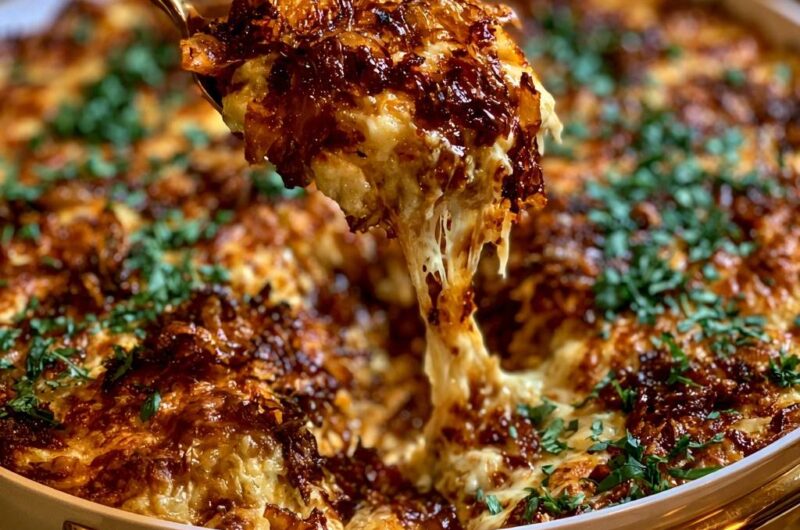
French Onion Cheesy Potato Bake
Course: Side DishCuisine: French and American FusionDifficulty: easy8
servings25
minutes1
hour60
Minutes410
kcalFrench and American Fusion
Ingredients
3 pounds Yukon Gold potatoes, peeled and sliced into 1/8-inch rounds
4 large yellow onions, thinly sliced
6 tablespoons unsalted butter, divided
1 tablespoon olive oil
2 cups shredded Gruyère cheese
1 cup shredded low-moisture mozzarella cheese
1.5 cups heavy cream
1/2 cup beef bone broth (for deep umami flavor)
4 cloves garlic, minced
1 tablespoon fresh thyme leaves (or 1 tsp dried)
1.5 teaspoons kosher salt
1 teaspoon cracked black pepper
1/2 cup fresh parsley, finely chopped
Directions
- Preheat and Prep: Preheat your oven to 400°F (200°C). Generously grease a large oven-safe skillet or heavy-bottomed baking dish with 1 tablespoon of butter.
- The Anti-Soggy Par-Roast: Arrange the sliced potatoes in the prepared dish. Drizzle with olive oil and toss with 1/2 teaspoon of salt. Spread them out as evenly as possible. Roast for 20 minutes. This step is crucial; it seals the surface of the potato and prevents them from releasing water into the sauce later.
- Caramelize the Onions: While potatoes roast, melt 4 tablespoons of butter in a large pan over medium heat. Add the onions and a pinch of salt. Cook, stirring occasionally, for 25-30 minutes until they are a deep mahogany brown. If the pan gets too dry, add a splash of water to deglaze.
- Prepare the Infused Cream: In a small saucepan, combine the heavy cream, beef broth, minced garlic, thyme, remaining salt, and pepper. Simmer over medium-low heat for 5-8 minutes until slightly reduced and thickened.
- Layering: Remove the potatoes from the oven. Reduce oven temperature to 375°F. Spread half of the caramelized onions directly over the par-roasted potatoes. Sprinkle with 1 cup of the Gruyère and 1/2 cup of the mozzarella.
- The Final Bake: Pour the warm cream mixture evenly over the potatoes. Top with the remaining caramelized onions and the remaining cheese, ensuring the onions are spread to the edges to create the dark, crispy crust seen in the image.
- Crisp and Melt: Return to the oven and bake for 30-35 minutes. If the cheese isn’t deeply browned and bubbling like the photo, turn on the broiler for the last 2-3 minutes, watching closely to prevent burning.
- The Set: Remove from the oven. Crucial Step: Let the dish rest for 15 minutes. This allows the starches to bind with the cream, ensuring a clean scoop and a rich, non-watery texture. Garnish heavily with fresh parsley before serving.
Notes
- Letting the dish rest for 15 minutes after baking is crucial for the starches to bind with the cream, ensuring a rich and non-watery texture.