Mastering the Loaded Broccoli and Ham Breakfast Bake
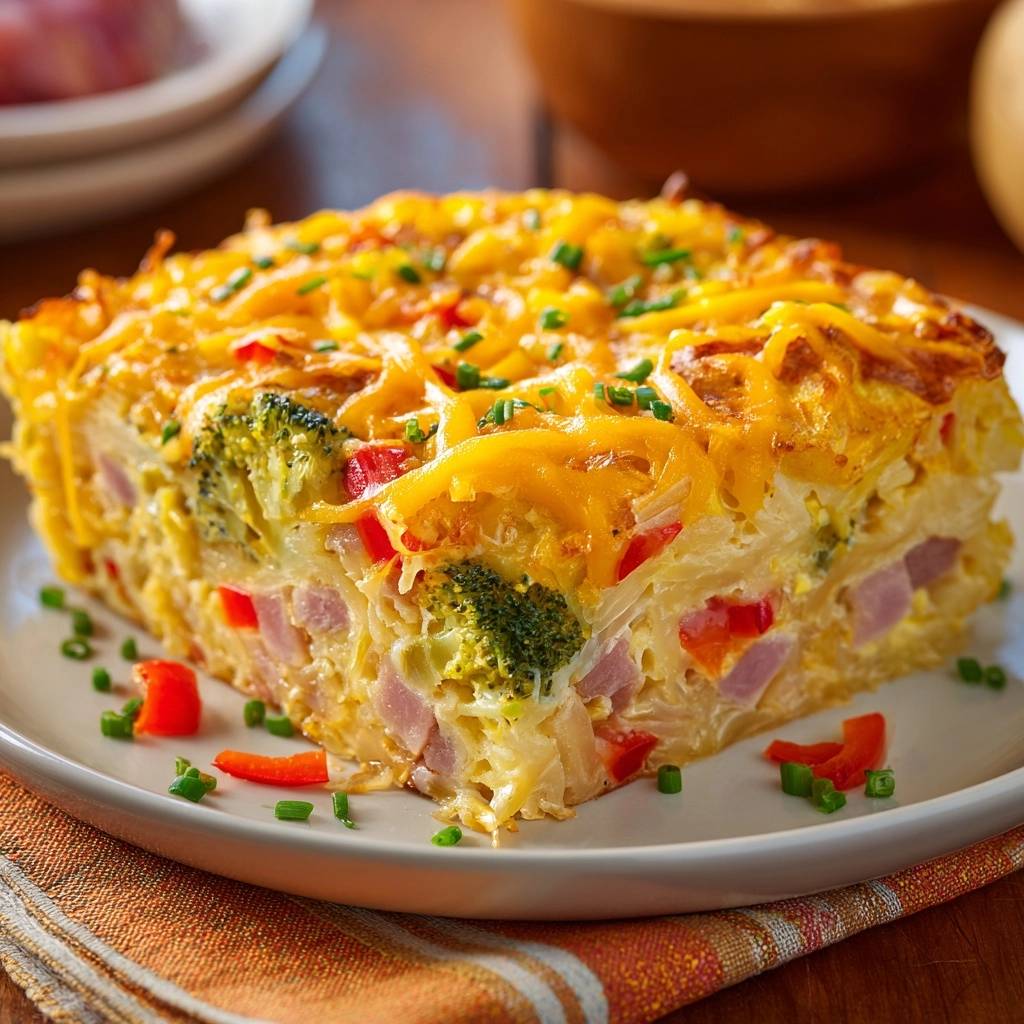
Most breakfast casseroles suffer from a tragic flaw: the dreaded soggy bottom. You know the one—where the potatoes turn into a gray, gummy mash and the eggs sit in a pool of vegetable water. It’s a disappointing start to a morning, especially when you’ve spent time prepping for a crowd. This Loaded Broccoli and Ham Breakfast Bake changes the game by treating the ingredients with the respect they deserve.
The secret to a firm, sliceable bake lies in moisture management. By using a dual-roasting technique, we transform the hash browns into a structural crust and dehydrate the vegetables before they ever touch the eggs. This ensures every bite is fluffy, rich, and holds its shape perfectly on a plate. Whether you’re hosting a holiday brunch or meal-prepping for a busy week, this method delivers a professional-grade result every single time.
Expertise in the kitchen often comes down to understanding how water behaves during the cooking process. To get that perfect “anti-soggy” finish, you must squeeze your thawed hash browns in a clean kitchen towel until they are bone-dry. Removing that excess starch-water is the only way to get the potatoes to crisp up into a golden foundation rather than steaming into a mushy layer.
The Science of Preventing a Watery Breakfast Bake
Cooking eggs is essentially a lesson in protein bonding. When eggs heat up, the proteins uncoil and then mesh together to form a solid structure. However, if your vegetables release water while the eggs are setting, that liquid gets trapped between the protein bonds. This results in a “weeping” casserole that feels spongy and looks unappealing on the plate.
Broccoli and bell peppers are notorious “water bombs” in the oven. If you toss them in raw, they release their internal moisture directly into the egg custard as they soften. By roasting them first, we evaporate that water and concentrate their natural sugars. This not only protects the integrity of the eggs but also intensifies the savory flavor of the entire dish.
Furthermore, the choice of dairy plays a massive role in the final texture. While milk is fine for a scramble, heavy cream provides the fat content necessary for a dense, velvety set. The fat in the cream coats the egg proteins, preventing them from over-tightening and becoming rubbery. This creates a custard-like consistency that remains stable even after the bake cools slightly.
Why Thawed Hash Browns Require Mechanical Drying
Frozen hash browns are convenient, but they are packed with ice crystals that turn into a puddle as they thaw. Even if they look dry on the surface, the cellular structure of the potato holds onto a surprising amount of moisture. If you skip the drying step, that water will boil underneath the eggs, creating a soggy, flavorless base.
To fix this, place your thawed potatoes in the center of a lint-free kitchen towel, gather the corners, and twist with all your might. You’ll be shocked at how much liquid drains out. This mechanical drying allows the heat of the oven to immediately begin the browning process, turning the potatoes into a crisp, hash-brown crust that can support the weight of the toppings.
Essential Components for the Loaded Broccoli and Ham Breakfast Bake
Quality ingredients make a world of difference when the flavor profile is this focused. Sharp cheddar is the MVP here because it offers a punchy, bold flavor without the high moisture content of younger cheeses. When it melts, it creates a beautiful lacy crust on top and a gooey, savory interior that binds the ham and broccoli together.
The ham provides the essential salty backbone of the dish. Using a pre-cooked, high-quality ham steak or leftover holiday ham works best. The smokiness of the meat acts as a counterpoint to the earthy, slightly charred broccoli. For the best results, ensure your eggs are at room temperature before whisking; they’ll emulsify much more smoothly with the heavy cream for a uniform texture.
If you’re swapping ingredients in a breakfast bake, this same method works well for a sausage and broccoli strata.
Selecting the Right Broccoli and Peppers
Fresh broccoli is always the winner for this recipe. Frozen broccoli tends to be blanched before freezing, which makes it much softer and more prone to mushiness. When prepping the fresh florets, keep them small—about the size of a nickel. This ensures they roast quickly and distribute evenly so you get a bit of green in every single forkful.
Red bell peppers add a necessary pop of color and a subtle sweetness that balances the savory elements. While green peppers are fine, the ripeness of the red variety provides a better flavor contrast to the salty ham. Make sure to dice them uniformly so they roast at the same rate as the broccoli florets.
The Role of Heavy Cream in Structural Integrity
If you’ve ever had a breakfast bake that felt “watery” even though the vegetables were cooked, the culprit was likely low-fat milk. Skim or 1% milk lacks the fat solids needed to create a sturdy custard. Heavy cream acts as a stabilizer, giving the bake a rich mouthfeel and a structure that resists collapsing once you pull it out of the oven.
This fat content also helps the bake reheat beautifully. Low-fat egg dishes often become tough and “squeaky” when microwaved the next day. The heavy cream keeps the proteins supple, meaning your leftovers will taste just as luxurious as the first slice you took from the hot pan.
Step-by-Step: Building the Perfect Potato Crust
The first phase of cooking happens at 400°F, and it is the most important step for texture. After you’ve squeezed the hash browns dry, spread them into your greased 9×13 dish. Don’t just sprinkle them in; use the back of a large spoon or your palms to press them firmly into the bottom. This creates a compacted layer that mimics a traditional pie crust.
Bake this potato layer on its own for 15 minutes. You are looking for the edges to start turning a light golden brown and for the surface to feel dry to the touch. This par-baking step seals the potatoes so that when you pour the liquid eggs over them later, the eggs stay on top rather than soaking into the potatoes and turning them into a mushy mess.
While the potatoes are in the oven, keep an eye on them. If you see any spots browning too quickly, rotate the pan. The goal is a consistent, firm foundation. Once this “crust” is set, it acts as a thermal barrier, helping the rest of the casserole cook evenly from the bottom up.
The Moisture-Lock: Roasting Vegetables for Maximum Flavor
While the potatoes are getting their head start, your broccoli and peppers should be on a separate sheet pan. Roasting them at 400°F for about 10 minutes does more than just cook them; it caramelizes the edges. This “Maillard reaction” adds a nutty, savory depth that you simply cannot get from steaming or sautéing.
Using parchment paper on your baking sheet is a pro move here. It prevents the peppers from sticking and makes it incredibly easy to slide the roasted vegetables into the casserole dish later. You’ll know they are ready when the broccoli tips look slightly charred and the peppers have softened but still retain a bit of their vibrant color.
If you love the salty ham and broccoli combination here, try this cheesy ham broccoli potato breakfast bake for a heartier version.
Assembling the Layers for Even Distribution
Once your base and vegetables are prepped, assembly is all about the layers. Start by scattering the roasted broccoli, peppers, and cubed ham over the potato crust. Try to spread them as evenly as possible so the dish looks uniform. Then, add the first 1.5 cups of cheddar cheese directly over the fillings.
Pour the egg and cream mixture slowly. If you dump it in all at once, you might displace your carefully layered ingredients. After pouring, take a fork and gently poke through the layers. This allows the egg mixture to seep into every nook and cranny, ensuring the entire bake is bound together without any dry air pockets in the middle.
The Final Bake: Achieving the Golden-Brown Finish
Now, drop the oven temperature to 350°F. This lower heat is crucial. If you keep it at 400°F, the outside of the eggs will overcook and turn rubbery before the center has a chance to set. The final 35 to 40 minutes is where the magic happens as the cheese melts into a bubbly, golden crust.
Use the “jiggle test” to check for doneness. Gently shake the pan; the edges should be firm, and the center should have a very slight, stable wobble—not a liquid splash. If the top is browning too fast but the center is still loose, you can loosely tent the dish with foil for the last 5 minutes to protect the cheese.
The Critical Resting Period for Clean Slices
I know it’s tempting to dive in the second the timer goes off, but patience is a virtue here. Letting the bake rest for 10 to 15 minutes is a non-negotiable step. During this time, carry-over cooking finishes the center, and the proteins “set” firmly. If you cut it too early, the steam will escape, and the slice will likely fall apart.
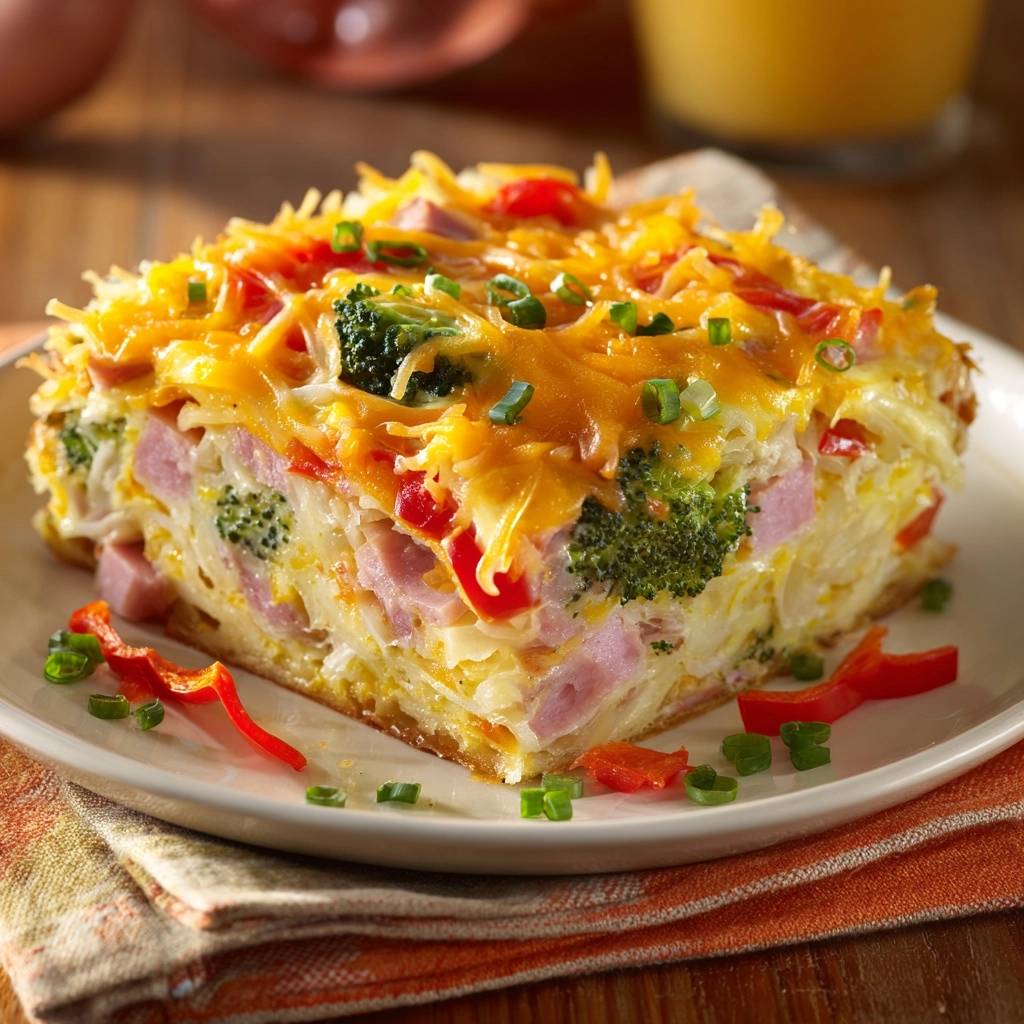
As the dish rests, you’ll notice it settles slightly and the edges pull away from the sides of the pan. This is exactly what you want. It makes slicing much easier and ensures that each square comes out with those beautiful, distinct layers of potato, egg, and colorful vegetables intact.
Flavor Variations and Ingredient Swaps
This recipe is a fantastic canvas for whatever you have in the fridge. If you aren’t a fan of ham, smoked turkey or even a well-seasoned beef sausage works beautifully. Just make sure any meat you add is fully cooked and drained of excess fat before it goes into the egg mixture.
For a different base, you can swap the white hash browns for shredded sweet potatoes. Just be aware that sweet potatoes have a higher sugar content and may brown faster, so keep an eye on them during the par-baking phase. You can also add a tablespoon of sun-dried tomatoes or a pinch of red pepper flakes if you want an extra kick of umami or heat.
Make-Ahead Strategies and Storage Logistics
This is a meal-prepper’s dream. You can roast the vegetables and par-bake the potato crust the night before. Store them separately in the fridge, then simply assemble and pour the egg mixture over them in the morning. This cuts your “day-of” prep time down to almost nothing.
What to Serve Alongside
If you are making that broccoli bake for brunch, a sweet bread on the side rounds out the meal nicely. Both of these quick loaves use a simple glaze and bright citrus notes that contrast with the hearty, cheesy bake.
- For a tart-sweet counterpart, try the
Get the full recipe in your inbox in seconds – perfect for shopping and cooking.
Broccoli Ham Bake
Course: BreakfastCuisine: AmericanDifficulty: medium8
servings15
minutes55
minutes340
kcal70
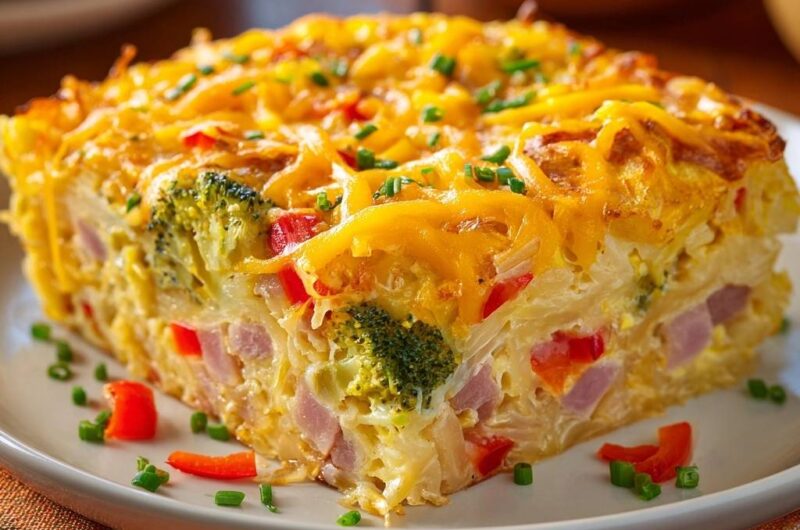
MinutesThis hearty breakfast bake combines ham, broccoli, and cheddar cheese over a crispy hash brown base. By pre-baking the potatoes and roasting the vegetables, this recipe eliminates the common problem of a watery breakfast casserole.
Ingredients
2 cups fresh broccoli florets, chopped into bite-sized pieces
1 large red bell pepper, diced
1.5 cups cooked ham, cubed
4 cups frozen shredded hash browns, thawed and squeezed dry in a kitchen towel
2.5 cups sharp cheddar cheese, shredded (divided)
10 large eggs
3/4 cup heavy cream (for a denser, non-watery set)
1/2 teaspoon garlic powder
1/2 teaspoon onion powder
1/2 teaspoon salt
1/2 teaspoon black pepper
2 tablespoons fresh chives, minced
Directions
- Preheat your oven to 400°F (200°C). Generously grease a 9×13 inch ceramic or glass baking dish.
- The Crisp Base Step: Spread the thawed and towel-dried hash browns into the bottom of the prepared baking dish. Press them down firmly. Bake the hash browns alone for 15 minutes. This creates a “crust” and prevents the potatoes from becoming a gummy mass once the eggs are added.
- The Moisture-Lock Step: While the potatoes bake, spread the chopped broccoli and diced red peppers on a separate parchment-lined baking sheet. Roast them in the oven alongside the potatoes for the final 10 minutes of the potato cook time. This evaporates the excess water that causes sogginess.
- Remove both pans from the oven. Lower the oven temperature to 350°F (175°C).
- In a large mixing bowl, whisk together the 10 eggs, heavy cream, garlic powder, onion powder, salt, and pepper until fully combined and frothy.
- Layer the roasted broccoli, roasted peppers, and cubed ham over the par-baked hash brown base.
- Sprinkle 1.5 cups of the shredded cheddar cheese evenly over the meat and vegetables.
- Pour the egg mixture slowly over the entire dish. Use a fork to gently poke the ingredients, allowing the egg to seep all the way to the bottom crust.
- Top with the remaining 1 cup of cheese.
- Bake for 35 to 40 minutes, or until the center is set (it should not jiggle when shaken) and the cheese on top has formed a deep golden-brown crust.
- Let the bake rest for 10 to 15 minutes before slicing. This is critical for the proteins to set so the slices come out clean. Garnish with fresh chives and serve.
Notes
- Letting the bake rest for 10 to 15 minutes after cooking is critical for the proteins to set so the slices come out clean and hold their shape.