Mastering Southern Style Baked Mac and Cheese
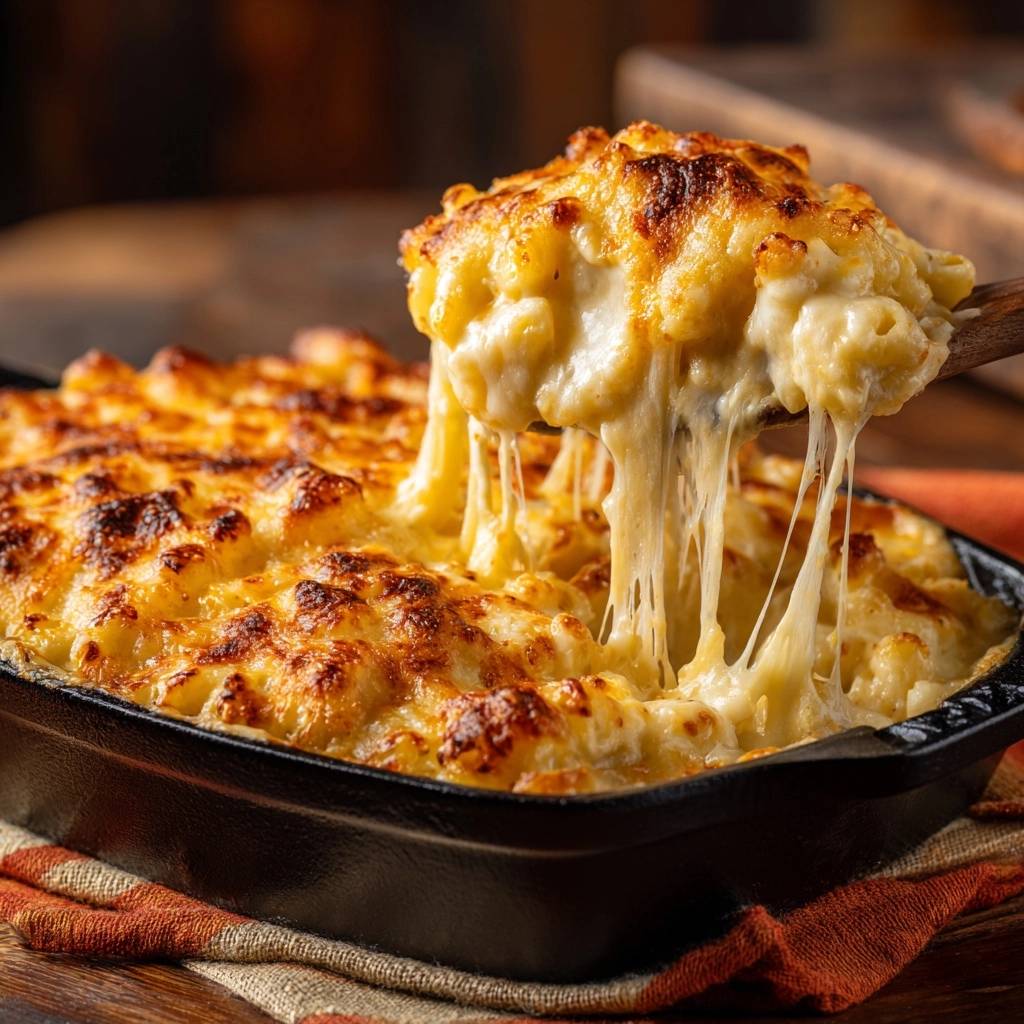
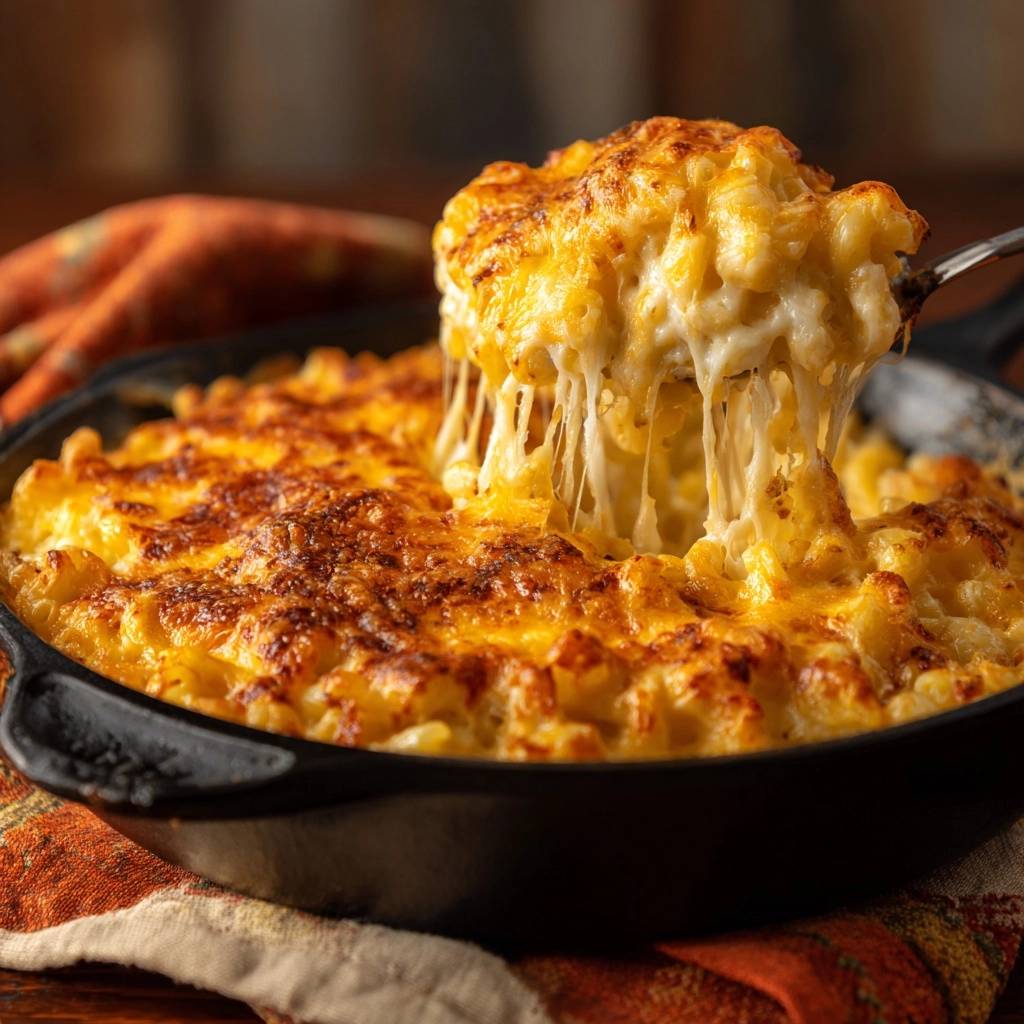
Imagine pulling a heavy cast-iron skillet from the oven, the edges bubbling with golden-brown cheese while the center remains a sea of silky, molten goodness. Southern Style Baked Mac and Cheese isn’t just a side dish; it’s the undisputed centerpiece of the Sunday table and the ultimate soul food staple. While many regions serve a loose, stovetop version, the Southern tradition demands a baked masterpiece that balances a custard-like richness with a distinct, sharp cheese flavor.
However, achieving that perfect consistency is where most home cooks struggle. You’ve likely encountered the “macaroni tragedy” at some point: a dish that looks beautiful on the outside but reveals dry, thirsty noodles or a grainy, broken sauce once you dig in. This recipe bridges the gap between the classic roux-based method and the soul food “custard” style, ensuring you get the structural integrity of a baked dish without sacrificing a drop of creaminess.
If you enjoy building creamy sauces with a roux, this same technique creates the silky base for a starch-stabilized potatoes au gratin.
The secret to avoiding that dreaded gritty texture lies in the temperature of your dairy and the timing of your cheese. By using room-temperature milk and heavy cream, you prevent the thermal shock that often causes a roux to clump. Furthermore, we never add the cheese while the sauce is boiling. This single adjustment ensures the proteins in the cheddar melt into a smooth emulsion rather than seizing into oily lumps.
The Science of a Silky Cheese Sauce
Creating a flawless Southern Style Baked Mac and Cheese requires understanding the chemistry of a Mornay sauce. A Mornay is simply a classic Béchamel—butter and flour cooked into a roux and whisked with milk—that has been enriched with shredded cheese. The challenge is that cheese is an emulsion of fat, water, and protein held together by calcium. When you subject it to the intense heat of an oven, that emulsion wants to break, leaving you with a puddle of oil and rubbery clumps of protein.
To combat this, we use dry mustard powder as a secret weapon. Beyond adding a subtle tang that cuts through the heavy fats, mustard acts as a natural emulsifier. It helps the fats from the butter and cheese stay suspended in the liquid milk, creating a cohesive, velvety texture. Additionally, the starch in the flour coats the cheese proteins, providing a physical barrier that prevents them from tightly bonding and becoming “stringy” or tough during the baking process.
Finally, we must account for carry-over cooking. Pasta is a sponge; it continues to absorb moisture long after it leaves the boiling water. If you cook your macaroni to “al dente” on the stove, it will inevitably turn to mush in the oven. By significantly undercooking the noodles—leaving them with a firm, almost chalky center—they finish their cooking process by absorbing the flavorful fats of the cheese sauce, resulting in a perfectly tender bite that holds its shape.
Why Hand-Grating Cheese is Non-Negotiable
If you want a professional result, you must step away from the bags of pre-shredded cheese. Manufacturers coat shredded cheese in cellulose (wood pulp) or potato starch to prevent the strands from clumping together in the bag. While this is convenient for tacos, it’s a disaster for a smooth sauce. These anti-clumping agents don’t melt; they stay suspended in your sauce, creating a gritty, sandy mouthfeel that no amount of whisking can fix.
Furthermore, block cheese retains more moisture than its pre-shredded counterparts. For this recipe, we use a combination of Sharp White Cheddar for that iconic “bite” and Mozzarella for the ultimate cheese pull. Sharp cheddar has a lower pH and a more complex flavor, but it doesn’t stretch well. By blending it with high-moisture mozzarella, you get the best of both worlds: a deep, savory flavor profile and a gooey, elastic texture that looks incredible on the plate.
Temperature Control: Preventing the Grainy Texture
The most critical moment in this recipe happens when the heat is turned off. Dairy proteins are incredibly sensitive to high temperatures. If you stir your freshly grated cheddar into a boiling roux, the temperature (212°F) will cause the cheese proteins to seize and squeeze out their fats. This results in a sauce that looks curdled and thin rather than glossy and thick.
Instead, we remove the pan from the burner entirely before adding the cheese. The residual heat of the thickened milk and cream is more than enough to melt the cheddar and mozzarella gently. You are looking for a temperature around 175°F. At this heat, the cheese relaxes into the sauce, creating a homogenous, mirror-like finish. If the sauce looks shiny and coats your spoon like heavy paint, you’ve nailed the emulsion.
Essential Components for Southern Style Baked Mac and Cheese
Quality ingredients are the foundation of this dish. We use a blend of whole milk and heavy cream to achieve a specific fat content that mimics the richness of a traditional Southern custard. Whole milk provides the volume and hydration the noodles need, while the heavy cream adds a luxurious mouthfeel that prevents the sauce from becoming watery. Using skim or 1% milk will result in a flat flavor and a sauce that lacks the necessary body to coat the macaroni.
The choice of butter also matters. I always recommend unsalted butter because it gives you total control over the seasoning. Different brands of salted butter vary wildly in their sodium content, and between the pasta water and the cheese, it’s easy to over-salt this dish. By starting with unsalted butter, you can precisely tune the salt levels to highlight the nuttiness of the Gruyère and the sharpness of the cheddar without it becoming overwhelming.
Lastly, the elbow macaroni shape is a classic for a reason. The hollow tubes act as little pipes that trap the cheese sauce inside, ensuring every mouthful is bursting with flavor. While you can use shells or cavatappi, larger shapes often require more sauce to fill their cavities, which can throw off the ratio and lead to a drier finished product. Stick to the standard elbow for that nostalgic, uniform texture.
The Spice Profile: Beyond Just Salt
A great Southern mac isn’t just salty; it’s aromatic. We use garlic and onion powders to provide a savory “base note” that lingers on the palate. Smoked paprika is another essential addition; it lends a beautiful sunset hue to the sauce and a very faint woodsy aroma that mimics the flavor of a slow-cooked meal. While some chefs prefer white pepper to keep the sauce pristine, I love the visible flecks and the sharp “kick” of freshly cracked black pepper to balance the richness of the cream.
Phase One: Preparing the Pasta and Roux
Start by boiling your macaroni in a large pot of water that is “salty like the sea.” This is your only chance to season the pasta itself. Set your timer for exactly 3 minutes less than the lowest time on the package. When you drain the noodles, they should feel slightly too firm to eat. This is intentional! They will soften perfectly as they bathe in the cheese sauce during the 30-minute bake.
While the pasta drains, melt your butter in a heavy-bottomed pot. Whisk in the flour to create your roux. You aren’t looking for a dark, nutty roux like you’d use for gumbo; you want a “blonde roux.” Cook it for about 2 minutes until it smells slightly like toasted bread and loses that raw, pasty scent. Keep the whisk moving constantly to ensure the flour doesn’t scorch on the bottom of the pan.
Phase Two: Building the Mornay and Assembly
Slowly stream in your room-temperature milk and cream. I like to add about a half-cup at a time, whisking vigorously until the mixture is smooth before adding more. This gradual tempering prevents lumps from forming. Once all the liquid is in, simmer the sauce for a few minutes. You’ll know it’s ready when it reaches the “nappe” stage—dip a spoon in, and the sauce should coat the back thickly enough that you can draw a clean line through it with your finger.
After removing the sauce from the heat and stirring in your cheese, it’s time to assemble. In a buttered cast-iron skillet, layer half of the cheesy macaroni. Sprinkle a generous layer of mozzarella and cheddar right in the middle. This “hidden” layer of cheese is the secret to those long, dramatic cheese pulls. Top with the remaining macaroni and the rest of the cheddar, ensuring every corner is covered to prevent the noodles from drying out.
Phase Three: The Baking and Broiling Strategy
Bake the dish at 375°F. This temperature is high enough to create those coveted crispy, browned edges in the cast-iron skillet but low enough that the interior doesn’t boil and break the sauce. Cast iron is the superior vessel here because it retains heat beautifully and creates a crust on the bottom and sides of the mac that a glass dish simply can’t replicate.
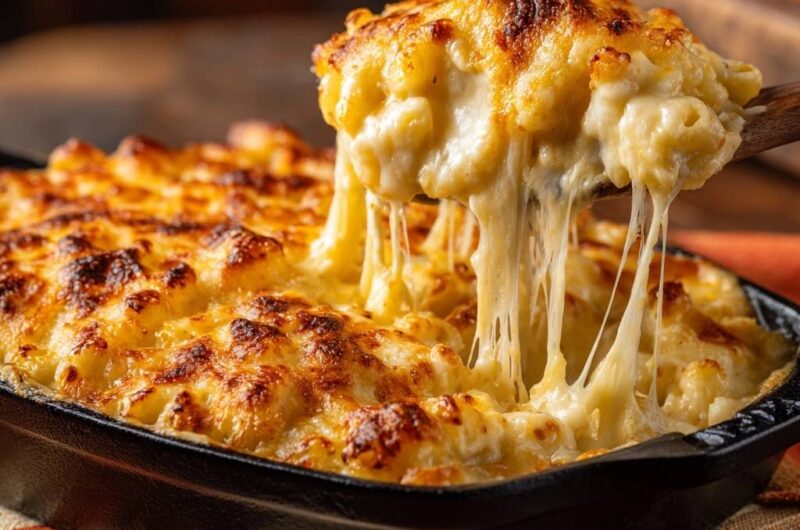
During the last two minutes of baking, keep a close eye on the oven. If the top isn’t as brown as you’d like, switch to the broiler. You are looking for “leopard spotting”—dark, caramelized bubbles of cheese that provide a bitter contrast to the creamy interior. Once you pull it out, let it rest for at least 5 to 10 minutes. This resting period is vital; it allows the sauce to set up so it clings to the noodles rather than running to the bottom of the plate.
Troubleshooting Common Macaroni and Cheese Failures
If you find an oily layer on top of your finished dish, your sauce likely broke because the oven was too hot or you used pre-shredded cheese. To fix this next time, ensure your oven is calibrated and always grate your own blocks. If the noodles are mushy, you simply boiled them too long. Remember, they should feel “undercooked” before they go into the oven to account for the moisture they will absorb.
Bland flavor is usually a result of under-salting the pasta water or the roux. Don’t be afraid to taste your cheese sauce before you add the noodles! It should taste slightly “over-seasoned” at that stage because the unseasoned pasta will mellow out the flavors once combined. If it tastes a bit flat, add an extra pinch of salt or a dash more dry mustard to brighten the profile.
Make-Ahead Strategies and Storage Logistics
You can absolutely prep this dish 24 hours in advance, which is a lifesaver for holiday hosting. The trick is to make about 25% more cheese sauce than the recipe calls for. As the dish sits in the fridge, the noodles will drink up the sauce. By adding that extra liquid, you ensure it stays creamy when it finally hits the oven. Store it tightly covered with foil in the refrigerator, but let it sit on the counter for 30 minutes to take the chill off before baking.
For leftovers, avoid the microwave if possible, as it tends to make the cheese oily and the noodles rubbery. Instead, place a portion in a small oven-safe dish, add a splash of whole milk, and cover it with foil. Reheat at 325°F until warmed through. The milk will steam the pasta and re-emulsify the sauce, restoring that original velvety texture. This dish will stay fresh in an airtight container for up to 4 days, though it rarely lasts that long!
Optimal Pairings for a Southern Feast
Because this Southern Style Baked Mac and Cheese is incredibly rich and fatty, it pairs best with sides that offer acidity or bitterness to cleanse the palate. Braised collard greens with a splash of apple cider vinegar are a traditional and perfect match. The vinegar cuts right through the heavy cream and cheddar, making every bite of mac and cheese feel like the first one.
For a complete meal, serve this alongside roasted root vegetables or a bright, vinegar-based coleslaw. If you’re looking for a beverage, a sparkling cranberry juice or a tart lemonade provides the necessary acidity to balance the meal. These bright, sharp flavors prevent the “food coma” often associated with heavy soul food and keep the meal feeling balanced and vibrant.
Expert Tips for Professional Results
Can I use gluten-free flour for the roux?
Yes, you can substitute a high-quality 1:1 gluten-free all-purpose flour blend for the roux. However, keep in mind that gluten-free starches can sometimes make the sauce feel slightly more “stretchy” or “tacky.” To counter this, ensure you whisk the milk in very slowly and consider adding an extra half-cup of liquid to keep the consistency fluid, as gluten-free flours tend to thicken more aggressively over time.
Why is my cheese sauce stringy instead of smooth?
Stringy sauce is usually caused by using a cheese with too high a protein-to-fat ratio or by overheating the cheese. If you use only very aged, hard cheeses like Parmesan or extra-sharp aged cheddar, they don’t have enough moisture to melt smoothly. Always balance those “flavor” cheeses with a “melter” like mozzarella or Monterey Jack. Also, remember to stir the cheese in off the heat to prevent the proteins from tightening into strings.
Is Gruyère worth the extra cost?
While you can make a delicious mac with just cheddar and mozzarella, Gruyère adds a sophisticated, nutty depth that elevates the dish from “good” to “gourmet.” It has incredible melting properties and a complex flavor that bridges the gap between the sharp cheddar and the mild mozzarella. If it’s not in the budget, you can substitute it with Swiss or Fontina, but Gruyère is truly the gold standard for a high-end baked mac.
How do I scale this recipe for a large crowd?
This recipe scales linearly, but the cooking vessel is key. If you are doubling the recipe, use two separate cast-iron skillets or a very large, deep hotel pan. Avoid piling the macaroni too deep in a single dish, or the center won’t heat through before the top burns. If you are cooking for a crowd, increase the baking time by about 10 minutes and use a foil tent for the first half of the bake to ensure the interior is piping hot without drying out the crust.
Can I freeze baked mac and cheese?
You can freeze it, but be aware that the texture of the sauce may change slightly upon thawing. To freeze, assemble the dish but do not bake it. Wrap it tightly in two layers of plastic wrap and one layer of heavy-duty foil. It will keep for up to 2 months. Thaw it completely in the refrigerator for 24 hours before baking. You may need to add a few tablespoons of milk to the top before it goes into the oven to help restore the creaminess.
Baked Mac and Cheese
Course: Main CourseCuisine: AmericanDifficulty: medium8
servings15
minutes30
minutes510
kcal45
MinutesThis recipe solves the common problem of oily or dry baked pasta by using a smooth roux, room temperature dairy, and hand-grated cheeses. By undercooking the pasta and removing the sauce from heat before adding cheese, you achieve a perfect cheese pull and a rich, velvety texture.
Ingredients
1 pound elbow macaroni
4 cups sharp white cheddar cheese, freshly grated from a block
2 cups mozzarella cheese, freshly grated (for the ultimate cheese pull)
1/2 cup Gruyère cheese, freshly grated (optional, for depth)
4 tablespoons unsalted butter
1/4 cup all-purpose flour
3 cups whole milk, room temperature
1 cup heavy cream
1 teaspoon garlic powder
1 teaspoon onion powder
1/2 teaspoon smoked paprika
1/2 teaspoon dry mustard powder (prevents sauce separation)
Salt and black pepper to taste
Directions
- Preheat your oven to 375°F (190°C). Generously grease a large cast-iron skillet or deep baking dish with butter.
- Boil the macaroni in heavily salted water for 2 to 3 minutes less than the package directions for al dente. The pasta should still have a firm “bite” in the center to prevent it from becoming mushy while baking. Drain and set aside.
- Grate all cheeses by hand from blocks. Avoid pre-shredded bagged cheese, as the cellulose coating prevents a smooth melt and creates a grainy texture.
- In a large saucepan or Dutch oven, melt the butter over medium heat. Whisk in the flour and cook for 1-2 minutes until fragrant and pale golden to remove the raw flour taste.
- Slowly pour in the milk and heavy cream a half-cup at a time, whisking constantly to ensure a smooth roux. Add the garlic powder, onion powder, smoked paprika, and dry mustard. Simmer for 3-5 minutes until the sauce is thick enough to coat the back of a spoon.
- Remove the pan from the heat entirely. This is critical: adding cheese to boiling liquid causes the proteins to seize and become grainy. Stir in 3 cups of the white cheddar and 1 cup of the mozzarella until completely melted and glossy. Taste and adjust salt and pepper.
- Fold the undercooked pasta into the cheese sauce until every noodle is submerged.
- Pour half of the mac and cheese into the prepared cast-iron skillet. Sprinkle with the remaining mozzarella and half of the remaining cheddar. Top with the rest of the pasta mixture and the final layer of cheddar.
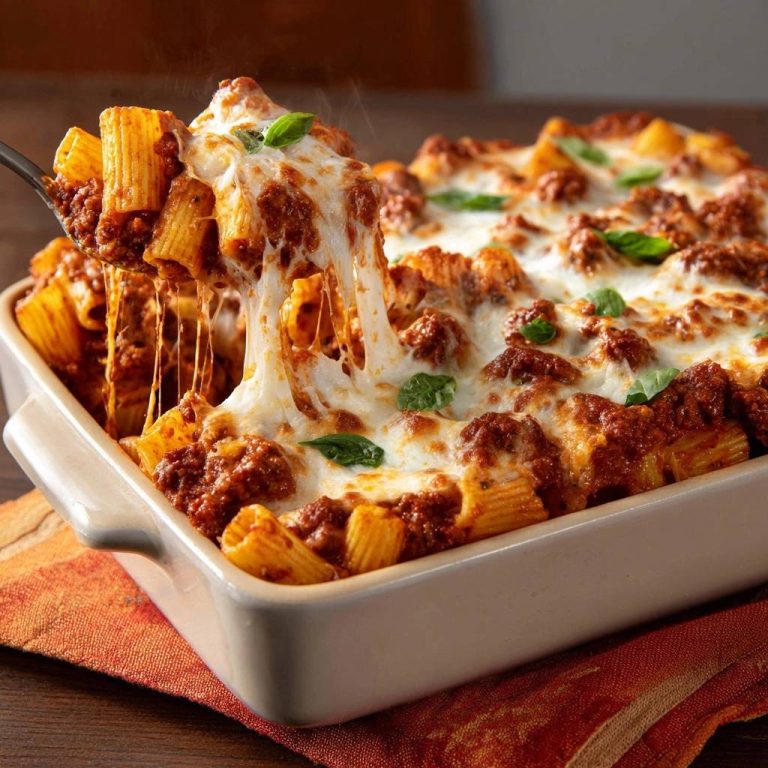
- Bake for 25 to 30 minutes. If the top isn’t deeply golden and bubbling like the image, turn the broiler on for the last 2 minutes, watching closely to prevent burning.
- Let the dish rest for 5-10 minutes before serving. This allows the sauce to thicken slightly and ensures the perfect creamy consistency shown in the photo.
Notes
- Always grate cheese from a block to avoid cellulose coating found in bagged shreds. Ensure the sauce is removed from heat before adding cheese to prevent the proteins from seizing and becoming grainy.