Mastering the Loaded Creamy Potato Salad
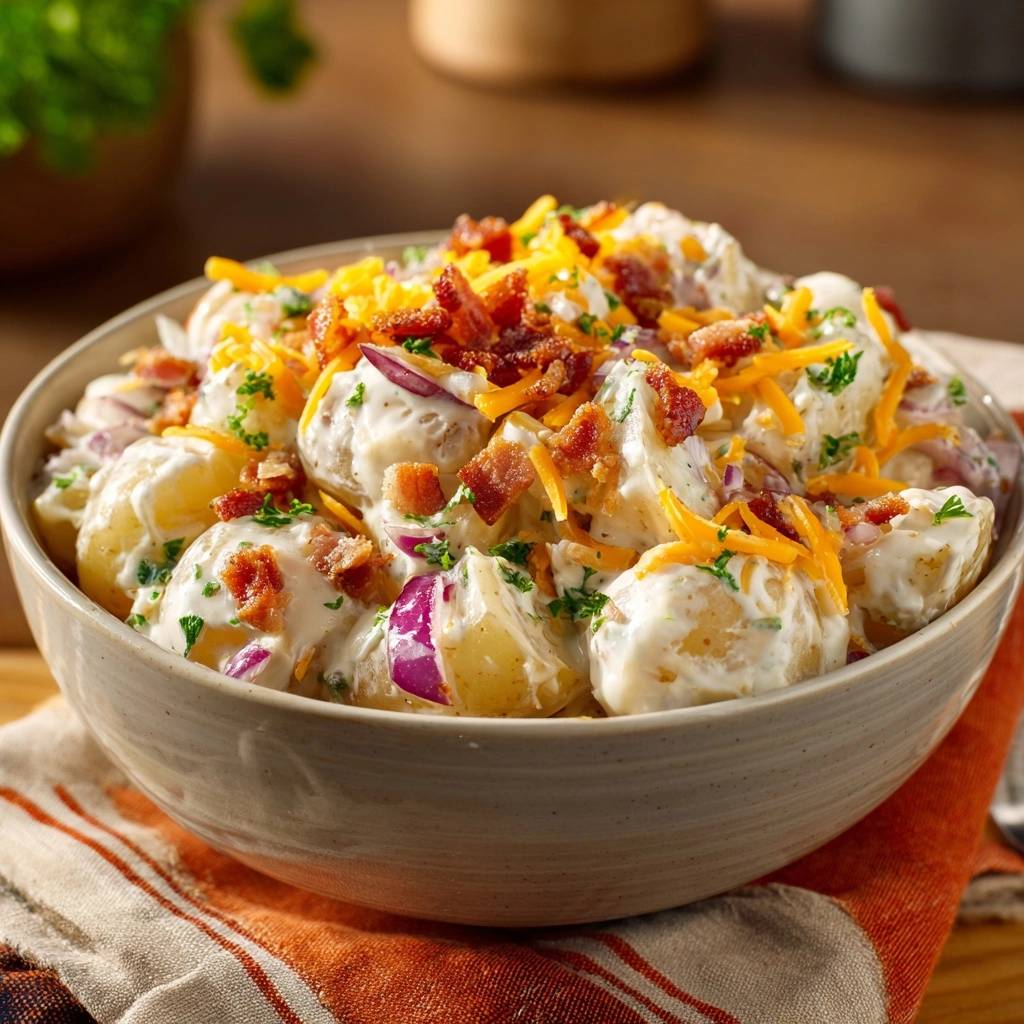
We have all been there. You spend an hour prepping a beautiful side dish, only to watch it transform into a watery, bland mess after sitting in the fridge. It is the ultimate picnic heartbreak when your creamy dressing slides right off the potatoes and pools at the bottom of the bowl.
The secret to a professional-grade Loaded Creamy Potato Salad is not just about the ingredients; it is about the “Anti-Soggy Bottom” philosophy. By mastering temperature control and moisture management, you can ensure every bite is rich, cohesive, and packed with flavor.
I have found that the biggest mistake home cooks make is rushing the cooling process. The secret is the “Flash-Pickle” technique, where you season the potatoes while they are still steaming to lock in flavor from the inside out. This guide will walk you through the science of the perfect potato texture.
The Science of the Anti-Soggy Potato
When you boil a potato, the starch molecules swell and soften. If you toss them into a dressing while they are dripping with water, that moisture gets trapped, eventually leaching out and thinning your sauce. This is why “steam drying” is a non-negotiable step for a premium salad.
By letting the potatoes sit in a colander for exactly five minutes after draining, you allow surface moisture to evaporate. This leaves the exterior slightly tacky, which is the perfect “velcro” for your dressing to cling to. You want that starch to be thirsty, not drowning.
While the potatoes are still off-gassing steam, we hit them with apple cider vinegar. This creates a chemical reaction where the warm starch absorbs the acid instantly. It builds a foundation of tanginess that prevents the final dish from tasting flat or overly heavy.
Essential Components for a Loaded Creamy Potato Salad
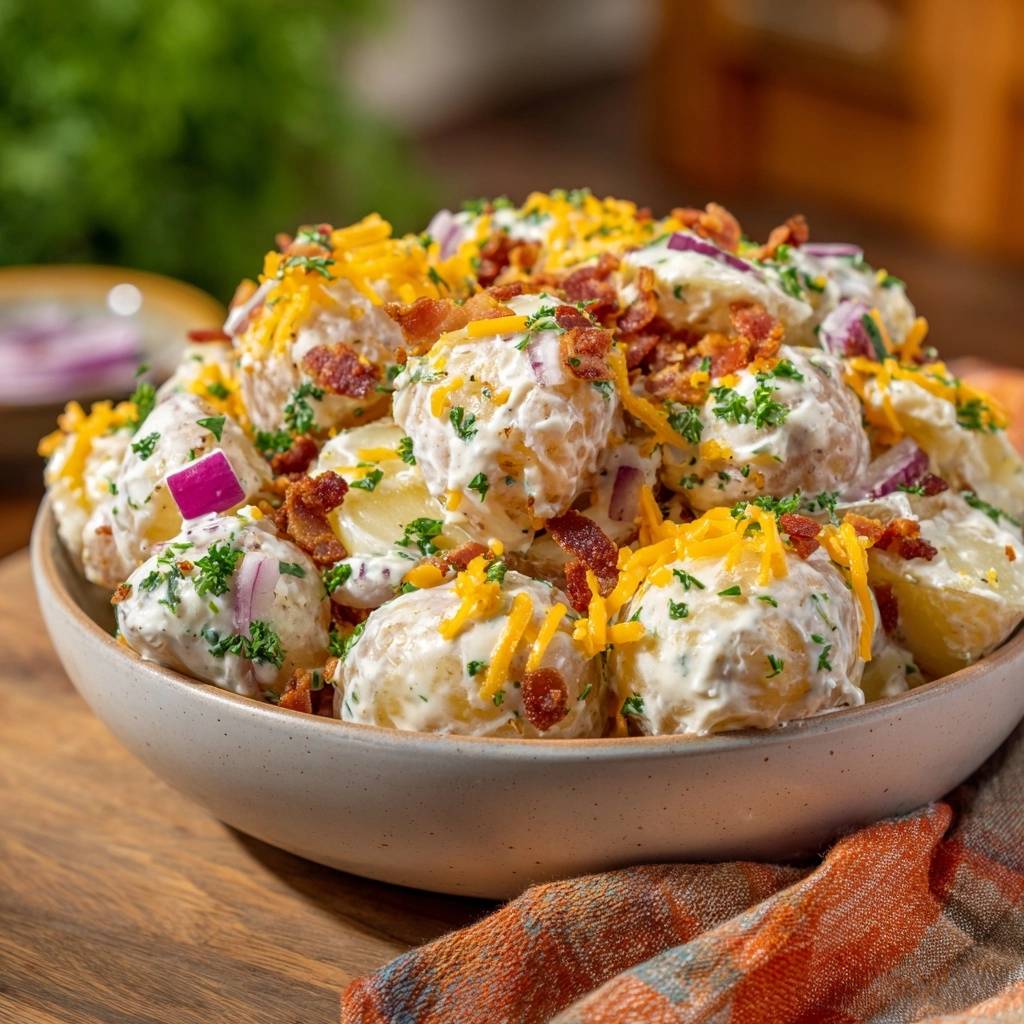
Quality starts with the right spud. For this recipe, Baby Gold potatoes are the undisputed champions. Unlike Russets, which are mealy and fall apart, Golds are waxy and hold their shape even after being tossed with heavy mix-ins.
The dressing relies on a specific balance of fat and acid. Using full-fat mayonnaise and sour cream is vital because “light” versions often contain extra water and thickeners. These fillers tend to break down and weep when they hit the salt in the potatoes, leading to that dreaded soupy texture.
Freshness matters for your aromatics too. While we use powders for the base dressing to keep it smooth, the crunch of a fresh red onion and the brightness of flat-leaf parsley provide the necessary contrast to the rich, smoky bacon and sharp cheddar cheese.
Selecting and Prepping Baby Gold Potatoes
Look for potatoes that are uniform in size, roughly the size of a golf ball. If you find a few giants in the bag, halve them so everything cooks at the same rate. Keeping the skins intact is a pro move because it acts as a barrier, preventing the potato from becoming waterlogged during the boil.
Before cooking, give them a gentle scrub under cold water. You want to remove any dirt without bruising the delicate, thin skins. Since Gold potatoes have such tender skins, there is no need for peeling, which saves you time and adds a lovely rustic texture to the finished salad.
If you’re a fan of combining sweet and savory sides, this crunchy bacon apple red cabbage slaw is a perfect next recipe to try.
The Texture Profile: Bacon, Cheese, and Onions
For the “loaded” element, thick-cut bacon is a must. Thin bacon tends to disappear or get chewy once it hits the creamy dressing. You want crispy, salty nuggets that provide a structural “snap” in every mouthful. Fry it until it is deeply golden, then drain it well on paper towels.
Sharp cheddar is the best choice here because its aggressive flavor cuts through the richness of the mayo. I recommend slicing your red onions into thin half-moons. This shape allows them to drape over the potatoes, ensuring you get a bit of sharp, crisp onion in every single forkful.
Step-by-Step: Achieving the Perfect Emulsion
Creating a stable emulsion is the technical heart of this recipe. It is the difference between a greasy salad and one that is luxuriously creamy. You have to respect the physics of the ingredients to get that “clinging” effect we all crave.
Phase One: The Cold Water Start
Never drop potatoes into boiling water. If you do, the outside will overcook and turn to mush before the center is even soft. Always start with cold, heavily salted water. This ensures the potato heats up evenly from the core to the skin.
As the water comes to a boil, the salt penetrates the potato. This is your only chance to season the actual vegetable. Once they are fork-tender—meaning a knife slides in with zero resistance—they are ready to be drained. Watch for the skins just starting to crack; that is the sign of a perfectly cooked potato.
Phase Two: The Five-Minute Steam Dry
Once you’ve drained the pot, let the potatoes sit in the colander. You will see steam billowing off them; this is a good thing! That is excess water leaving the building. If you skip this, that water stays in the salad and thins out your beautiful dressing.
The potatoes should look matte and feel slightly sticky to the touch after five minutes. This texture is exactly what you want. It means the surface starches are ready to bond with your flavorings rather than repelling them with a layer of water.
Phase Three: The Vinegar Infusion
While the potatoes are still hot, drizzle them with the apple cider vinegar. You will notice the potatoes soak it up almost instantly. This “primer” layer seasons the potato deeply and creates a bridge between the vegetable and the creamy dressing you will add later.
However, you must let them cool to room temperature now. If you add the mayonnaise while the potatoes are hot, the heat will melt the fat in the mayo. This causes the emulsion to “break,” leaving you with a greasy, oily mess instead of a creamy coating.
Mixing the Signature Creamy Dressing
In a separate bowl, whisk together your mayo, sour cream, and spices. We use garlic and onion powder here for a very specific reason. Fresh garlic can be too sharp and “hot” in a cold salad, and fresh onions can release juice that thins the sauce.
If you prefer a pasta base over potatoes, this creamy, never-gummy Classic Ham & Pea Pasta Salad follows the same rich, herb-flecked approach.
The powders provide a consistent, savory backbone without adding extra moisture. Your dressing should be thick, almost like a Greek yogurt. If it feels too thin, add an extra tablespoon of sour cream. It needs to be sturdy enough to hold up the heavy bacon and cheese.
Assembly Tactics to Prevent Mashing
When it is time to combine everything, put down the metal spoon. A silicone spatula is your best friend here because it allows you to “fold” the ingredients. You want to gently lift the potatoes from the bottom and turn them over into the dressing.
Use the “Layered Loading” method. Fold in half of your bacon and cheese first to distribute the flavor. Then, once the salad is in the serving bowl, top it with the remaining half. This keeps the mix-ins from getting buried and ensures the dish looks as good as it tastes.
Troubleshooting Common Potato Salad Failures
If you find your salad looks greasy, it usually means the potatoes were too warm when mixed. You can sometimes save this by chilling the bowl immediately and then folding in a tablespoon of cold sour cream once it has cooled down to help re-emulsify the fats.
If the salad seems too dry after chilling, don’t panic. Potatoes are like sponges and will continue to absorb moisture. Simply stir in a small dollop of sour cream or a teaspoon of milk right before serving to loosen the texture and restore that glossy sheen.
Did you overcook the potatoes? If they are falling apart, embrace it! Turn it into a “Smashed” Loaded Potato Salad. Gently crush the potatoes further and mix as usual. It will have a texture closer to a chunky mashed potato, which is actually a popular regional style.
Flavor Variations and Ingredient Swaps
While this version is a classic, you can easily tweak the profile. If you want a “Jalapeño Popper” vibe, swap the parsley for chopped cilantro and add a handful of pickled jalapeños. The acidity of the peppers works beautifully with the creamy base.
For a fresher, garden-style twist, try using fresh dill or chives instead of parsley. Chives add a mild onion flavor that complements the red onion wedges perfectly. Just make sure you keep the bacon and cheddar, as they are the soul of the “loaded” identity.
Optimal Storage and Make-Ahead Strategies
This salad actually tastes better after an hour in the fridge. This “Flavor Marriage” period allows the salt to draw out the sweetness of the onions and lets the spices permeate the dressing. The dressing also sets during this time, becoming thick and velvety.
You can make this up to 24 hours in advance. In fact, the texture is often best on day two. However, do not freeze this dish. The emulsion of mayonnaise and sour cream will break upon thawing, and the potatoes will turn grainy and unappealing.
What to Serve with This Potato Salad
If you’re looking for something to round out your meal, these two recipes share the same creamy, savory vibe as the potato salad.
- For a sweet-and-smoky bite, try these Brown Sugar Smoked Turkey Wrapped Smokies — the caramelized coating pairs nicely with the creamy potato salad.
- For extra crunch and cheese, the Skillet Smoked Turkey Cheese Fries use a similar skillet technique and are great for dipping.
Pairing Your Loaded Creamy Potato Salad
Because this side dish is so rich and savory, it pairs best with grilled or smoked proteins. Think of it as the cool, creamy counterpoint to a charred steak or zesty BBQ chicken. The acidity in the dressing helps cleanse the palate between bites of heavy meat.
It also works wonderfully alongside acidic main dishes. If you are serving a vinegar-based coleslaw or a bright tomato salad, this Loaded Creamy Potato Salad provides the necessary “weight” to the meal, making it feel satisfying and complete.
Expert Tips for Large-Scale Batching
If you are doubling this for a crowd, remember that the “steam dry” step takes longer with more potatoes. Spread them out on a large baking sheet after draining so they aren’t piled on top of each other. This ensures every potato gets the chance to dry out properly.
When serving outdoors, use the “Chilled Bowl” method. Place your serving bowl inside a slightly larger bowl filled with ice. This keeps the dairy-based dressing at a safe temperature and prevents it from thinning out in the summer heat.
Maintaining Temperature Integrity at Picnics
Food safety is paramount with mayonnaise-based salads. Follow the “Two-Hour Rule”: never leave the salad out of the fridge for more than two hours (or one hour if it is over 90 degrees outside). Keeping it on ice not only keeps it safe but keeps the texture firm and delicious.
Customizing the Crunch Factor
The red onion wedges are more than just flavor; they are structural. By cutting them into half-moons rather than a fine dice, you create a “crunch barrier” that prevents the salad from feeling one-dimensional. That snap of fresh onion against the soft potato is what makes this recipe a winner.
How long can I store this in the refrigerator?
You can store this Loaded Creamy Potato Salad in an airtight container for up to 3 to 4 days. In fact, the flavors often peak on the second day. If the salad looks a little dry when you take it out of the fridge, simply fold in a tablespoon of sour cream to refresh the creamy texture before serving.
Why did my potato salad turn out watery?
Watery potato salad usually happens for two reasons: either the potatoes weren’t “steam dried” long enough, or the dressing was added while the potatoes were still hot. Hot potatoes cause the oils in the mayonnaise to separate. To prevent this, ensure the potatoes are room temperature and look matte (not shiny with water) before mixing.
Can I use a different type of potato?
While Baby Gold potatoes are the best for their waxy texture, you can use Red Bliss potatoes as a substitute. Avoid using Russet or Idaho potatoes if possible; they are very starchy and tend to crumble into mush, which will turn your salad into something closer to cold mashed potatoes.
Is there a substitute for the apple cider vinegar?
If you don’t have apple cider vinegar, white wine vinegar or even fresh lemon juice will work. The goal is to provide a hit of acidity while the potatoes are warm. This “brightens” the flavor of the starch and ensures the salad doesn’t taste heavy or dull.
Can I make this recipe ahead of time?
Yes, this is an excellent make-ahead dish. Making it at least 4 hours in advance (or even the night before) gives the flavors time to meld. Just wait to add the final garnish of crispy bacon until right before serving so the bacon stays crunchy instead of softening in the fridge.
What is the best way to cook the bacon for this salad?
For the best texture, I recommend oven-baking the bacon at 400°F on a rack until it is very crispy. This allows the fat to render off completely, leaving you with sturdy bits that won’t get soggy when mixed with the sour cream and mayo dressing.
Potato Salad
Course: Side DishCuisine: AmericanDifficulty: easy6
servings15
minutes15
minutes450
kcal30
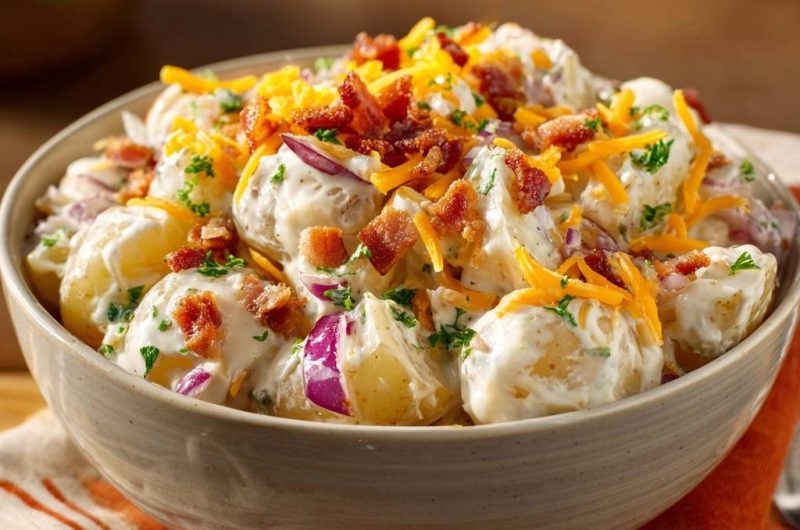
MinutesThis creamy potato salad uses a specific temperature-control method to ensure the dressing clings perfectly to the potatoes. Packed with bacon, cheese, and red onions, it delivers a ‘loaded’ baked potato flavor in a chilled salad format.
Ingredients
3 pounds baby gold potatoes, kept whole (or halved if very large)
1/2 cup thick-cut crispy bacon bits
1 cup shredded sharp cheddar cheese
1/2 cup red onion, sliced into thin wedges/half-moons
1/4 cup fresh parsley, chopped
1 cup thick mayonnaise
1/2 cup sour cream
1 tablespoon apple cider vinegar
1 teaspoon garlic powder
1/2 teaspoon onion powder
Salt and black pepper to taste
Directions
- Place the potatoes in a large pot of cold salted water. Bring to a boil and cook for 12 to 15 minutes until fork-tender but the skins are still intact.
- This is the critical step to prevent a soggy salad. Drain the potatoes and let them steam dry in the colander for exactly 5 minutes. While they are still hot, drizzle them with the apple cider vinegar. The warm potatoes will absorb the vinegar, locking in flavor and preventing excess moisture from leaching out later.
- Allow the potatoes to cool to room temperature before adding the creamy base. If you add mayo to hot potatoes, the oils will break and create a greasy, watery texture.
- In a small bowl, whisk together the mayonnaise, sour cream, garlic powder, onion powder, salt, and pepper until completely smooth and thick.
- In a large mixing bowl, combine the cooled potatoes and the sliced red onions. Pour the dressing over them and fold gently to coat, being careful not to break the potato skins.
- Fold in half of the bacon, half of the cheese, and the parsley.
- Transfer to a serving bowl. Top with the remaining bacon and shredded cheddar cheese to achieve the “loaded” visual. Chill for at least one hour before serving to allow the flavors to marry and the dressing to set perfectly against the potatoes.
Notes
- The critical secret is drizzling apple cider vinegar over the potatoes while they are still hot to lock in flavor, then waiting until they reach room temperature before adding the mayonnaise base to prevent the dressing from breaking.