Mastering the Creamy Garlic Chicken Linguine Emulsion
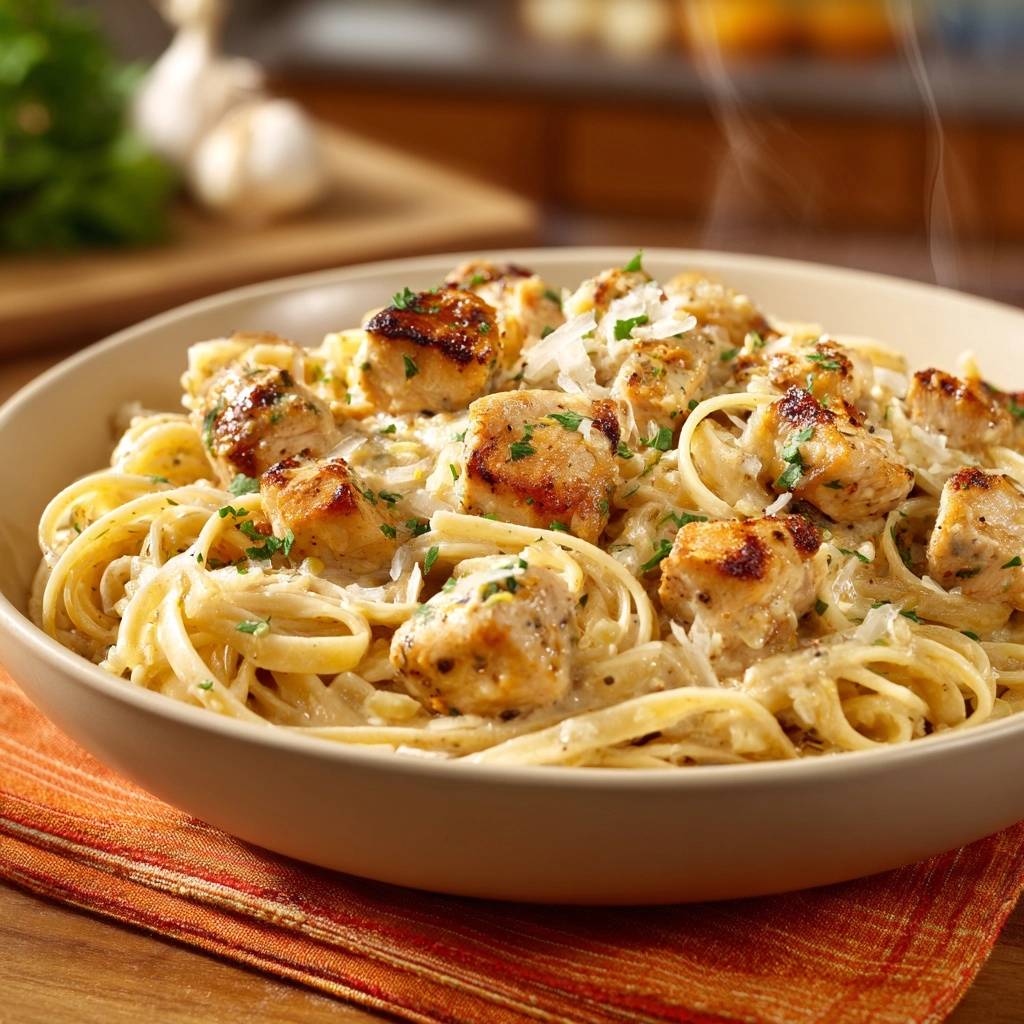
Most home cooks have faced the disappointment of a pasta sauce that looks beautiful in the pan but turns into a watery puddle on the plate. You want a sauce that hugs the noodles, providing a velvety, rich coating in every single bite. This Creamy Garlic Chicken Linguine solves the “broken sauce” problem by focusing on the science of the emulsion.
In just 30 minutes, you can create a dish that rivals any high-end Italian trattoria. We aren’t just tossing noodles in cream; we are building a structural bond between the fats and starches. This method ensures your dinner stays cohesive and luxurious from the first forkful to the very last.
The secret to this professional finish is pulling your pasta two minutes before it hits the “al dente” stage. By finishing the linguine directly in the simmering cream, the noodles release their starches into the sauce. This creates a natural thickener that binds the heavy cream and Parmesan together into a glossy, inseparable coating.
The Science of Non-Watery Cream Sauce
Creating a stable cream sauce is an exercise in physics. When you sear the chicken, you leave behind “fond,” which are those caramelized brown bits stuck to the bottom of the skillet. These bits aren’t just flavor; they contain proteins that help stabilize the base of your sauce as you deglaze with butter and garlic.
As the heavy cream reduces, the water content evaporates, leaving behind concentrated fats and solids. However, fat and water naturally want to separate. This is where the “mechanical action” of tossing comes into play. When you vigorously stir the pasta, you are physically forcing the fat droplets to disperse evenly throughout the liquid.
The molecular interaction between the Parmesan cheese and the starchy pasta water acts as the bridge. The starch molecules get in the way of the fat droplets, preventing them from clumping back together. This results in a smooth, unified emulsion that defies the laws of gravity and stays on the noodle instead of sliding to the bottom of the bowl.
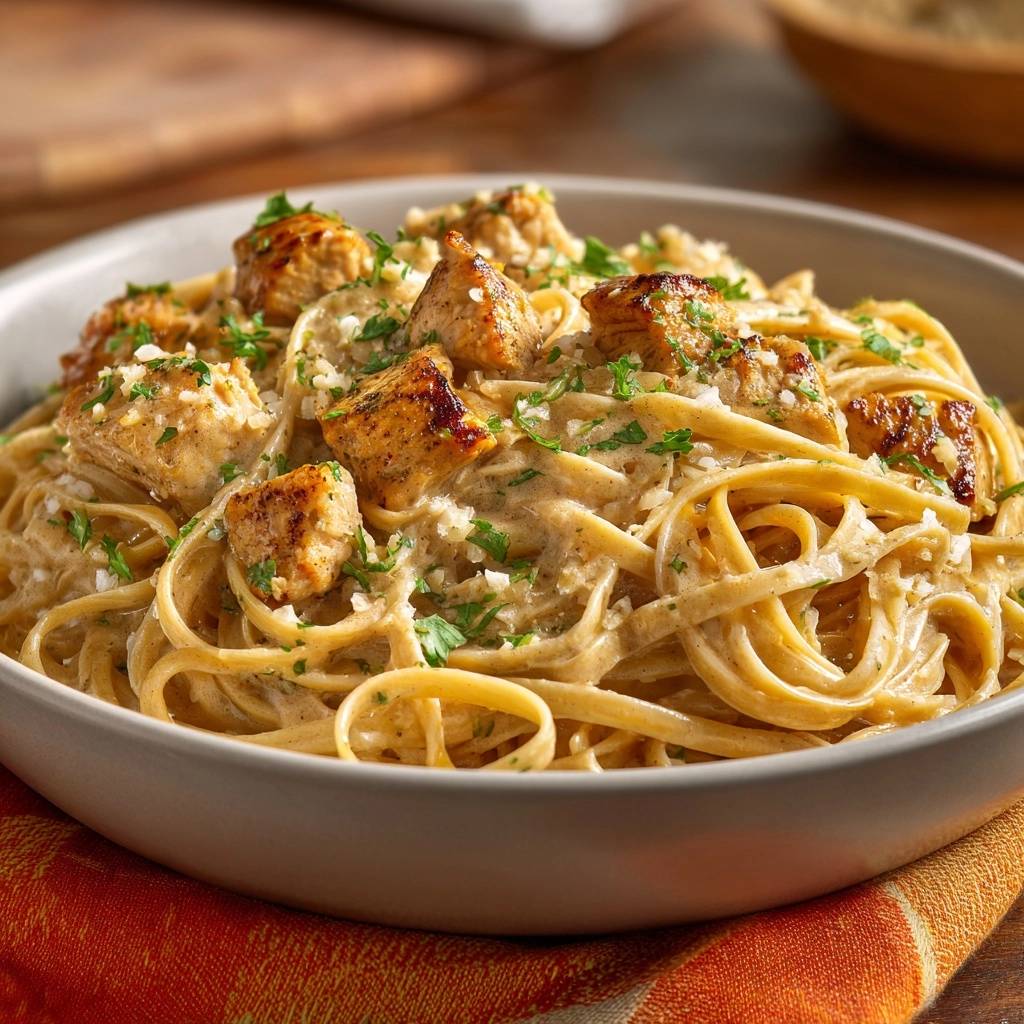
Essential Components for Creamy Garlic Chicken Linguine
Quality ingredients are the foundation of a successful emulsion. You must use freshly grated Parmesan cheese from a wedge. Pre-shredded cheeses are coated in cellulose or potato starch to prevent clumping in the bag, but these additives will prevent the cheese from melting smoothly into your sauce, often causing a grainy or “sandy” texture.
Linguine is the superior choice for this dish because of its flat, narrow shape. It offers more surface area than spaghetti, allowing the garlic-infused cream to cling more effectively. The slight thickness of the noodle also provides a sturdy “backbone” that can withstand the vigorous tossing required during the final emulsification phase.
Don’t reach for the jarred minced garlic. Fresh cloves provide a pungent, aromatic depth that pre-processed versions simply cannot match. When you mince fresh garlic, you release essential oils that permeate the butter and cream, creating a fragrant base that carries the entire flavor profile of the dish.
If you love using pasta water to build a creamy sauce, you will enjoy this creamy sun-dried tomato chicken penne for a similar silky finish.
Selecting and Preparing the Protein
Chicken breast is the ideal canvas for this recipe because its lean profile allows the rich garlic sauce to shine. To ensure the meat stays juicy, cut it into uniform 1-inch cubes. This size creates a high surface-area-to-volume ratio, which is exactly what you want for a quick sear.
By using small cubes, you can achieve a deep golden crust on the outside while the center remains tender. If the pieces are too large, the outside will overcook before the middle is safe to eat. If they are too small, they will dry out before they ever get that beautiful Maillard reaction color.
The Role of Starchy Pasta Water
Never dump your pasta water down the drain until the dish is finished. This “liquid gold” is the most important tool in your kitchen for sauce management. The cloudy water is packed with starch that has been washed off the linguine during the boiling process.
This starch acts as a surfactant, which is a fancy way of saying it helps oil and water get along. When you add a splash of this water to your cream and cheese, it creates a creamy bridge. It prevents the sauce from “breaking” into an oily mess and gives it that professional, glossy sheen.
Phase One: Searing for Maximum Flavor
Heat your olive oil over medium-high heat until it shimmers. You want the pan hot enough to trigger the Maillard reaction immediately upon contact. When you add the seasoned chicken, listen for a loud sizzle; if it’s quiet, your pan isn’t hot enough, and the chicken will steam rather than sear.
Avoid the temptation to crowd the pan. If you put too much meat in at once, the temperature of the skillet will drop, and the chicken will release its juices and boil in its own liquid. Work in batches if necessary to ensure every cube gets a dark, caramelized crust that locks in the flavor.
Phase Two: Building the Aromatic Base
Once the chicken is removed, lower the heat to medium before adding the butter and garlic. This transition is critical. Garlic has a high sugar content and will burn in seconds if the pan is still at searing temperatures. Burnt garlic is bitter and will ruin the entire batch of sauce.
Use the butter to deglaze the pan, scraping up the browned chicken bits with a wooden spoon. You are looking for the garlic to become fragrant and turn a pale, translucent gold. This step builds the first layer of flavor, infusing the fat with aromatics before the cream even touches the pan.
If you enjoy this creamy garlic sauce, try it baked into a creamy garlic chicken pasta bake for a heartier finish.
Phase Three: The Reduction and Emulsion Process
Pour in the heavy cream and watch for the bubbles. You want a gentle simmer, not a rolling boil. As the cream reduces for a few minutes, it will begin to coat the back of a spoon. This is your cue that the water is evaporating and the sauce is concentrating.
Now comes the “Two-Minute Rule.” Add your undercooked linguine directly into the skillet. The pasta is still “hungry” for moisture and will soak up the garlic cream into its core. Add the Parmesan and the reserved pasta water now. The heat must be high enough to melt the cheese but low enough that the cream doesn’t separate.
Toss the pasta vigorously using tongs or a pasta fork. You aren’t just mixing; you are whipping the ingredients together. Within about two minutes, you will see the liquid transform from a thin soup into a thick, velvety coating that grips the noodles tightly. Fold the chicken back in at the very end just to bring it back to temperature.
Troubleshooting Common Sauce Failures
If your sauce looks too thick or sticky, don’t panic. Simply add an extra tablespoon of pasta water at a time and toss again. The starch and heat will loosen the sauce back to a silky consistency. This is why keeping that extra water on hand is a lifesaver.
If the cheese clumps into a ball, your heat was likely too high when you added the Parmesan. To fix this, remove the pan from the heat entirely and add a tiny splash of room-temperature cream, whisking quickly to break up the clumps. Next time, ensure the cheese is finely grated so it melts instantly.
If the sauce looks oily, the emulsion has broken. This usually happens if the cream boils too hard for too long. You can often rescue it by adding a teaspoon of very hot pasta water and whisking vigorously off the heat. The extra starch can sometimes pull the fat back into the fold.
Flavor Variations and Ingredient Swaps
While the garlic and cream are the stars, you can easily customize this base. Adding a handful of fresh baby spinach at the very end provides a pop of color and a nutritional boost. The residual heat of the sauce will wilt the spinach in seconds without overcooking it.
For a deeper flavor, try using boneless, skinless chicken thighs instead of breasts. Thighs have a higher fat content and stay incredibly moist, even if they simmer in the sauce for an extra minute. You can also add sun-dried tomatoes or a pinch of red pepper flakes to create a “Garlic Scampi” hybrid profile.
What’s Next?
Try these delicious pairings:
If you want an even richer experience, swap the dried oregano for fresh thyme or basil. Just remember to add fresh herbs at the very end of the cooking process. This preserves their bright color and delicate oils, which can be lost if they are boiled in the cream for too long.
Optimal Side Dishes for Rich Pasta
Because this dish is incredibly rich and savory, you want side dishes that offer acidity or bitterness to cleanse the palate. A simple arugula salad dressed with fresh lemon juice and a light vinaigrette is the perfect companion. The peppery bite of the arugula cuts right through the heavy cream.
Roasted broccolini with a balsamic glaze is another excellent choice. The charred edges of the vegetable provide a smoky contrast to the smooth sauce. Avoid heavy, buttery garlic bread as a side; the pasta already has plenty of garlic and fat, so you want something crisp and refreshing instead.
Expert Tips for Reheating and Storage
Cream-based pastas are notorious for drying out in the fridge. The noodles continue to absorb moisture as they sit, leaving you with a stiff block of pasta the next day. Store leftovers in an airtight container for up to three days, but do not freeze this dish, as the cream will likely break and become grainy upon thawing.
To reheat, avoid the microwave if possible. Instead, place the pasta in a small skillet over low heat. Add a splash of milk or a tablespoon of water to loosen the sauce. Stir constantly as it warms up. This gentle heat allows the fats to melt back into a creamy state without turning into an oily mess.
Frequently Asked Questions
Can I use milk instead of heavy cream?
It is not recommended to use milk for this specific recipe. Heavy cream has a high fat content (around 36%) which allows it to reduce and emulsify without curdling. Milk has a much higher water content and lacks the stability needed to create a thick, clingy sauce. If you use milk, the sauce will likely remain thin and watery, or it may break when you add the cheese.
Why is my Parmesan not melting smoothly?
The most common reason for clumpy cheese is using pre-shredded varieties from a bag. These products contain anti-caking agents like cellulose that prevent the cheese from bonding with the liquid. Always grate your Parmesan fresh from a block using a fine grater. Additionally, make sure your sauce is at a gentle simmer, not a rolling boil, when the cheese is added.
How do I keep the chicken from getting rubbery?
The key is the “carry-over cooking” principle. You sear the chicken until it is just cooked through, then remove it from the pan immediately. If you leave the chicken in the pan while the cream reduces and the pasta finishes, it will overcook and become tough. By adding it back only at the very last second, you ensure it stays tender and moist.
Is linguine the only pasta that works?
While linguine is the traditional choice for its surface area, you can use other long pastas like fettuccine or pappardelle. These wider noodles also provide a great “grip” for the sauce. Avoid thin noodles like angel hair, as they are too delicate for the vigorous tossing required to create the emulsion and can easily become mushy.
Can I make this recipe dairy-free?
You can substitute the heavy cream with full-fat coconut milk or a high-quality cashew cream. However, keep in mind that the flavor profile will shift significantly. If using coconut milk, the sauce will have a slight tropical undertone. You will also need to use a dairy-free Parmesan alternative, though these often do not melt as effectively as the real thing, so the emulsion may be less stable.
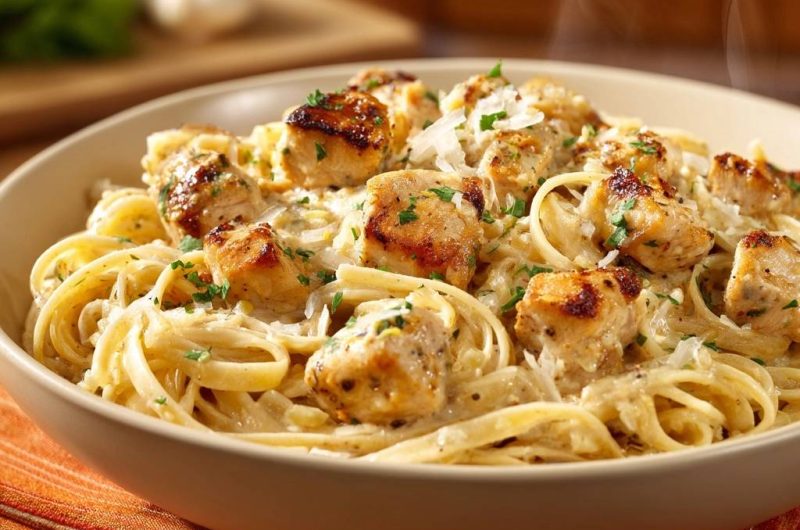
Creamy Garlic Chicken Linguine
Course: Main CourseCuisine: AmericanDifficulty: easy4
servings10
minutes20
minutes620
kcal30
MinutesA rich and velvety pasta dish featuring seared chicken breast, fresh garlic, and a Parmesan cream sauce designed to cling perfectly to every strand of linguine.
Ingredients
1 pound linguine pasta
1.5 pounds chicken breast, cut into 1-inch cubes
2 tablespoons olive oil
1 tablespoon unsalted butter
6 cloves garlic, minced
1.5 cups heavy cream
1.5 cups freshly grated Parmesan cheese (plus extra for garnish)
1/2 cup reserved starchy pasta water
1 teaspoon salt
1/2 teaspoon black pepper
1/2 teaspoon dried oregano
2 tablespoons fresh parsley, finely chopped
Directions
- Bring a large pot of heavily salted water to a boil. Add the linguine and cook for two minutes less than the package directions for al dente. The pasta will finish cooking in the sauce.
- While the pasta cooks, season the chicken cubes with salt, pepper, and dried oregano. Heat olive oil in a large skillet over medium-high heat. Sear the chicken in a single layer until deeply golden brown and caramelized on all sides. Remove the chicken from the pan and set aside on a plate. The chicken is done when it reaches 165°F (74°C) in the thickest part.
- Lower the skillet heat to medium. Add the butter and the minced garlic. Sauté for 1 minute until fragrant, scraping up the browned bits (fond) from the chicken.
- Pour in the heavy cream and bring to a gentle simmer. Let it reduce for 2-3 minutes until it begins to thicken slightly.
- Crucial Step: Before draining the pasta, scoop out 1/2 cup of the cloudy, starchy pasta water. This starch is the “glue” that prevents a watery separation.
- Add the undercooked linguine directly into the simmering cream. Add the Parmesan cheese and the reserved pasta water.
- Toss the pasta vigorously and continuously over medium heat for 2-3 minutes. The mechanical action of tossing, combined with the starch in the water and the proteins in the cheese, will emulsify the sauce into a thick, rich coating that grips the noodles.
- Once the sauce has reached a velvety consistency, fold the seared chicken back into the pan just to warm through.
- Serve immediately in warm bowls. Garnish with a generous amount of fresh parsley and additional shaved Parmesan to match the visual texture of the dish.
Notes
- The secret to the sauce is the starchy pasta water and finishing the pasta in the skillet. Ensure you use freshly grated Parmesan cheese for the best melting results and emulsion.