Mastering the Roasted Tomato Caprese Brie: The Anti-Soggy Technique
We’ve all been there. You pull a beautiful wheel of baked brie from the oven, hoping for a gourmet masterpiece, only to find a watery, soupy mess sliding off your crackers. It’s frustrating when the vibrant toppings turn into a puddle that compromises the integrity of the cheese. This Roasted Tomato Caprese Brie solves that problem by focusing on moisture control and structural timing.
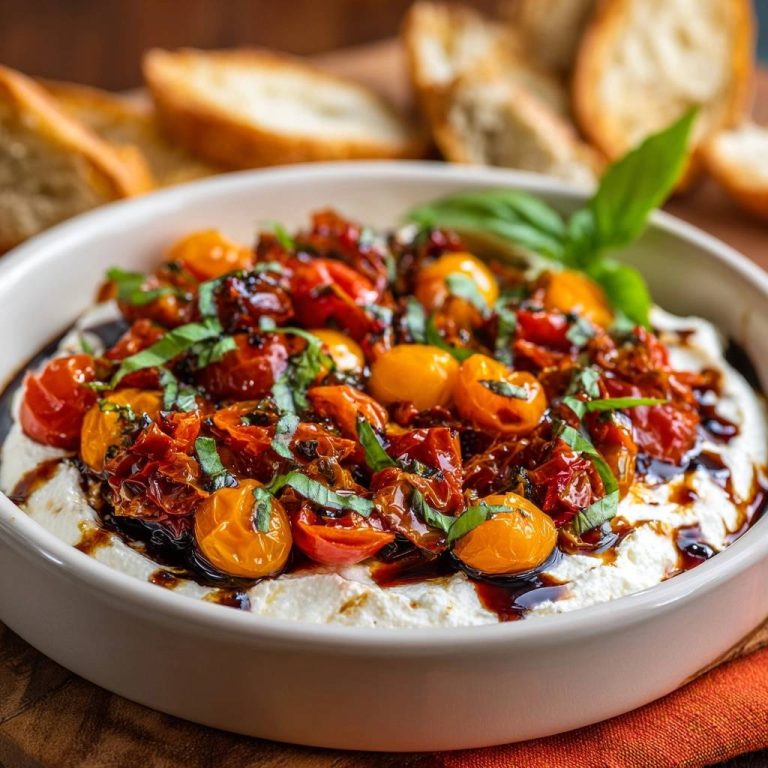
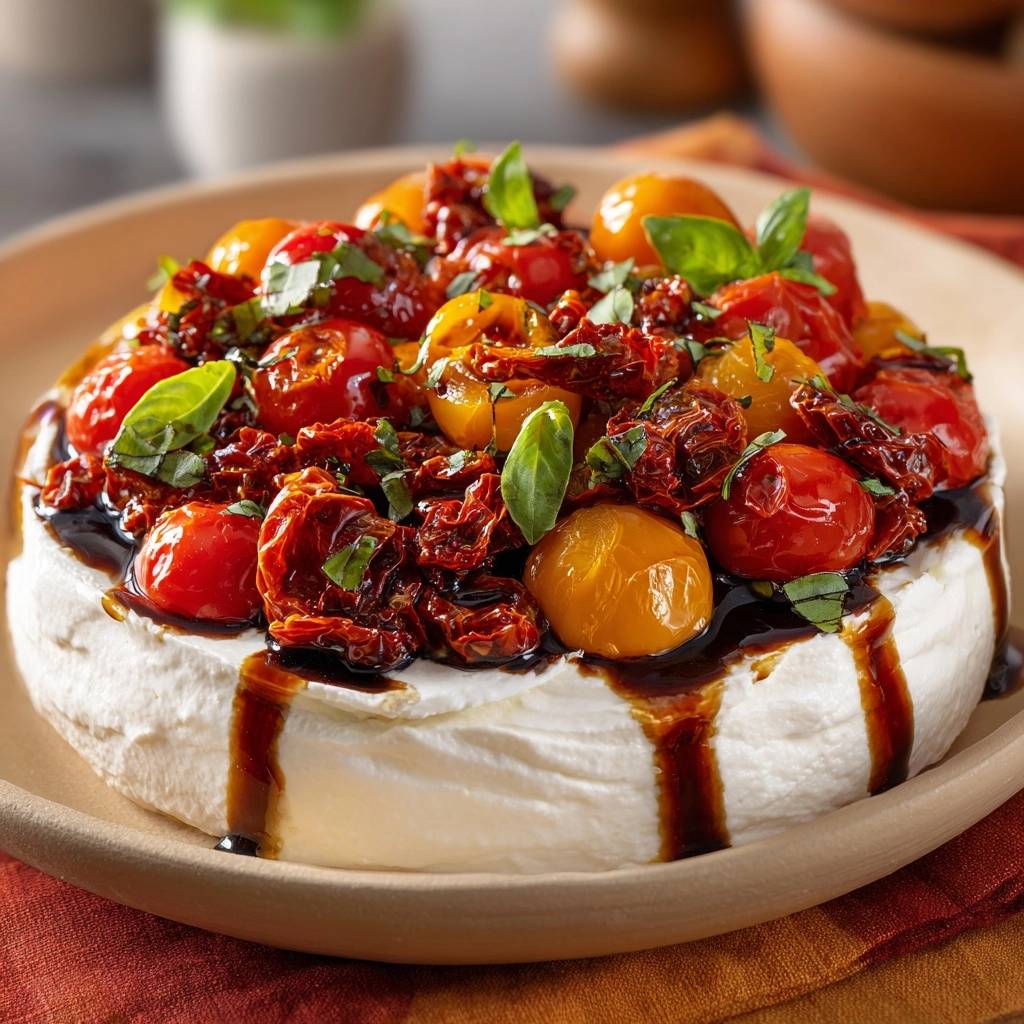
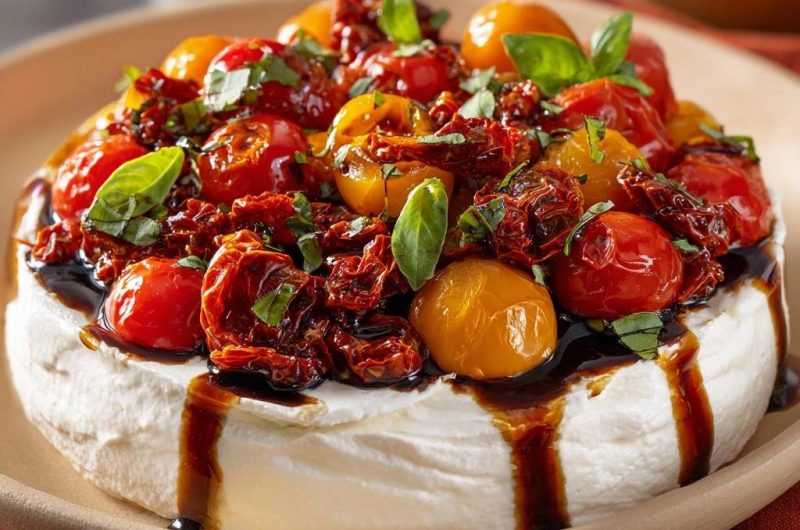
The secret to this stunning appetizer lies in the contrast between the snowy white rind and the jammy, concentrated red and yellow tomatoes. By treating the toppings and the cheese as two separate components that meet at the very end, you ensure the cheese stays upright and the flavors remain intense. It’s a sophisticated approach that guarantees a picture-perfect result every single time you entertain.
Expertise in cheese baking often comes down to one simple rule: don’t overcook the rind. Most people bake their brie far too long, causing the sidewalls to collapse into a puddle. I’ve found that tempering the cheese for just a few minutes while pre-roasting the tomatoes separately creates a thick, rich topping that sits proudly on a warm, buttery base without any of that dreaded “weeping.”
Roasting tomatoes brings out their natural sweetness, a trick that works just as well in this spring ravioli with roasted veggies.
The Science of Moisture in Roasted Tomato Caprese Brie
Cherry tomatoes are tiny flavor bombs, but they’re also packed with water held inside delicate cellular walls. When you heat them, those walls break down and release juice. If you roast them directly on top of the brie, that liquid has nowhere to go but into the cheese, which creates a soggy texture and dilutes the rich fats of the dairy.
By roasting the tomatoes on a separate sheet pan at a high temperature, you encourage that excess water to evaporate. This process concentrates the natural sugars and acids, turning a simple fruit into a savory, candy-like topping. You’ll notice the skins blister and the juices thicken on the pan, leaving you with the essence of the tomato rather than the water content.
This “anti-soggy” method also protects the structural integrity of the brie. When cheese is exposed to moisture and high heat for too long, the protein structure collapses. Keeping the tomatoes separate until the final assembly ensures the cheese remains a solid vessel for the topping. You get all the gooey, melted goodness in the center without losing the iconic circular shape of the wheel.
Why Sun-Dried Tomatoes are the Secret Ingredient
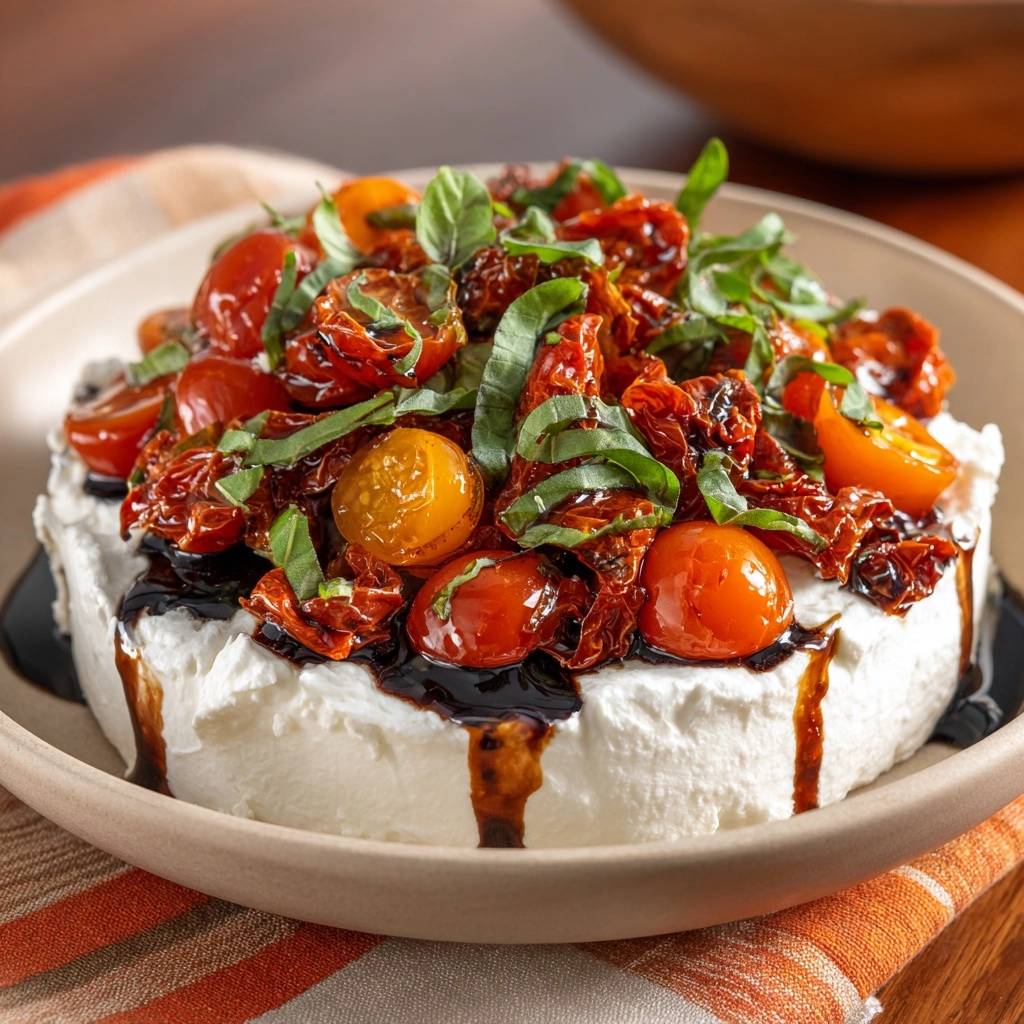
Sun-dried tomatoes aren’t just here for their deep, umami flavor; they serve a functional purpose as a “flavor sponge.” Because they’ve been dehydrated, they are naturally hygroscopic, meaning they actively seek out and absorb moisture. When you toss them with the freshly roasted cherry tomatoes, they soak up any residual juices that might otherwise run off the cheese.
This creates a cohesive, jam-like consistency that stays exactly where you put it. Beyond the moisture control, they provide a chewy texture contrast to the soft, bursting cherry tomatoes and the creamy brie. It’s a layering of textures that makes each bite feel more complex and intentional.
Essential Components for the Perfect Cheese Board
Quality is everything when you’re working with so few ingredients. For the brie, look for a wheel that feels firm to the touch when cold. While “Triple Cream” varieties are incredibly decadent, they have a higher fat content and tend to melt much faster. A standard “Double Cream” brie or a firm Camembert provides the best structural wall for this specific roasting technique.
Freshness matters for the garnish too. Use extra virgin olive oil with a peppery finish to toss your tomatoes, and ensure your basil is vibrant green. If the basil has dark spots, it will wilt and look unappealing the moment it hits the warm cheese. High-quality ingredients ensure that the simple flavors of the Caprese profile—tomato, basil, and balsamic—really shine against the buttery backdrop.
Selecting the Right Wheel: Brie vs. Camembert
Brie is generally milder and more buttery, making it a universal crowd-pleaser that pairs beautifully with the sweetness of roasted tomatoes. Camembert, on the other hand, offers a more intense, earthy, and mushroom-like aroma. Both work perfectly for this recipe, but Camembert often has a slightly thicker rind which can be helpful for maintaining that “upright” look.
Regardless of which you choose, keep the wheel in the refrigerator until the very moment you are ready to prep. A chilled wheel is much easier to handle and won’t over-soften during the short window it spends in the oven. The rind is your best friend here; it acts as a natural, edible bowl that holds the melted center in place.
The Importance of High-Quality Balsamic Glaze
Don’t confuse balsamic vinegar with balsamic glaze. Standard vinegar is thin and acidic; it will run right off the cheese and pool at the bottom of the plate. A high-quality glaze has been reduced until it’s thick, syrupy, and sweet. This viscosity is what allows you to create those beautiful, controlled drips down the side of the white rind.
The glaze adds a necessary punch of acidity to cut through the heavy fat of the brie. It also acts as a visual anchor, tying the bright red tomatoes to the white cheese. If you don’t have a store-bought glaze, you can simmer balsamic vinegar in a small saucepan until it reduces by half, but be careful not to burn it!
Phase One: Preparing the Concentrated Tomato Topping
Preheat your oven to 400°F. This high heat is the “sweet spot” for roasting cherry tomatoes because it works quickly. You want the skins to blister and pop before the entire tomato turns into mush. Line your pan with parchment paper to catch the sticky juices and make cleanup a breeze.
Toss your red and yellow tomatoes with olive oil, salt, and pepper directly on the pan. Roast them for about 12 to 15 minutes. You’re looking for the moment the skins just begin to burst and the tomatoes look slightly deflated. This visual cue tells you the water has evaporated and the flavors are concentrated and ready for the cheese.
Phase Two: Tempering the Cheese for Structural Integrity
This is the most critical part of the process. While the tomatoes are finishing their roast, take your cold brie and place it on a heat-proof serving plate. Slide it into the oven for only the last 3 to 4 minutes of the tomato roasting time. This “Short-Bake” method is the secret to a perfect texture.
You aren’t trying to cook the cheese; you’re simply tempering it. Use the “finger-press test” to check for readiness. Gently press the center of the wheel with your finger. It should feel soft and yielding, like a ripe avocado, while the sidewalls remain firm and upright. If the sides start to bulge or leak, pull it out immediately.
Assembling the Roasted Tomato Caprese Brie
Once the tomatoes and cheese are out of the oven, gently fold the roasted tomatoes with the chopped sun-dried tomatoes in a small bowl. This allows the sun-dried pieces to lock in those juices. Carefully pile the mixture onto the center of the warm brie, letting a few pieces tumble naturally toward the edges for a rustic, professional look.
Drizzle the balsamic glaze generously over the top. Finally, scatter your chiffonade basil. Adding the basil at the very end is vital; the residual heat from the tomatoes will warm the herb and release its aromatic oils without turning it black or slimy. The result is a vibrant, fragrant topping that looks as good as it tastes.
Troubleshooting Common Baked Brie Failures
If your cheese walls collapse, it usually means the oven was too hot or the cheese stayed in too long. You can sometimes “patch” a small leak by pressing a cracker against the side, but the best fix is prevention via the short-bake method. If the cheese feels too firm when you go to serve it, don’t panic; the heat from the roasted tomatoes will continue to soften the center as it sits.
A watery base is almost always caused by skipping the separate roasting step. If you find liquid pooling on the plate, use the corner of a paper towel to carefully wick it away before serving. To keep the cheese soft for longer, serve it on a pre-warmed ceramic plate which will hold the temperature better than a cold glass or wooden board.
Flavor Variations and Herb Substitutions
While the Caprese profile is a classic, you can easily adapt this technique. Swap the basil for fresh thyme or rosemary for a woodier, more autumnal flavor. If you want a bit of crunch, toasted pine nuts or slivered almonds added at the very end provide a wonderful texture contrast to the creamy cheese.
For those who like a bit of heat, a pinch of red pepper flakes tossed with the tomatoes before roasting adds a lovely glow. You could even swap the balsamic glaze for a drizzle of hot honey. The “anti-soggy” roasting method works with almost any fruit-based topping, from grapes to figs, so feel free to experiment.
Sturdy Pairings: What to Serve with Warm Brie
Because this topping is so rich and jammy, you need a vessel that can handle the weight. A flimsy cracker will snap under the pressure of the roasted tomatoes. I highly recommend a toasted sourdough baguette sliced into rounds. The slight tang of the sourdough balances the buttery brie perfectly.
Artisanal fruit and nut crisps are another excellent choice, as they add a layer of sweetness and crunch. For a lighter option, try sliced crisp pears or apples. The crunch of the fruit provides a refreshing break from the richness of the cheese, and the acidity helps cleanse the palate between bites.
Frequently Asked Questions
Can I use large tomatoes instead of cherry tomatoes?
It isn’t recommended for this specific method. Large tomatoes have a much higher water-to-flesh ratio and contain large seed cavities filled with liquid. Even with roasting, they tend to remain too wet and will likely make the cheese soggy. Cherry or grape tomatoes are ideal because they have thicker skins and more concentrated flesh, which creates that perfect jammy texture.
How do I keep the Brie warm for a party?
The best way to maintain the temperature is to serve the brie on a heavy ceramic or cast-iron plate that has been warmed in the oven. These materials retain residual heat much longer than wood or glass. You can also use a small marble warming stone if you have one. Avoid putting the cheese back in the oven once it’s assembled, as this will wilt the basil and potentially cause the cheese walls to collapse.
Is it necessary to remove the rind before roasting?
No, you should definitely leave the rind on! The rind is completely edible and has a mild, mushroomy flavor that complements the tomatoes beautifully. More importantly, the rind acts as the structural “casing” for the cheese. If you remove it, the brie will simply melt into a flat puddle the moment it hits the heat. The rind is what allows you to have that beautiful, gooey center while keeping the shape intact.
Can I prepare the tomato mixture in advance?
Yes, you can roast the tomatoes and mix them with the sun-dried tomatoes up to 24 hours in advance. Store the mixture in an airtight container in the refrigerator. When you’re ready to serve, gently warm the tomato mixture in a small pan or the microwave until it’s just hot, then pile it onto your freshly tempered brie wheel. This is a great time-saver for holiday hosting.
What should I do with leftovers?
Leftover brie and roasted tomatoes are a goldmine for other meals. You can slice the cold cheese and tomatoes and use them to make a gourmet grilled cheese sandwich the next day. Alternatively, toss the leftovers with warm pasta; the cheese will melt into a creamy sauce and the tomatoes will provide bursts of flavor. Store leftovers in an airtight container in the fridge for up to three days, but do not freeze them, as the texture of the cheese will become grainy.
Roasted Tomato Caprese Brie
Course: AppetizerCuisine: Italian-AmericanDifficulty: easy6
servings10
minutes15
minutes210
kcal25
MinutesA sophisticated appetizer featuring a firm brie wheel topped with a thick, jam-like mixture of roasted cherry tomatoes and sun-dried tomatoes, finished with balsamic glaze and fresh basil.
Ingredients
1 large wheel (8-12 oz) of firm Brie or Camembert cheese, chilled
1 cup red cherry tomatoes
1 cup yellow cherry tomatoes
1/2 cup sun-dried tomatoes in oil, drained and roughly chopped
2 tablespoons extra virgin olive oil
2 tablespoons high-quality balsamic glaze
1/4 cup fresh basil leaves, chiffonade (thinly sliced) and small whole leaves for garnish
Flaky sea salt and cracked black pepper to taste
Directions
- Preheat and Prep: Preheat your oven to 400°F (200°C). Line a small rimmed baking sheet with parchment paper.
- Roast the Fresh Tomatoes: Place the red and yellow cherry tomatoes on the baking sheet. Toss with olive oil, salt, and pepper. Roast for 12 to 15 minutes until the skins just begin to blister and burst. This step is critical: roasting them separately allows excess water to evaporate on the pan rather than soaking into the cheese.
- Temper the Cheese: While the tomatoes roast, remove the cold brie from the refrigerator. To achieve the look in the image-where the rind remains bright white and structurally upright-do not bake the cheese for a long period. Instead, place the brie on a heat-proof serving plate and pop it into the oven for only the last 3-4 minutes of the tomato roasting time. You want the center to be just yielding to pressure, but the side walls must remain firm.
- Combine the Topping: Remove the tomatoes from the oven. In a small bowl, gently fold the roasted cherry tomatoes together with the chopped sun-dried tomatoes. The sun-dried tomatoes act as a natural sponge, absorbing any residual juices from the roasted tomatoes to create a thick, jammy consistency.
- Assemble: Carefully pile the tomato mixture onto the center of the warm brie wheel, allowing some to tumble toward the edges.
- The Glaze: Drizzle the balsamic glaze generously over the tomatoes, allowing it to drip down the white sides of the cheese in clean lines as shown in the image.
- Garnish: Scatter the fresh sliced basil and whole small leaves over the top. The residual heat from the tomatoes will release the basil’s aroma without wilting it into a dark green.
- Serve: Serve immediately with toasted baguette slices or sturdy crackers. The cheese should be soft and buttery inside while maintaining its perfect circular shape.
Notes
- The secret to preventing a watery mess is roasting the tomatoes separately and using sun-dried tomatoes to absorb excess moisture. Keep the cheese chilled until the final minutes of baking to maintain its structural integrity.