Mastering the Savory Beef Ramen Bowl
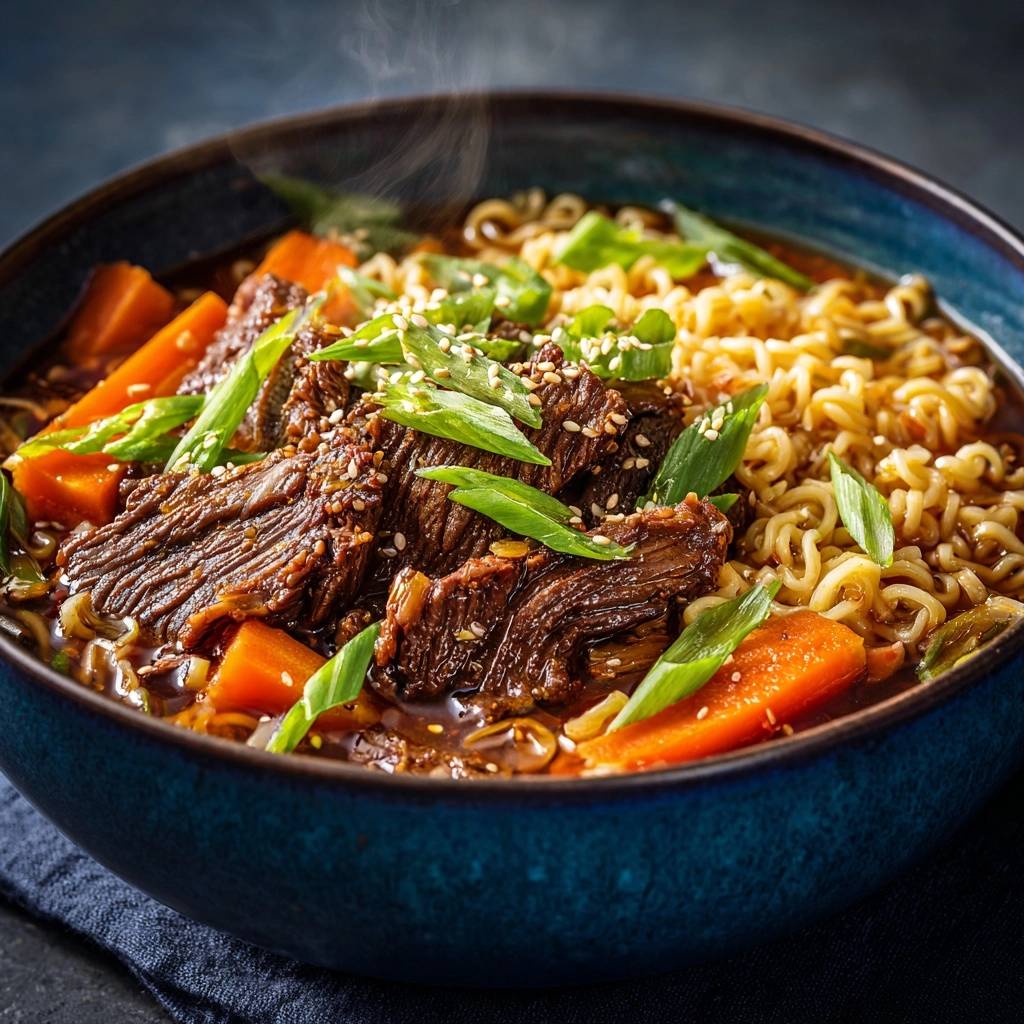
We’ve all been there. You spend an hour prepping a beautiful beef ramen only to have the noodles turn into a gummy, overcooked mess before you even take the first bite. It’s heartbreaking to see tender beef swimming next to mushy starch. The secret to restaurant-quality ramen at home isn’t just the broth; it’s the temperature shock technique.
By controlling the starch release and stopping the cook at the exact right moment, you get that perfect chewy snap every single time. This method creates a professional-grade bridge between amateur home cooking and noodle bar quality. You’ll finally achieve that psychological satisfaction of a resilient, al dente noodle that stands up to a heavy, savory broth.
The real trick is boiling your noodles for exactly one minute less than the package says. Immediately hitting them with freezing cold water locks their structure in place. This prevents the residual heat from turning your dinner into porridge while you’re busy plating the beef. Trust me, once you try this “shock” method, you’ll never go back to the old way.
The Anatomy of a Rich Beef Broth
A great ramen bowl lives or dies by its liquid base. While standard beef stock is fine for a quick soup, a high-quality beef bone broth provides the gelatin and body needed for a luxurious mouthfeel. Bone broth is simmered longer, extracting collagen that coats the tongue and carries flavor better than thin, watery alternatives.
The soul of this broth starts with the “fond.” Those dark, caramelized brown bits stuck to the bottom of your pot after searing the beef are concentrated flavor gold. When you pour in the broth, you must scrape those bits up. This deglazing process integrates deep, roasted notes directly into the simmering liquid.
To get that iconic dark, moody color, we use a combination of soy sauces. Regular soy sauce provides the necessary salt profile and sharp umami. Dark soy sauce, however, is thicker and less salty; its primary job is to add a deep mahogany hue and a hint of molasses-like richness. It transforms the broth from a pale brown to a professional, ink-dark elixir.
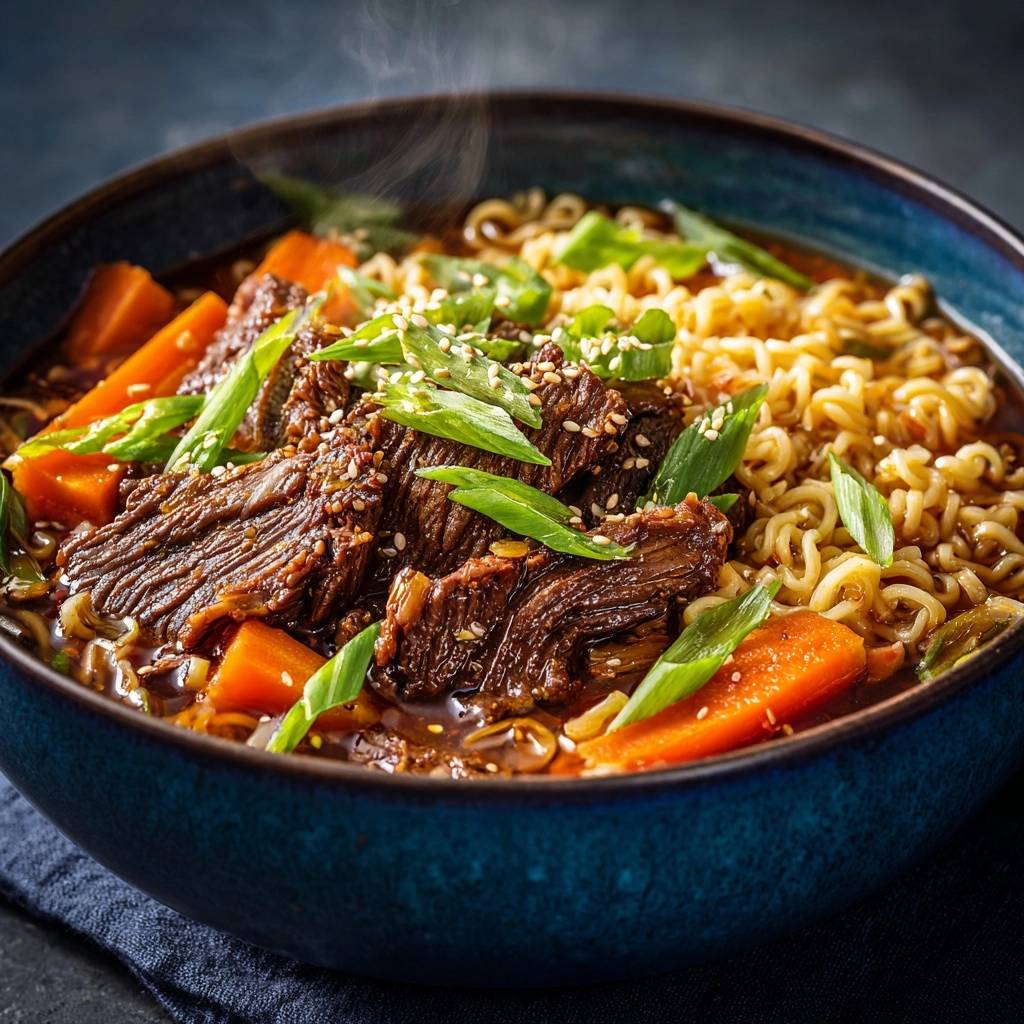
Finally, a tablespoon of brown sugar acts as the ultimate balancer. It doesn’t make the broth sweet in a dessert sense. Instead, it rounds out the sharp salt of the soy and the earthy punch of the ginger. It creates a complex, multidimensional profile that keeps you coming back for spoonful after spoonful.
Selecting the Right Cut: Why Chuck Roast?
Chuck roast is the undisputed king of the simmer. It’s packed with connective tissue and intramuscular fat that breaks down beautifully during a 30-minute braise. While lean cuts like sirloin or flank might seem “fancier,” they actually toughen up and become chewy when boiled in broth. Chuck roast does the opposite; it softens into tender, succulent strips.
If you love how the chuck roast breaks down here, try this braised beef ramen with tender beef chunks for a similar melt-in-your-mouth result.
To ensure maximum tenderness, always slice your beef against the grain. Look for the natural lines of the muscle fibers and cut perpendicular to them. This shortens the fibers, meaning your teeth don’t have to do the hard work. When those short fibers meet the hot broth, they practically melt in your mouth.
Aromatic Foundations: Ginger and Garlic
Fresh ginger and garlic contain volatile oils that provide the “high notes” of the dish. I always recommend grating the ginger rather than chopping it. Grating breaks down the tough fibers and creates more surface area, allowing the spicy, citrusy juice to infuse the oil instantly. It’s a much more efficient way to get that zing into every drop of broth.
Mincing the garlic serves a similar purpose, but you have to be careful. Garlic burns in a heartbeat, especially in a hot pot used for searing. Only sauté these aromatics for about 30 seconds. You want them to smell fragrant and look softened, not brown or bitter. If they turn dark, it’s better to start over than to ruin the whole batch.
Essential Tools for Noodle Precision
You don’t need a professional kitchen, but a heavy-bottomed pot or Dutch oven is a game changer. These pots retain heat evenly, which is crucial for getting a hard sear on the beef. If your pot is too thin, the temperature drops the moment the meat hits the surface, causing the beef to steam in its own juices rather than developing a crust.
A fine-mesh strainer is your best friend for the noodle shock. You need to be able to drain the boiling water and switch to cold water in seconds. A large strainer allows you to toss the noodles under the tap, ensuring every single strand gets hit by the cold. This rapid transition is what saves the texture of your Savory Beef Ramen Bowl.
Step-by-Step: Searing and Braising the Beef
The first step is the Maillard reaction. When you press that dry beef into the hot oil, the proteins and sugars react to create a complex, savory crust. Don’t crowd the pan! If you put too much meat in at once, the temperature will plummet. Sear in batches until the beef is a deep, dark brown. This isn’t just for looks; that crust is where the deep “beefy” flavor lives.
Once the beef is out, the deglazing begins. As you pour in the bone broth, use a wooden spoon to firmly scrape the bottom of the pot. You’ll see the liquid turn darker as it dissolves the caramelized proteins. This is the most satisfying part of the process because you’re literally cleaning the pot while building the flavor base.
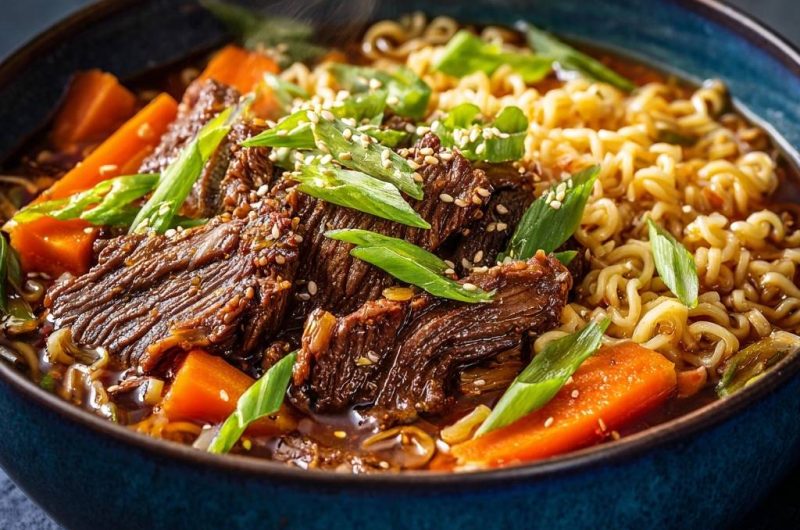
When you return the beef and carrots to the pot, keep the heat low. A violent boil will make the beef tough and the carrots mushy. You want a gentle simmer where small bubbles occasionally break the surface. This slow heat allows the carrot batons to cook through while maintaining their structural integrity. They should be tender enough to bite but firm enough to pick up with chopsticks.
The Science of the Anti-Mush Method
Noodles turn mushy because of starch gelatinization. As they cook, the starch granules absorb water and swell until they eventually burst, releasing a sticky film called amylose. If you cook the noodles all the way through in boiling water and then put them in hot broth, they never stop absorbing liquid. They just keep swelling until they lose all their bite.
By boiling the ramen for one minute less than the instructions, you leave a tiny “hard core” in the center of the noodle. This is the secret to longevity. The noodle is technically undercooked at this stage, but that’s exactly what we want. We are pausing the cooking process before the starch bonds completely break down.
The cold-water shock is the most critical step. Rinsing the noodles for 30 seconds in freezing water does two things. First, it stops the internal heat from cooking that “hard core.” Second, it washes away the excess surface amylose. This prevents the noodles from sticking together in a clump and ensures they stay distinct and slippery in the bowl.
The Residual Heat Reheating Theory
You might worry that putting cold noodles in a bowl will result in a cold dinner. However, the boiling broth acts as a powerful heat exchanger. When you ladle that 212°F liquid over the cold noodles, the temperature equalizes perfectly. The noodles quickly warm up to about 140°F, which is the ideal eating temperature.
If you enjoy this noodle trick, you might like the velveting technique used in these sticky Mongolian beef bowls.
This flash-heating method finishes the cooking process of that “hard core” we left earlier. Because the noodles only spend a few seconds reaching that temperature, they don’t have time to become waterlogged. You end up with a noodle that is hot, slippery, and has a distinct, toothsome snap. It’s the exact texture you find in high-end ramen shops.
Customizing Your Savory Beef Ramen Bowl
This recipe is a fantastic canvas for your favorite flavors. If you want more greens, toss in some baby bok choy during the last three minutes of the beef simmer. The leaves will wilt perfectly while the stems stay crunchy. Shiitake mushrooms are another great addition; they soak up the dark soy broth like little umami sponges.
For those who like a bit of heat, a drizzle of chili oil or a teaspoon of fermented bean paste works wonders. These add spice without clouding the beautiful clarity of the broth. If you’re looking for a gluten-free option, brown rice ramen noodles work surprisingly well with the shock technique. Just be sure to rinse them extra thoroughly, as rice noodles tend to be starchier than wheat ones.
What Goes Well with a Savory Beef Ramen Bowl?
If you have a bowl of rich beef ramen on the table, these two chicken dishes bring extra heat, sweetness, and crunch that round out the meal without overshadowing the noodles.
- For a sticky, spicy contrast to the savory broth, Spicy Sticky Gochujang Chicken Wings add a fermented chili kick that pairs naturally with ramen’s umami notes.
- When you want something lighter but still bold, the Sweet and Spicy Chicken Salad offers a crunchy, tangy side that
Troubleshooting Common Ramen Obstacles
If your broth tastes too salty, don’t panic. Simply add a splash of water or more unsalted broth. The body of the soup will remain intact thanks to the gelatin in the bone broth. If the beef is still tough after 30 minutes, it likely just needs more time. Every cut of chuck is different; keep it on a low simmer for another 10 minutes until it yields to a fork.
Cloudy broth usually happens if the heat was too high during the simmer, causing the fat to emulsify into the liquid. To keep it clear, always stick to a low heat and make sure you got a good, clean sear on the beef initially. If your noodles are still sticking together after the rinse, you probably didn’t rinse them long enough. Use your hands to toss them under the water to ensure all the starch is gone.
Plating for Visual and Textural Impact
We eat with our eyes first, and a well-plated bowl makes the meal feel special. Cut your green onions on a long, sharp diagonal. This creates more surface area, which looks elegant and provides a fresh, sharp crunch to contrast the rich beef. It’s a small detail that makes a huge difference in the final presentation.
When assembling, place the noodles in the bowl first, then use tongs to arrange the beef and carrots on top. This creates height and ensures the toppings don’t get lost at the bottom. The final drizzle of toasted sesame oil should be the very last thing you do. Sesame oil is highly volatile; if you cook it too long, the aroma disappears. Adding it at the table ensures that nutty scent hits your nose the moment you lean in.
Storage and Make-Ahead Strategies
This is a fantastic meal prep dish if you store it correctly. Keep the beef and broth together in one airtight container. The beef will actually continue to absorb flavor from the broth as it sits in the fridge. It stays fresh and delicious for up to three days. However, never store the noodles in the broth!
If you want to prep ahead, cook and shock the noodles, then toss them with a tiny bit of vegetable oil to prevent sticking. Store them in a separate bag or container. When you’re ready to eat, heat the broth and beef on the stove until boiling. Place the cold noodles in your bowl and pour the hot broth over them. Avoid the microwave for the noodles if possible, as it can make them rubbery.
How long can I store leftovers in the fridge?
You can store the beef and broth together in an airtight container for up to 3 days. The flavors actually meld and improve overnight. However, you should always store the noodles separately. If the noodles sit in the liquid, they will absorb all the broth and turn into a thick paste. When reheating, get the broth boiling on the stove and then pour it over the cold noodles to refresh them.
Why is my beef still tough after simmering?
Beef chuck roast relies on the breakdown of collagen, which is a time-dependent process. If the meat is tough, it usually means it hasn’t simmered long enough or the heat was too high, causing the muscle fibers to seize. Ensure you are using a very low simmer (just a few bubbles) and give it an extra 10 to 15 minutes. It will eventually reach that “melt-in-your-mouth” stage.
Can I use a different cut of meat if I can’t find chuck roast?
If chuck roast isn’t available, look for beef shank or short ribs. These cuts also have the high fat and connective tissue content needed for a long simmer. Avoid lean cuts like round steak or sirloin for this specific recipe, as they will become dry and “stringy” when cooked in the broth for 30 minutes.
What is the best way to reheat the ramen without losing the texture?
The best way to reheat is on the stovetop. Bring the broth and beef to a rolling boil in a small pot. While that heats up, place your leftover noodles in a bowl. Once the broth is piping hot, pour it directly over the noodles. The heat from the broth is enough to warm the noodles through without overcooking them. Avoid microwaving the noodles and broth together, as this almost always leads to mushy noodles.
Can I freeze the broth and beef for later?
Yes, the beef and broth freeze exceptionally well! Place them in a freezer-safe container or a heavy-duty zip-top bag for up to 3 months. Just be sure to leave a little bit of headspace in the container as the liquid will expand when frozen. I do not recommend freezing the cooked noodles or the carrots, as the texture of both will become grainy and soft once thawed.
What can I use if I don’t have dark soy sauce?
If you don’t have dark soy sauce, you can substitute it with an extra tablespoon of regular soy sauce and a half-teaspoon of molasses or extra brown sugar. You won’t get the same deep, “inky” color, but the flavor profile will be very similar. The dark soy is mostly for that rich aesthetic and a subtle depth, so the dish will still taste great without it.
Beef Ramen
Course: Main CourseCuisine: Asian FusionDifficulty: mediumYields2
servingsPrep Time15
minutesCook Time35
minutesCalories650
kcalTotal Time50
MinutesA restaurant-quality beef ramen that solves the problem of overcooked noodles. By using a specific rinsing and shocking method, the noodles maintain a perfect chewy snap while paired with savory braised beef and a deep, soy-infused broth.
Ingredients
1 pound beef chuck roast, sliced into 1/2-inch thick strips
2 packs instant ramen noodles (discard flavor packets)
4 cups high-quality beef bone broth
2 large carrots, peeled and cut into large 2-inch batons
3 cloves garlic, minced
1 tablespoon fresh ginger, grated
3 tablespoons soy sauce
1 tablespoon dark soy sauce (for the deep color shown in image)
1 tablespoon brown sugar
1 tablespoon toasted sesame oil
2 green onions, sliced long on a sharp diagonal
1 tablespoon toasted sesame seeds
2 tablespoons vegetable oil
Directions
- Sear the Beef: Heat vegetable oil in a heavy pot or Dutch oven over medium-high heat. Pat the beef dry and sear in batches until a deep brown crust forms on both sides. Remove beef and set aside.
- Build the Base: In the same pot, add garlic and ginger. Sauté for 30 seconds. Deglaze the pot with the beef broth, scraping up the browned bits (fond) from the bottom.
- Braise: Stir in the soy sauce, dark soy sauce, and brown sugar. Return the beef to the pot along with the large carrot batons. Bring to a boil, then reduce heat to low. Cover and simmer for 25-30 minutes. This ensures the chuck beef is tender and the carrots are cooked through but hold their shape as seen in the image.
- The Anti-Mush Method: While the beef finishes, boil a separate pot of water. Drop the ramen noodles in and cook for exactly 1 minute less than the package directions.
- Shock the Noodles: Immediately drain the noodles and rinse them under freezing cold tap water for 30 seconds. This stops the internal cooking process and washes away excess surface starch that causes gumminess.
- Assemble: Divide the cold, firm noodles into two deep bowls. Using tongs, arrange the beef strips and carrot batons over the noodles.
- Finish: Ladle the boiling hot, dark broth over the noodles. The residual heat will bring the noodles to a perfect al dente temperature instantly.
- Garnish: Top with a generous amount of diagonally sliced green onions, a drizzle of sesame oil, and a sprinkle of sesame seeds. Serve immediately while steaming.
Notes
- The secret is the ‘Anti-Mush Method’: cook noodles for 1 minute less than the package instructions and rinse immediately in freezing cold water to stop the cooking process and remove excess starch.