Mastering Pomegranate Glazed Braised Chicken
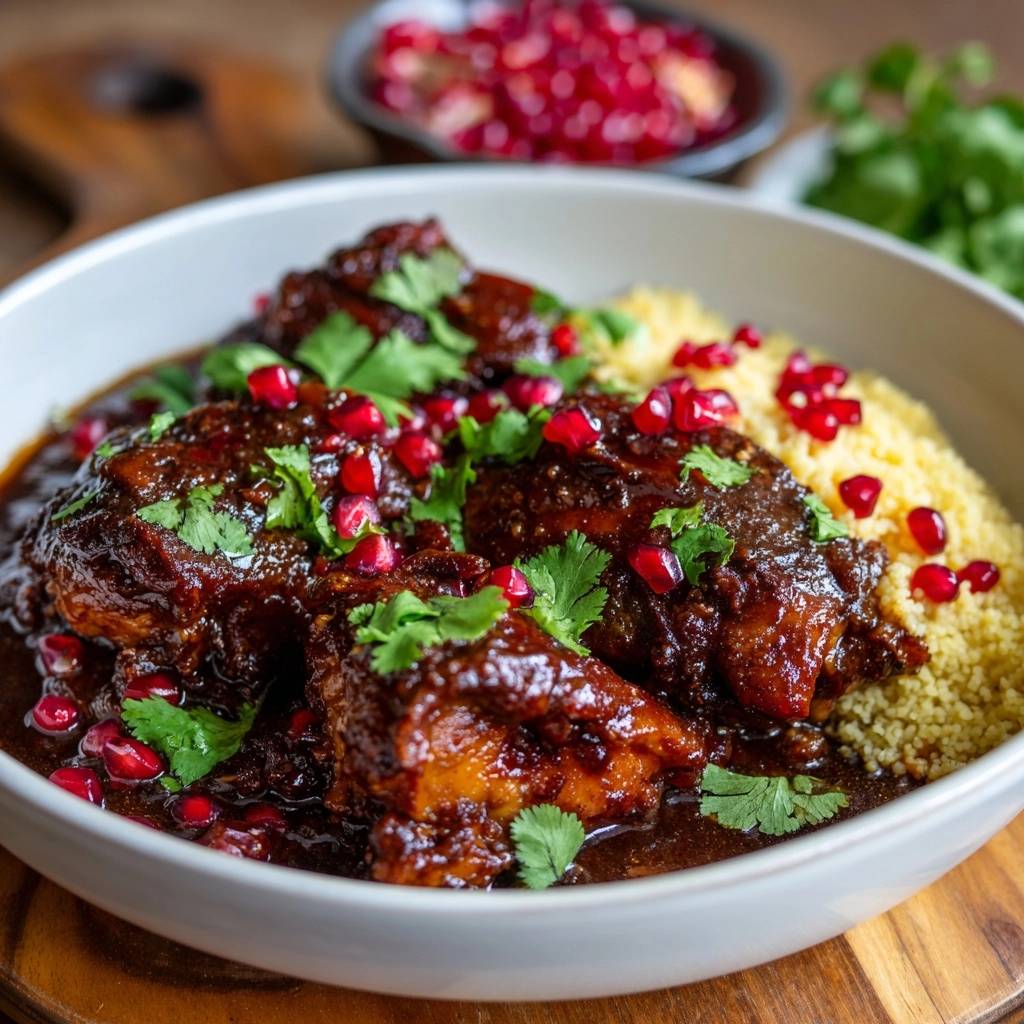
Most home cooks struggle with the “bland chicken” epidemic, where the meat ends up tasting like nothing but salt and steam. This happens because they boil the poultry in a thin sauce rather than focusing on a controlled reduction. This Pomegranate Glazed Braised Chicken fixes that by prioritizing a deep, mahogany lacquer that clings to the meat.
The philosophy of this dish centers on the balance between sharp acidity and earthy warmth. You aren’t making a watery stew here; you’re building a concentrated glaze. The tartness of the pomegranate meets the smoky depth of cumin and cinnamon to create a profile that feels sophisticated yet incredibly comforting.
If the balance of sharp acidity and earthy warmth appeals to you, these Moroccan glazed chicken thighs offer a similar depth with a crisper finish.
The secret to success lies in the moisture control before the chicken ever hits the pan. If your chicken is damp, it will steam instead of searing, and you’ll lose that vital texture. I always tell my friends to pat the skin until the paper towel comes away bone-dry, ensuring the heat creates a crisp barrier that stands up to the braising liquid.
The Chemistry of the Perfect Mahogany Glaze
Creating a restaurant-quality glaze requires an understanding of the Maillard reaction. When you sear the chicken skin-side down in a hot pan, the proteins and sugars reorganize to create hundreds of new flavor compounds. This initial sear also renders out the excess fat, which provides the perfect base for sautéing your aromatics later.
Once the liquid is added, the process shifts from searing to caramelization. Pomegranate molasses and honey are packed with natural sugars that transform during the 30-minute simmer. As the water in the broth and juice evaporates, these sugars concentrate and darken, eventually reaching a syrupy, lacquer-like consistency.
Because we simmer the chicken uncovered, the steam escapes freely, allowing the sauce to thicken naturally. This prevents the skin from becoming soggy and ensures the glaze coats the back of a spoon. By the time the chicken is cooked through, the liquid has reduced into a rich, dark coating that looks like polished mahogany.
Essential Components for Pomegranate Glazed Braised Chicken
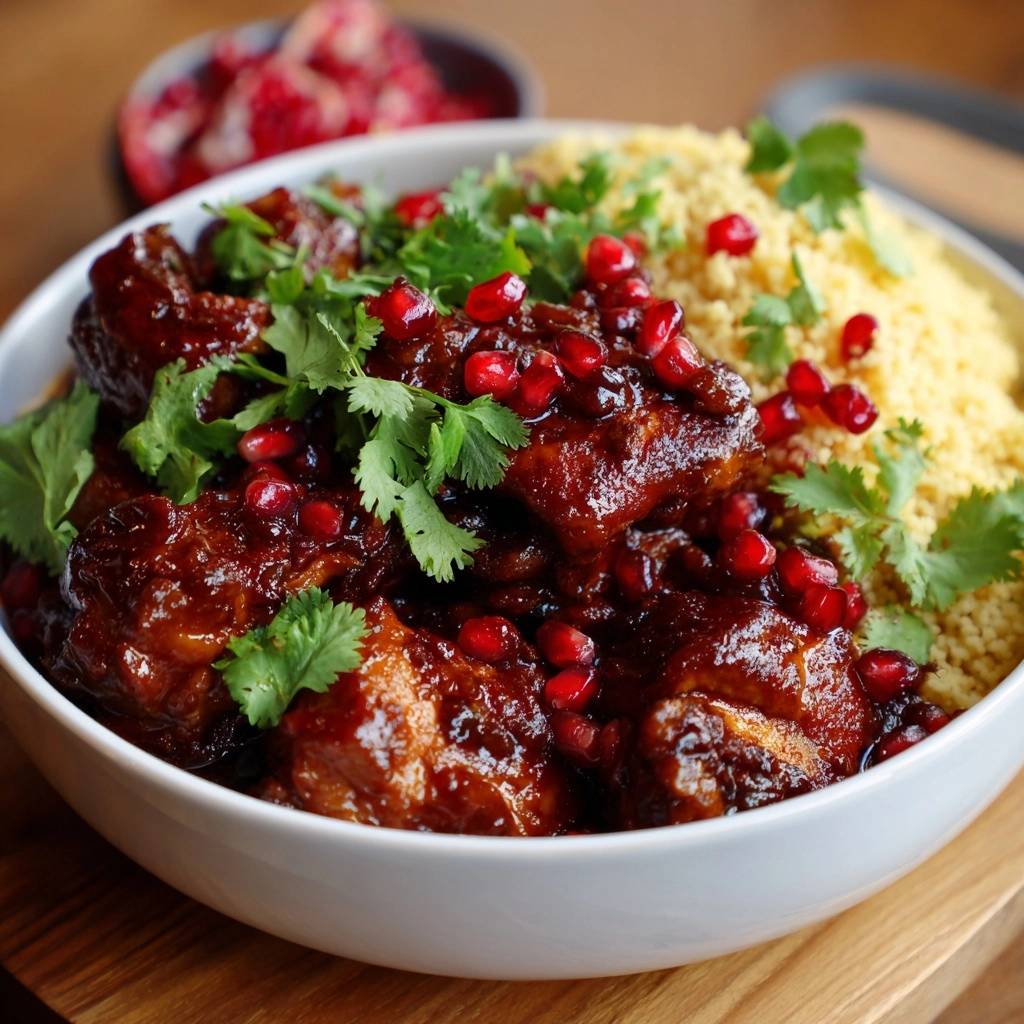
Quality ingredients are the backbone of this recipe, starting with the cut of meat. Bone-in, skin-on thighs are non-negotiable because they contain the collagen necessary for a succulent braise. While white meat dries out quickly, the connective tissue in thighs breaks down into gelatin, keeping the meat juicy even as the sauce reduces.
The star of the show is the pomegranate molasses, which is quite different from standard juice. It is a thick, syrupy reduction that offers a potent punch of acidity and a deep purple hue. Without it, the sauce will lack the necessary viscosity and that signature tart “zing” that cuts through the richness of the chicken fat.
Selecting and Preparing the Poultry
Moisture is the absolute enemy of a good sear, so you must be diligent about drying the chicken. If you have the time, let the chicken sit uncovered in the fridge for an hour before cooking. This air-drying method tightens the skin and guarantees a much louder crunch when it hits the hot oil.
If you’re drying ground chicken for kofta the same way, this technique helps with skewer stability for Mediterranean ground chicken kofta.
The Spice Profile: Earthy Meets Aromatic
We use a blend of cumin, cinnamon, and smoked paprika to bridge the gap between the sweet fruit and the savory meat. The cumin provides an earthy base, while the cinnamon adds a subtle aromatic warmth that mimics the complexity of Middle Eastern cuisine. Smoked paprika ties it all together with a hint of char-like depth.
Step-by-Step: Searing for Maximum Texture
Start by heating your olive oil over medium-high heat until it shimmers but isn’t smoking. You want a hot pan to immediately seize the skin and begin the browning process. Place the chicken thighs in the pan skin-side down, and then—this is the hard part—leave them alone for at least six minutes.
If you try to flip the chicken and it sticks, it isn’t ready yet. The meat will naturally release from the pan once a proper crust has formed. You are looking for a deep, golden-brown color that looks almost like a fried chicken crust. This texture is what allows the skin to remain palatable even after it sits in the braising liquid.
Be careful not to overcrowd your skillet during this stage. If the thighs are packed too tightly, the moisture they release will get trapped, and the chicken will gray and steam. Work in batches if your pan isn’t large enough to give each piece an inch of breathing room. This patience pays off in the final flavor profile.
Deglazing and Building the Braising Liquid
After removing the chicken, you’ll see dark, caramelized bits stuck to the bottom of the pan; this is called “fond.” This is pure flavor gold that you don’t want to waste. After pouring off the excess fat, add your minced garlic and cook it for just a minute until you smell that wonderful aroma.
Immediately pour in the pomegranate juice and chicken broth to deglaze the pan. Use a wooden spoon to scrape up every bit of that fond so it dissolves into the liquid. This step ensures that the savory, seared chicken flavor is fully integrated into the sweet and tart pomegranate sauce.
The Reduction Phase: Achieving the Syrupy Finish
When you return the chicken to the pan, place it skin-side up and make sure the liquid only comes halfway up the sides. We want the meat to simmer in the liquid while the skin stays high and dry. This keeps the top crispy while the bottom absorbs all the pomegranate goodness.
Every ten minutes, use a large spoon to baste the chicken with the bubbling liquid. This “spooning” technique builds layers of flavor on top of the skin, much like applying layers of lacquer to furniture. Each layer dries slightly and sticks, creating a beautiful, glossy finish that is packed with concentrated spice.
Troubleshooting Common Braising Obstacles
If your sauce still looks too thin after 30 minutes, don’t panic. Simply remove the chicken and set it on a plate, then turn the heat up to high for two or three minutes. This rapid boil will quickly drive off the remaining water and thicken the glaze to your desired consistency.
Conversely, if the sauce becomes too thick or starts to smell like it’s burning, whisk in a splash of chicken broth or water. You can check for doneness by wiggling the leg joint; it should feel loose and give way easily. However, using a meat thermometer to hit 165°F is the most reliable way to ensure safety without overcooking.
What to Serve With Pomegranate Glazed Braised Chicken
The sweet-tart glaze on this braised chicken works well with contrasting textures and earthy spices. A side of roasted turmeric cauliflower adds crunch and warmth, while a crisp salad keeps things light.
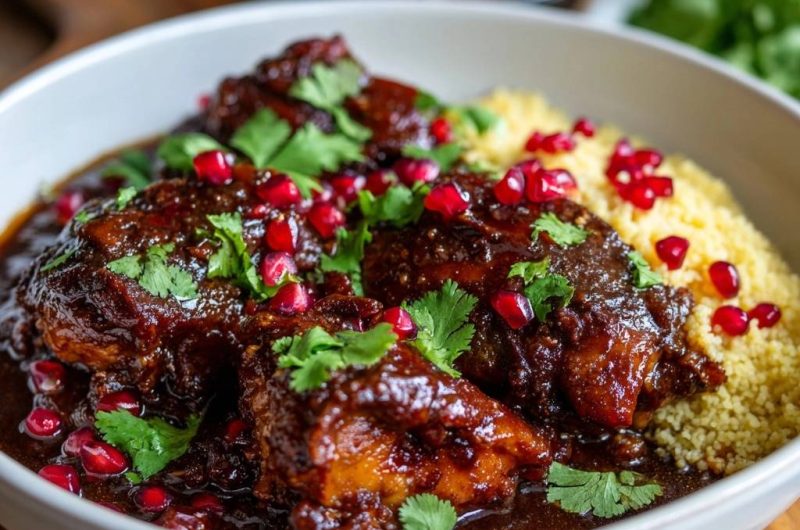
Pomegranate Glazed Braised Chicken
Course: Main CourseCuisine: Middle Eastern FusionDifficulty: medium4
servings15
minutes45
minutes485
kcal60
MinutesA sophisticated chicken dish featuring bone-in thighs seared to perfection and braised in a tangy, sweet pomegranate reduction. Served over couscous and garnished with fresh seeds and cilantro.
Ingredients
4 large bone-in, skin-on chicken thighs
1 cup pomegranate juice (unsweetened)
2 tablespoons pomegranate molasses (essential for the dark, thick glaze shown)
1 tablespoon honey
3 cloves garlic, minced
1 teaspoon ground cumin
1/2 teaspoon cinnamon
1/2 teaspoon smoked paprika
1 cup chicken broth
1/2 cup pomegranate seeds
Fresh cilantro for garnish
2 cups cooked couscous
2 tablespoons olive oil
Salt and black pepper to taste
Directions
- Pat the chicken thighs completely dry with paper towels. This is the most important step for a proper sear. Season generously on all sides with salt, pepper, cumin, cinnamon, and smoked paprika.
- Heat olive oil in a large heavy skillet or Dutch oven over medium-high heat. Place chicken skin-side down. Do not move them for 6 to 8 minutes until the skin is deep golden brown and crispy. Flip and brown the other side for 3 minutes. Remove chicken from the pan and set aside on a plate.
- Lower heat to medium. Pour off all but 1 tablespoon of the rendered fat. Add minced garlic and cook for 1 minute until fragrant.
- Pour in the pomegranate juice, chicken broth, pomegranate molasses, and honey. Use a wooden spoon to scrape up all the brown bits (fond) from the bottom of the pan.
- Place the chicken back into the skillet, skin-side up. Ensure the liquid reaches about halfway up the chicken but does not submerge the crispy skin.
- Simmer uncovered over medium-low heat for 25 to 30 minutes. As the liquid evaporates, it will transform into a thick, dark, syrupy glaze. Every 10 minutes, spoon the reducing sauce over the chicken to build the deep mahogany color seen in the image.
- Once the sauce has thickened to a heavy glaze and the chicken’s internal temperature reaches 165°F, remove from heat.
- Serve the chicken nestled against a bed of fluffy couscous. Spoon the concentrated dark reduction generously over the meat and the edge of the couscous.
- Garnish with fresh pomegranate seeds and cilantro leaves. The fresh seeds provide a burst of acidity that balances the deep, savory glaze.
Notes
- Do not submerge the crispy skin in the braising liquid to maintain the texture achieved during the initial sear. Pomegranate molasses is essential for the signature dark color and tang.