Pineapple Glazed Salmon: Moist, Flaky Perfection
Why Low-Temp Baking Transforms Pineapple Glazed Salmon
Picture this: you pull flaky, juicy salmon from the oven, every bite bursting with sweet pineapple glaze that caramelizes just right. No more dry, tough fish that turns dinner into a disappointment. This low-temp method at 275F gently cooks the salmon, breaking down collagen into gelatin for that perfect tenderness.
High heat at 400F seizes proteins fast, squeezing out moisture and leaving you with chalky fillets. However, baking low and slow keeps juices locked in. In addition, the foil trap steams the fish in its own glory, while a quick broil bubbles the glaze without drying it out.
The secret lies in pulling at 120F internal. It carryovers to a safe 130F as it rests, staying moist. You’ll taste the difference, with pineapple enzymes tenderizing ahead of time.
From Dry Disaster to Flaky Success
I’ve seen too many salmon dinners ruined by overcooking. One minute it’s pink, the next it’s tough. That’s why this recipe hits exactly 120F before broiling. Therefore, carryover cooking brings it to 130F, the sweet spot for flakiness and safety.
Glaze Magic Meets Tender Fish
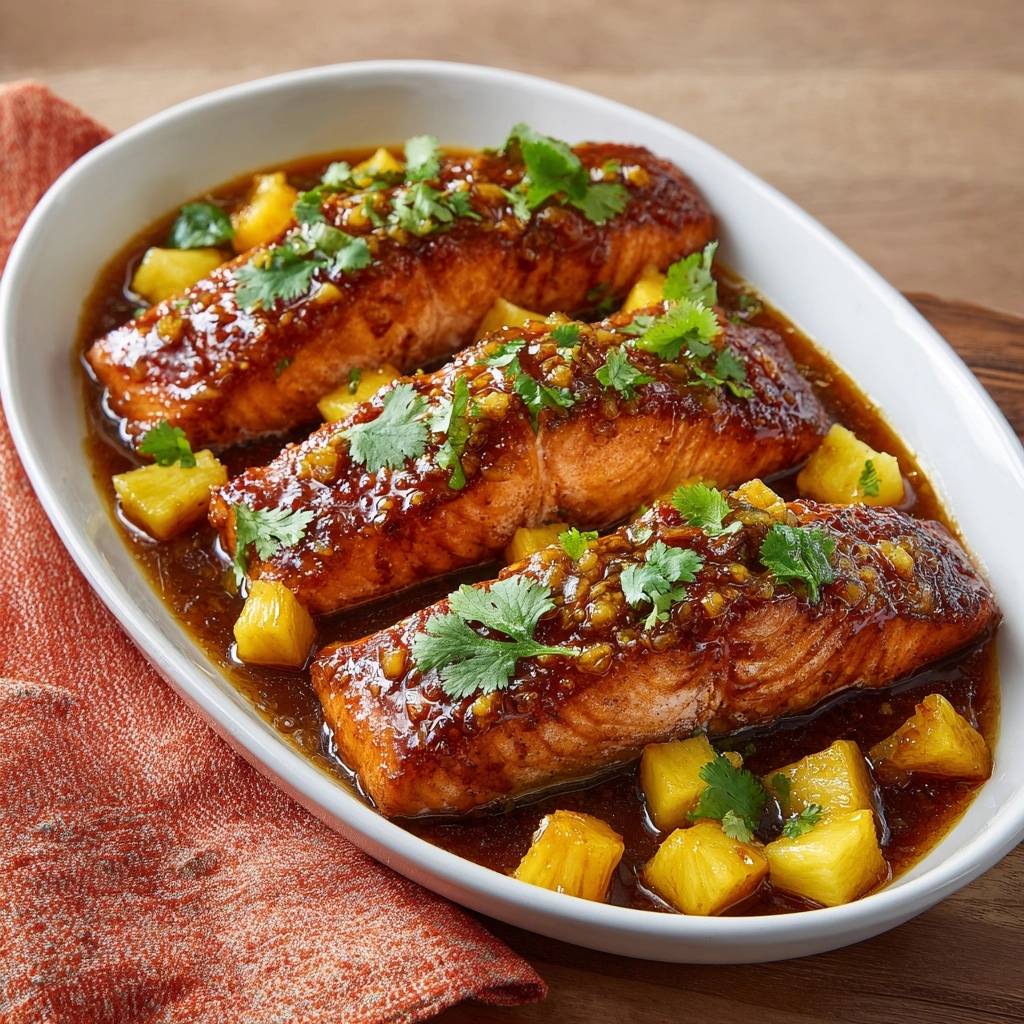
The glossy pineapple glaze clings to the salmon, sealing in every drop of moisture. Its sweet-tangy vibe, inspired by Asian flavors, elevates plain fish to craveable status. You get caramelized edges with juicy centers every time.
Key Ingredients for Pineapple Glazed Salmon
Fresh pineapple chunks bring bromelain, an enzyme that tenderizes salmon gently. Canned works too, just drain well. They add natural sweetness and juice for the glaze base.
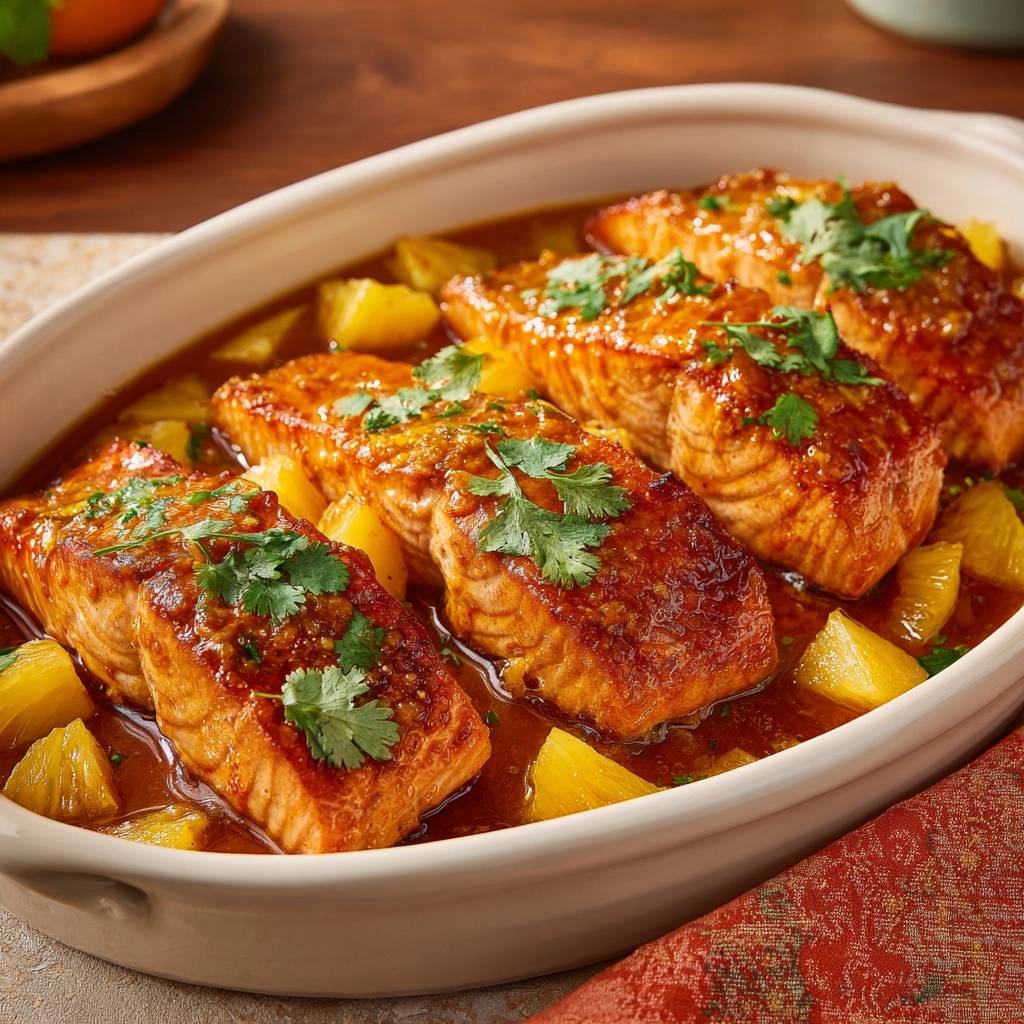
Low-sodium soy sauce delivers umami without overwhelming saltiness. Honey provides fructose for perfect caramelization under the broiler. Rice vinegar cuts the sweetness with bright acidity.
Grated ginger and minced garlic punch up the flavor. Use fresh for the best aroma. In addition, reserve some pineapple juice from the chunks; its viscosity thickens the glaze beautifully.
No fresh pineapple? Drained canned chunks sub fine. However, fresh offers brighter taste and more tenderizing power.
Salmon Fillets: Skin-On vs Skinless Choice
Go for 6oz fillets; they’re ideal for even cooking. Skin-on crisps nicely under the broil, shielding the flesh. Skinless works great too, just watch the edges closer.
Pineapple Chunks and Juice Essentials
Fresh pineapple chunks release enzymes that break down proteins softly. Canned, drained ones save time and still infuse flavor. Their juice makes the glaze cling perfectly.
Soy-Honey Base: Umami Sweetness Balance
Low-sodium soy prevents a salty bite. Honey caramelizes fast, while rice vinegar balances it all. Ginger and garlic add that fresh zing you crave.
Science of Low-Temp Pineapple Glazed Salmon
At 275F, proteins denature slowly, avoiding toughness from rapid contraction. High heat at 400F forces moisture out quick. Therefore, low temp converts collagen to gelatin for supreme flakiness.
Pineapple’s bromelain pre-tenderizes the fish. Honey’s sugars trigger Maillard during broil, browning the glaze. Pull at 120F; it finishes at 130F safely.
The foil cover traps steam, keeping things juicy. Broiling then caramelizes without evaporating liquids. It’s simple science for restaurant results.
Protein Gentle Cooking Explained
Low heat melts collagen into gelatin slowly. This creates that melt-in-your-mouth texture. High temps toughen it instead.
Glaze Caramelization Chemistry
Broiling browns sugars via Maillard, bubbling the glaze. Foil steams first for juiciness. Perfect combo every time.
Equipment for Perfect Pineapple Glazed Salmon
You need basics: an oven thermometer ensures 275F accuracy. An instant-read probe checks 120F precisely. Line your baking dish with foil for easy cleanup and even heat.
Metal pans heat faster than glass, so adjust time if using glass. Broil on a rack for even caramelization. No fancy gear required.
Pro tip: calibrate your oven yearly. It prevents sneaky temperature drifts that dry out fish.
Thermometer Precision Matters
Hit 120F exactly; visuals fool you. Carryover adds 10F while resting. Juicy win.
Step-by-Step: Building Pineapple Glazed Salmon
Pat salmon super dry first. Wet fish repels glaze. Scatter pineapple for infusion as it bakes.
Phase 1: Preheat and Glaze Prep
Set oven to 275F. Whisk soy, honey, vinegar, garlic, ginger, and pineapple juice. It emulsifies smooth. Reserve 1/4 cup for later shine.
Phase 2: Assemble and Low-Bake
Place dry salmon in foil-lined dish. Pour half glaze over, top with pineapple chunks. Seal foil tight; steam builds juiciness. Bake 15 minutes to 120F.
Phase 3: Broil for Caramelized Finish
Uncover, brush reserved glaze. Broil high 2-3 minutes till bubbly. Watch close; edges caramelize fast without drying.
Phase 4: Rest and Garnish
Rest 2 minutes; juices settle. Sprinkle cilantro for fresh contrast. Spoon pan sauce over top.
Avoiding Mistakes in Pineapple Glazed Salmon
Don’t skip the thermometer; guessing leads to overdone fish at 145F. Pat dry or glaze slides off. High oven temp seizes proteins dry.
Over-broil burns edges while center stays raw. Reserve glaze fixes that. Foil prevents steam escape and drying.
Skipping the Thermometer Trap
Visuals lie; probe to 120F. Hits safe 130F final. No toughness.
Glaze Timing Errors
All glaze upfront leaves raw spots. Reserve for broil. Foil locks moisture.
Flavor Variations for Pineapple Glazed Salmon
Swap honey for maple for deeper sweetness. Add sriracha for heat. Use mango chunks for tropical twist.
What’s Next?
Try these delicious pairings:
Lime juice subs vinegar nicely. Grill skinless fillets in foil packets. Keeps it juicy outdoors.
Spicy Sriracha Pineapple Upgrade
Stir 1 tbsp sriracha into glaze. Honey tempers the heat perfectly.
Tropical Mango Substitution
Mango chunks mimic pineapple enzymes. They add vibrant color too.
Pairing Sides with Pineapple Glazed Salmon
Coconut rice soaks up the sweet glaze. Sesame green beans add crunch. Cucumber salad cools the richness.
For a similar sweet and sticky finish that locks in moisture, try this orange glazed salmon.
Avoid heavy starches; light veggies balance best. Steamed bok choy fits the Asian vibe.
Coconut Rice Absorbs Sweet Glaze
Cook rice in coconut milk. Fluff and serve under salmon. Glaze mixes in heavenly.
Quick Sesame Veggie Sides
Stir-fry green beans with sesame oil. Crunch cuts salmon’s tenderness.
Pineapple Glazed Salmon FAQ
Can I Use Frozen Salmon?
Thaw fully in the fridge overnight, then pat extra dry to remove excess water. This prevents watery glaze. Add 3 minutes to bake time since it starts colder.
Is Pineapple Glazed Salmon Freezer-Friendly?
Freeze uncooked fillets in glaze up to 2 months; thaw overnight before baking. Cooked leftovers store airtight 3 days in fridge, but don’t freeze, glaze gets gummy. Reheat gently at 275F.
Substitute for Soy Sauce?
Coconut aminos work great; it’s low-sodium with similar umami. Use equal amount. Tamari if gluten-free needed.
The same caramelization technique works beautifully for this pineapple glazed salmon.
Grill Instead of Oven?
Yes, use foil packet on med-low indirect heat. Seal tight for steam, open last 2 minutes to caramelize. Probe to 120F still.
Nutrition Per Serving?
About 350 calories, packed with omega-3s from salmon and vitamin C from pineapple. High protein, low carb. Great for heart health.
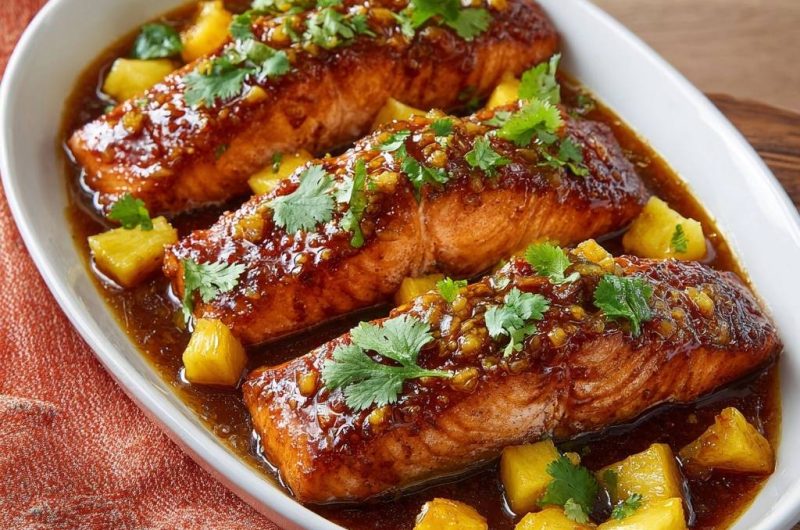
Pineapple Glazed Salmon
Course: Main CourseCuisine: AmericanDifficulty: easy4
servings15
minutes20
minutes450
kcal35
MinutesDry salmon ruins dinner every time, but this low-temp bake in glossy pineapple glaze locks in juices for flaky, moist perfection.
Ingredients
4 salmon fillets (6 oz each, skin-on or skinless)
2 cups pineapple chunks (fresh or canned, drained)
1/2 cup low-sodium soy sauce
1/4 cup honey
2 tablespoons rice vinegar
3 garlic cloves, minced
1 tablespoon fresh grated ginger
1/4 cup pineapple juice (from chunks if canned)
Fresh cilantro, chopped for garnish
Directions
- Preheat oven to 275F. This low temperature is the key to no more dry salmon: it gently cooks the fish to perfect doneness without toughening the proteins.
- In a bowl, whisk soy sauce, honey, rice vinegar, garlic, ginger, and pineapple juice to make the glaze. Reserve 1/4 cup for finishing.
- Pat salmon dry and place in a baking dish. Pour half the glaze over fillets, then scatter pineapple chunks around and on top. Cover tightly with foil.
- Bake for 15 minutes until salmon reaches 120F internal (use a thermometer for precision; it will carryover to 130F while resting, staying juicy).
- Remove foil, brush with reserved glaze, and broil on high 2 to 3 minutes until glaze bubbles and caramelizes without drying the fish.
- Rest 2 minutes, garnish with cilantro, and serve with sauce spooned over. Flaky, moist salmon guaranteed.
Notes
- Use a thermometer for precision: bake to 120F internal temp, it will carryover to 130F while resting for juicy results. Skin-on or skinless fillets both work.