Pineapple Upside-Down Cake with Foolproof Release
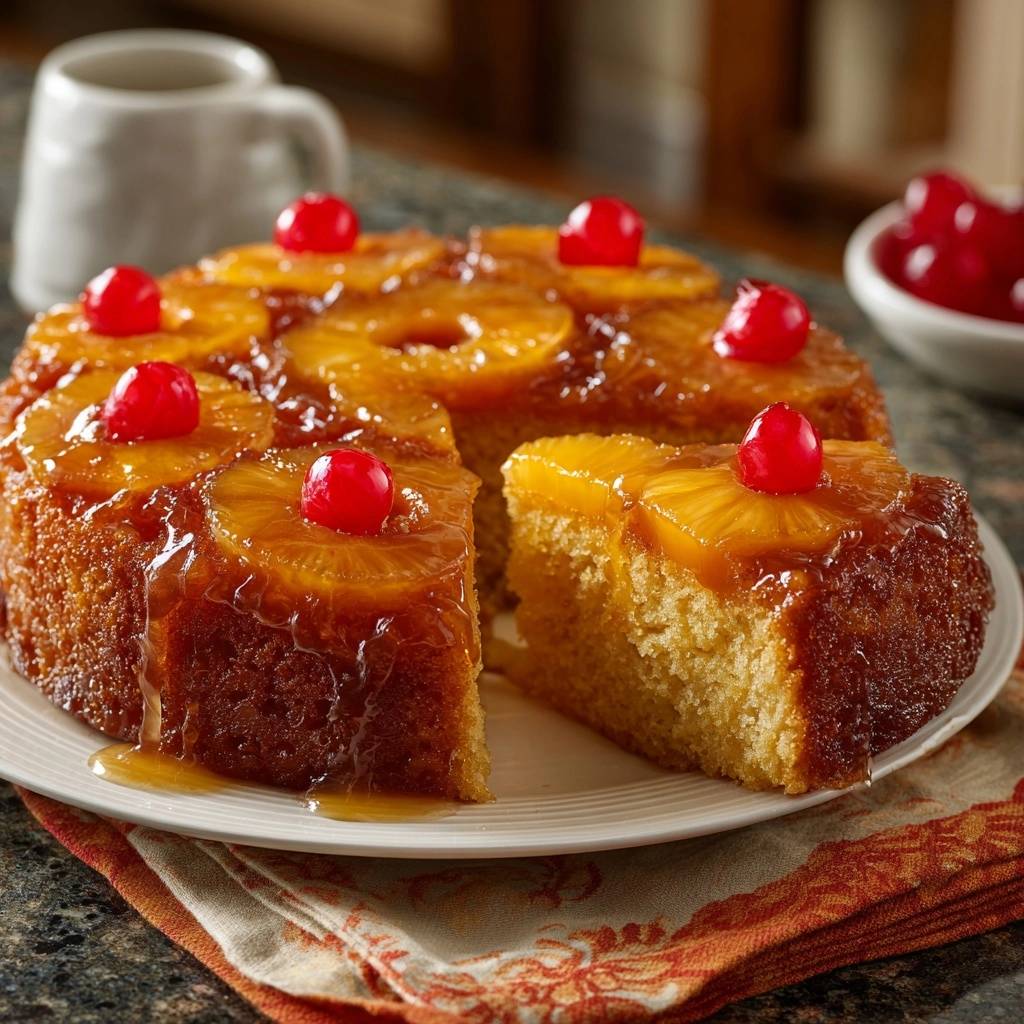
Ever flipped a pineapple upside-down cake only to watch half of it cling desperately to the pan? That heartbreaking mess ends today. This pineapple upside-down cake uses a stovetop butter-sugar melt that forms an unbreakable caramel barrier. No sprays, no parchment, just a perfect release every time.
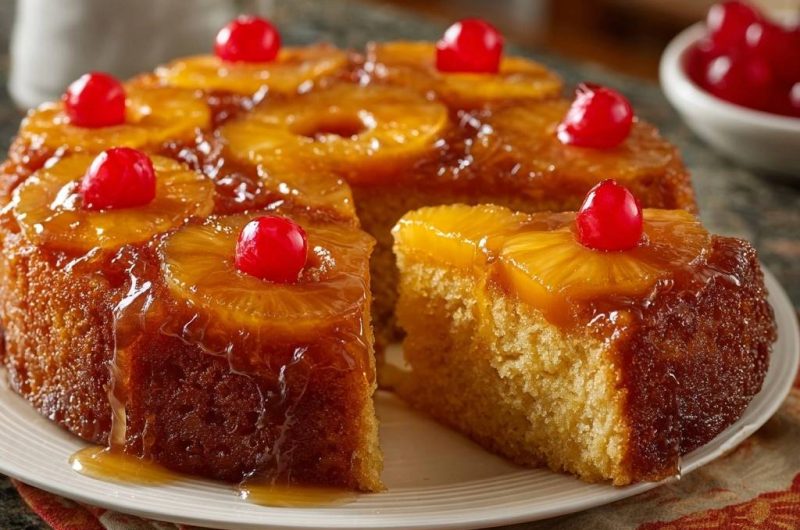
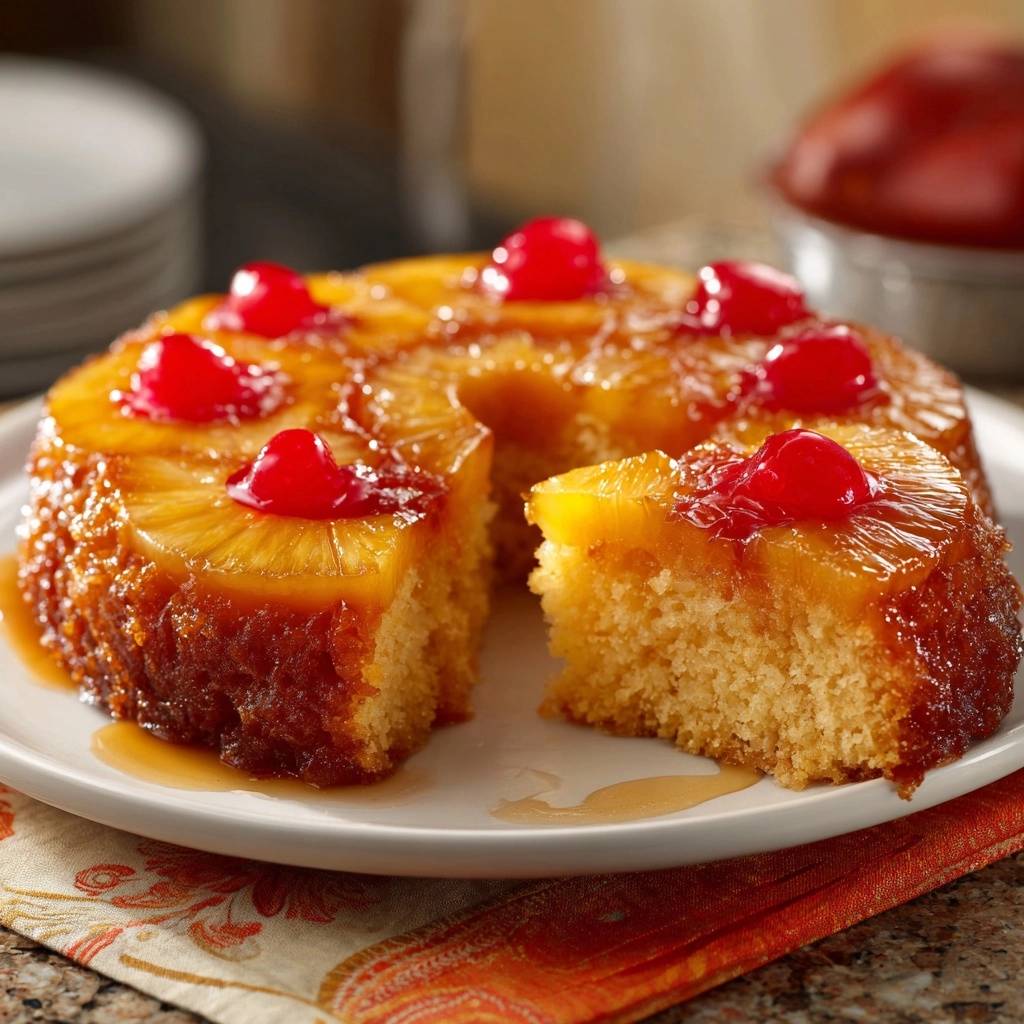
Therefore, you get glossy pineapple rings and cherries that slide out intact, atop a moist crumb bursting with tropical sweetness. It’s the pineapple cake you’ve craved without the stress. Plus, it serves up that classic upside down pineapple dessert vibe in under an hour of active time.
Here’s the expertise booster: melt the butter fully on medium heat before adding brown sugar. Stir until it bubbles glossy, about two minutes. That seals the pan’s pores perfectly, so your pineapple upside-down cake flips like a dream.
Why This Pineapple Upside-Down Cake Succeeds
This pineapple upside-down cake stands out because the stovetop caramel bonds directly to the pan. Sprays fail under heat, and parchment tears easily. However, this method creates a glassy seal that holds through baking and releases cleanly.
This same fruit-and-glaze technique works beautifully for a glazed blueberry lemon bundt cake.
In addition, the arranged pineapple slices glisten in caramel, with cherries adding pops of color and tartness. You’ll love how the moist cake soaks up just enough fruit juice for flavor without sogginess. It’s your go-to pineapple upside down cake recipe for flawless results.
Moreover, the easy pineapple cake technique ensures even caramelization. No more patchy toppings or stuck edges. Just pure, nostalgic perfection.
Classic Nostalgia Meets Modern Reliability
Pineapple upside-down cake burst onto scenes in the 1920s, thanks to canned pineapple’s rise. Dole pushed it as a simple dessert. Today, this version fixes old sticking woes with stovetop science.
Therefore, you enjoy the retro charm of caramelized rings and cherries, backed by reliable release. It’s comfort food upgraded.
If you enjoy the bright citrus in this cake, the same sunny flavor shines in this glazed lemon blueberry loaf.
Key Ingredients for Caramelized Pineapple Upside-Down Cake
Start with unsalted butter in the topping; it melts purely without salt interfering with caramel. Packed brown sugar delivers deep molasses richness that white sugar can’t match. Drain the 20-ounce can of pineapple slices, but reserve that juice for batter moisture and tang.
Maraschino cherries, stems off, provide color and sweet-tart contrast. For the cake, softened unsalted butter creams airy for tender crumb. All-purpose flour offers just-right protein for structure without toughness.
In addition, two large eggs add lift and bind everything. Baking powder gives rise, while salt sharpens flavors. Pineapple juice plus milk keeps it fruity yet balanced, preventing sogginess. Use room-temp eggs for smooth emulsion.
Fresh pineapple works if very ripe and drained well, but canned holds shape better in heat. No buttermilk needed; the juice-milk combo tenderizes naturally.
Topping Components Explained
The half-cup butter to one-cup brown sugar ratio ensures bubble-free caramel. Reserve pineapple juice for acidity that tenderizes batter. Place cherries in slice centers and gaps for even distribution and visual pop.
Cake Batter Building Blocks
Flour’s moderate protein builds structure without density. Granulated sugar tenderizes and sweetens. Eggs provide lift; alternate wet-dry mixes distribute evenly for moist crumb.
Science of the Stovetop Caramel Barrier
Butter melts at 350°F, then brown sugar inverts into liquid caramel via stovetop heat. Bubbles signal the emulsion filling pan pores for a non-stick seal. That’s why stovetop beats oven melting; it sets faster without cracking.
In addition, invert sugars prevent crystallization, creating a glossy glaze. Post-bake, heat softens it just enough for clean release. This pineapple upside-down cake science guarantees success.
Therefore, your upside down pineapple dessert emerges whole, with caramel clinging perfectly to fruit.
Maillard Reaction in Action
Heat browns butter-sugar proteins, forming a flavorful, non-stick glaze that bonds to metal. It transforms into a durable barrier, releasing cleanly after the flip.
Essential Tools for Flawless Pineapple Upside-Down Cake
Grab a 9-inch round cake pan or cast-iron skillet for stovetop compatibility and even heat. A hand mixer or stand mixer creams butter smoothly. You’ll need a thin knife for edges and a serving plate for flipping.
However, skip sprays; the caramel does the work. These tools make your pineapple upside-down cake foolproof.
Cast-Iron Skillet Advantages
Cast-iron retains heat, setting caramel firmly and synergizing with its seasoning for extra release. Cake pans work too, but rank below for heat control. Avoid glass; it heats unevenly.
Mastering the Foolproof Pan Prep Phase
Preheat oven to 350°F. Place half-cup butter in your 9-inch pan on medium stovetop heat. Melt fully, then stir in brown sugar until it bubbles glossy, about two minutes. Remove immediately to avoid burning; it smells richly sweet.
Next, arrange drained pineapple slices in a single layer. Cut some to fit edges snugly. Pop a cherry in each center and fill gaps for full coverage.
This topping locks in during baking, transforming into caramelized perfection for your pineapple upside-down cake.
Perfect Pineapple Arrangement
Fit 10-12 slices symmetrically; trim edges for a tight circle. Center cherries precisely, add extras between for no bare spots. It ensures even sweetness.
Building the Moist Cake Batter Layer
Beat softened butter and granulated sugar until creamy, three to five minutes; it turns pale and fluffy. Add eggs one at a time, beating well for stable emulsion. Mix in vanilla.
Whisk flour, baking powder, and salt. Alternate adding dry with pineapple juice and milk, starting and ending with dry. Stir just until combined to avoid toughness.
Gently spoon batter over fruit, smoothing top lightly. Don’t press down, or fruit shifts. This pineapple upside-down cake batter bakes moist and tender.
Creaming Butter for Tenderness
Softened butter traps air for light crumb; melted makes dense cake. Cream at medium speed to ribbon stage for best lift.
Alternating Wet and Dry Precision
Three dry and two wet additions prevent curdling. Pineapple juice adds tang without over-wetting. It hydrates evenly for fluffiness.
Baking and the Critical Inversion Moment
Bake 40 to 45 minutes until toothpick comes out clean and edges pull from sides. Cool exactly five minutes; caramel stays fluid. Run thin knife around edges.
Place plate over pan, grip firmly, and flip swiftly. Lift pan slowly; cake slides out intact. Spoon back any stuck bits. Cool 30 minutes, serve warm for melt-in-mouth joy.
Pro tip: warm slices revive moisture next day. Perfect baking for pineapple upside-down cake.
Timing the Perfect Flip
Five minutes max keeps caramel viscous for release. Longer hardens it. Grip plate and pan tight; one confident motion works best.
Avoiding Pineapple Upside-Down Cake Pitfalls
Sticky flips happen from overcooling or under-melted caramel; fix with prompt heat and full bubbling. Dense cake comes from overmixing, activating gluten. Drain pineapple well to dodge sogginess.
Burnt edges mean too-hot pan; use medium heat. Dome forms from uneven batter; spread gently. These tips save your pineapple upside-down cake.
Overmixing and Texture Fixes
Stop when flour vanishes; lumps are fine. Overmix toughens via gluten. Rest batter five minutes if needed.
Flavor Twists on Pineapple Upside-Down Cake
Add coconut flakes to batter for tropical chew. Stir rum extract into caramel for depth. Dice fresh pineapple for chunks, or swap cherries with pecan halves.
In addition, dust cake batter with cinnamon for warmth. These keep chemistry intact for pineapple upside-down cake variations.
Nutty and Tropical Swaps
Pecans add crunch without sogginess; toast lightly. Coconut shreds boost moisture balance. All fit seamlessly.
Pairing Sides with Pineapple Upside-Down Cake
Whip cream with a touch of sugar for stable clouds that melt into caramel. Vanilla ice cream contrasts warm cake perfectly. Coconut yogurt offers dairy-free creaminess.
Fresh berries cut sweetness. Coffee balances the fruit with bold roast.
Pairings for Pineapple Upside-Down Cake
If you’re looking for more ways to use caramelized pineapple or round out a dessert spread, these two recipes share the same sweet, golden fruit character.
- Use leftover pineapple to make Caramelized Pineapple Chunks – they cook in a skillet without a watery glaze and work as a topping for ice cream or yogurt.
- For a warm, spiced side that echoes the cake’s pineapple flavor, try Glazed Sweet Potatoes and Pineapple – the natural sweetness of
Storage and Make-Ahead for Pineapple Cake
Store covered at room temp up to two days; caramel softens nicely. Fridge holds five days, but rewarm slices in 300°F oven 10 minutes to restore moisture.
Freeze whole cake up to three months, wrapped tightly twice. Thaw overnight in fridge. Pro tip: slice before freezing for easy portions.
Pineapple Upside-Down Cake Troubleshooting
Sticky Flip Rescue Steps
If stuck, warm pan bottom gently over low heat 30 seconds to loosen caramel. Spoon toppings back on. Prevent by full two-minute melt.
Batter Consistency Checks
Batter should mound slightly, not pour like soup. Add flour tablespoon if thin. Thick ensures fruit stays put.
FAQ
How do you store leftovers of pineapple upside-down cake?
Keep covered at room temperature for up to two days; the caramel stays glossy and soft. Refrigerate in an airtight container for five days max, but warm slices in a 300°F oven for 10 minutes to revive moisture and texture. For freezing, wrap tightly in plastic then foil; it holds three months without sogginess. Thaw overnight in the fridge and reheat gently to avoid gumminess.
Why did my pineapple upside-down cake stick to the pan?
Sticking usually means the caramel didn’t bubble fully or you cooled longer than five minutes, hardening the seal. Always melt butter completely, stir brown sugar two full minutes until glossy bubbles form, and flip precisely at five minutes when it’s still fluid. If it happens, warm the pan bottom briefly over low heat and spoon bits back; next time, the stovetop method nails it.
Can I substitute ingredients in pineapple upside-down cake?
Swap canned pineapple for fresh if drained super well; it works but may soften more. No maraschino cherries? Use halved grapes or pecans for similar pop. For dairy-free, coconut oil replaces butter in topping, but cream it well in batter. Gluten-free flour blend (1:1) subs all-purpose; add one extra tablespoon milk if batter thickens. Pineapple juice is key for tang, but orange juice approximates in pinch.
Why is my pineapple upside-down cake dense or gummy?
Density comes from overmixing batter, developing gluten; stir just until flour disappears, lumps okay. Gummyness signals undrained pineapple or overbaking; pat slices dry and check at 40 minutes with toothpick. Also, ensure softened butter creams to ribbon stage for air pockets. These fixes yield light, moist crumb every time.
How do I prevent fruit from sinking in pineapple upside-down cake?
Arrange pineapple snugly in warm caramel so it grips, and spoon thick batter gently without pressing down. Batter should be scoopable, not runny; if thin, whisk in one tablespoon flour. Bake promptly at 350°F middle rack for even rise that holds fruit in place.
Can I make pineapple upside-down cake ahead?
Yes, prep topping and batter separately; assemble and bake same day for best flip. Fully baked cake stores two days room temp or freezes three months. Make caramel layer day before, cover tightly, and add batter fresh; it reheats beautifully warm.
Pineapple Upside-Down Cake
Course: DessertCuisine: AmericanDifficulty: mediumYields8
servingsPrep Time20
minutesCook Time45
minutesCalories450
kcalTotal Time65
MinutesSick of pineapple upside-down cakes sticking to the pan and falling apart on the flip? This recipe’s butter-sugar melt-in-pan method creates a caramelized barrier that guarantees clean release every single time, no parchment or sprays needed.
Ingredients
Topping:
1/2 cup unsalted butter
1 cup packed brown sugar
1 can (20 oz) pineapple slices in juice, drained (reserve juice)
10-12 maraschino cherries, stems removed
Cake:
1 1/2 cups all-purpose flour
1 cup granulated sugar
1/3 cup unsalted butter, softened
2 large eggs
2 teaspoons baking powder
1/4 teaspoon salt
1 teaspoon vanilla extract
1/2 cup reserved pineapple juice
1/4 cup milk
Directions
- Preheat oven to 350 degrees F.
- For the foolproof pan release (the star step): Place 1/2 cup butter in a 9-inch round cake pan or cast-iron skillet. Set pan directly on stovetop over medium heat. Melt butter completely, then stir in brown sugar until it bubbles and turns smooth and glossy, about 2 minutes. This creates a sticky caramel seal that bonds to the pan and prevents any sticking. Remove from heat immediately.
- Arrange pineapple slices in a single layer over the warm caramel, cutting some to fit edges if needed. Place a cherry in the center of each slice and between slices for full coverage.
- In a large bowl, beat softened butter and granulated sugar until creamy. Add eggs one at a time, beating well after each. Mix in vanilla.
- Whisk together flour, baking powder, and salt. Alternate adding dry ingredients to batter with pineapple juice and milk, starting and ending with dry. Stir just until combined, no overmixing.
- Gently spoon batter evenly over pineapple topping, smoothing top without disturbing fruit.
- Bake 40-45 minutes until a toothpick in center comes out clean and edges pull slightly from pan sides.
- Cool in pan exactly 5 minutes (no longer, or caramel hardens). Run a thin knife around edges to loosen. Place a serving plate over pan top. Holding firmly, flip pan upside down in one swift motion. The foolproof caramel release lets the cake slide out perfectly intact. Lift pan off slowly. If any topping sticks, lift pan edge and spoon it back on.
- Cool 30 minutes before slicing. Serve warm for best moist texture. Store covered at room temp up to 2 days.
Notes
- Cool in pan exactly 5 minutes before flipping to ensure perfect release. Serve warm for best moist texture. Store covered at room temperature up to 2 days.