The Ultimate Loaded Cheesy Hashbrown Casserole: Solving the Soggy Potato Problem
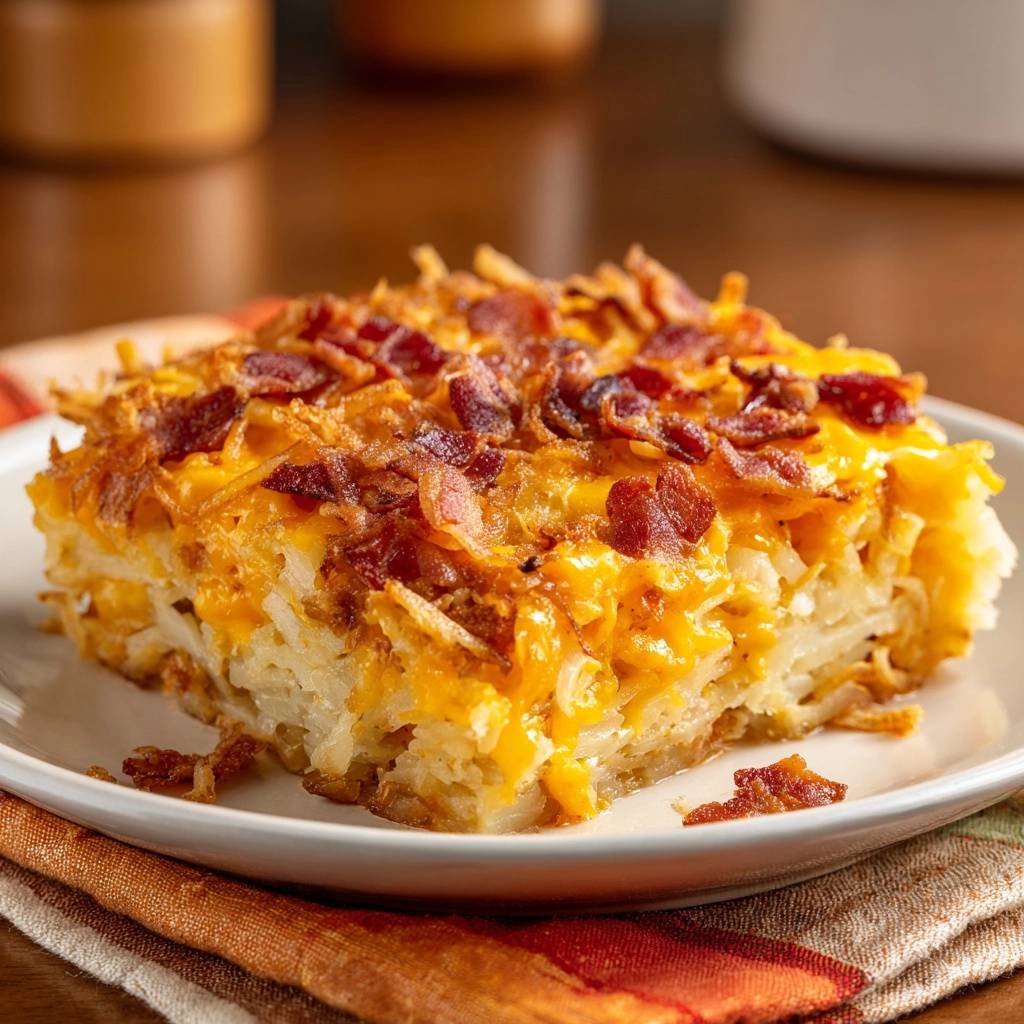
We have all been there at the potluck or holiday dinner. You reach for a scoop of what looks like a golden, crispy potato dream, only to find a puddle of bland, mushy starch underneath. While the “funeral potato” legacy is built on comfort, most traditional recipes fail because they treat the potato like a sponge rather than a vegetable.
This version changes the game by focusing on structural integrity and texture contrast. By using an “Anti-Soggy Bottom” philosophy, we ensure every bite has a distinct crunch and a creamy center that doesn’t collapse. You are looking at a 15-minute prep time and a 55-minute bake that will completely redefine how you view the humble hashbrown.
The secret to this success lies in a dual-stage baking process. Instead of dumping everything into a bowl and hoping for the best, we treat the potatoes with the respect they deserve. By par-baking the shreds before adding the dairy, we lock in the texture and prevent that dreaded “mashed potato” consistency that ruins so many casseroles.
Why Most Hashbrown Casseroles Turn Into Mush
Frozen potatoes are essentially tiny ice blocks held together by starch. When you toss them directly into a dish with sour cream and butter, that ice melts and turns into steam. Because the dairy creates a heavy seal on top, that steam has nowhere to go, effectively boiling the potatoes in their own liquid.
Furthermore, starch behaves differently when it is trapped in a high-moisture, dairy-heavy environment. Instead of crisping up, the starch granules swell and burst, creating a gummy, glue-like texture. This “steaming effect” is the primary reason most casseroles lack the structural bite we crave.
This recipe breaks that cycle by removing the water before it ever hits the oven. By treating the potatoes as a dry ingredient first, we allow the heat to penetrate the shreds and create a firm foundation. This ensures that when the cream is finally added, it coats the potatoes rather than diluting them into a soup.
That same trick of pre-cooking the peppers to avoid moisture works great for these cheesy beef stuffed peppers.
Essential Components for Loaded Cheesy Hashbrown Casserole
You will need a 30-ounce bag of frozen shredded hashbrowns. It is vital to let these thaw completely before you start, as you cannot squeeze the moisture out of a frozen block. Look for a brand that offers long, consistent shreds rather than small, broken bits for the best mouthfeel.
The cheese is the soul of this dish, so please grab a block of sharp cheddar and grate it yourself. Pre-shredded cheese is coated in potato starch or cellulose to prevent clumping in the bag, which also prevents it from melting into a smooth, silky sauce. Freshly grated cheese provides a much better “pull” and a richer flavor.
For the binding agents, we use a combination of sour cream and heavy cream. The sour cream provides a necessary tang that cuts through the fat, while the heavy cream adds a luxurious, velvety finish. Together, they create a thick sauce that clings to the potatoes without making them swim in liquid.
The Role of Beef Bacon and Aromatics
Beef bacon brings a deep, smoky saltiness that elevates this from a side dish to a centerpiece. Since we are avoiding pork, beef bacon offers a sturdier texture and a savory profile that mimics the richness of a high-end steakhouse side. Cook it until it is very crisp so it maintains its bite even after being baked into the cheese.
The aromatics are simple but precise. Onion powder and garlic powder provide a uniform flavor distribution that fresh aromatics sometimes can’t achieve in a quick bake. However, the real hero is the cracked black pepper. Use a coarse grind to provide a sharp, spicy contrast against the heavy fats of the cream and cheese.
The Moisture Purge: A Critical Preparation Step
If you skip this step, you are essentially inviting a soggy bottom to dinner. Once your hashbrowns are thawed, pile them into the center of a clean, thin kitchen towel. Gather the corners, stand over the sink, and twist the towel with as much force as you can muster. You will be shocked at how much water drains out.
This liquid is the enemy of crispiness. By removing it, you open up the cellular structure of the potato shreds. This allows the melted butter and seasonings to actually penetrate the potato rather than just sliding off the surface. It is the difference between a potato that is seasoned on the outside and one that is flavorful all the way through.
If you enjoy this method for achieving crispy potatoes, try it with the cheesy beef jalapeño cornbread for a similar texture boost.
Think of the potato shreds like a dry sponge. When they are full of water, they can’t absorb anything else. Once you squeeze them dry, they are ready to soak up the butter, garlic, and onion flavors. This 200-word emphasis on the “squeeze” is because it is truly the most important five minutes of the entire process.
Step-by-Step: Achieving the Perfect Par-Bake
Preheat your oven to a hot 400°F. This high initial heat is necessary to “shock” the potatoes and begin the browning process. Spread your seasoned, butter-coated potatoes into the greased dish and press them down slightly. You want good contact with the bottom of the pan to encourage browning.
Bake them for 20 minutes. During this time, the exterior starch “sets,” creating a protective barrier. You are looking for the edges to turn a light golden brown and the centers to look translucent and matte rather than wet. This par-bake ensures the potatoes stay individual and distinct once the liquids are introduced.
Pro Tip: If your oven has a convection setting, use it during this par-bake. The circulating air helps whisk away any remaining surface moisture, leading to an even crispier result. Just keep an eye on the edges so they don’t get too dark too quickly.
Integrating the Cream and Cheese Layers
While the potatoes are roasting, whisk your sour cream and heavy cream until the mixture is completely smooth. Once the 20-minute timer goes off, pull the dish out and immediately drop the oven temperature to 350°F. This lower heat is crucial for the second half of the bake to prevent the dairy from curdling or “breaking.”
Pour the cream mixture over the hot potatoes. It might look like a lot, but the par-baked potatoes will handle it beautifully. Sprinkle 1.5 cups of your cheddar on top and use a fork to gently swirl the cheese into the upper layer of the potatoes. You aren’t looking for a perfect mix; pockets of pure cream and pockets of melted cheese create a better eating experience.
This “swirl” technique ensures that the cheese is integrated into the body of the casserole rather than just sitting like a plastic sheet on top. It allows the cream to bubble up through the cheese, creating a beautiful, mottled texture that looks as good as it tastes.
Building the Crispy Fried Onion Crust
After the second 20-minute bake, it is time for the final flourish. The casserole should be mostly set at this point. Remove it from the oven and top it with the remaining cup of cheese, the crispy fried onions, and that chopped beef bacon. This creates a structural “lid” that protects the creamy interior while providing a massive crunch.
Return the dish to the oven for the final 10 to 15 minutes. During this stage, the Maillard reaction takes over. The sugars in the onions and the proteins in the cheese and bacon brown deeply, creating a complex, savory crust. You want to see the cheese bubbling vigorously around the edges and turning a deep, rich orange.
Be careful not to let the onions burn. They can go from perfectly toasted to charred in a matter of sixty seconds. If you notice the top browning too fast, you can loosely tent the dish with foil, but usually, the 350°F temperature keeps things under control perfectly.
The Science of the 10-Minute Rest
I know it is tempting to dive in the second the dish hits the counter, but patience is a literal ingredient here. When the casserole comes out of the oven, the fats and proteins are in a liquid state. If you cut into it immediately, the sauce will run, and the portion will slump into a messy pile on the plate.
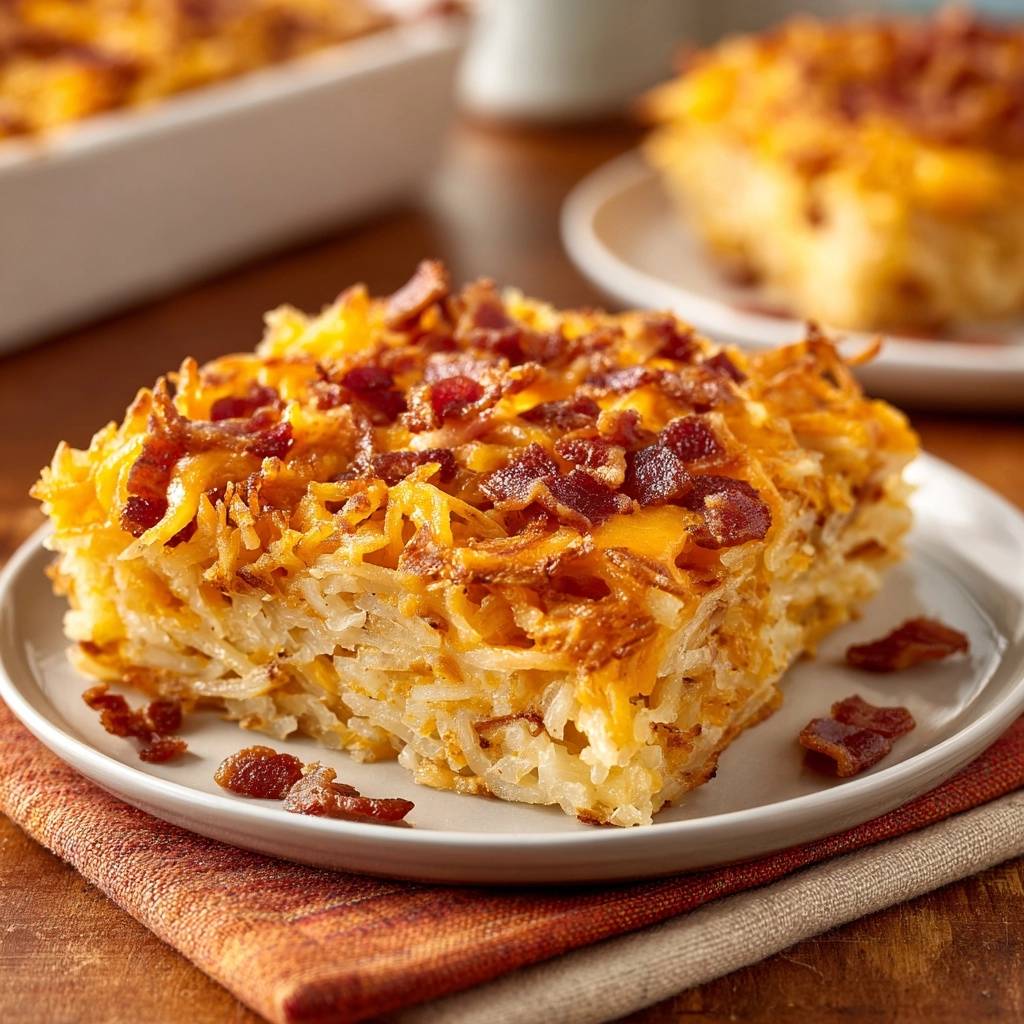
During the 10-minute rest, carry-over cooking finishes the very center of the dish. More importantly, the starches and proteins begin to firm up as they cool slightly. This allows the fats to be reabsorbed into the potato shreds, resulting in a cohesive, stable slice. You want clean, square portions that show off those beautiful, distinct layers.
Think of it like resting a steak. You are letting the internal pressure equalize so the moisture stays where it belongs—inside the food. This rest period is what separates a “hot mess” from a professional-looking side dish that holds its shape on a plate next to your main course.
Troubleshooting Common Casserole Failures
If you find that your potatoes are still frozen when you are ready to cook, do not try to power through. Frozen potatoes will release too much water too fast, and the par-bake won’t work. Thaw them quickly by placing the sealed bag in a bowl of warm water for 15 minutes, then proceed with the towel squeeze.
If your sauce looks oily or “broken,” it usually means the oven was too hot or you used low-quality, pre-shredded cheese. High heat causes the fat to separate from the solids in the dairy. To prevent this, always ensure you drop the temperature to 350°F before adding the cream and cheese mixture.
For those whose ovens run hot, the onion topping might brown before the center is hot. If the top looks done but the middle feels jiggly, simply cover the dish with aluminum foil. This stops the browning process while allowing the heat to continue penetrating the center of the casserole.
Make-Ahead Strategies and Storage Logistics
You can definitely prep parts of this ahead of time, but don’t assemble the whole thing too early. You can squeeze the potatoes and toss them with the butter and spices up to 24 hours in advance. Store them in an airtight container in the fridge. Similarly, you can whisk the cream and sour cream together and keep that in a separate jar.
Do not combine the wet and dry components until you are ready to start the par-bake. If the potatoes sit in the cream for hours, they will soften and lose that structural integrity we worked so hard to build. For the best results, follow the steps in order on the day you plan to serve.
Leftovers store beautifully in an airtight container for up to four days. When reheating, avoid the microwave if possible, as it will make the fried onions soggy. Instead, put a portion in a small oven-safe dish and heat at 350°F for 10 minutes. This will revive the crispy top and keep the potatoes firm.
Optimal Pairings for a Rich Potato Side
Because this casserole is incredibly rich and savory, you want to pair it with something that offers a bit of acidity or lean protein. A roasted chicken with lemon and herbs is a perfect match. The citrus cuts through the heavy cheddar and cream, refreshing your palate between bites of potato.
Grilled steaks or a coffee-rubbed roast also work well, as the smoky beef notes complement the beef bacon in the casserole. If you are looking for a vegetable side, go for something bright and crisp, like a vinegar-based coleslaw or a simple green salad with a sharp vinaigrette.
Avoid pairing this with other heavy, starch-based sides like macaroni and cheese or thick gravies. You want the Loaded Cheesy Hashbrown Casserole to be the star of the show, and too many heavy hitters on one plate can lead to a “food coma” feeling rather than a satisfying meal.
Expert Tips for Customizing Your Casserole
Once you have mastered the base recipe, feel free to get creative. If you like heat, fold some diced jalapeños or a dash of cayenne pepper into the potato mixture before the par-bake. The spice works incredibly well with the sharp cheddar and cooling sour cream.
You can also experiment with different cheeses. While sharp cheddar is the classic choice, swapping half of it for smoked gouda or pepper jack can add a whole new dimension of flavor. Just remember to always grate it yourself from a block to ensure that perfect, creamy melt.
Finally, don’t underestimate the power of fresh herbs. A handful of chopped chives or fresh parsley sprinkled over the top right before serving adds a pop of color and a hit of freshness that wakes up the whole dish. It makes the casserole look as vibrant as it tastes.
What’s Next?
Try these delicious pairings:
Frequently Asked Questions
Can I use fresh potatoes instead of frozen hashbrowns?
Yes, but it requires extra work. You must peel and shred russet potatoes, then soak them in cold water for 30 minutes to remove excess starch. After soaking, rinse them thoroughly and perform the “moisture purge” with a kitchen towel twice. Fresh potatoes hold more water than frozen ones, so the squeeze step is even more critical here.
Why is my casserole oily on top?
This usually happens if you use pre-shredded cheese or if the butter didn’t fully emulsify with the potatoes. Pre-shredded cheese has additives that can cause the oils to separate when heated. Always use block cheese and ensure your melted butter is tossed thoroughly with the dried potato shreds before the par-bake to prevent pooling.
Can I use Greek yogurt instead of sour cream?
You can substitute full-fat Greek yogurt for sour cream in a 1:1 ratio. It will provide a similar tang and creamy texture. However, avoid non-fat or low-fat yogurt, as they have a higher water content and are more likely to curdle or break under the high heat of the oven, which could lead to a watery consistency.
How do I double this recipe for a large crowd?
To double the recipe, use two separate 9×13 inch dishes rather than one deep dish. If the potato layer is too thick, the center will steam and become mushy before the edges crisp up. Bake both dishes side-by-side, but rotate them halfway through the cooking time to ensure even heat distribution from your oven’s heating elements.
Can I freeze the leftovers?
You can freeze the baked casserole for up to two months. Wrap individual portions tightly in plastic wrap and then foil. To reheat, thaw in the fridge overnight and bake at 350°F until warmed through. Note that the fried onions will lose their crunch after freezing, so you might want to add a fresh sprinkle of onions during the last 5 minutes of reheating.
What if I don’t have a kitchen towel for the moisture purge?
You can use several layers of heavy-duty paper towels, but be careful as they can tear when you squeeze. A clean pillowcase or a piece of cheesecloth also works perfectly. The goal is to use a material that allows water to pass through while keeping the potato shreds contained so you can apply maximum pressure.
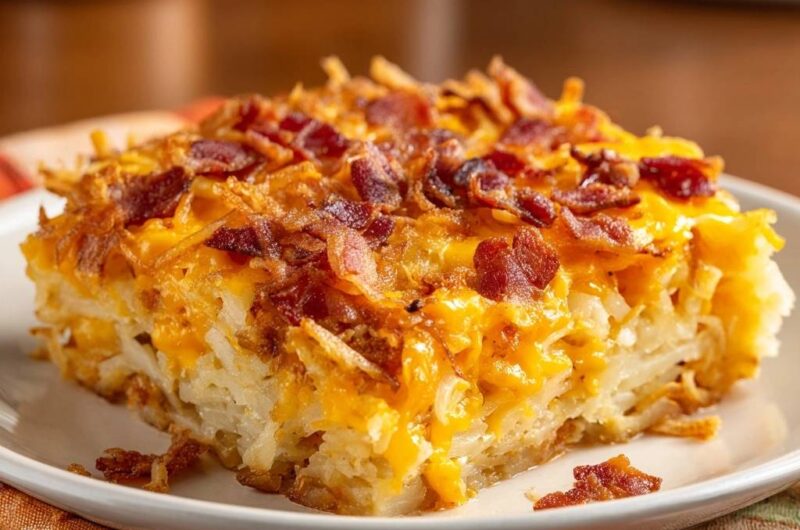
Hashbrown Casserole
Course: Side DishCuisine: AmericanDifficulty: medium8
servings15
minutes55
minutes380
kcal70
MinutesThis loaded hashbrown casserole features shredded potatoes, sharp cheddar cheese, sour cream, and crispy beef bacon. By squeezing out moisture and par-baking the potatoes, this recipe ensures a perfect texture with distinct potato shreds and a golden crust.
Ingredients
30 ounces frozen shredded hashbrowns, thawed
2.5 cups sharp cheddar cheese, shredded (divided)
1/2 cup sour cream
1/2 cup heavy cream
1/2 cup unsalted butter, melted
1 teaspoon onion powder
1 teaspoon garlic powder
1/2 teaspoon kosher salt
1/2 teaspoon cracked black pepper
1 cup crispy fried onions
8 slices beef bacon, cooked until crisp and chopped
Directions
- Preheat your oven to 400°F (200°C). Generously grease a 9×13 inch ceramic or glass baking dish.
- The Moisture Purge: Place the thawed hashbrowns in a clean kitchen towel. Twist and squeeze forcefully over the sink to remove as much liquid as possible.
- In a large bowl, toss the dried hashbrowns with the melted butter, salt, pepper, garlic powder, and onion powder until evenly coated.
- Spread the seasoned potatoes into the baking dish. Press down lightly to ensure even contact with the bottom. Bake for 20 minutes at 400°F. This “sets” the potatoes and crisps the edges so they don’t turn to mush when the liquids are added.
- While the potatoes par-bake, whisk together the sour cream and heavy cream in a small bowl until smooth.
- Remove the dish from the oven and reduce the temperature to 350°F.
- Pour the cream mixture evenly over the par-baked potatoes. Sprinkle 1.5 cups of the shredded cheddar cheese over the top and use a fork to gently swirl the cheese into the top layer of potatoes.
- Bake for another 20 minutes.
- Remove from the oven. Top with the remaining 1 cup of cheddar cheese, the crispy fried onions, and the chopped beef bacon.
- Return to the oven for a final 10-15 minutes until the cheese is bubbling and deep orange, and the bacon is integrated into the crust.
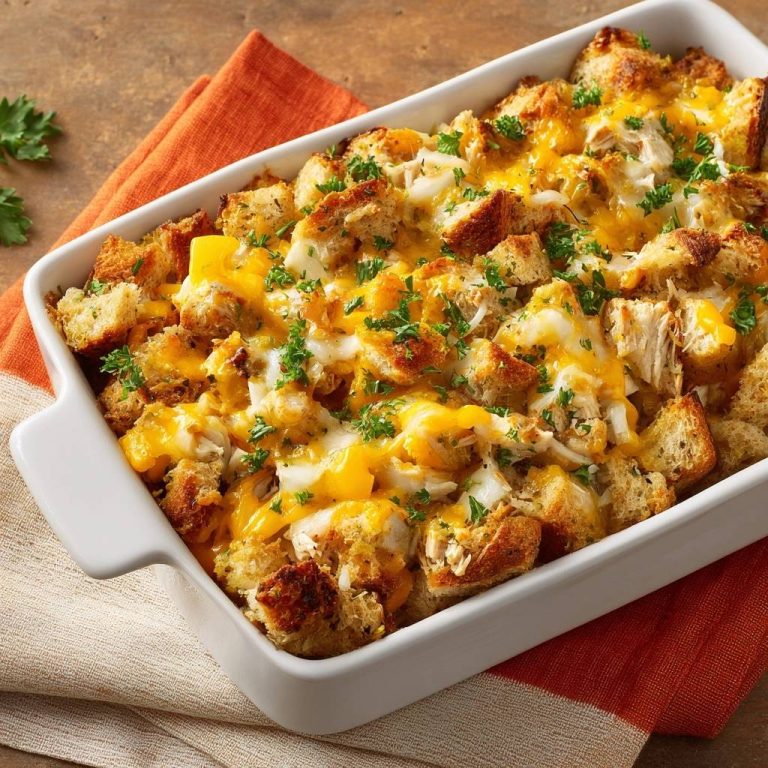
- The Set: Let the casserole rest for 10 minutes before slicing. This allows the fats to reabsorb and ensures clean, square slices as seen in the photo.
Notes
- Let the casserole rest for 10 minutes after baking to allow the fats to reabsorb and ensure clean slices. Use a kitchen towel to squeeze as much liquid as possible from the thawed hashbrowns for the best texture.