The Ultimate Southern Biscuits and Mushroom Gravy
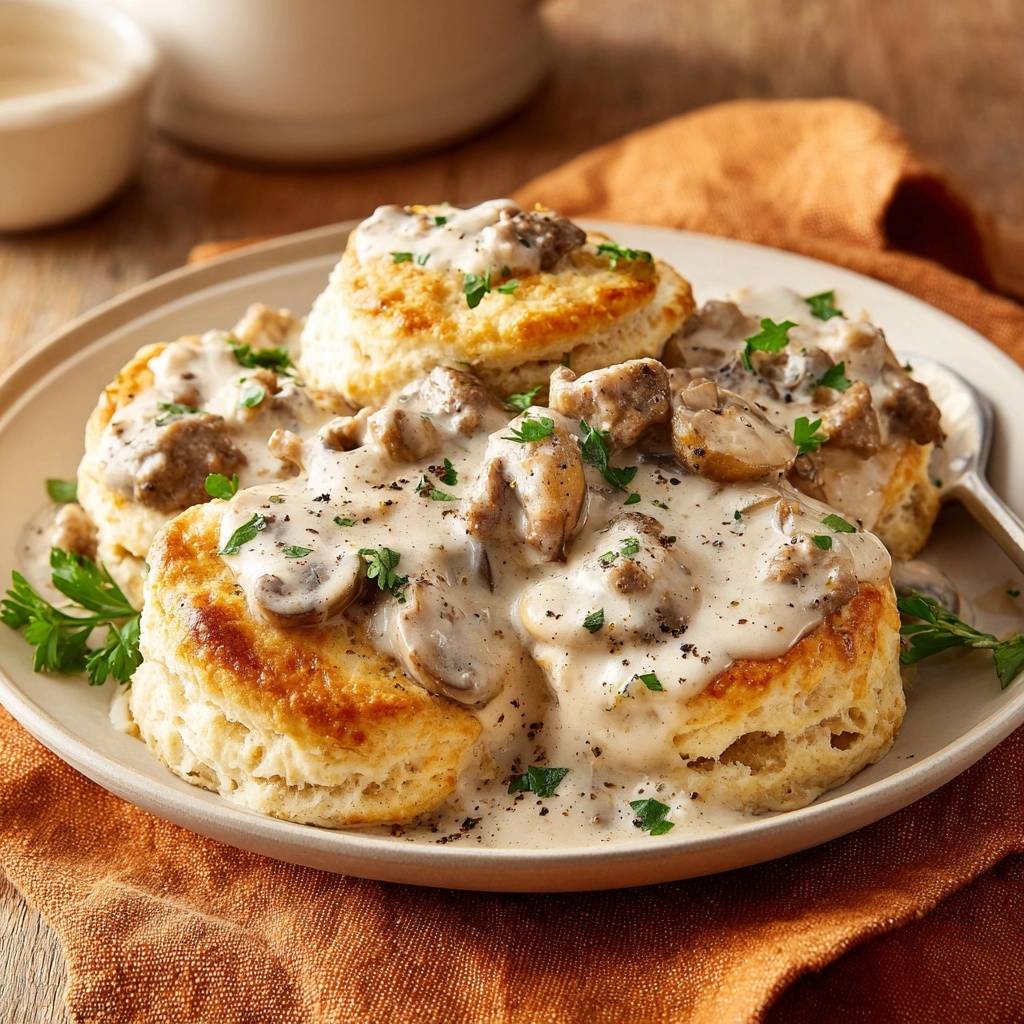
There is something deeply restorative about a plate of warm, flaky biscuits smothered in a rich, peppery gravy. In the South, this isn’t just a breakfast; it’s a hug on a plate that signals a slow, intentional start to the morning. While many people associate this classic with sausage, a well-executed mushroom version offers a savory, earthy depth that is every bit as satisfying and hearty.
However, the biggest hurdle home cooks face is the dreaded “watery gravy” syndrome. You’ve likely seen it before: a thin, greyish liquid that immediately soaks into the biscuit, turning your beautiful pastry into a pile of mush. This happens when the mushrooms aren’t handled correctly, or the dairy is rushed into the pan before a proper base is built. We’re going to fix that today by focusing on a technique that prioritizes texture and concentrated flavor.
The secret to a gravy that stays thick and velvety until the very last bite lies in the dry sear. By roasting the mushrooms in a hot skillet without any fat first, you force them to give up their moisture and brown deeply. This simple shift in the order of operations ensures your gravy is robust and ivory-colored, rather than thin and diluted. It’s a small change that makes a massive difference in the final mouthfeel.
The Secret to Thick, Velvety Mushroom Gravy
Texture is the most important element of a successful Southern gravy. It should be thick enough to coat the back of a spoon but fluid enough to pool beautifully over the crags of a split biscuit. Most people fail because they treat mushrooms like onions, tossing them into butter immediately. This causes the mushrooms to steam in their own juices, resulting in a rubbery texture and a watery sauce.
By searing the mushrooms in a dry pan, you trigger the Maillard reaction, which creates those complex, savory flavors we crave. Once that moisture is gone, the mushrooms become “meatier” and more resilient. When you finally add the butter and flour, you’re building a roux on top of a concentrated flavor base, ensuring the sauce remains stable and creamy even as it cools on the plate.
Essential Components for Southern Biscuits and Mushroom Gravy
The foundation of this dish starts with the mushrooms. While white button mushrooms are fine in a pinch, cremini mushrooms (often sold as baby bellas) are the superior choice here. They have a lower water content and a much more pronounced “umami” profile, which is essential for replacing the savory punch usually provided by meat. Slicing them thick ensures they don’t disappear into the sauce.
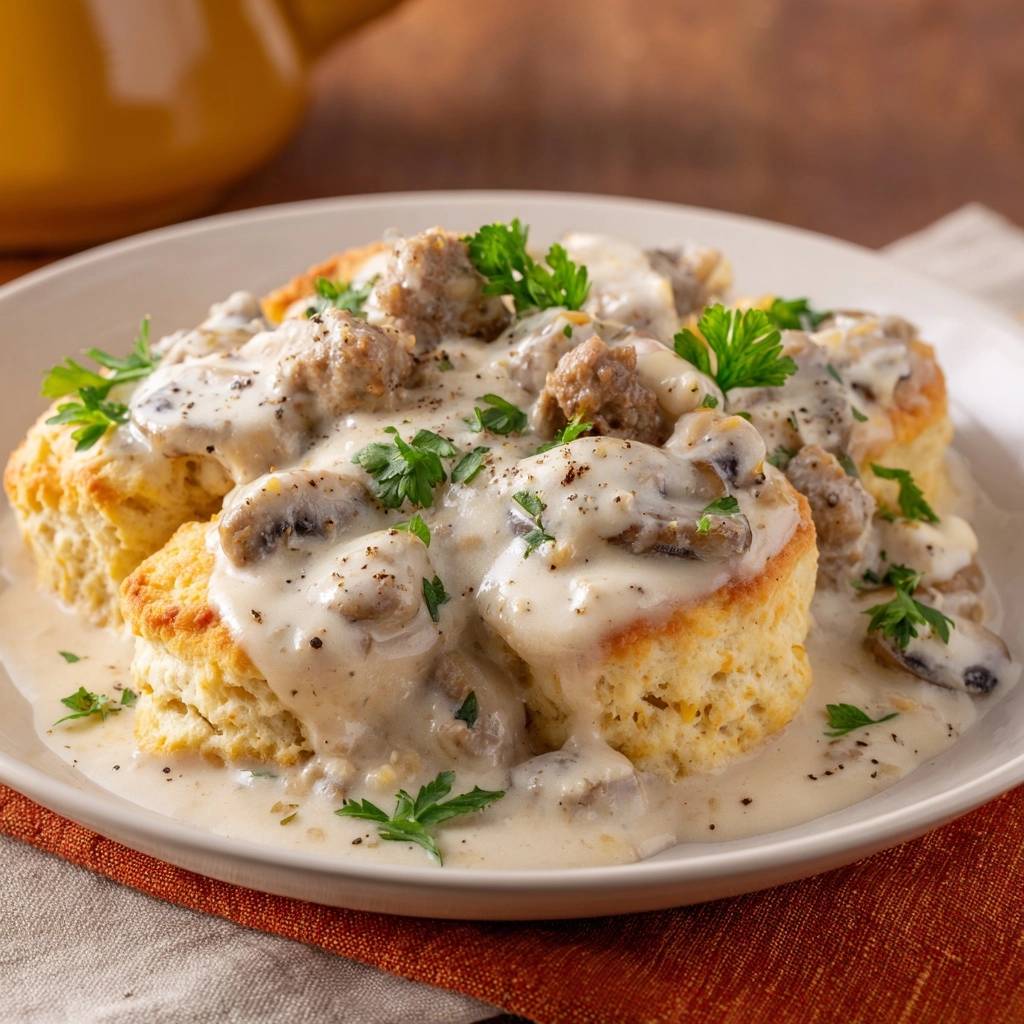
For the liquid base, whole milk is your best friend. It provides the necessary fat content to create a smooth emulsion with the flour. However, the real “pro” move is the addition of heavy cream. Just a half-cup of cream transforms the gravy from a standard white sauce into a luxurious, ivory-colored masterpiece. It adds a silkiness that milk alone simply cannot achieve, giving you that classic diner-style finish.
Finally, don’t overlook the biscuits. Since the gravy is the star, you need a sturdy, high-quality buttermilk biscuit that can stand up to the weight of the sauce. Whether you make them from scratch or use a high-end store-bought version, ensure they are baked until they have a deep golden-brown crust. That crunch provides the perfect structural contrast to the soft, creamy gravy.
If you enjoy making these sturdy biscuits, try them with the rich gravy in this homemade sausage gravy recipe.
Choosing the Right Mushrooms for Maximum Umami
If you want to get fancy, you can mix in some shiitake or oyster mushrooms for a more complex flavor profile. Shiitakes add a smoky, almost buttery note, while oyster mushrooms provide a delicate, velvety texture. Regardless of the variety, keep the slices about a quarter-inch thick. They will shrink significantly during the searing process, and you want those visible chunks of “meat” in every spoonful.
The Role of Fat and Flour in a Stable Roux
A perfect gravy relies on a 1:1 ratio of fat to flour. We use unsalted butter so we can have total control over the seasoning. This is particularly important because Worcestershire sauce and different brands of biscuits vary in saltiness. By using unsalted butter, you can layer in the sea salt at the end to suit your specific palate without overdoing it.
If you enjoy building flavor from a rich roux base, you can use that same method for this creamy chicken and dumplings.
The Science of Searing: Preventing Watery Sauce
Mushrooms are roughly 80% to 90% water. When you throw them into a pan with oil or butter, the fat coats the exterior and traps that water inside. As they cook, the water eventually leaks out, but it mixes with the fat to create a greasy, thin liquid. This is why so many mushroom gravies feel “slick” rather than creamy. It’s a fundamental kitchen error that is easily avoided.
When you use a dry pan over medium-high heat, the intense heat hits the mushroom cells directly. This causes the water to evaporate almost instantly as it’s released. You’ll actually hear the mushrooms “whistling” as the steam escapes. Once the water is gone, the natural sugars in the mushrooms begin to caramelize against the hot metal. This creates a deep brown crust on the outside while keeping the inside tender.
This process doesn’t just improve texture; it concentrates the flavor. Think of it like the difference between a boiled mushroom and a grilled one. That concentrated essence is what gives the gravy its “Southern” soul. By the time you add the butter, the mushrooms are primed to soak up that fat, creating a cohesive base that won’t break or separate later in the cooking process.
Step-by-Step: Building the Perfect Mushroom Gravy
Cooking a great gravy is a sensory experience. You need to listen to the sizzle, watch the color changes, and smell the flour as it toasts. It’s a quick process, but it requires your full attention for about fifteen minutes. Start by getting your skillet nice and hot before the mushrooms even touch the surface. You want to hear a loud hiss the moment they hit the pan.
As you move through the phases, you’ll notice the aroma shifting from earthy and raw to nutty and rich. Don’t be afraid of the brown bits forming on the bottom of the pan. That’s called “fond,” and it’s essentially concentrated flavor gold. Your goal is to lift all of that up and incorporate it into the liquid, which will turn your gravy from a stark white to a beautiful, warm ivory.
Phase 1: The Dry Sear and Moisture Evaporation
Toss your sliced creminis into the dry skillet and let them sit for a minute before stirring. You want them to make direct contact with the heat. After about five minutes, you’ll see the moisture pool and then vanish. Keep going until the edges of the mushrooms are dark brown and slightly crisp. This is the point where you’ve successfully removed the “watery” threat from your recipe.
Phase 2: Developing the Roux and Deglazing the Fond
Drop the butter into the center of the pan and watch it foam around the mushrooms. Once it’s melted, sprinkle the flour over everything. Stir it constantly. You’re looking for the flour to lose its bright white color and turn a pale tan. This “cooks out” the raw grain taste. As you stir, the flour and butter will scrub the bottom of the pan, loosening those delicious browned mushroom bits.
Phase 3: The Slow Tempering of Dairy
This is where most people rush and end up with lumps. Pour in just a half-cup of your room-temperature milk. The pan will hiss and the mixture will suddenly turn into a thick, pasty glob. Don’t panic! Keep whisking or stirring until it’s smooth, then add another half-cup. By adding the liquid slowly, you allow the starch in the flour to expand evenly, creating a stable, silk-like structure.
Avoiding Common Gravy Mistakes
If your gravy feels too thick, like a paste, don’t worry. This usually happens if the heat is a bit too high or if you let it simmer too long. Simply whisk in a tablespoon of milk at a time until it reaches your desired consistency. Remember, gravy continues to thicken as it sits, so it’s better to have it slightly thinner in the pan than you want it on the plate.
Another common mistake is using cold milk straight from the fridge. Cold liquid can cause the butter in your roux to seize up, which leads to a grainy texture. If you forgot to take the milk out early, just pop it in the microwave for 30 seconds to take the chill off. This ensures a smooth transition and a much more stable emulsion that won’t “break” or show oily streaks.
Equipment: Why a Heavy Skillet Matters
A heavy-bottomed skillet, like cast iron or thick stainless steel, is essential for this recipe. These pans hold heat much better than thin aluminum ones. When you add the mushrooms, a thin pan will drop in temperature immediately, causing the mushrooms to stew rather than sear. A heavy pan stays hot, ensuring that crucial moisture evaporation happens quickly.
Furthermore, a wide skillet provides more surface area. This allows the steam to escape into the air rather than getting trapped under the mushrooms. If you try to make this in a deep, narrow pot, the mushrooms at the bottom will brown while the ones on top just steam. Use the widest pan you have to get the best results for both the sear and the final sauce reduction.
Flavor Variations and Savory Swaps
While the classic black pepper and garlic version is unbeatable, you can easily customize this. For an earthier, “forest” vibe, add a teaspoon of fresh chopped thyme or rosemary when you add the butter. If you want a bit of heat, a pinch of cayenne pepper or a dash of hot sauce goes a long way in cutting through the richness of the heavy cream.
If you’re missing that smoky “bacon” flavor, try adding a half-teaspoon of smoked paprika or a tiny drop of liquid smoke. This adds a layer of complexity that mimics traditional meat-based gravies without changing the vegetarian nature of the dish. You can also swap the Italian parsley for chives or green onions for a sharper, fresher finish right before serving.
Make Ahead and Storage Guidelines
You can absolutely make this gravy a day in advance. Store it in an airtight container in the refrigerator for up to three days. When you’re ready to eat, place the gravy in a small saucepan over low heat. It will likely be very thick, almost like a jelly, because of the butter and starch. Add a splash of milk and whisk constantly as it warms up to restore that creamy texture.
Freezing is possible, but it requires a bit of care. Because this is a cream-based sauce, it can sometimes separate or become slightly grainy after thawing. To fix this, reheat it slowly and give it a vigorous whisking or even a quick pulse with an immersion blender. This will re-emulsify the fats and liquids, bringing back that velvety mouthfeel you worked so hard to create.
What to Serve with Biscuits and Gravy
Since biscuits and gravy are incredibly rich and savory, they pair best with sides that offer a bit of brightness or acidity. A simple fruit salad with citrus dressing or a side of roasted tomatoes can provide a much-needed palate cleanser between bites of the heavy, creamy sauce. The acidity helps cut through the fat of the butter and cream.
Something Sweet to Finish
These rich, peppery biscuits and creamy mushroom gravy call for a dessert that contrasts with something light, fruity, or tropical. Try one of these to round out the meal.
- The Spiced Apple Cream Puffs with Crisp Choux bring warm cinnamon and apple notes that match the earthy gravy without overwhelming it.
- A slice of
Get the full recipe in your inbox in seconds – perfect for shopping and cooking.
Mushroom Gravy
Course: Main CourseCuisine: AmericanDifficulty: easy4
servings15
minutes25
minutes510
kcal40
MinutesThis recipe focuses on a specific searing and roux-building technique to ensure a rich, creamy mushroom gravy that never turns watery. By browning mushrooms first and slowly incorporating milk and heavy cream, you achieve a professional-grade Southern comfort meal.
Ingredients
8 large buttermilk biscuits, baked until golden brown
1 pound cremini mushrooms, sliced thick
1/4 cup unsalted butter
1/4 cup all-purpose flour
2 1/2 cups whole milk, room temperature
1/2 cup heavy cream (for visual silkiness and thickness)
1 teaspoon garlic powder
1/2 teaspoon onion powder
1 teaspoon freshly cracked black pepper (plus extra for garnish)
1/2 teaspoon sea salt (or to taste)
1/2 teaspoon Worcestershire sauce (for depth of color)
2 tablespoons fresh Italian parsley, chopped
Directions
- Place a large skillet over medium-high heat. Add the sliced mushrooms to the dry pan first. This is the secret to preventing watery gravy. Sauté them for 5 to 7 minutes without oil or butter until they release their liquid and it completely evaporates, leaving the mushrooms deeply browned.
- Once the mushrooms are browned and dry, add the butter to the skillet. Stir until melted and the mushrooms are well-coated.
- Sprinkle the flour over the mushrooms. Stir constantly for 2 to 3 minutes. This cooks out the raw flour taste and creates a thick paste (roux) that coats the mushrooms and locks in the fat, preventing the sauce from breaking later.
- Slowly pour in the milk, just a half-cup at a time. Use a whisk or wooden spoon to incorporate the liquid fully and scrape up the browned bits (fond) from the bottom of the pan before adding more.
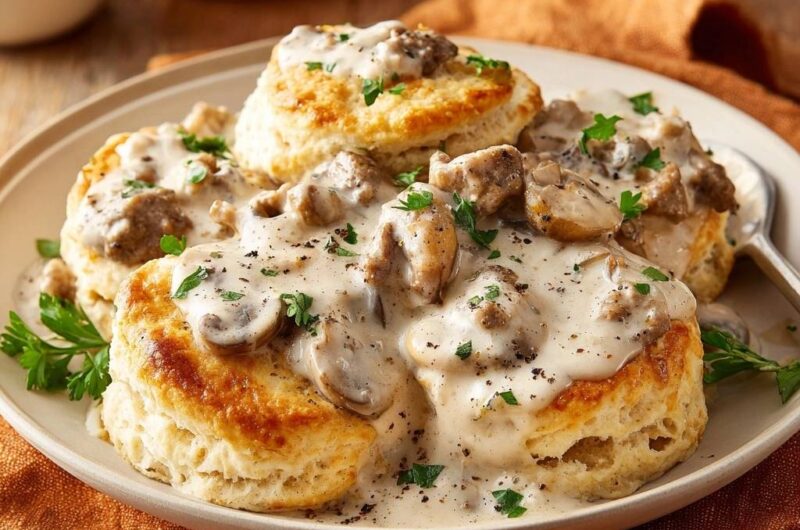
- Stir in the heavy cream and Worcestershire sauce. This provides the opaque, ivory thickness seen in the image.
- Add the garlic powder, onion powder, salt, and the full teaspoon of cracked black pepper.
- Reduce the heat to low and simmer for 5 to 8 minutes, stirring frequently. The gravy will thicken significantly. If it becomes too thick, add a small splash of milk to reach your desired consistency.
- Place the warm, golden biscuits on plates (keep them whole or split as preferred). Generously ladle the thick mushroom gravy over the top, ensuring the mushroom chunks are visible.
- Garnish heavily with fresh parsley and an extra dusting of cracked black pepper before serving immediately.
Notes
- To prevent a watery sauce, ensure the mushrooms release all their liquid and brown deeply in a dry pan before adding butter. If the gravy becomes too thick during the simmer, add a small splash of milk to adjust the consistency.