Zesty Shredded Chicken Tortilla Soup: Achieving a Bold, Restaurant-Quality Broth
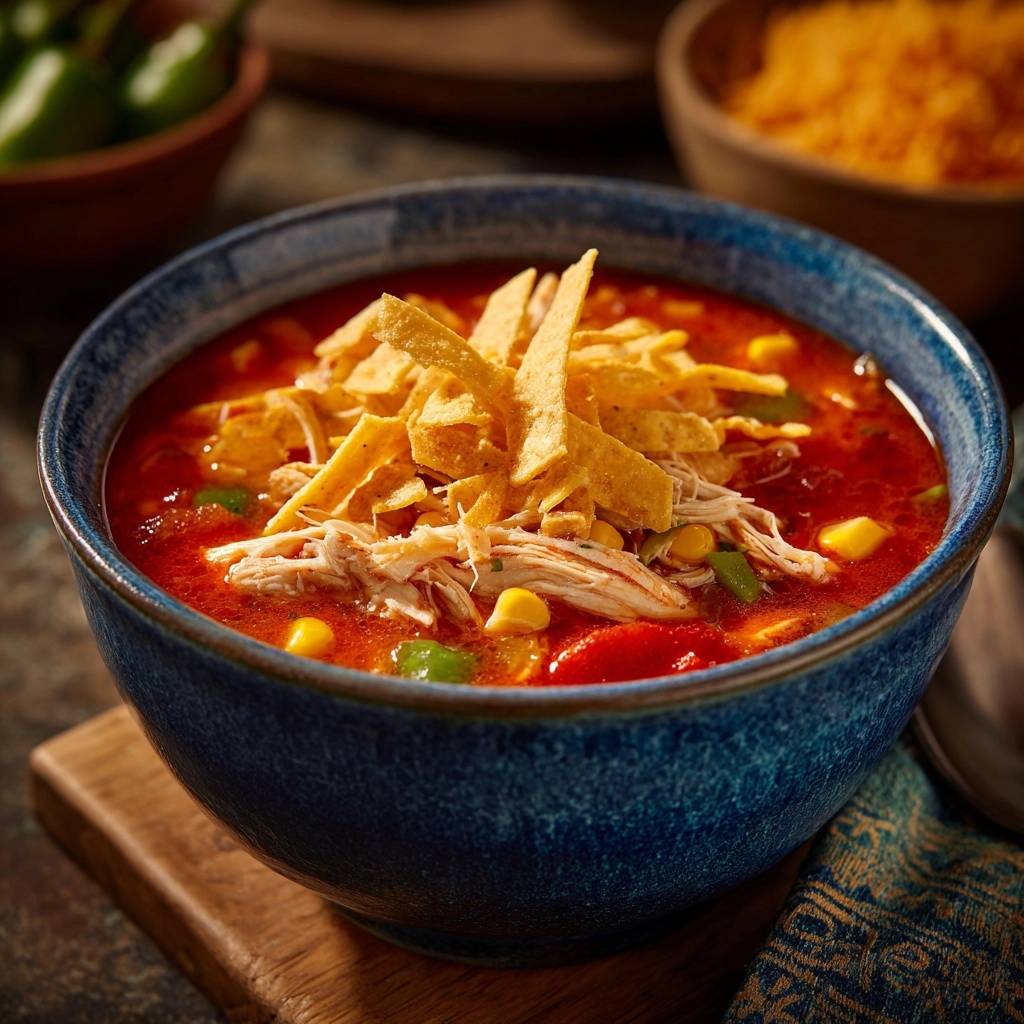
Most homemade tortilla soups suffer from what I call the “watery broth” syndrome. You sit down expecting a rich, vibrant meal, but instead, you get a bowl of thin, salty water with a few lonely vegetables floating on top. It’s disappointing when the flavor doesn’t match the beautiful, deep red color you see in professional kitchens.
The secret to a truly velvety, full-bodied soup lies in the “bloom and emulsify” method. This technique transforms a simple pot of liquid into a robust, opaque base that clings to every shred of chicken. We aren’t just boiling ingredients here; we’re building layers of flavor that result in a smoky, zesty masterpiece.
I’ve found that the real trick to that restaurant-quality texture is using corn tortillas as a natural thickener within the broth itself. By letting them dissolve into the liquid, you create a rustic, hearty consistency that never feels thin. This approach ensures every spoonful is packed with the essence of toasted corn and warm spices.
Essential Components for a Robust Soup Base
To get that deep, savory backbone, you really need to start with high-quality chicken bone broth. Unlike standard stock, bone broth is simmered longer, which extracts collagen from the bones. This collagen provides a silky mouthfeel and a richness that coats the back of your spoon.
In addition to the broth, fire-roasted tomatoes are a non-negotiable ingredient for this recipe. Regular canned tomatoes are fine for some dishes, but they lack the charred, smoky undertone we want here. Those little blackened bits in the fire-roasted variety add a complex, grilled flavor that mimics a slow-simmered Mexican stew.
The Role of Aromatics and Peppers
Yellow onions and green bell peppers provide the foundational sweetness for our soup. I recommend dicing them into uniform, small pieces so they soften at the same rate. This consistency ensures you don’t end up with crunchy bits of onion in an otherwise smooth and velvety broth.
Freshly minced garlic adds a necessary pungency, but you have to be careful with the timing. I always add the garlic during the last minute of sautéing the vegetables. If garlic burns, it turns incredibly bitter, which can ruin the entire pot of soup in seconds.
Selecting and Preparing the Chicken Breast
Using 1.5 lbs of boneless skinless chicken breasts is the most efficient way to get those long, tender shreds. While some people prefer thighs, breasts stay together better during the shredding process. They also act like a sponge, soaking up the spicy broth as they poach.
The science here is simple: poaching the meat directly in the liquid keeps it incredibly moist. As the chicken cooks, it releases its own juices into the pot, further fortifying the broth. It’s a win-win situation where the meat stays juicy and the soup gets even tastier.
The Science of Blooming Spices and Tomato Paste
Many home cooks make the mistake of dumping their spices into the liquid at the end. However, spices like chili powder, cumin, and smoked paprika contain fat-soluble flavor compounds. To truly unlock their potential, you must sauté them in olive oil first.
This process is called “blooming.” When the spices hit the hot oil, they release essential oils that water simply cannot extract. You’ll notice the aroma in your kitchen change instantly from raw and dusty to toasted and intense. It’s the fastest way to deepen the flavor profile of any soup.
We also apply this logic to the tomato paste. By stirring the paste into the oil and spices, you trigger the Maillard reaction. The paste will darken from a bright red to a deep brick color, losing its metallic, raw edge and gaining a natural, savory sweetness.
Techniques for a Thick, Non-Watery Consistency
If you want a soup that feels substantial, you have to move away from “clear” broths. This recipe uses a two-fold thickening process to ensure a hearty result. We rely on both physical starches and a bit of light blending to create an emulsion that stays together.
The combination of dissolved corn tortillas and blended corn kernels creates a base that is thick but not heavy. It feels more like a rustic chowder-style consistency than a thin consommé. This is exactly how the best cantinas achieve that signature “opaque” look in their tortilla soup.
Using Tortillas as a Natural Thickener
Tearing up corn tortillas and dropping them into the simmering broth is a classic technique. As they heat up, the corn starches break down and dissolve, acting as a natural, gluten-free roux. It provides a much better flavor than using flour or cornstarch slurries.
While some people use masa harina, I find that dissolved tortillas offer a superior, more rustic texture. The tortillas give the broth a subtle “toasted corn” finish that ties all the zesty spices together. It’s a traditional trick that makes a massive difference in the final bowl.
The Immersion Blender Pulse Method
For the ultimate texture, I highly recommend using an immersion blender for just a few seconds. After adding the broth, tomatoes, and the first half-cup of corn, give it three or four quick pulses. You aren’t trying to make a purée; you just want to break down some of the solids.
This creates a partial emulsion that prevents the oil and water from separating. It also distributes the sweetness of the corn throughout the entire base. This small step is what separates a “good” home cook’s soup from a “great” chef’s soup.
Step-by-Step: Building the Zesty Shredded Chicken Tortilla Soup
Building this soup is all about patience during the first few steps. Once the base is established, the rest of the process is relatively hands-off. Follow these phases to ensure your flavors are concentrated and your chicken is perfectly tender.
Phase 1: Sautéing and Developing the Fond
Start by heating your olive oil in a heavy-bottomed pot. Add your diced onions and green peppers, cooking them for about 5 minutes. You’re looking for the onions to become translucent and the peppers to soften around the edges without browning too much.
Next, stir in the garlic, tomato paste, and all your dry spices. Keep everything moving for about 2 minutes. The mixture will become thick and very fragrant, and the bottom of the pot might develop a dark coating called a fond. This is where all the concentrated flavor lives.
For a perfect pairing, try our Wonton Soup with Bok Choy: Intact Wontons Guaranteed.
Phase 2: Simmering and Poaching the Poultry
Deglaze the pot by pouring in the fire-roasted tomatoes and chicken broth, scraping up those browned bits from the bottom. Add your torn tortillas and the first portion of corn. If you’re using an immersion blender, this is the time to give it those few quick pulses.
Gently nestle the whole chicken breasts into the liquid. Bring the pot to a very gentle simmer, then cover it. Don’t let it reach a rolling boil, or the chicken will become rubbery. Let it poach for 20 minutes until the internal temperature hits 165°F.
Phase 3: Shredding and Final Reduction
Carefully remove the chicken to a plate. Use two forks to pull the meat apart into bite-sized shreds. I like to keep some chunks a bit larger for a more rustic feel. Return the shredded meat to the pot along with the remaining cup of corn.
Leave the lid off for the final 10 minutes of simmering. This reduction time is vital because it allows some of the water to evaporate, further thickening the broth. You’ll see the color deepen into a vibrant, opaque red as the flavors finally meld together.
Flavor Variations and Ingredient Swaps
This recipe is very forgiving if you want to play with the ingredients. If you prefer an earthier, more complex heat, try swapping the green bell pepper for a poblano pepper. Poblanos have a mild spice and a deep flavor that pairs beautifully with the smoked paprika.
For those who want extra fiber and protein, adding a can of rinsed black beans during the final simmer is a great move. If you find the chipotle powder too spicy, you can easily cut the amount in half. The goal is a pleasant warmth, not a burn that overpowers the corn and lime.
Troubleshooting Common Soup Issues
If you find your soup has become too salty after the reduction, don’t panic. You can add a splash more broth or even a peeled, halved potato to simmer for a few minutes to soak up the excess salt. Just remember to remove the potato before serving!
If the soup still feels too thin for your liking, crush up a handful of tortilla chips and stir them in. They will dissolve quickly and add an extra boost of salt and corn flavor. Conversely, if it’s too spicy, a dollop of Greek yogurt or a heavy squeeze of lime juice will help neutralize the heat.
Optimal Garnishes for Texture and Contrast
The toppings are just as important as the soup itself. I always aim for a “high stack” of crispy tortilla strips right in the center of the bowl. This provides a necessary crunch that contrasts with the tender shredded chicken and the velvety broth.
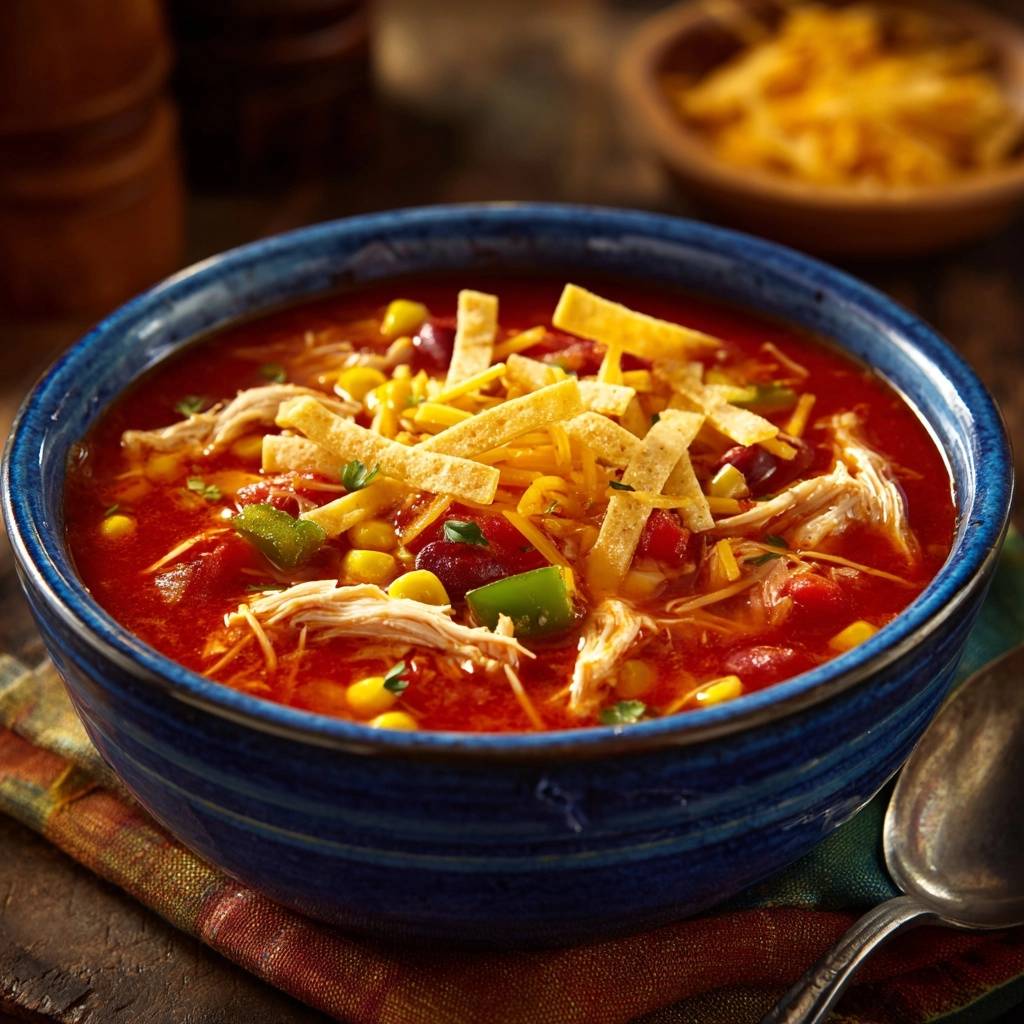
Fresh lime wedges are essential because the acidity cuts through the richness of the cumin and smoked paprika. It brightens the whole dish and makes the flavors pop. Finally, a sprinkle of shredded cheddar cheese adds a creamy, salty finish that melts perfectly into the hot liquid.
Make Ahead, Storage, and Freezing Instructions
Like most stews, this soup actually tastes better the next day. As it sits in the fridge, the spices continue to marry and the flavors become more rounded. If you’re making this for meal prep, let it cool completely before transferring it to airtight containers.
This soup freezes exceptionally well for up to three months. Just make sure to freeze the soup base and chicken only—don’t add the toppings until you’re ready to eat. To reheat, let it thaw in the fridge overnight and warm it gently on the stove, adding a splash of water if it thickened too much in the freezer.
Expert Tips for the Perfect Batch
Never skip the step of caramelizing the tomato paste. That two-minute sauté with the spices is the difference between a “flat” tasting soup and one with real depth. It’s a small effort that yields a massive reward in the final flavor profile.
I also recommend using room temperature chicken breasts if possible. Cold meat can drop the temperature of your broth too quickly, which messes with your cooking times. Also, try zesting your lime before you juice it; adding a pinch of zest to the bowl at the end adds an incredible floral aroma.
Finally, always wait to do your final salting until the very end. Because the soup reduces during the final simmer, the saltiness will naturally concentrate. If you salt too early, you might end up with a bowl that is far too savory once it’s finished cooking.
How should I store leftovers and does this soup freeze well?
Store any leftover soup in an airtight container in the refrigerator for up to 4 days. This soup is an excellent candidate for freezing because it doesn’t contain dairy or potatoes, which can change texture when frozen. Place the cooled soup in freezer-safe bags or containers for up to 3 months. When you are ready to eat, thaw it in the refrigerator overnight and reheat it on the stovetop over medium heat. Avoid freezing the toppings like cheese or tortilla strips, as these should be added fresh upon serving.
Why is my chicken tough or rubbery instead of tender?
Tough chicken is usually the result of boiling the meat too aggressively. If the broth is at a rolling boil, the muscle fibers in the chicken breast will contract tightly and become rubbery. To fix this, ensure the liquid is at a “gentle simmer,” meaning only a few small bubbles are breaking the surface. Using a meat thermometer to pull the chicken exactly at 165°F also prevents overcooking, which is the leading cause of dry, stringy poultry.
Can I make this recipe if I don’t have an immersion blender?
Yes, you can still achieve a great consistency without an immersion blender. Simply tear the corn tortillas into very small, nickel-sized pieces before adding them to the pot. They will naturally dissolve as the soup simmers for 30 minutes. Alternatively, you can transfer two cups of the broth and vegetables to a standard blender, pulse until smooth, and stir it back into the main pot. Just be extremely careful when blending hot liquids in a standard blender, as steam pressure can cause the lid to pop off.
What can I use if I don’t have corn tortillas to thicken the soup?
If you don’t have corn tortillas on hand, the best substitute is 2 tablespoons of masa harina mixed with a little water to form a slurry. If you don’t have masa harina, you can finely crush about a cup of standard corn tortilla chips and stir them into the broth. They contain the same corn base and will dissolve similarly, though you may need to reduce the amount of added salt in the recipe since tortilla chips are already salted.
How can I make the soup less spicy without losing the flavor?
The heat in this recipe primarily comes from the chipotle powder and chili powder. To reduce the spice level, omit the chipotle powder entirely and use a “mild” chili powder. You can replace the smoky heat of the chipotle with a bit more smoked paprika, which provides the aroma without the burn. If the finished soup is still too spicy for your palate, serving it with a dollop of sour cream or extra shredded cheese will help coat the tongue and neutralize the capsaicin.
Shredded Chicken Tortilla Soup
Course: Main CourseCuisine: Mexican-AmericanDifficulty: medium6
servings15
minutes35
minutes340
kcal50
MinutesThis restaurant-quality soup features shredded chicken breasts, fire-roasted tomatoes, and a deep red broth thickened with corn and tortillas. By sautéing spices and tomato paste, the flavors are unlocked for a velvety, full-bodied texture.
Ingredients
1.5 lbs boneless skinless chicken breasts
1 large yellow onion, diced
3 cloves garlic, minced
1 green bell pepper, diced
1.5 cups frozen corn (divided)
1 can (14.5 oz) fire-roasted diced tomatoes
5 cups high-quality chicken bone broth
3 tablespoons tomato paste
1 tablespoon chili powder
1 teaspoon ground cumin
1 teaspoon smoked paprika
1/4 teaspoon chipotle powder (for that deep red hue and smoky heat)
2 tablespoons olive oil
2 corn tortillas, torn into small pieces (to thicken the broth)
Salt and black pepper to taste
Toppings: Crispy corn tortilla strips, fresh lime wedges, and shredded cheddar cheese
Directions
- Heat olive oil in a large heavy-bottomed pot over medium heat. Add the onion and green bell pepper, sautéing for 5 minutes until softened.
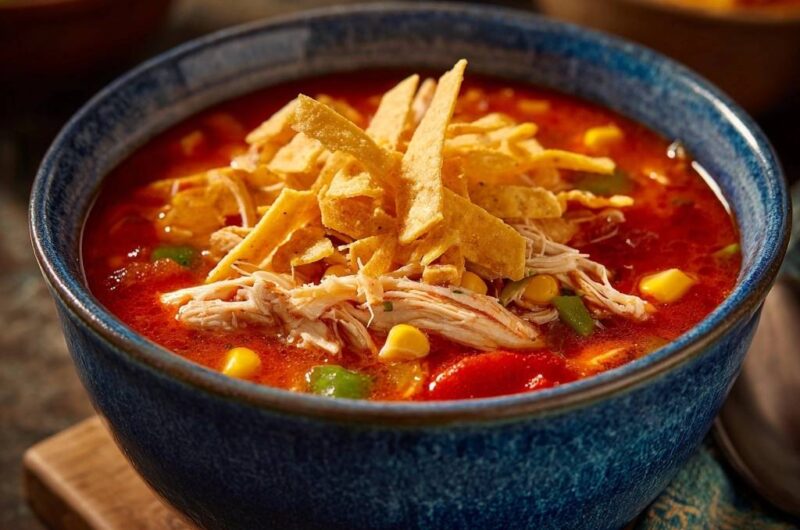
- Add the garlic, tomato paste, chili powder, cumin, smoked paprika, and chipotle powder directly to the oil. Stir constantly for 2 minutes. This “blooms” the spices and caramelizes the tomato paste, creating the dark, rich red base seen in the image.
- Pour in the fire-roasted tomatoes and 1/2 cup of the corn. Use a wooden spoon to scrape the bottom of the pot.
- Add the chicken broth and the torn tortilla pieces. Use an immersion blender to briefly pulse the base (optional, but recommended for a thicker, non-watery consistency) or simply let the tortillas dissolve into the broth as it heats.
- Add the whole chicken breasts to the liquid. Bring to a gentle simmer. Cover and cook for 20 minutes or until the chicken reaches an internal temperature of 165°F.
- Remove the chicken to a plate and shred with two forks.
- Return the shredded chicken to the pot along with the remaining 1 cup of corn. Simmer uncovered for another 10 minutes. This reduction time ensures the soup is hearty and the flavors are concentrated.
- Taste and adjust salt and pepper. The broth should be opaque, vibrant red, and slightly thickened.
- Ladle into bowls. Top with a high stack of crispy tortilla strips as shown in the image, and serve with lime wedges and a side of shredded cheese.
Notes
- To achieve the deep red hue and thick consistency, do not skip blooming the spices in oil. Using an immersion blender to pulse the broth with torn tortillas creates a professional, non-watery base.