Classic Pot Roast: Tender Beef Mastery
Why Classic Pot Roast Transforms Dinners
Ever pulled a pot roast from the oven only to find it tough and dry? You’re not alone. This classic pot roast fixes that frustration with a sear-then-braise method that delivers fork-tender beef every time. In addition, it turns simple ingredients into a meal that feels like Sunday dinner magic.
That’s why classic pot roast remains a timeless comfort food staple. However, most home cooks skip the crucial first step, ending up with steamed meat instead of juicy perfection. Therefore, this recipe guarantees moist results that beat takeout or restaurant versions.
The secret lies in the Maillard reaction from searing. You pat the beef dry, hit it with high heat, and create a crust that locks in juices. Plus, low-slow braising breaks down collagen into silky gelatin. Oh man, that first bite melts in your mouth!
Essential Ingredients for Juicy Pot Roast
Start with a 3 lb beef chuck roast. Its marbling melts during braising, keeping the meat moist. In addition, season with 2 tsp salt and 1 tsp black pepper for balanced flavor that penetrates deep.
Olive oil’s high smoke point makes searing easy without burning. Meanwhile, 2 large sliced onions build sweetness and fond for the gravy. Therefore, don’t skip them.
Six carrots in 2-inch chunks and 1.5 lb baby potatoes add heartiness. Four cups beef broth provides the braising liquid; choose low-sodium if you’re watching salt. Finally, 4 sprigs fresh rosemary infuse aroma, while 2 tbsp chopped parsley brightens the finish.
Fresh herbs beat dried ones for potency, but if needed, use 1 tsp dried rosemary. No broth? Vegetable stock works in a pinch.
Selecting the Ideal Beef Chuck Roast
Look for chuck roast with good fat marbling, like USDA Choice grade. Thickness around 3 inches ensures even cooking. Avoid lean cuts like sirloin; they dry out fast.
Butcher counters offer fresher options than supermarket packs. Therefore, ask for one trimmed but not too lean. This choice makes your classic pot roast shine.
Vegetables and Aromatics Breakdown
Baby potatoes hold their shape better than larger ones. Cut carrots into 2-inch chunks for tenderness without mush. Slice onions thin to maximize caramelized fond.
Rosemary adds piney depth; swap for thyme if you prefer earthiness. In addition, these timings keep everything perfect.
Science of Searing in Classic Pot Roast
Searing triggers the Maillard reaction, where amino acids and sugars form deep flavor compounds. This creates a crust that seals juices inside. However, without it, your beef steams and dries out.
Pat the beef dry first to avoid steaming. You want that shimmering oil and deep brown sides after 4-5 minutes per side. Therefore, high heat is key.
For a heartier version of this slow-cooked meal, try this slow-simmered beef and potato stew with the same foil-sealing trick.
Before searing, the meat looks plain. After, it boasts a rich, crusty exterior. This step elevates classic pot roast from good to unforgettable.
Equipment Choices for Perfect Pot Roast
A Dutch oven reigns supreme for classic pot roast. Its cast iron retains heat evenly and the tight lid traps steam for braising. In addition, enameled versions prevent sticking.
No Dutch oven? Use an oven-safe pot with a lid. However, check oven temp stays at 325F. A meat thermometer confirms doneness at 195-205F.
Dutch Oven Advantages Explained
Cast iron distributes heat steadily, fitting a 3 lb roast plus veggies. Seal the lid tight with foil if needed. Therefore, moisture stays locked in.
Step-by-Step: Searing the Pot Roast Base
Preheat your oven to 325F. Pat the beef dry, then season with salt and pepper. This dryness ensures a crisp sear, not steam.
Heat 2 tbsp olive oil in the Dutch oven until it shimmers. Sear beef 4-5 minutes per side for a deep crust. If it’s pale, your meat was too wet or heat too low.
Remove beef to a plate. Safety first: use tongs, as oil splatters hot. Now you’ve built flavor foundation for classic pot roast.
Deglazing Onions for Flavor Depth
Add sliced onions to the pot; cook 5 minutes until soft and golden. Pour in 1/2 cup broth, scrape up the browned bits. That fond turns into gravy gold.
Braising Technique for Fork-Tender Results
Return beef to the pot. Add remaining broth until it reaches halfway up the meat; top with water if short. Tuck in rosemary sprigs for aroma.
Bring to a simmer, cover tightly, and oven-braise 2.5 hours undisturbed. Collagen breaks down into gelatin here, creating tenderness. Check lid seal to prevent drying.
This low-slow method transforms tough chuck into shreds. Therefore, patience pays off big.
Adding Vegetables at the Right Moment
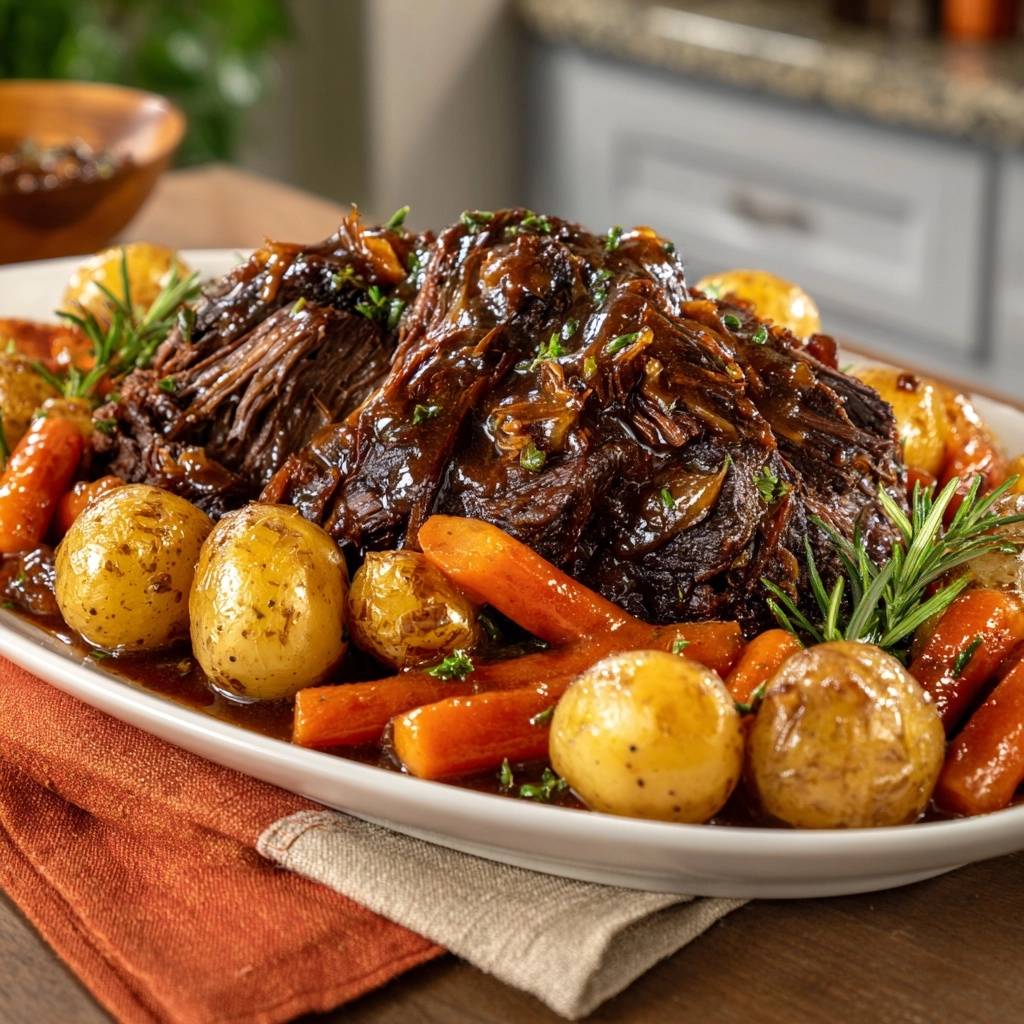
After 2.5 hours, add carrots and potatoes. Spoon liquid over them, cover, and braise 45-60 minutes. Late addition keeps veggies firm, not mushy.
The same low-and-slow method that makes this pot roast so tender is what gives a slow-roasted savory pot roast its deep, rich flavor.
Test with a fork: tender but intact. This timing perfects classic pot roast balance.
Finishing Gravy from Pot Roast Liquids
Transfer beef and veggies to a platter. Simmer pot liquids on stovetop 10 minutes to thicken naturally. No cornstarch needed; reduction concentrates flavors.
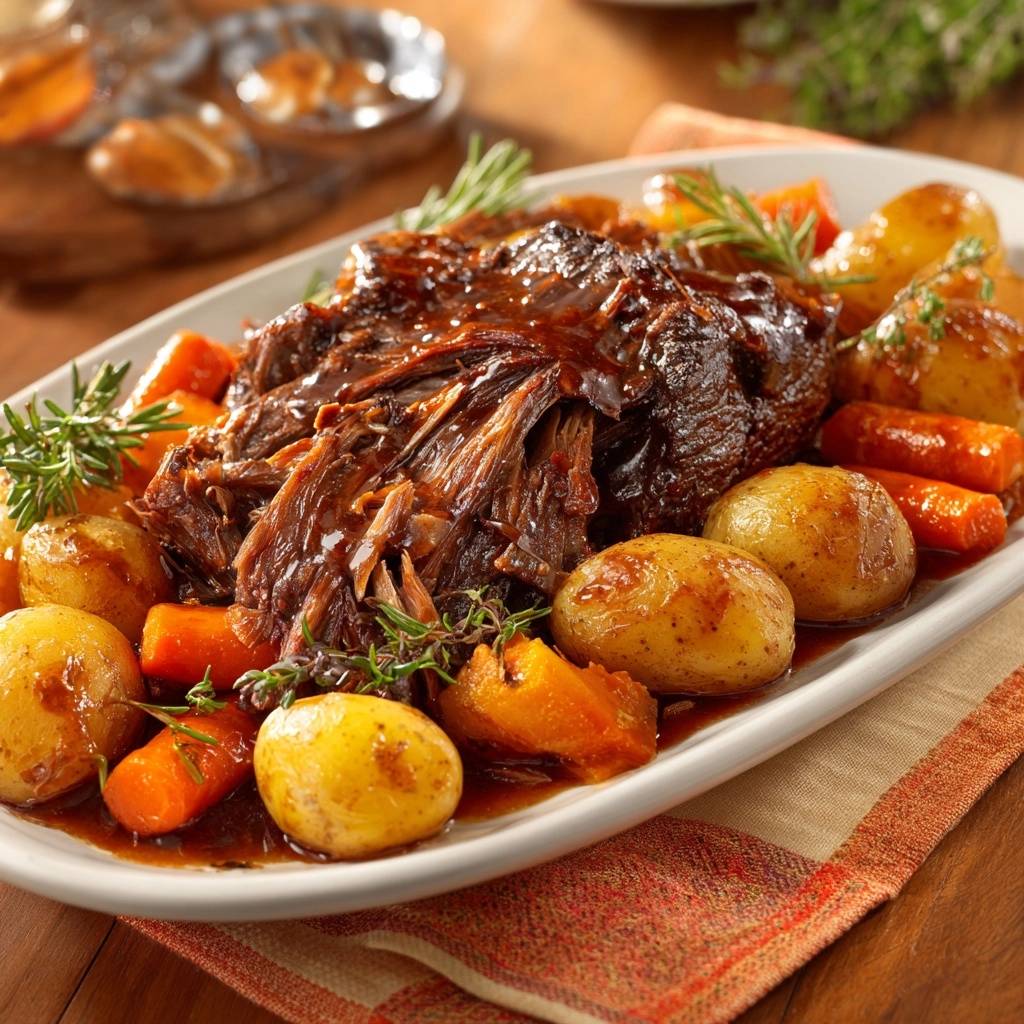
Shred beef easily with forks. Pour gravy over everything, garnish with parsley. Serves 6, with about 500 calories and 40g protein per serving.
That glossy gravy clings perfectly. Dig in hot for peak comfort.
Classic Pot Roast History and Evolution
Classic pot roast traces to 19th-century American homes, rooted in Yankee cooking. Settlers adapted French pot-au-feu braising with local beef and roots.
However, early versions often dried out. Modern tweaks like searing ensure juiciness. In addition, it symbolizes family gatherings across generations.
Today, classic pot roast evolves with fresh herbs but keeps one-pot simplicity. It’s endured for its warmth and ease.
Make-Ahead and Freezing Pot Roast Guide
Cool pot roast fully before storing in an airtight container. It lasts 3-4 days in the fridge. For freezing, portion into bags; good for 3 months.
Thaw overnight in fridge. Reheat gently in a 300F oven with extra broth to restore moisture. Therefore, it’s ideal for weeknight batching.
Pro tip: freeze gravy separate to avoid sogginess.
Avoiding Dry Beef in Pot Roast
Skipping the sear is the top pitfall; it leaves meat bland and dry. Always pat dry and use high heat. In addition, a loose lid lets steam escape.
Overcooking toughens it too. Check internal temp at 195-205F. Wrong cuts like round fail where chuck succeeds.
What Complements a Pot Roast
A rich, slow-cooked pot roast calls for sides that cut through the heartiness. These two coleslaw recipes bring crunch and brightness to the table.
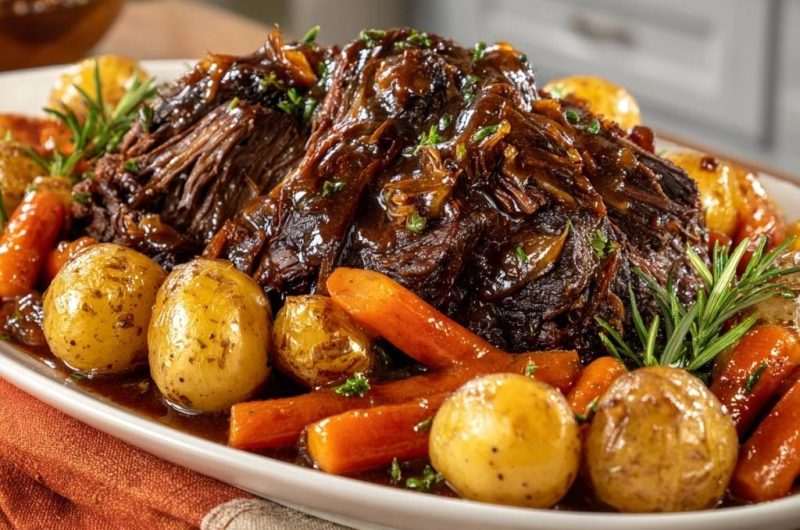
Pot Roast
Course: Main CourseCuisine: AmericanDifficulty: medium6
servings20
minutes3
hours30
minutes450
kcal230
MinutesDry pot roast ruining dinner? This recipe fixes it with a simple sear-plus-braise method that locks in juices for fork-tender, moist beef every single time.
Ingredients
3 lb beef chuck roast
2 tsp salt
1 tsp black pepper
2 tbsp olive oil
2 large onions, sliced
6 carrots, peeled and cut into 2-inch chunks
1.5 lb baby potatoes
4 cups beef broth
4 sprigs fresh rosemary
2 tbsp chopped fresh parsley
Directions
- Preheat oven to 325 degrees F. Pat beef dry with paper towels, season all over with salt and pepper. This dry surface is key to searing without steaming.
- Heat olive oil in a large Dutch oven over medium-high heat until shimmering. Sear beef on all sides, 4-5 minutes per side, until deep brown crust forms. This Maillard reaction seals juices inside, preventing dryness. Remove beef to a plate.
- Add sliced onions to pot, cook 5 minutes until softened. Pour in 1/2 cup broth to deglaze, scraping up browned bits, which add flavor and moisture.
- Return beef to pot, pour in remaining broth until it reaches halfway up the meat (add water if needed). Tuck in rosemary sprigs. Bring to simmer, cover tightly, and transfer to oven.
- Braise 2.5 hours undisturbed. This low slow covered cook in liquid steams and tenderizes without drying out.
- Add carrots and potatoes around beef, spoon liquid over veggies. Cover and braise 45-60 minutes more, until beef shreds easily and veggies are tender.
- Remove beef and veggies to platter. Simmer sauce on stovetop 10 minutes to thicken into gravy. Shred beef, pour gravy over, garnish with parsley. Serve hot.
Notes
- Use a heavy Dutch oven for best results. Pat beef very dry before searing to achieve a deep brown crust. Leftovers taste even better the next day.