Fork-Tender Beef Stew: Sear and Braise Mastery
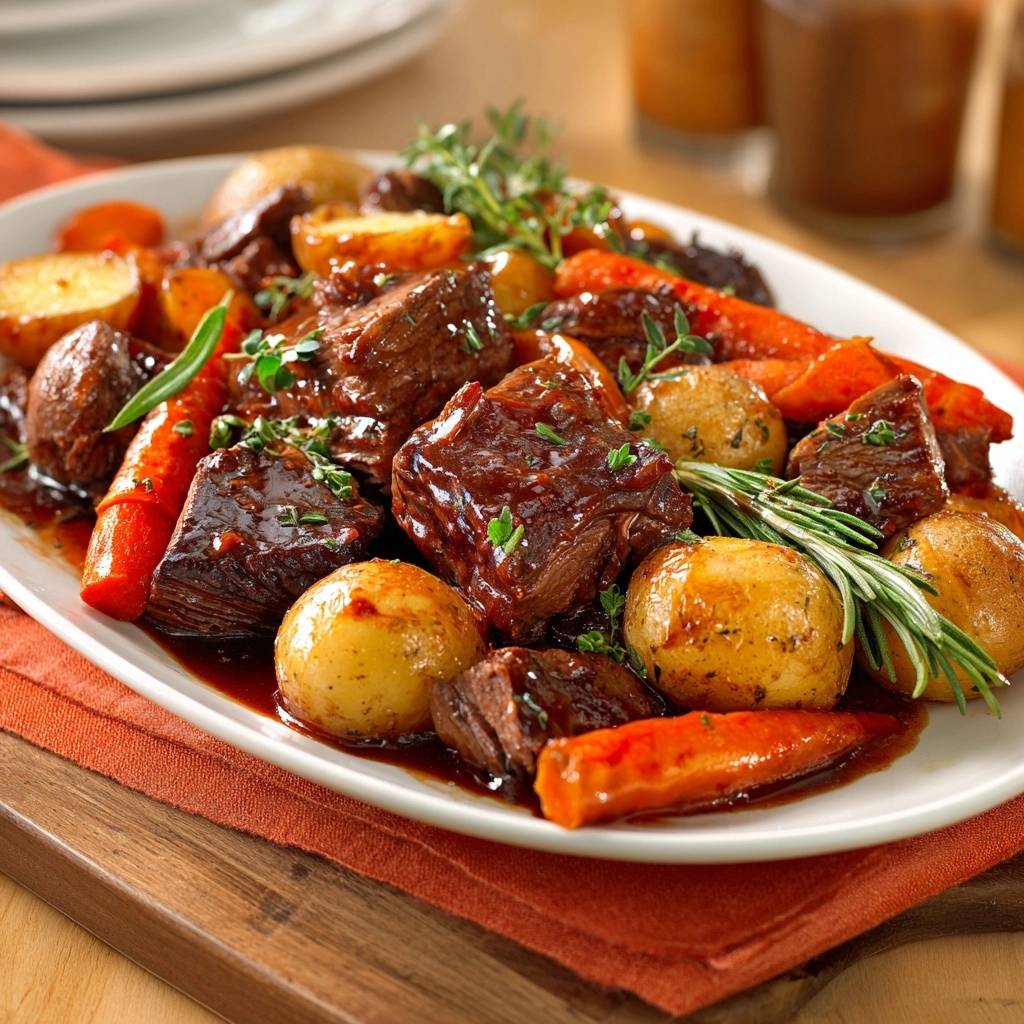
Ever simmer beef stew for hours only to bite into chewy chunks that ruin the whole pot? You’re not alone. This recipe nails fork-tender beef every time with a quick high-heat sear followed by a low oven braise. Dinner serves 6 in about 3.5 hours total, with just 30 minutes hands-on.
Here’s why it works so well. The sear creates a Maillard reaction that builds deep flavor and starts breaking down tough connective tissue. Then, the steady 325°F oven turns collagen into silky gelatin over 2.5 to 3 hours. No more guesswork or tough meat.
The real secret lies in using chuck roast cut into 2-inch cubes. Its marbling and fat content melt perfectly during braising. Pat it dry first, or you’ll steam instead of sear, and that crust won’t form.
Why Chuck Roast Delivers Fork-Tender Beef Stew
Chuck roast shines in beef stew because of its rich marbling and high collagen content. That collagen, when braised low and slow, converts to gelatin for that melt-in-your-mouth texture. Leaner cuts like sirloin dry out fast, so stick with chuck.
At the butcher, ask for 2 pounds of chuck cut into even 2-inch cubes. This size ensures uniform cooking. In addition, trim excess fat if it’s super thick, but leave some for flavor.
However, don’t skip the flour dredge after seasoning. It helps form a crust that thickens the broth naturally. You’ll taste the difference in every spoonful.
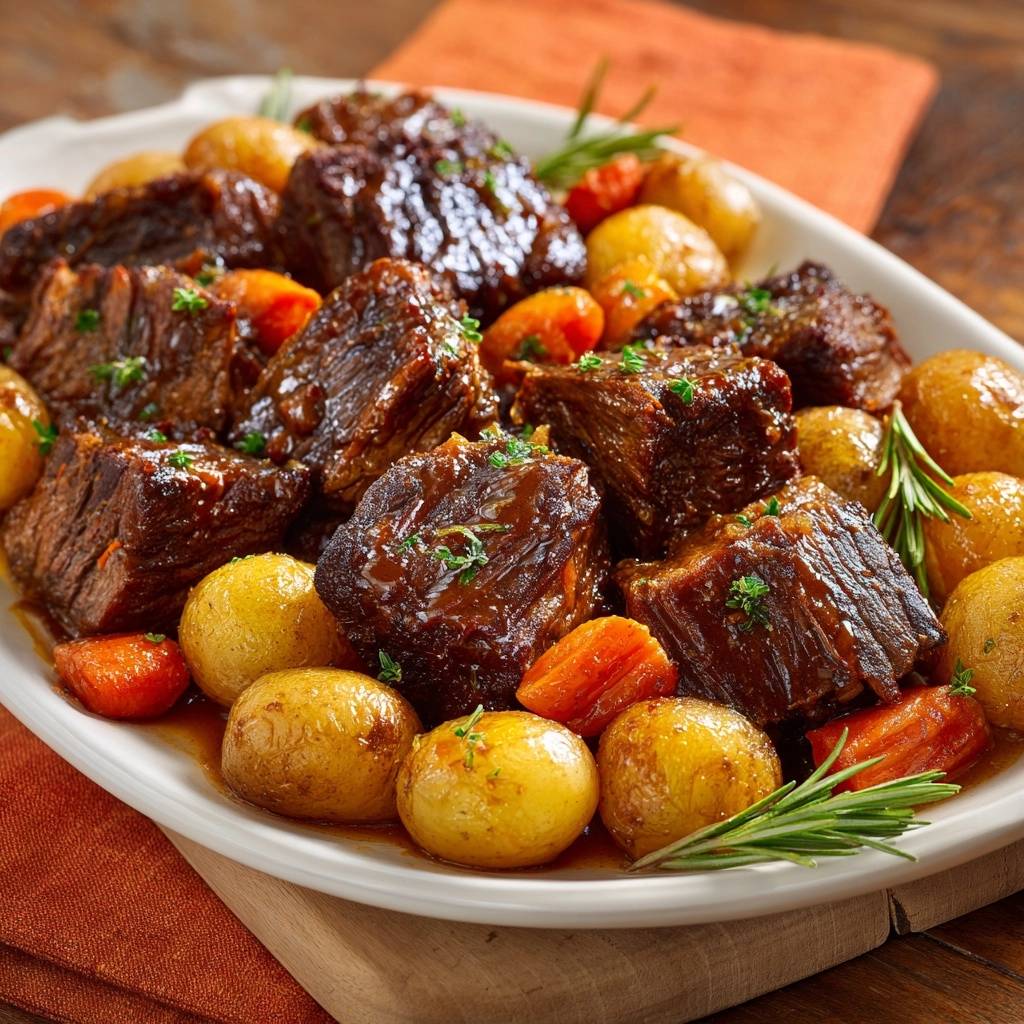
Pat Dry and Season for Maximum Sear
Start by patting those beef cubes bone-dry with paper towels. Wet meat steams in the pan, so this step guarantees a sizzling sear. Season generously with salt and pepper, about 2 teaspoons salt and 1 teaspoon pepper total.
Therefore, dredge in 1/4 cup all-purpose flour and shake off the excess. This creates a light coating without making your sauce gluey later. Heat 2 tablespoons olive oil until it shimmers, around 400°F.
Essential Ingredients for Rich Beef Stew
Beef broth forms the backbone, so use 4 cups of low-sodium store-bought or homemade for control. Tomato paste, 3 tablespoons, adds umami and caramelizes for depth. Baby potatoes and carrots provide starch that thickens without flour overload.
Fresh thyme and rosemary sprigs bring earthy notes that infuse gently. In addition, one large yellow onion diced to 1.5 cups and 4 minced garlic cloves build aromatics. Salt and pepper tie it all together to taste.
For substitutions, swap low-sodium broth if watching salt. No baby potatoes? Use Yukon Golds cut similarly. These keep the stew hearty and balanced.
Vegetables That Hold Up to Braising
Baby potatoes, 1.5 pounds, stay firm during the long braise because they’re waxy and small. Cut 6 medium carrots into 2-inch chunks to match the beef size. This prevents mushy veggies.
However, dice the onion fine for quick softening without bitterness. Mince garlic fresh, as jarred lacks punch. Sauté them together for sweet, fragrant results in minutes.
The same technique that saves this stew also works beautifully in a slow-simmered beef and potato stew.
Herbs and Broth for Layered Flavor
Four thyme sprigs and three rosemary sprigs pair perfectly with beef’s richness. Tuck them whole so flavors release slowly without overpowering. Chopped herbs can turn bitter over hours.
Therefore, bloom the tomato paste for 1-2 minutes until it darkens. This caramelizes sugars for complexity. Quality beef broth matters, so pick one with bold beefiness over watery versions.
Science of the Perfect Sear in Beef Stew
The sear triggers the Maillard reaction at high heat, producing over 1,000 flavor compounds. It seals juices and builds fond, those browned bits that make stew unforgettable. Sear in batches to avoid crowding and steaming.
Oil shimmers at medium-high, about 400°F. Brown each side 3-4 minutes for a deep crust. In addition, this step tenderizes by contracting proteins early.
Oven searing works too, but stovetop gives better control. Remove beef to a plate so it doesn’t overcook while building the base.
Flour Dredge and Crust Formation
Flour dredge boosts browning and creates a roux-like thickener as it cooks into the broth. Shake off excess to prevent lumps or pasty sauce. You’ll see the crust form instantly in hot oil.
Pro tip: If flour burns slightly, that’s flavor gold. Just deglaze well later. This keeps everything silky.
Building Flavor Base After Searing
Drop heat to medium and add onion plus garlic. Cook 4-5 minutes until soft and fragrant, not browned. Stir in tomato paste next and cook 1-2 minutes till it darkens to brick red.
Then, toss in potatoes and carrots. Stir 2 minutes to coat them in flavorful fond bits. This distributes taste evenly throughout.
Smell that aroma building? It’s the sign you’re on track. However, don’t rush; timings build layers.
Deglazing with Beef Broth
Return beef and juices to the pot. Tuck herbs in gently. Pour in 4 cups broth, scraping every browned bit from the bottom with a wooden spoon.
Bring to a simmer, not a boil. Those fond bits dissolve into pure umami. In addition, the juices reincorporate for cohesion.
If you enjoy the rich, tender texture of this stew, the same low-and-slow technique works beautifully for a savory pot roast.
Oven Braising for Fork-Tender Results
Preheat to 325°F and cover the Dutch oven tightly. Braise 2.5-3 hours until beef shreds with a fork. Low, steady heat melts collagen without drying meat.
No peeking, or steam escapes and toughens everything. Test tenderness by forking a piece; it should pull apart effortlessly. Veggies will be fork-tender too.
Pro tip: If short on time, check at 2.5 hours. Chuck’s fat keeps it forgiving.
Why Dutch Oven Beats Slow Cooker
Dutch ovens circulate heat evenly for consistent braising. They control evaporation better than slow cookers, which can make watery stew. Braise times match closely, but texture improves.
Enameled cast iron works great too. However, avoid thin pots that hotspot.
Avoiding Common Beef Stew Pitfalls
Crowded searing steams meat, so do batches. Over-peeking dries it out by losing moisture. Wrong cuts like round stay tough no matter what.
Add veggies after searing to prevent mush. Therefore, taste salt post-braise; flavors concentrate. Adjust then.
Pro tip: Undercooked? Braise 30 more minutes. It’s hard to overdo chuck.
Fixing Thin or Greasy Broth
Skim fat after searing before braising. If broth’s thin post-cook, simmer uncovered 10-15 minutes to reduce. Flour dredge prevents separation.
For greasy results, chill overnight; fat solidifies on top. Scoop it off easily.
Make-Ahead and Freezing Beef Stew Guide
Flavors peak on day 2 as gelatin sets fully. Store in fridge up to 4 days in airtight containers. It reheats beautifully and tenderizes more.
Freeze portions up to 3 months in freezer bags, flat for space. Thaw overnight in fridge. Avoid refreezing.
Something cool and crunchy alongside
A rich, slow-cooked beef stew calls for a side that cuts through the heft with brightness and bite. A couple of creamy, tangy slaws fit the bill perfectly.
- For a version that stays crisp and never turns watery, this Creamy Poppy Seed Coleslaw brings a delicate sweetness and a pop of texture next to the tender beef.
- If you prefer a sharper, more classic pairing, the
Get the full recipe in your inbox in seconds – perfect for shopping and cooking.
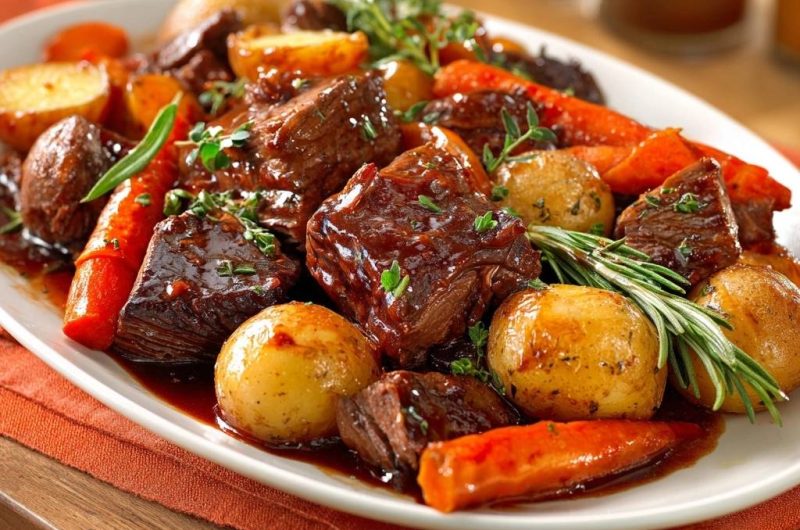
Beef Stew
Course: Main CourseCuisine: AmericanDifficulty: medium6
servings30
minutes3
hours550
kcal210
MinutesTired of chewy beef stew? This recipe uses a simple sear-then-braise method that breaks down tough connective tissue for guaranteed fall-apart results every time.
Ingredients
2 pounds beef chuck cut into 2-inch cubes
1/4 cup all-purpose flour
1 large yellow onion, diced (about 1 1/2 cups)
4 garlic cloves, minced
1.5 pounds baby potatoes
6 medium carrots cut into 2-inch chunks
4 sprigs fresh thyme
3 sprigs fresh rosemary
3 tablespoons tomato paste
4 cups beef broth
2 tablespoons olive oil
Salt and black pepper to taste
Directions
- Pat beef cubes dry with paper towels and season generously with salt and pepper. Dredge in flour, shaking off excess. Heat olive oil in a large Dutch oven over medium-high heat until shimmering. Sear beef in batches without crowding for 3 to 4 minutes per side until deep brown crust forms. This crucial Maillard reaction locks in juices and starts tenderizing. Remove beef to a plate.
- Reduce heat to medium. Add onion and garlic to pot; cook 4 to 5 minutes until softened and fragrant. Stir in tomato paste and cook 1 to 2 minutes until darkened. Add potatoes and carrots; stir 2 minutes to coat in flavorful bits.
- Return beef and any juices to pot. Tuck in thyme and rosemary sprigs. Pour in beef broth, scraping up browned bits from bottom. Bring to simmer.
- Cover tightly and transfer to 325F oven. Braise 2.5 to 3 hours until beef shreds easily with fork and veggies are tender. No peeking—oven temp stays low and steady to melt collagen without drying out meat.
- Remove herb sprigs. Taste and adjust salt. Garnish with additional fresh thyme and rosemary if desired. Serve hot straight from pot. Leftovers tenderize even more.
Notes
- Sear beef in batches without crowding for best crust. Braise covered in 325F oven—no peeking—to melt collagen without drying out meat. Leftovers tenderize even more.