Glazed Baby Carrots with Fresh Dill
Why Glazed Baby Carrots with Fresh Dill Transform Sides
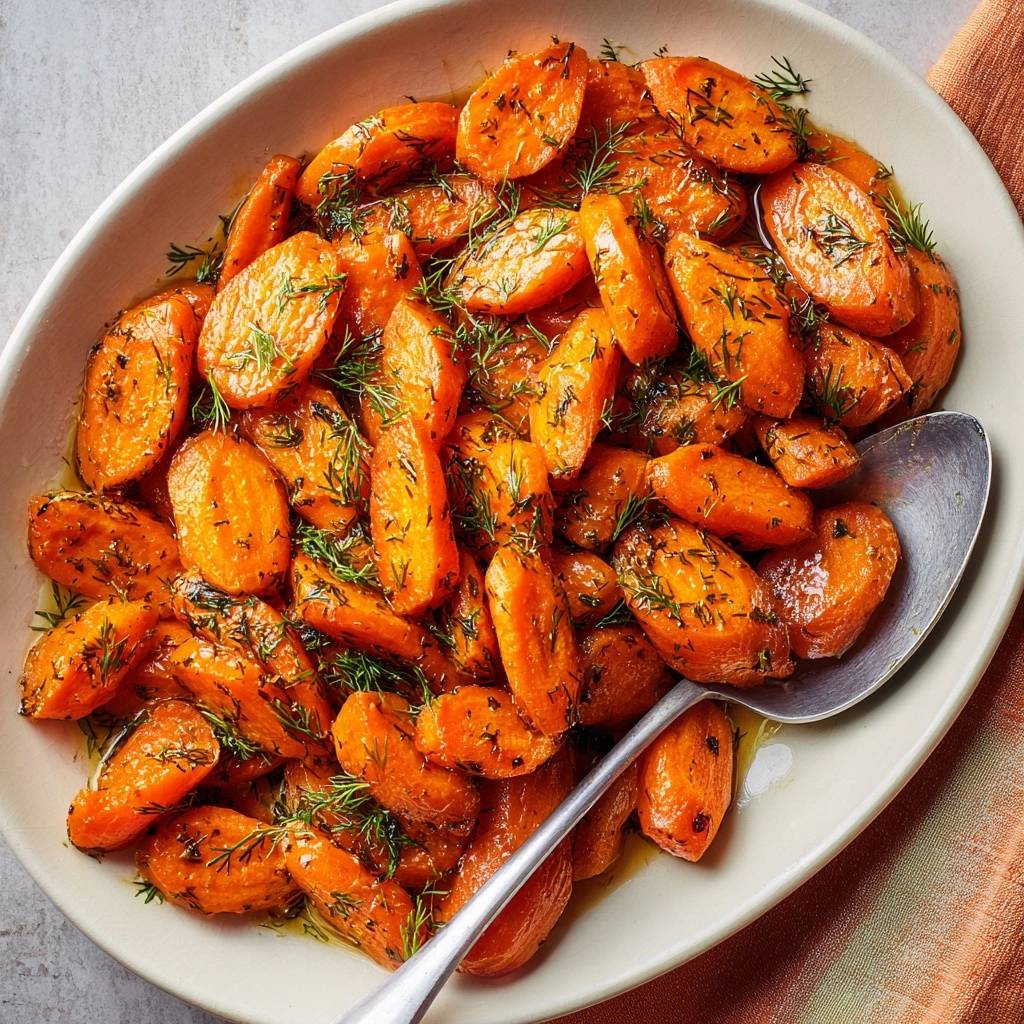
Imagine biting into carrots that gleam with a honey-butter shine, firm and snappy instead of that sad, boiled mush everyone knows too well. This recipe fixes the heartbreak of soggy sides in just 20 minutes flat. You’ll get glossy perfection that steals the show at any table.
So why does this method win? It steams with barely any water, then evaporates it all before glazing. Therefore, the carrots stay crisp while flavors concentrate into something irresistible. No more watery disappointment.
Here’s the pro tip that seals it: test tenderness with a fork at 8 minutes. It should pierce with a bit of resistance, not sink in like overcooked mush. That one check guarantees the texture revolution every time.
From Watery to Glossy: Texture Revolution
Boiling carrots drowns them in excess water, breaking down cell walls into mush. However, this skillet trick uses just 1/2 cup water to steam gently. Evaporation then dries the pan, locking in firmness.
Roasting chars edges but misses the glossy coat. Boiling dilutes taste. In addition, this approach tenderizes via steam without sogginess, thanks to minimal liquid. Fork them; they hold bite.
Pro tip: use a large skillet for quick evaporation. Crowded pans trap steam too long. That keeps your glazed baby carrots with fresh dill perfectly al dente.
Fresh Dill’s Role in Bright Flavor Balance
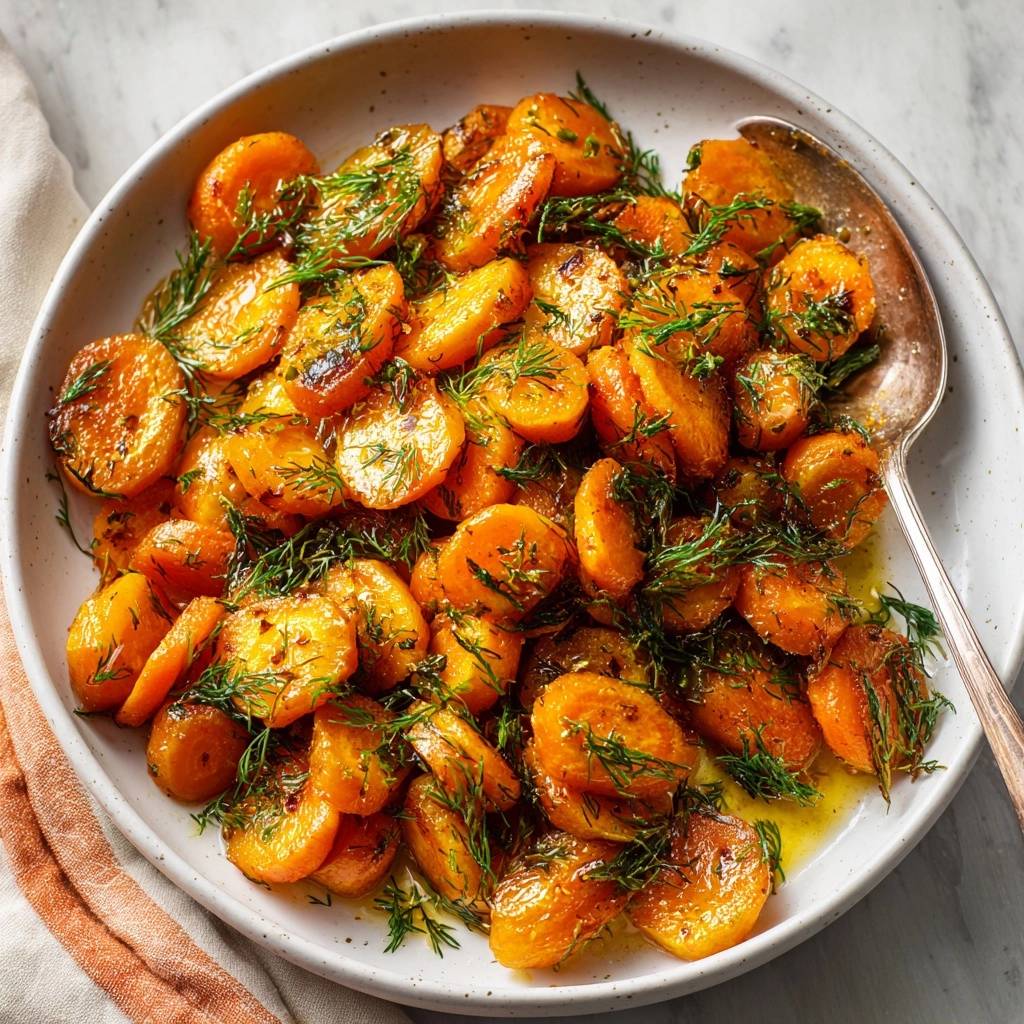
Fresh dill brings anethum graveolens compounds that cut through honey’s sweetness with citrusy, herbal pop. Dried dill fades fast, losing that vibrant lift. Therefore, chop it fresh for peak aroma.
Harvest dill in the morning when oils peak. It pairs with carrots’ earthiness, balancing the glaze. Snip leaves finely to release flavors without bruising stems.
This synergy turns simple veggies into a bright side. You’ll smell it first, that fresh zing promising every forkful delights.
Key Ingredients for Perfect Glazed Baby Carrots with Fresh Dill
Baby Carrots: Trimming and Peeling Essentials
Baby carrots cook uniformly tender, unlike big ones that turn woody. Trim tops and peel smoothly for 2 pounds, serving four generously. Rinse well to ditch grit, especially bagged ones.
Organic hold more natural sweetness. Pat dry after washing. Therefore, they absorb glaze evenly without excess moisture sneaking in.
Grab fresh ones; they snap crisp when bent. That sets up the firm bite you crave.
Unsalted Butter and Honey Glaze Duo
Unsalted butter lets you control salt while its fats emulsify the glaze for shine. Honey’s fructose caramelizes at low heat, adding gloss without burning. Use 2 tablespoons each for perfect cling.
Room-temp butter melts fast into honey. Too cold, and it separates. In addition, this duo coats every crevice as it bubbles.
Feel the silkiness form; it’s why these carrots shine like candy.
Kosher Salt, Pepper, and Fresh Dill Precision
Kosher salt draws out moisture coarsely, seasoning deeply without sharpness. Fresh-ground pepper, 1/4 teaspoon, scatters evenly for subtle heat. Chop 3 tablespoons dill fine to avoid big chunks.
For that same tender finish, try this method with glazed baby carrots with dill.
Store dill in damp paper towels in the fridge; it stays punchy. Add it last off heat. Therefore, volatiles stay bright.
These pinpoint the balance: salty base, pepper kick, dill’s fresh finish.
Step-by-Step Skillet Method for Glazed Baby Carrots with Fresh Dill
Phase 1: Steam with Minimal Water for Crisp Tenderness
Add 2 pounds trimmed baby carrots to a large skillet with 1/2 cup water and 1 teaspoon kosher salt. Cover and crank to medium-high. Cook 8-10 minutes until water vanishes completely.
Steam tenderizes without boiling’s dilution. Listen for the hiss fading; smell sweetness rising. Fork-test: resistance means perfect crisp.
Large skillet speeds evaporation. Smaller ones steam too long, risking mush. Nail this, and you’re golden.
Phase 2: Uncover and Build Shiny Honey-Butter Glaze
Uncover the dry pan, toss in 2 tablespoons unsalted butter, 2 tablespoons honey, and 1/4 teaspoon pepper. Stir hard for 2-3 minutes as it bubbles and clings.
Butter stabilizes the emulsion; honey caramelizes lightly via Maillard. Watch the shine build, coating each carrot. Lower heat if scorching starts.
That vigorous toss creates the glossy magic. Don’t skip it; lazy stirring leaves bare spots.
Phase 3: Fresh Dill Finish Off Heat
Pull from heat, stir in 3 tablespoons chopped fresh dill. Toss gently to coat. Serve warm right away.
Dill’s oils preserve off heat, adding herbal pop. Total time: 20 minutes. Plate high for wow factor.
That last step brightens everything. Dig in while steaming.
Science of Evaporation Glazing in Baby Carrots with Fresh Dill
Water Evaporation Locks in Firmness
Steam from minimal water softens pectin gently, unlike boiling’s cell rupture. Evaporation via dry heat firms exteriors. No standing water means no mush.
Blanching fails by shocking with ice water, diluting texture. Here, thermodynamics tenderize precisely. Therefore, carrots hold shape and snap.
Pro tip: altitude adds 1-2 minutes cook time. Test always.
Honey-Butter Caramelization for Glossy Sheen
Honey browns at 320°F, but butter’s milk solids stabilize below scorch point. Emulsion forms a clingy coat. Skillet’s direct heat beats oven’s dry roast.
For another side that pairs beautifully with roast chicken or grilled fish, try these crispy roasted potatoes and carrots.
Stirring aerates for even gloss. You’ll see bubbles thicken into shine. That’s the caramelized payoff.
Control beats oven unpredictability every time.
Avoiding Mush in Glazed Baby Carrots with Fresh Dill
Overcooking Signs and Recovery Fixes
Fork sinks without resistance? You’ve overcooked. Rescue by draining fast and glazing vigorously to firm up. Next time, check at 8 minutes.
Bigger carrots or high altitude need tweaks. Shorter time for petite ones. Therefore, always fork-test visually.
Recovery works, but prevention tastes best.
Water Amount and Heat Control Pitfalls
Too much water boils; too little scorches before tender. Stick to 1/2 cup. Gas stoves evaporate faster than electric, so watch closely.
Salt early prevents wilting. Medium-high builds steam quick. In addition, lid traps heat efficiently.
Master this, and mush vanishes forever.
Flavor Variations for Glazed Baby Carrots with Fresh Dill
Honey Substitutes and Herb Swaps
Swap honey for maple syrup; it adds woodsy depth. Agave works vegan-smooth. Try thyme for earthiness or mint for cool twist.
Lemon zest brightens any. Vegan? Plant butter emulsifies fine. Keep ratios; test small batches.
Parsley swaps neutrally. Each keeps glaze intact while varying vibes.
Spice Twists Without Overpowering
Add a cumin pinch for smoke or grated ginger for zip. Balance against sweet glaze. Start tiny; taste as you stir.
These elevate without dominating dill’s role. Pro tip: grind fresh for punch.
Pairing Glazed Baby Carrots with Fresh Dill
Main Dish Matches for Balance
Roast chicken loves the sweet cut against savory skin. Grilled fish gets herbal lift. Grain bowls gain glossy pop.
Pair with baked salmon; dill echoes flavors. Or turkey cutlets for easy weeknights. Sweet glaze tempers richness every time.
What’s Next?
Try these delicious pairings:
- Thyme-Glazed Beef Roast with Roasted Vegetables
- Crispy Fried Chicken & Biscuit Sandwich: Cloud-Like Biscuits!
These combos make sides shine.
Meal Prep and Holiday Side Ideas
Prep for buffets: hold warm in low oven. Thanksgiving fits with turkey; Passover with brisket. Reheat oven at 300°F to revive crisp.
Steam-free reheat keeps texture. Perfect for crowds.
Make-Ahead Guide for Glazed Baby Carrots with Fresh Dill
Storage and Reheating Without Sogginess
Store airtight in fridge up to 3 days. Reheat in skillet over medium with a pat of butter; avoid microwave steam. Don’t freeze; texture turns grainy.
Revive glaze by adding splash water and stirring. Keeps that shine. Make-ahead blanching? Skip it; fresh steam wins.
Glazed Baby Carrots with Fresh Dill: Common Queries
Can I Use Regular Carrots Instead?
Yes, cut full-sized into 2-inch uniform pieces for even cooking. Steam 12-15 minutes until water evaporates. They soften more, so fork-test rigorously; texture trades some snap for deeper flavor.
Peel thoroughly. Works great, just plan extra time.
Best Sub for Fresh Dill?
Frozen dill thaws fine, same amount. Dried? Use 1 tablespoon; it fades quicker, so boost at end. Grow your own: snip young leaves for best oils.
Fresh beats all, but these hold up in pinches.
How to Scale for Crowds?
Double to 4 pounds, use two skillets for evaporation speed. Keep 1/4 cup water per pound. Stir in batches; total time stretches to 25 minutes.
Gloss holds across multiples. Perfect for 8-10 servings.
Vegan Version Possible?
Absolutely: swap unsalted butter for plant-based like Miyoko’s, and honey for agave or maple. Same ratios emulsify beautifully. Toss dill same way; shine and snap intact.
No compromises on taste or texture.
Why Skillet Over Oven?
Skillet gives precise evaporation control and fast glaze buildup in 20 minutes. Oven roasts drier, charring edges over glossy coat. Direct stir ensures even shine.
Speed and control win for weeknights.
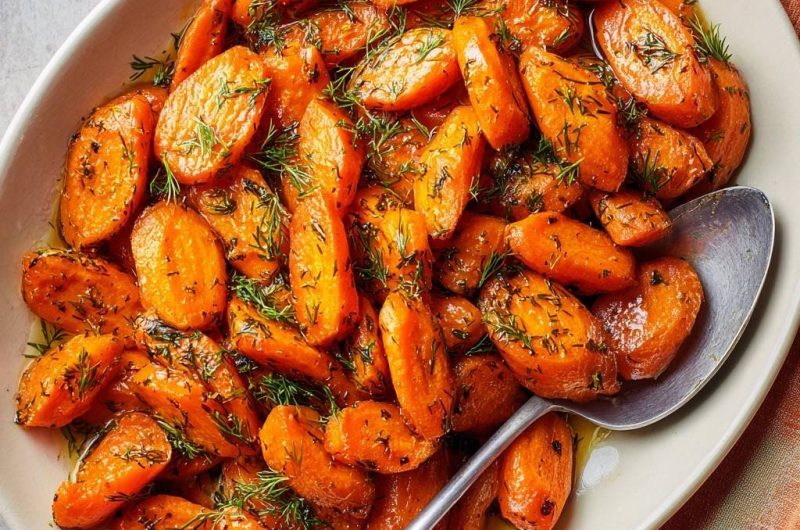
Glazed Baby Carrots
Course: Side DishCuisine: AmericanDifficulty: easy6
servings10
minutes12
minutes150
kcal22
MinutesSick of boiled carrots turning into a watery mush? This skillet method steams them just enough for tenderness, then evaporates every drop of liquid before glazing for that perfect glossy, firm bite every time.
Ingredients
2 pounds baby carrots, trimmed and peeled
2 tablespoons unsalted butter
2 tablespoons honey
1 teaspoon kosher salt
1/4 teaspoon black pepper
3 tablespoons fresh dill, chopped
Directions
- Place carrots in a large skillet with 1/2 cup water and salt. Cover and cook over medium-high heat for 8-10 minutes until water evaporates completely and carrots are tender-crisp (test with a fork; they should have bite, not mush). This is the key: minimal water steams without boiling, preventing sogginess.
- Uncover, add butter, honey, and pepper. Stir vigorously for 2-3 minutes as mixture bubbles and coats carrots in a shiny glaze. The evaporated pan locks in firmness while fats caramelize for gloss.
- Remove from heat, toss in chopped dill. Serve warm. Perfect texture guaranteed!
Notes
- Test carrots with a fork for tender-crisp texture with bite, not mush. Minimal water prevents sogginess.