Mastering Creamy Garlic Spinach Chicken with a Velvety Sauce
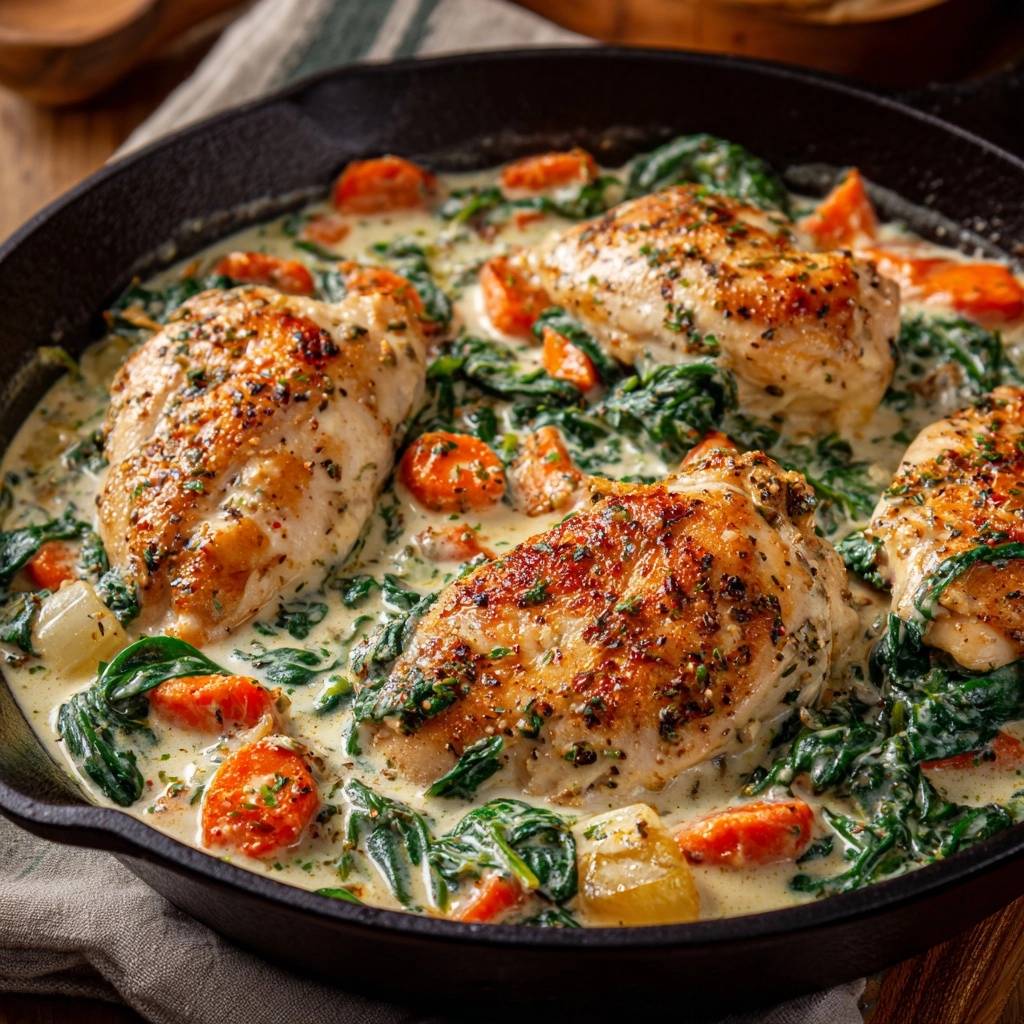
Most home cooks have experienced the disappointment of a “broken” cream sauce. You start with high hopes, but by the time the dish hits the plate, the chicken is swimming in a thin, watery puddle rather than a rich, clinging glaze. This Creamy Garlic Spinach Chicken solves that frustration by utilizing a professional reduction technique that ensures a restaurant-grade emulsion every single time.
The flavor profile strikes a perfect balance between savory aromatics, earthy greens, and a high-protein base. By focusing on the science of the sauce, we create a dish that feels incredibly indulgent while remaining structurally sound. The secret lies in how we handle the moisture levels of the vegetables and the concentration of the liquids before the dairy even touches the pan.
To achieve that signature velvety texture, you must reduce your deglazing liquid by half. This step concentrates the proteins and flavors in the chicken broth, providing a stable foundation for the heavy cream to bind to. When you master this specific timing, you’ll never deal with a separated or bland sauce again.
The Anatomy of a Non-Watery Cream Sauce
A successful cream sauce is essentially a stable emulsion of fats and liquids. When sauces fail, it’s usually because excess moisture from the vegetables—especially the spinach—overwhelms the fat content of the cream. Therefore, we use a reduction method to preemptively remove that extra water, leaving behind only the intense flavor of the ingredients.
The process begins with the Maillard reaction during the chicken searing phase. As the chicken hits the hot oil and butter, it develops a deep golden crust, leaving behind “fond” or browned bits on the bottom of the skillet. These bits are concentrated flavor bombs that provide the structural backbone for your sauce once they are released during deglazing.
By boiling the chicken broth and reducing it significantly, you are creating a thick, flavorful syrup. This concentrated base acts as an anchor for the heavy cream. When the cream is added to a reduced base rather than a watery one, it thickens almost instantly, resulting in a glossy finish that coats the back of a spoon beautifully.
Essential Components for Creamy Garlic Spinach Chicken
Quality ingredients are the difference between a mediocre meal and a masterpiece. For this recipe, heavy cream is a non-negotiable requirement. While you might be tempted to use milk or half-and-half to save on calories, those options lack the fat stability needed to withstand the heat and the acidity of the other ingredients without curdling.
The choice of aromatics also plays a huge role in the final taste. Yellow onions are preferred here because they offer a higher sugar content than white onions. As they sauté in the chicken fat, they soften into a mellow sweetness that perfectly offsets the salty punch of the parmesan cheese and the earthy notes of the spinach.
Speaking of cheese, always reach for a wedge of Parmesan and grate it yourself. Pre-shredded cheeses are coated in potato starch or cellulose to prevent clumping in the bag. However, those same anti-clumping agents will prevent the cheese from melting smoothly into your sauce, often resulting in a grainy or “sandy” texture that ruins the mouthfeel.
Selecting Your Protein: Breasts vs. Thighs
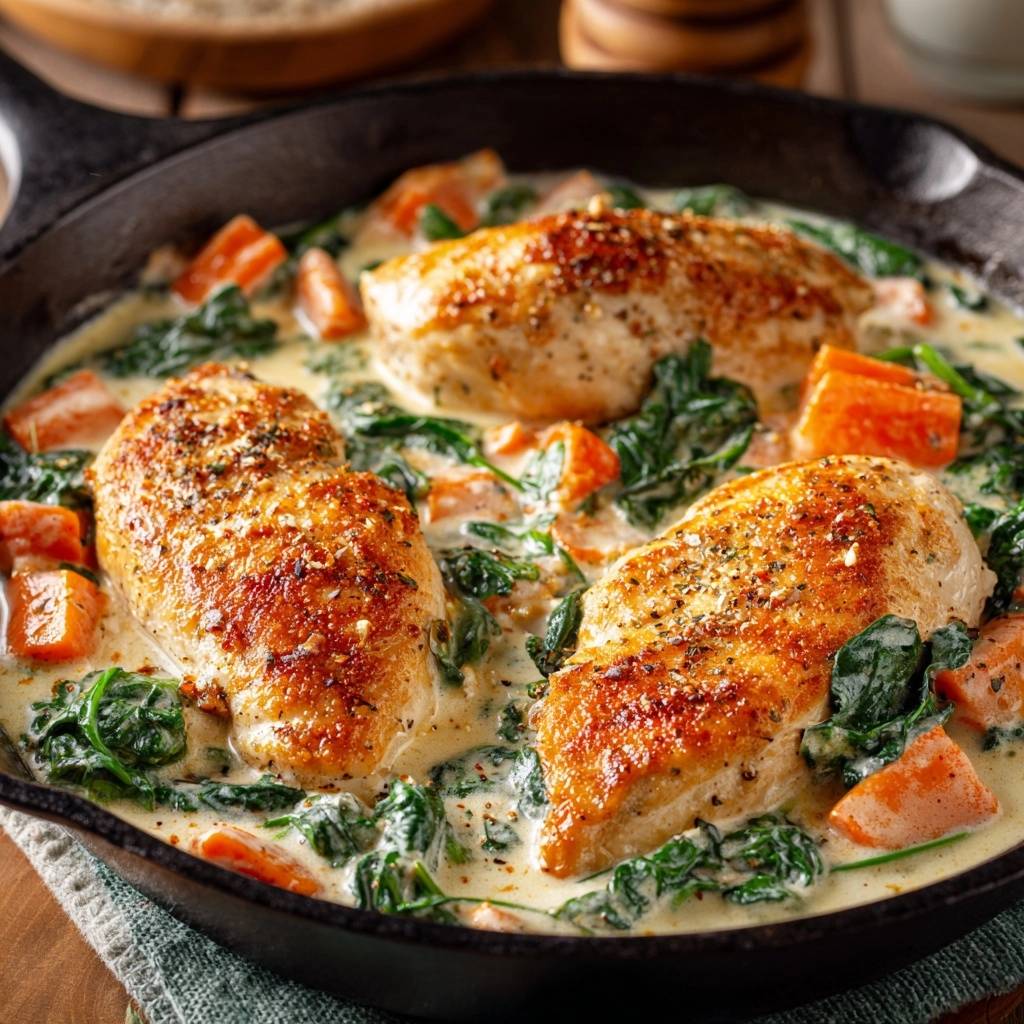
Chicken breasts offer a lean, clean protein profile that pairs elegantly with a rich sauce. However, they can dry out quickly if they aren’t prepped correctly. I recommend using a meat mallet to pound the thicker end of the breast so the entire piece is an even thickness, ensuring the edges don’t overcook while the center finishes.
If you prefer a more forgiving cut, boneless skinless chicken thighs are an excellent alternative. Their higher fat content keeps them juicy even if they stay in the pan a minute too long. Whichever you choose, make sure to pat the meat bone-dry with paper towels before seasoning to ensure you get a proper sear rather than steaming the meat.
The Role of Aromatics and Spices
We use a dry rub of oregano and garlic powder for the initial sear because dried spices can withstand high heat without burning. Fresh garlic, while delicious, would turn bitter and black if added during the searing phase. By reserving the fresh minced garlic for the vegetable sauté, we preserve its buttery, pungent aroma.
The addition of red pepper flakes is optional but highly recommended. Even a small pinch doesn’t make the dish “spicy” in a traditional sense. Instead, the subtle heat cuts through the heavy richness of the dairy and cheese, brightening the overall flavor profile and making each bite feel a bit lighter on the palate.
The Foundation: Searing for Maximum Flavor
A cast iron skillet is your best friend for this recipe because it retains heat better than any other material. You want the pan shimmering hot before the chicken touches it. Once you place the meat down, leave it alone! If you try to flip it and it sticks, it isn’t ready yet; the chicken will naturally release from the pan once a proper crust has formed.
You are looking for a deep, mahogany-gold color on both sides. This isn’t just about aesthetics; that crust is where the savory “umami” flavor lives. Use an instant-read thermometer to pull the chicken at exactly 165°F. Overcooking the meat at this stage will result in a rubbery texture once it’s added back to the simmering sauce later.
Building the Base: Sautéing Carrots and Onions
After removing the chicken, you’ll see a layer of fat and browned bits in the pan. Do not wipe this out! This is liquid gold. Toss your carrots and onions directly into that flavorful oil. The carrots need a few minutes head start to soften, as they take longer to cook than the onions and garlic.
You want the onions to become translucent and the carrots to have a slight “al dente” bite. In the final sixty seconds of sautéing, stir in the minced garlic. Watch it closely; as soon as you can smell that incredible garlic aroma, it’s time to move to the next step. Burning the garlic at this stage will ruin the entire sauce base.
The Deglazing Technique: Concentrating the Sauce
Deglazing is the most critical step for preventing a watery sauce. Pour in the chicken broth and use a wooden spoon to vigorously scrape the bottom of the skillet. All those stuck-on browned bits will dissolve into the liquid, turning it a deep, rich amber color. This is the foundation of your flavor profile.
Now, turn the heat up and let the broth boil. You must wait until the liquid has reduced by at least half. This physical reduction removes the excess water that usually thins out cream sauces. By the time you add the heavy cream, the broth should be thick enough to leave a trail if you run your spoon through it.
Integrating the Greens and Dairy
Once the broth is reduced, lower the heat to medium-low before pouring in the heavy cream. You want a gentle simmer, never a rolling boil. High heat can cause the dairy proteins to tighten and separate. When the cream begins to bubble softly, it’s time to add the tightly packed baby spinach.
Gently fold the spinach into the cream. The goal is to wilt the leaves just until they turn bright green. If you overcook the spinach, the cell walls will rupture, releasing all their internal water into your perfectly reduced sauce. By wilting it slowly, you keep the moisture inside the leaf and the sauce remains thick and velvety.
Finally, stir in the freshly grated parmesan. The cheese acts as a natural emulsifier and thickener. As it melts, the sauce will transform into a glossy, luxurious coating. If the sauce looks too thick at this point, you can add a tiny splash of broth, but usually, the consistency is perfect right as the cheese disappears into the cream.
Troubleshooting Your Creamy Garlic Spinach Chicken
If your sauce appears to be “breaking” or looking oily around the edges, your heat is likely too high. Immediately remove the pan from the burner and stir in a teaspoon of cold heavy cream to bring the temperature down and re-emulsify the fats. Constant stirring is your best defense against separation.
In the event the sauce becomes too thick before you’ve even added the chicken back, don’t panic. Simply whisk in a tablespoon of chicken broth at a time until you reach your desired consistency. Remember that the sauce will continue to thicken as it cools on the plate, so it’s better to have it slightly looser in the pan than too gloopy.
Optimal Side Dish Pairings
To make the most of that incredible garlic cream sauce, you need a side dish that can soak it up. Al dente fettuccine or linguine is a classic choice, as the wide noodles provide plenty of surface area for the sauce to cling to. Roasted fingerling potatoes or a thick slice of toasted sourdough are also fantastic for mopping up every last drop.
For a perfect pairing, try our Creamy Chicken Spinach White Bean Skillet: Juicy One-Pan Wonder.
If you are looking for a lighter, lower-carb option, serve this chicken over a bed of cauliflower rice or alongside steamed green beans. The crispness of the beans provides a nice textural contrast to the soft, velvety sauce. Even a simple side salad with a sharp vinaigrette can help balance the richness of the heavy cream and parmesan.
Storage and Reheating Protocols
Leftovers can be stored in an airtight container in the refrigerator for up to three days. However, be aware that the sauce will thicken significantly as it chills. I do not recommend freezing this dish; the molecular structure of the heavy cream and cheese will break during the freezing and thawing process, resulting in a grainy, separated mess.
When reheating, avoid the microwave if possible, as it tends to make the chicken rubbery and the sauce oily. Instead, place the chicken and sauce in a small skillet over low heat. Add a teaspoon of water or chicken broth and stir constantly as it warms up. This gentle heat helps the emulsion come back together without breaking the sauce.
Expert Tips for Success
Can I use frozen spinach for this recipe?
Yes, you can use frozen spinach, but you must be extremely careful. Thaw it completely and squeeze it in a kitchen towel until it is bone-dry. Frozen spinach contains significantly more moisture than fresh, and if you don’t remove every drop of that water, your sauce will become thin and grey. Fresh baby spinach is always the better choice for texture and color.
How do I prevent the garlic from becoming bitter?
The key is timing and heat management. Never add fresh minced garlic to a dry, scorching hot pan. Always ensure there is enough fat (oil or butter) in the skillet to coat the garlic, and only cook it for about 60 seconds. As soon as it becomes fragrant and turns a pale golden color, add your liquid to stop the cooking process.
What is the best substitute for heavy cream?
If you must avoid heavy cream, the best substitute is a mixture of whole milk and a “slurry” made of cornstarch. Whisk one teaspoon of cornstarch into a cup of milk before adding it to the pan. While it won’t be as rich or flavorful as the original, the starch will help stabilize the milk and provide a similar thickness without the high fat content.
How can I tell if my Parmesan is “real” enough for melting?
Check the ingredient label on the back of the cheese. It should only list milk, salt, and enzymes. If you see “cellulose,” “potato starch,” or any other anti-caking agents, the cheese will not melt properly. Buying a wedge with the “Parmigiano-Reggiano” name stamped on the rind is the gold standard for a smooth, professional sauce.
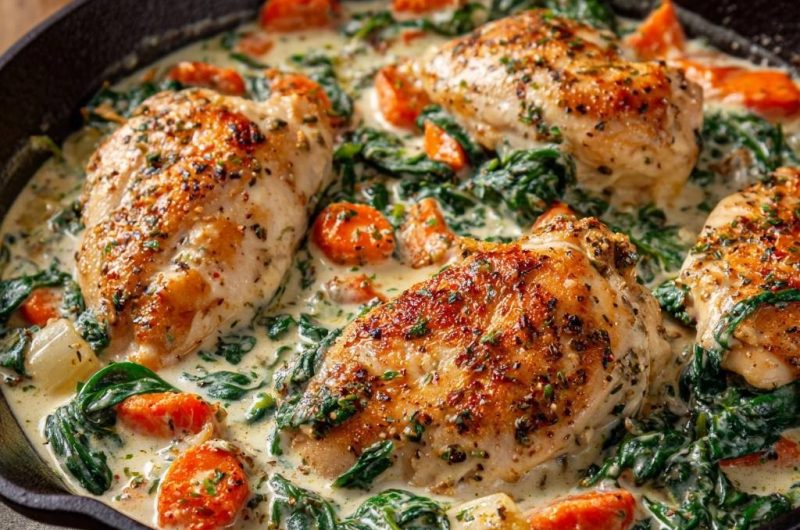
Creamy Garlic Spinach Chicken
Course: Main CourseCuisine: AmericanDifficulty: easy4
servings15
minutes25
minutes445
kcal40
MinutesA rich and restaurant-quality skillet dinner featuring golden seared chicken breasts, fresh baby spinach, and carrots in a stable, non-watery garlic cream sauce.
Ingredients
4 boneless skinless chicken breasts (or thighs for extra juiciness)
2 tablespoons olive oil
1 tablespoon butter
1 teaspoon dried oregano
1 teaspoon garlic powder
1/2 teaspoon red pepper flakes (optional)
Salt and black pepper to taste
3 cups fresh baby spinach (tightly packed)
1 1/2 cups carrots, sliced into thick rounds
1 small yellow onion, diced into large chunks
4 cloves garlic, minced
1 cup heavy cream
1/2 cup chicken broth
1/2 cup freshly grated parmesan cheese
Directions
- Season the chicken breasts generously on both sides with salt, pepper, oregano, and garlic powder.
- Heat the olive oil and butter in a large cast iron skillet over medium-high heat. Once the pan is shimmering, add the chicken. Sear for 6-8 minutes per side until a deep golden-brown crust forms and the internal temperature reaches 165°F. Remove chicken from the pan and set aside on a plate.
- In the same skillet (do not wipe out the fat), add the sliced carrots and diced onions. Sauté for 4-5 minutes until the onions are translucent and the carrots begin to soften. Add the minced garlic and cook for 1 minute until fragrant.
- Pour in the chicken broth. Use a wooden spoon to scrape the bottom of the pan (deglazing) to release all the flavorful browned bits. Let the broth boil and reduce by at least half. This concentration of flavor is the secret to a stable, non-watery sauce.
- Reduce the heat to medium-low. Pour in the heavy cream and bring to a very gentle simmer.
- Add the fresh baby spinach to the cream. Fold it in gently for 1-2 minutes until it just begins to wilt. By wilting it slowly in the cream rather than boiling it, you prevent the cells from rupturing and releasing excess water into the sauce.
- Stir in the grated parmesan cheese. Continue to stir for 1 minute until the cheese is melted and the sauce has thickened into a glossy, velvety consistency.
- Place the seared chicken back into the skillet. Spoon the thick garlic cream sauce and vegetables over the chicken. Serve immediately to maintain the perfect crust and creamy texture.
Notes
- To prevent a watery sauce, ensure the chicken broth is reduced by half before adding the cream and wilt the spinach slowly over lower heat.