Mastering Creamy Sun-Dried Tomato Chicken Penne
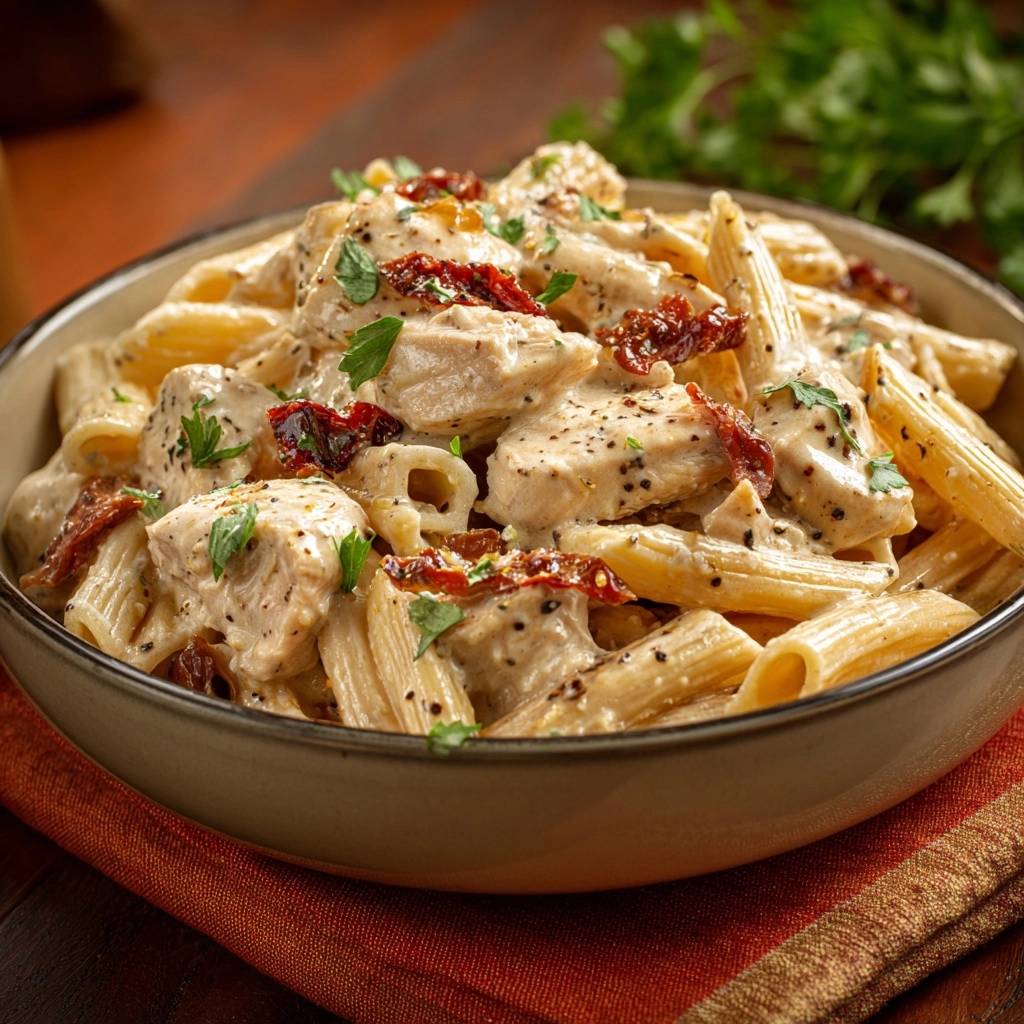
Few things are more disappointing than a home-cooked pasta dish that looks beautiful in the pan but leaves a watery, flavorless pool at the bottom of your bowl. You want a sauce that hugs every ridge of the penne, delivering a velvety punch of tangy sun-dried tomatoes and savory garlic in every single bite. This Creamy Sun-Dried Tomato Chicken Penne isn’t just another quick dinner; it’s a lesson in achieving a permanent, restaurant-quality emulsion that stays thick and glossy until the very last forkful.
The secret to this success lies in the balance between the concentrated sweetness of the tomatoes and the richness of tempered heavy cream. However, the real magic happens when you stop treating the pasta and the sauce as two separate entities. By finishing the noodles directly in the skillet, you allow the starches to bind the fats together, creating a cohesive glaze that never breaks or turns greasy. It’s a sophisticated flavor profile that feels like a splurge but relies on simple, high-quality pantry staples.
I’ve found that the absolute key to this recipe is the “under-cook” method. If you boil your pasta until it’s soft, it won’t have the capacity to soak up the seasoned cream sauce. Instead, pull those noodles out while they still have a firm, almost chalky center. This allows the pasta to act like a sponge in the final minutes, drawing the sauce into the center of the penne and ensuring the flavor is baked right into the grain.
The Science of a Non-Separating Cream Sauce
Creating a stable cream sauce is more about chemistry than luck. When you combine heavy cream with acidic ingredients like sun-dried tomatoes, there’s always a risk of curdling. However, by using heavy cream specifically, you’re utilizing a high fat-to-water ratio that is much more resistant to breaking under heat. When you whisk in freshly grated Parmesan, the proteins in the cheese melt into the fat of the cream, creating a complex network that thickens the liquid naturally without the need for a flour-based roux.
Furthermore, the “fond” left behind after searing your chicken is a critical component for both stability and depth. Those little browned bits stuck to the bottom of your skillet are concentrated umami. As you pour in the cream and scrape the pan, those particles dissolve, acting as natural emulsifiers that help bridge the gap between the oil from the tomatoes and the dairy. This process, known as deglazing, ensures that the savory essence of the chicken is infused into every drop of the sauce.
Tempering the cream is another vital step in this scientific dance. By bringing the cream to a gentle simmer and letting it reduce by about a third before adding the pasta, you’re evaporating excess water. This results in a more concentrated fat content, which is far less likely to separate when it meets the heat of the noodles. The result is a sauce that is structurally sound, clinging to the pasta with a silkiness that persists even as the dish begins to cool on the plate.
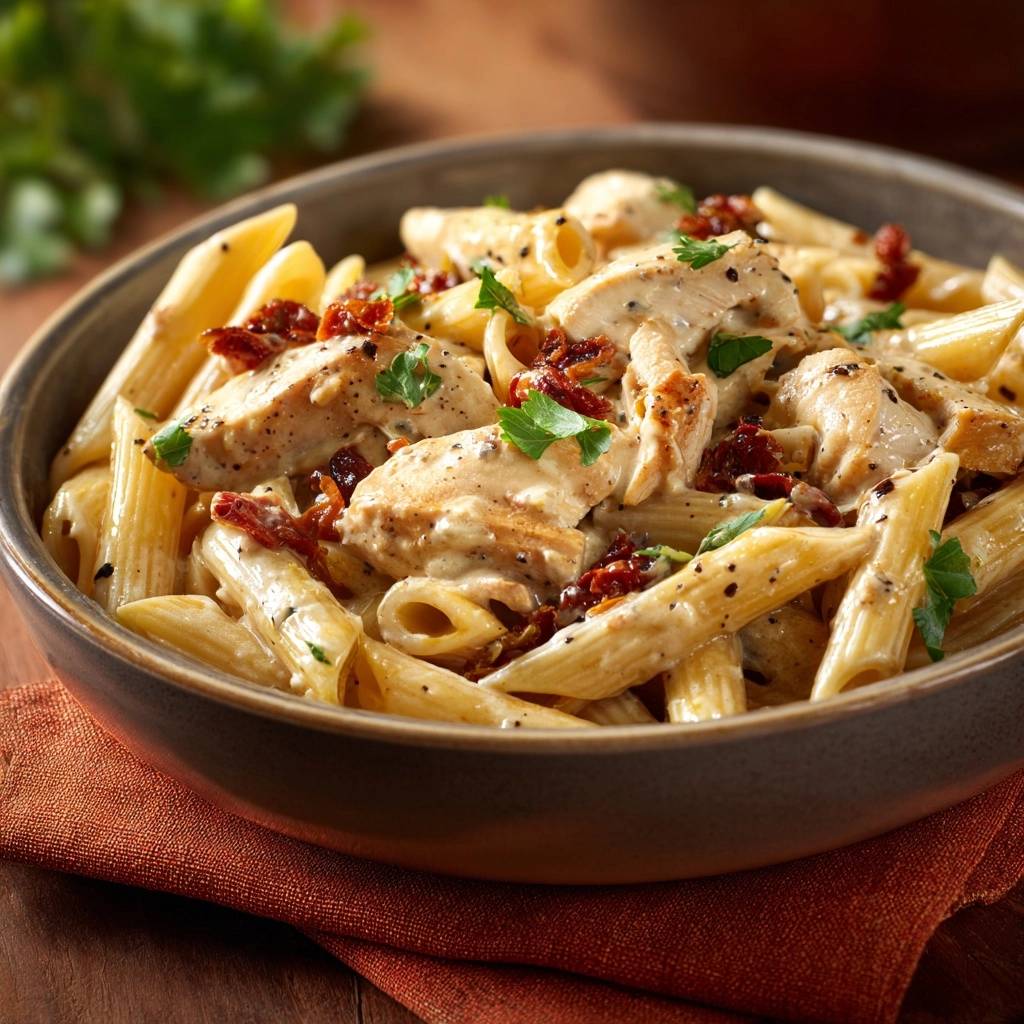
Why Starchy Pasta Water is Liquid Gold
Never pour your pasta water down the drain until the meal is served! As the penne boils, it releases amylose and amylopectin starches into the water, turning it into a cloudy, salty elixir. These starches are the ultimate “glue” for your sauce. When you add a splash of this water to your cream and cheese mixture, the starch molecules act as a bridge, physically linking the fats in the cream to the water-based components of the sauce. This creates a thick, stable emulsion that prevents the dreaded “oil slick” on top of your pasta.
Essential Components for Sun-Dried Tomato Chicken Penne
Quality ingredients are the backbone of this dish, and how you prep them matters just as much as the items themselves. For the sun-dried tomatoes, I always recommend the julienne-cut variety packed in oil. These thin strips distribute much more evenly throughout the pasta than whole halves, ensuring you get that concentrated, tart flavor in every mouthful. If you can only find whole ones, take the extra minute to slice them into thin ribbons yourself; it makes a world of difference in the final texture.
When it comes to the cheese, please put down the green shaker bottle or the pre-shredded bags. Pre-shredded cheese is coated in cellulose or potato starch to prevent clumping in the bag, but that same coating prevents the cheese from melting smoothly into your sauce. It often results in a grainy, sandy texture that ruins the silkiness of the cream. Buy a wedge of real Parmesan and grate it yourself using the small holes on a box grater. It will melt almost instantly into a liquid gold state that integrates perfectly with the heavy cream.
The chicken also requires a bit of attention before it ever hits the pan. I prefer using boneless, skinless chicken breasts for their lean profile, which balances the richness of the sauce. However, you must season them aggressively with the dried oregano and black pepper before cooking. This ensures the seasoning is seared into the meat rather than just floating in the liquid later. Fresh garlic is also non-negotiable here; the pre-minced jars often have a bitter, metallic aftertaste that can overwhelm the delicate cream.
Selecting the Right Penne Rigate
Not all penne is created equal. For this recipe, you must look for “Penne Rigate,” which refers to the ridges on the outside of the pasta tubes. Smooth penne (Penne Lisce) is too slippery for a thick cream sauce and will often result in the sauce sliding right off the noodle. The ridges on Rigate provide essential surface area and “grip,” allowing the emulsion to latch onto the pasta. This ensures that the sauce stays on the noodle and in your mouth, rather than at the bottom of the bowl.
Chicken Preparation: Searing for Maximum Flavor
To get the best flavor, pat your chicken chunks dry with a paper towel before seasoning. If the meat is wet, it will steam in the pan instead of searing, leaving you with gray, rubbery pieces. You want a high-heat sear to trigger the Maillard reaction, which creates that beautiful golden-brown crust. By cutting the chicken into large, bite-sized chunks rather than thin strips, you also protect the interior from drying out during the final tossing phase in the skillet.
Step-by-Step: Achieving the Perfect Emulsion
Achieving the perfect pasta requires a bit of timing and a lot of heat management. You aren’t just heating things up; you’re building layers of flavor and texture that culminate in a unified dish. The process moves quickly once the cream hits the pan, so have all your ingredients measured and ready to go. This “mise en place” approach prevents the garlic from burning while you’re fumbling with a cheese grater.
Phase 1: Searing and Building the Fond
Start by heating your olive oil over medium-high heat until it shimmers. Add the chicken in a single layer, resisting the urge to move it for at least two minutes. This patience is what builds that flavorful “fond” on the bottom of the skillet. Once the chicken is golden and cooked through, remove it to a plate. Don’t wash that pan! Those brown bits are the foundation of your sauce. Lower the heat slightly before adding the butter and garlic to ensure the aromatics soften without scorching.
Phase 2: Reducing the Cream and Deglazing
Pour the heavy cream into the skillet and use a wooden spoon to scrape up every bit of the chicken fond. As the cream simmers, you’ll notice the color change to a light tan as it absorbs the seared chicken essence. Let it bubble gently until it reduces by about one-third. You’ll know it’s ready when the cream is thick enough to coat the back of a spoon. If you draw your finger across the spoon, the line should stay clean and sharp without the cream running back together.
Phase 3: Finishing the Pasta in the Pan
This is where the “marriage” happens. Add your under-cooked penne and the seared chicken back into the simmering cream. Toss everything vigorously. As the pasta finishes its last two minutes of cooking, it will actually drink up the cream sauce. If it looks too dry, add your reserved pasta water one tablespoon at a time. You are looking for a glossy, tight coating that looks like it’s part of the noodle itself. The final result should be creamy, not soupy.
Troubleshooting Common Creamy Pasta Mistakes
If your sauce looks watery, the most likely culprit is that the cream didn’t reduce enough before you added the pasta water. Don’t panic! Just keep the pan over medium heat and continue to toss the pasta. The heat will help evaporate the excess moisture while the pasta starches work to thicken the remaining liquid. Conversely, if the sauce looks too thick or “clumpy,” it usually means the cheese was added to a pan that was too hot, or you’ve run out of moisture. A small splash of pasta water will usually loosen it right back up.
How to Fix a Broken or Grainy Sauce
A “broken” sauce is when the fat separates from the liquid, leaving a greasy mess. This usually happens if the heat is too high. To fix this, immediately remove the pan from the heat. Whisk in a tablespoon of room-temperature heavy cream or a small knob of cold butter. The cold dairy helps lower the temperature and re-emulsify the fats. If the sauce is grainy, it’s likely due to pre-shredded cheese; next time, stick to freshly grated Parmesan for a smoother finish.
Flavor Variations and Ingredient Swaps
While this chicken penne is a powerhouse on its own, it’s also a great canvas for variations. If you want to add some color and nutrition, toss in two cups of fresh baby spinach during the last minute of tossing. The heat from the pasta will wilt the spinach perfectly without making it slimy. For a vegetarian version, you can swap the chicken for thick slices of cremini or shiitake mushrooms. Just be sure to sear the mushrooms thoroughly to develop that same savory fond you’d get from the meat.
Vegetarian and Protein Alternatives
If you’re looking for a different protein, seared shrimp works beautifully with sun-dried tomatoes. Just remember that shrimp cooks much faster than chicken, so only sear them for about 90 seconds per side. For a plant-based protein boost, canned chickpeas that have been patted dry and roasted in the skillet until crispy provide a great textural contrast to the soft pasta and creamy sauce. Just remember to adjust your salt levels, as chicken provides a lot of natural savoriness.
Optimal Side Dishes for Rich Pasta
Because this dish is quite rich and decadent, you want side dishes that provide a sharp, acidic contrast. A simple arugula salad tossed in a lemon-shallot vinaigrette is the perfect companion; the peppery bite of the greens cuts right through the heavy cream. Alternatively, try charred broccolini with a squeeze of fresh lemon and a pinch of red pepper flakes. The bitterness of the charred brassica balances the sweetness of the sun-dried tomatoes, making the whole meal feel much more balanced and light.
For a perfect pairing, try our Creamy Chicken Fettuccine Alfredo with Juicy Chicken.
Expert Tips for Storage and Reheating
Cream-based pastas are notoriously tricky to reheat because the emulsion often breaks in the microwave, leaving you with oily noodles. To store, place leftovers in an airtight container in the fridge for up to three days. When you’re ready to eat, the best method is the stovetop. Place the pasta in a small skillet with a splash of milk or cream. Heat it over low, tossing constantly. The extra moisture and gentle heat will “wake up” the sauce and restore that creamy, glossy texture without the fat separating.
Frequently Asked Questions
Can I use half-and-half instead of heavy cream?
It is not recommended for this specific recipe. Half-and-half has a much lower fat content and a higher water content than heavy cream. When you try to reduce it, it doesn’t thicken as effectively and is much more likely to curdle when it hits the acidic sun-dried tomatoes. Heavy cream provides the necessary stability for a thick, non-watery sauce that coats the penne properly.
Why is my chicken rubbery or dry?
Rubbery chicken is usually the result of overcooking. Remember that the chicken will cook for 6-8 minutes during the initial sear and then spend another 2-3 minutes simmering in the sauce. To prevent dryness, pull the chicken off the heat the moment it is no longer pink in the center. The “carry-over” cooking that happens while it rests on the plate and the final toss in the sauce will ensure it stays juicy.
Can I use dry-packed sun-dried tomatoes instead of oil-packed?
Yes, but you’ll need to rehydrate them first. Place dry-packed tomatoes in a bowl of warm water for about 10 minutes until they are pliable, then pat them dry before slicing. Oil-packed tomatoes are generally preferred for this dish because they have a softer, more jam-like texture and the oil they are packed in is infused with flavor, which you can even use to sear the chicken for an extra flavor boost.
How do I keep the garlic from burning?
Garlic burns very quickly, especially when minced finely. The key is to add it to the pan only after you’ve lowered the heat to medium and added the butter. Butter has a lower smoke point than olive oil, and its water content helps “poach” the garlic slightly rather than frying it. Sauté the garlic for only 60 to 90 seconds—just until you can smell that wonderful aroma—before immediately pouring in the cream to stop the cooking process.
Can I freeze this pasta for later?
I don’t recommend freezing this dish. Dairy-based sauces almost always separate when frozen and thawed, resulting in a grainy texture and a pool of oil. The pasta also tends to become mushy as it absorbs too much moisture during the freezing process. This dish is best enjoyed fresh or kept in the refrigerator for a few days and reheated gently on the stove.
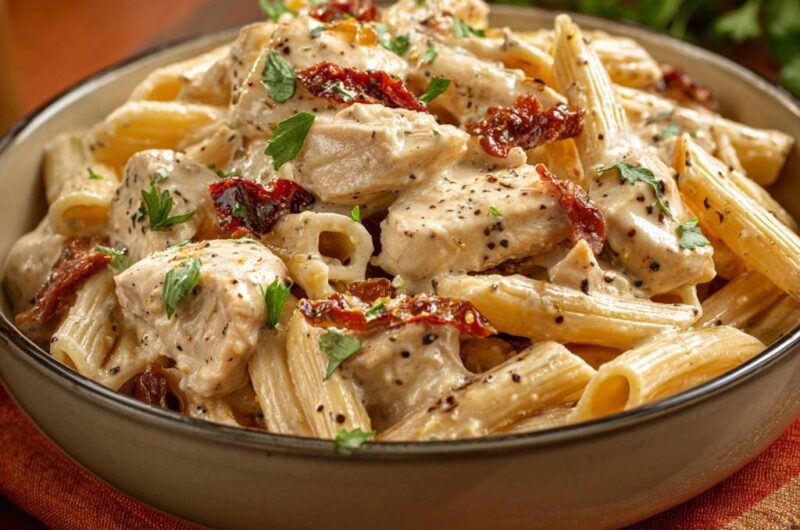
Chicken Penne
Course: Main CourseCuisine: AmericanDifficulty: easy4
servings10
minutes20
minutes620
kcal30
MinutesA rich and flavorful pasta dish featuring seared chicken, sun-dried tomatoes, and a garlic cream sauce. The recipe focuses on emulsification techniques to ensure the sauce perfectly coats every noodle without breaking or pooling.
Ingredients
1 pound penne pasta
1.5 pounds boneless skinless chicken breasts, cut into large bite-sized chunks
1/2 cup sun-dried tomatoes (julienne cut), drained of oil
4 cloves garlic, minced
1.5 cups heavy cream
1/2 cup freshly grated Parmesan cheese
1/2 cup reserved starchy pasta water
2 tablespoons olive oil
1 tablespoon unsalted butter
1 teaspoon dried oregano
1/2 teaspoon cracked black pepper (plus more for garnish)
Salt to taste
Fresh flat-leaf parsley, chopped for garnish
Directions
- Bring a large pot of heavily salted water to a boil. Cook the penne until it is 2 minutes shy of al dente (it should still have a firm bite). Before draining, scoop out 1 cup of the cloudy, starchy pasta water. This liquid is the key to preventing a watery sauce.
- While the pasta cooks, season the chicken chunks generously with salt, pepper, and oregano. Heat olive oil in a large skillet over medium-high heat. Sear the chicken until golden brown and cooked through, about 3-4 minutes per side. Remove chicken from the pan and set aside on a plate to catch any juices.
- In the same skillet, lower the heat to medium. Add the butter, minced garlic, and sun-dried tomatoes. Sauté for 1-2 minutes until the garlic is fragrant and the tomatoes have softened slightly.
- Pour in the heavy cream. Bring to a gentle simmer, scraping the bottom of the pan to release the browned chicken bits (fond). To solve the watery sauce problem, let the cream simmer and reduce by one-third until it begins to thicken naturally.
- Whisk in the Parmesan cheese until completely melted and smooth. Slowly whisk in 1/4 cup of the reserved pasta water. The starch in the water acts as a stabilizer between the fats in the cream and the moisture in the pasta.
- Add the undercooked penne and the chicken (including any juices from the plate) into the skillet. Toss vigorously over medium-low heat for 2-3 minutes. The pasta will finish cooking in the sauce, absorbing the cream and thickening the emulsion into a glossy coating that sticks to the noodles.
- If the sauce becomes too thick, add a splash more pasta water. Garnish with a heavy sprinkle of cracked black pepper and fresh parsley. Serve immediately while the emulsion is at its peak.
Notes
- The secret to preventing a watery sauce is using starchy pasta water and finishing the undercooked noodles directly in the sauce to allow for better absorption and thickening.