Mastering Crispy Golden Fried Wontons: The Anti-Soggy Technique
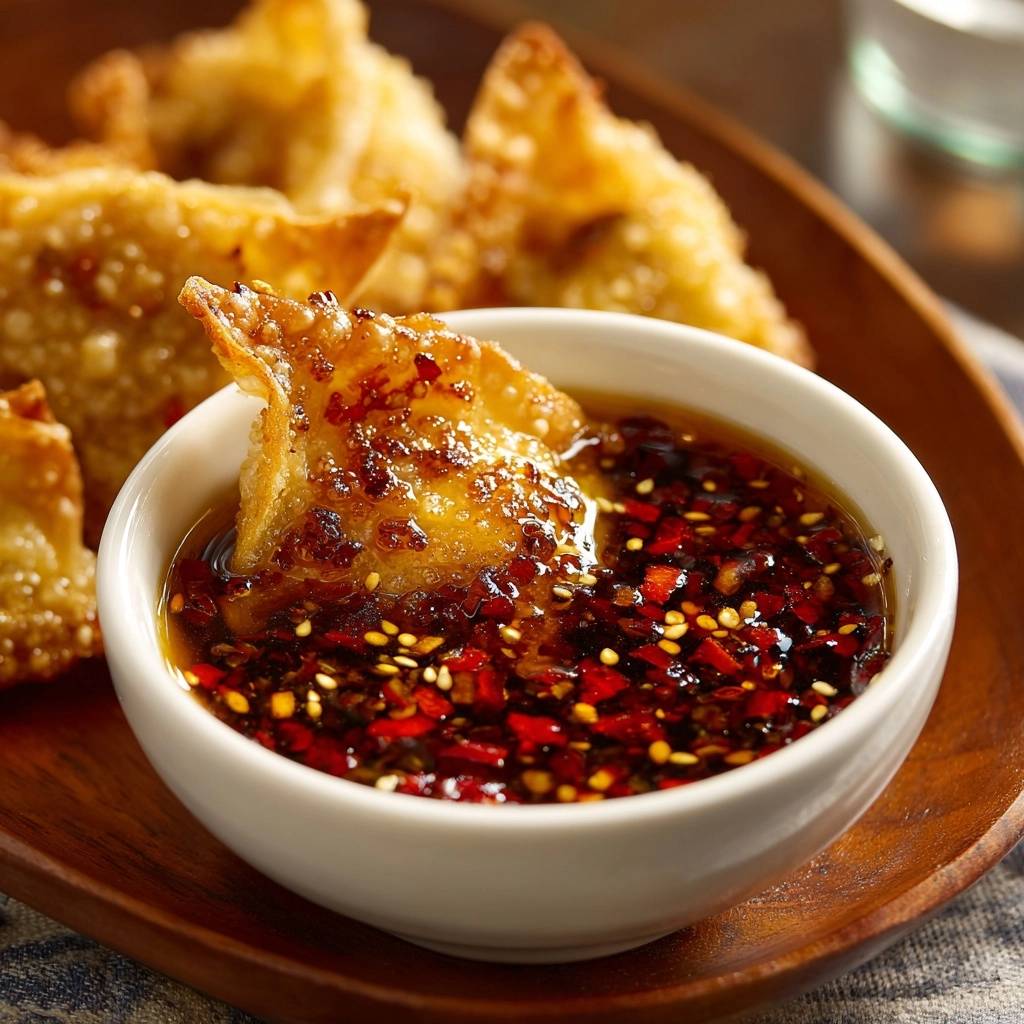
You know that heartbreaking moment when you bite into a fried wonton and it’s a greasy, limp disappointment? We’ve all been there, staring at a plate of appetizers that lost their crunch before they even hit the table. A truly perfect wonton should offer a shatteringly crisp, bubbly shell that stands up to a heavy dunk in spicy sauce without turning into mush.
The secret to that elusive, long-lasting crunch isn’t just luck; it’s a combination of moisture control and a specific temperature-staged frying method. Most home cooks struggle with oil absorption because their oil temperature fluctuates or they trap steam under the finished product. By mastering the way we handle the filling and the cooling process, you can achieve a professional-grade texture that stays firm and golden for the entire meal.
I’ve found that the real game-changer is using a wire rack instead of the traditional paper towel pile. While paper towels seem logical for soaking up grease, they actually create a tiny sauna that steams the bottom of your wontons. Switching to a rack allows air to circulate 360 degrees, locking in that bubbly crust instantly. Let’s dive into how you can replicate this at home.
The Anatomy of a Shatteringly Crisp Wrapper
That iconic “shatter” happens when the starch in the wonton wrapper hits hot oil and undergoes a rapid dehydration process. As the water in the dough evaporates, it creates tiny steam pockets that expand and then set into a rigid, brittle structure. This is why you see those beautiful micro-bubbles on the surface of a well-fried wonton.
Air pockets inside the wrapper are your biggest enemy because they cause the wonton to puff up like a balloon, making it fragile and prone to breaking. By using the “nurse’s cap” fold, you create multiple layers of thin dough that provide more surface area for the oil to crisp up. This specific shape ensures every bite has a high ratio of crunch to filling.
Why Moisture Control is Your Primary Objective
Internal moisture is the silent killer of a crispy shell. When the meat filling cooks, it naturally releases juices and steam; if that steam has nowhere to go, it migrates outward and softens the wrapper from the inside out. This is why your wontons might start crispy but turn soggy within minutes.
To combat this, we use a small amount of cornstarch directly in the meat mixture. The cornstarch acts as a binder, grabbing onto the natural juices of the chicken or turkey as they heat up. Instead of a watery mess, you get a succulent, cohesive filling that stays put, keeping the exterior shell bone-dry and brittle.
Essential Components for Crispy Golden Fried Wontons
Quality ingredients make a massive difference when you’re working with such a simple dish. I prefer using ground chicken or turkey because they have a lighter fat profile than beef or lamb. This prevents the filling from feeling overly heavy or greasy, allowing the aromatics like ginger and garlic to really shine through.
Freshness is non-negotiable for the aromatics. While powdered ginger or garlic might be convenient, they lack the bright, sharp bite that cuts through the richness of the fried dough. Freshly grated ginger adds a peppery heat, while minced garlic provides a savory depth that balances the salty soy sauce and nutty sesame oil.
Selecting the Right Wonton Wrappers
When you’re at the store, look for wrappers that feel supple and are pale yellow. Avoid any packs that have excess flour or look dry and cracked at the edges. Thinner wrappers will give you a more delicate, “shattering” crunch, while thicker ones offer a sturdier, more substantial bite.
Once you open the package, keep a damp paper towel over the stack you aren’t using. Wonton wrappers dry out incredibly fast when exposed to air, becoming brittle and impossible to seal. If they get too dry, they’ll crack during the folding process, which leads to oil leaking into the filling.
The Role of Neutral Oils with High Smoke Points
Frying requires an oil that can handle high heat without breaking down or smoking. Canola, peanut, or grapeseed oils are your best bets here. Peanut oil is a personal favorite because it adds a very subtle richness, but canola is a fantastic, budget-friendly option that lets the flavor of the wonton take center stage.
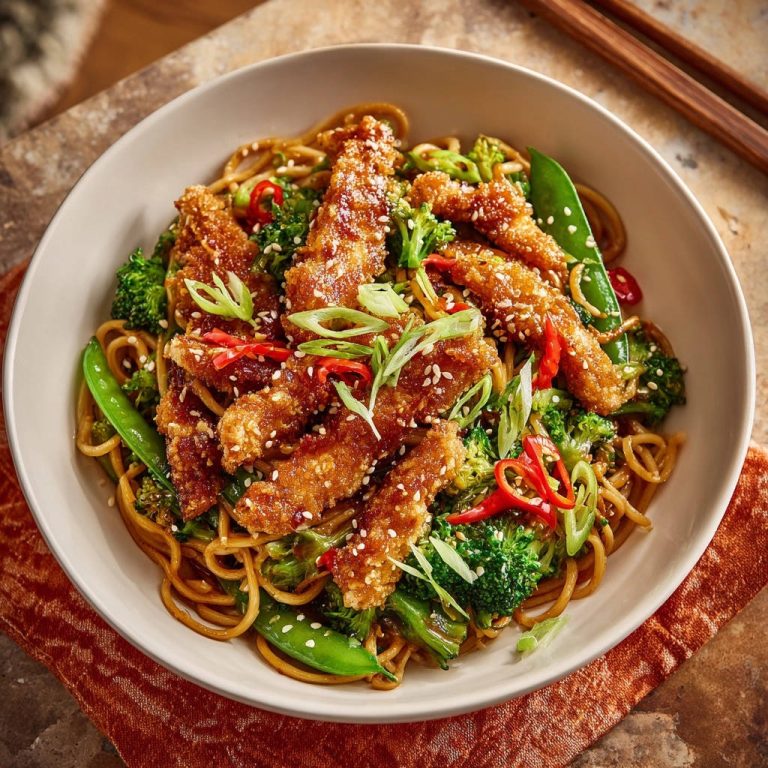
If you love the savory filling here, you’ll want to try this sticky sesame chicken for a satisfying meal.
Never use olive oil or butter for this recipe. Their smoke points are too low, meaning they’ll burn and turn bitter long before your wontons are cooked through. You also need enough oil volume—at least two inches—to ensure the temperature doesn’t plummet the moment you drop the cold wontons into the pot.
Step-by-Step: Preparing the Moisture-Locked Filling
Start by combining your ground meat with the minced green onions, ginger, garlic, soy sauce, and sesame oil. Now, here is the part where most people stop too early: you need to mix the meat until it becomes “tacky” or slightly sticky. This isn’t just about mixing ingredients; it’s about developing the proteins so they hold together.
When you stir the meat vigorously in one direction, the proteins begin to cross-link. This creates a springy, juicy texture rather than a crumbly one. If you under-mix, the filling will fall apart inside the wrapper, releasing more steam and ruining your crunch. You’ll know it’s ready when the mixture starts to pull away from the sides of the bowl in a cohesive mass.
Don’t forget that half-teaspoon of cornstarch. It might seem like a small amount, but it’s the insurance policy for your crispy shell. It turns the meat juices into a light gel, keeping the moisture inside the meat where it belongs. The result is a filling that is incredibly moist and flavorful without being “wet.”
Precision Assembly: Folding for Maximum Surface Area
To fold the “nurse’s cap,” place a teaspoon of filling in the center of your wrapper. Don’t overstuff it! If you add too much meat, the wrapper won’t seal properly, and the filling won’t cook through by the time the outside is golden. Lightly moisten the edges with a finger dipped in water.
Fold the wrapper into a triangle, pressing firmly around the mound of meat to squeeze out every bit of air. This is vital! If air is trapped inside, it will expand in the hot oil and cause the wonton to burst. Once you have your triangle, bring the two bottom corners together, overlap them slightly, and use a tiny drop of water to glue them in place.
This shape isn’t just for looks. The overlapping corners and the “brim” of the cap create extra layers of dough. When these layers hit the oil, they create different levels of crunch, giving you a much more interesting texture than a simple flat triangle would. Set the finished wontons on a tray lined with parchment paper while you finish the rest.
The Temperature-Staged Frying Protocol
Precision is everything when it comes to frying. You want your oil at exactly 350°F. If you don’t have a kitchen thermometer, it’s time to get one! At 350°F, the Maillard reaction happens perfectly—the exterior browns and develops flavor at the exact same rate the interior meat reaches a safe temperature.
If your oil is too cold, the dough will act like a sponge and soak up the grease, leaving you with a heavy, oily mess. If it’s too hot, the outside will turn dark brown or burn before the chicken inside is even warm. Consistency is the hallmark of a professional chef, so keep an eye on that dial throughout the process.
Managing Batch Sizes to Prevent Oil Temperature Drops
It’s tempting to dump all the wontons in at once to get finished faster, but patience pays off. Every time you add a cold wonton to the pot, the oil temperature drops. If you overcrowd the pan, the temperature can plummet by 30 or 40 degrees, which leads to that dreaded grease absorption.
Fry in small batches of five or six. This allows the oil to recover its heat quickly between additions. If you notice the oil isn’t bubbling vigorously around the wontons, stop and let the temperature climb back up to 350°F before adding the next batch. This “staged” approach ensures every single piece is as crispy as the first.
That double-fry method works just as well for achieving the crunch in this crispy chili chicken.
Visual Cues: Identifying the Perfect Golden Hue
While two to three minutes is the standard timing, your eyes are the best tool. You’re looking for a transition from a pale, doughy yellow to a deep, vibrant golden brown. The surface should be covered in tiny, sandy-textured bubbles. These bubbles are the sign of a perfectly dehydrated, crispy crust.
Use a slotted spoon or a spider strainer to gently turn the wontons as they fry. This ensures even browning on all sides. If one side stays submerged longer, it might get too dark. Once they reach that “sun-kissed” gold color, they are ready to be pulled from the heat immediately.
The Wire Rack Secret: Ending the Paper Towel Myth
This is the most important step for maintaining that crunch. As soon as the wontons come out of the oil, move them to a wire cooling rack set over a baking sheet. Most people reach for paper towels, but paper towels trap the heat and steam coming off the bottom of the hot food.
That trapped steam has nowhere to go but back into the wrapper, turning your hard-earned crunch into a soggy bottom in seconds. A wire rack allows the steam to escape downward, while cool air circulates underneath. This 360-degree airflow “sets” the crust, ensuring it stays shatteringly crisp even as it cools down to eating temperature.
Crafting the Spicy Chili Dipping Sauce
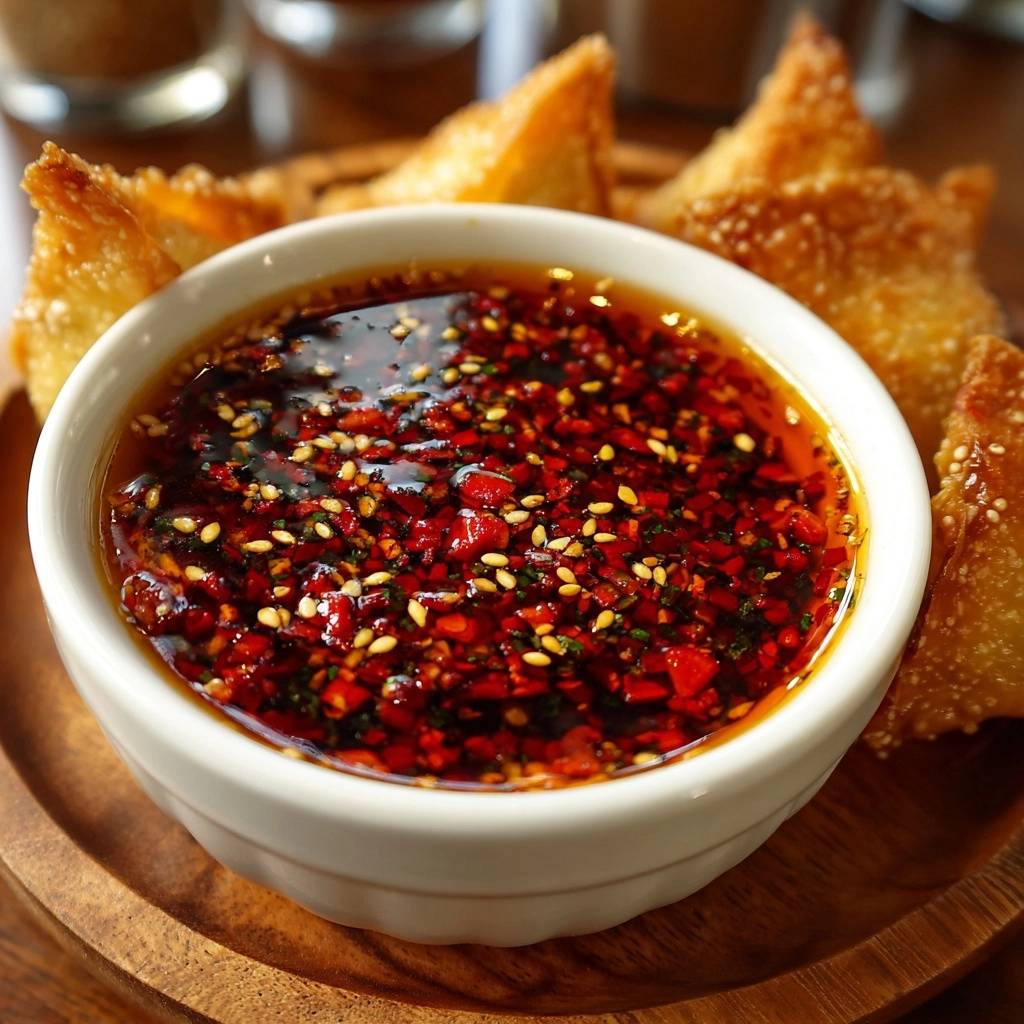
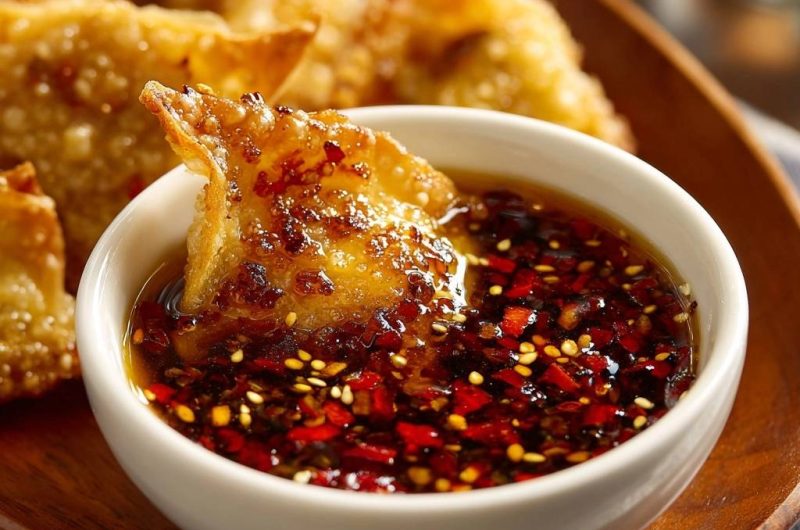
A crispy wonton needs a bold sauce to stand up to it. This dipping sauce is all about balance. The chili crisp provides heat and texture, while the soy sauce brings the umami. Rice vinegar adds a necessary acidic punch that cuts through the richness of the fried dough, making the whole dish feel lighter.
The secret ingredient here is the honey or brown sugar. It doesn’t just add sweetness; it changes the viscosity of the sauce. The sugar makes the sauce slightly tacky, allowing it to cling to the nooks and crannies of the bubbly wonton wrapper rather than just sliding off. Whisk it all together and let it sit for a few minutes so the garlic can mellow into the oil.
Troubleshooting Common Frying Obstacles
If your wontons are opening up in the oil, you likely have too much filling or didn’t use enough water to seal the edges. Make sure the edges are clean of any meat or oil before wetting them, as fat will prevent the dough from sticking together. Press the edges firmly to ensure a “dead-lock” seal.
If the outside is dark but the middle is raw, your oil is definitely too hot. Turn down the heat and wait for the oil to hit 350°F. Conversely, if they feel heavy and look pale after three minutes, your oil is too cold. Always use a thermometer to take the guesswork out of the equation.
Losing crunch after five minutes usually means the filling was too wet or you used paper towels for draining. Next time, try adding a pinch more cornstarch to the meat and ensure you are using the wire rack method. Also, make sure your green onions are dried thoroughly after washing before you mince them.
Make-Ahead Strategies and Flash-Freezing
You can absolutely make these in advance! To freeze them, place the uncooked wontons in a single layer on a parchment-lined baking sheet, making sure they don’t touch. Freeze them for about an hour until they are rock hard, then transfer them to a freezer bag. This “flash-freezing” prevents them from sticking together in one giant clump.
When you’re ready to eat, you can fry them directly from frozen. Do not thaw them, as they will become soggy and sticky. Just add an extra minute or two to the frying time to ensure the poultry filling reaches 165°F. It’s the perfect way to have a high-quality snack ready in under ten minutes.
What to Serve With Fried Wontons
These crispy wontons are great for dipping, but a few extra dishes on the table turns them into a full meal.
- Pair them with Creamy Skillet Mushrooms for a rich, earthy side that balances the crunch.
- For a savory, herby contrast, try Sausage Leek Stuffing (made with chicken sausage) alongside the wontons.
Optimal Pairings for a Complete Texture Profile
Since fried wontons are rich and crunchy, they pair beautifully with cold, refreshing sides. A smashed cucumber salad with plenty of garlic and black vinegar provides a sharp, cooling contrast. The acidity of the vinegar helps “reset” your palate between bites of the savory, fried wontons.
If you want something warmer, a light, brothy egg drop or wonton soup works well. You can also serve them alongside pickled radishes or carrots. The bright, fermented crunch of pickles offers a different sensory experience than the fried crunch of the wrappers, making the whole meal feel more balanced and sophisticated.
Expert Tips for Professional Results
For the most accurate temperature readings, use a digital probe thermometer. Analog clip-on thermometers can sometimes be off by 10 or 20 degrees, which is enough to ruin a batch. Knowing your exact oil temp gives you the confidence to fry like a pro.
If you are using extra-thick wrappers and want an even deeper crunch, you can try the “double-fry” method. Fry them once at 325°F to cook the meat, let them rest on the rack for five minutes, then flash-fry them at 375°F for 30 seconds. This creates an incredibly hard, glass-like shell.
Never use a microwave to reheat leftover wontons! The microwave vibrates water molecules, which will turn the wrapper into a rubbery, chewy mess. Instead, pop them into an air fryer at 350°F for 3-4 minutes. It will draw out the moisture and bring back about 90% of that original “shatter” texture.
Finally, be mindful of your salt levels. Since the dipping sauce is heavy on soy sauce, keep the salt in the filling slightly lower than you think you need. The goal is for the wonton and the sauce to work together as a team, rather than competing for your taste buds’ attention.
How should I store leftover fried wontons?
Store any leftovers in an airtight container in the refrigerator for up to three days. To maintain the best texture, place a piece of parchment paper between layers so they don’t stick. When you’re ready to eat them, avoid the microwave at all costs. Reheat them in a 350°F oven or an air fryer for a few minutes until they are hot and the oil begins to sizzle again. This will help restore some of the original crispness that the fridge moisture took away.
Why did my wontons turn out greasy and soft?
Greasy wontons are almost always caused by low oil temperature. If the oil is below 350°F, the wrapper doesn’t seal instantly, allowing the oil to soak into the dough. Another common culprit is overcrowding the pan, which causes the oil temperature to drop rapidly. Always use a thermometer and fry in small batches. Additionally, make sure you aren’t draining them on paper towels, as the trapped steam will soften the bottom of the wrappers within seconds.
Can I use a different meat or a vegetarian filling?
Yes, you can substitute the ground chicken with ground turkey or even finely chopped shrimp. If you want a vegetarian version, use a mixture of finely minced mushrooms and firm tofu that has been pressed to remove all moisture. The key is to ensure whatever filling you use is relatively dry and contains a binder like cornstarch to prevent steam from ruining the wrapper. Avoid using high-fat meats like lamb or beef if you want a lighter, crispier result.
What is the best way to prevent the wrappers from drying out?
Wonton wrappers are notorious for drying out and cracking. While you are assembling the wontons, keep the stack of unused wrappers covered with a slightly damp (not soaking wet) paper towel or a piece of plastic wrap. Only take out one wrapper at a time. If the edges start to feel stiff or papery, they won’t seal properly, and they may shatter prematurely when you try to fold them. Keeping them hydrated is the secret to a smooth, easy assembly process.
Can I air fry these instead of deep frying?
You can air fry them, though the texture will be slightly different. To get a good result in the air fryer, you must generously spray or brush each wonton with a neutral oil like canola. Air fry at 375°F for about 8-10 minutes, flipping halfway through. They won’t have the same bubbly, blistered surface as deep-fried wontons, but they will still be very crunchy. For the best “Better Than Takeout” experience, however, the traditional oil-frying method is highly recommended.
Why is my filling coming out dry?
If the filling feels dry or rubbery, you might be using meat that is too lean or you may have overcooked them. Ground chicken breast can be very lean, so using ground chicken thighs often yields a juicier result. Also, ensure you are mixing the meat until it is “tacky” as described in the recipe; this helps the meat retain its natural juices. Finally, stick to the 2-3 minute frying time. Since the wontons are small, the meat cooks very quickly, and every extra minute in the oil will dry out the interior.
Fried Wontons
Course: AppetizerCuisine: AsianDifficulty: medium4
servings25
minutes10
minutes320
kcal35
MinutesA specialized recipe for fried wontons featuring a chicken or turkey filling and a specific wire-rack cooling technique to ensure a bubbly, crunchy shell that stays firm even when dipped in spicy chili oil.
Ingredients
24 wonton wrappers
1 pound ground chicken or turkey
2 green onions, finely minced
1 tablespoon fresh ginger, grated
2 cloves garlic, minced
1 tablespoon soy sauce
1 teaspoon sesame oil
1/2 teaspoon cornstarch (to bind filling moisture)
Neutral oil for frying (canola or peanut)
For the Spicy Chili Dipping Sauce:
1/4 cup chili oil with sediment (Chili Crisp)
2 tablespoons soy sauce
1 tablespoon rice vinegar
1 tablespoon honey or brown sugar
1 teaspoon toasted sesame seeds
1 clove garlic, finely minced
Directions
- In a medium bowl, combine the ground meat, green onions, ginger, garlic, soy sauce, sesame oil, and cornstarch. Mix until the meat becomes slightly tacky; this ensures the filling stays together and doesn’t release steam that would soften the wrapper from the inside.
- Place one teaspoon of filling in the center of a wonton wrapper. Lightly moisten the edges with water. Fold into a triangle, then bring the two side corners together, overlapping them slightly and sealing with a drop of water to create the “nurse’s cap” shape seen in the image. Press firmly around the meat to remove all air pockets.
- Heat 2 inches of oil in a heavy pot or wok to exactly 350°F (175°C). Use a thermometer. If the oil is too cool, the dough absorbs grease; if it is too hot, the outside burns before the filling is cooked through.
- Carefully drop wontons in small batches of 5 or 6. Do not overcrowd the pan, as this drops the oil temperature and leads to limp wrappers.
- Fry for 2 to 3 minutes, turning occasionally, until the wrappers are deep golden brown and covered in tiny crisp bubbles.
- The critical step for lasting crunch: Move the finished wontons immediately to a wire cooling rack set over a baking sheet rather than a paper towel. Placing them on paper towels traps steam underneath, which softens the bottom. The wire rack allows air to circulate 360 degrees, locking in the crisp texture.
- While the wontons rest for 1 minute, whisk the chili oil, soy sauce, vinegar, honey, sesame seeds, and minced garlic in a small bowl. Serve the wontons hot, dipped deep into the spicy oil.
Notes
- The secret to the crunch is using a wire cooling rack instead of paper towels to prevent steam from softening the bottom of the wrappers. Ensure oil stays at exactly 350°F to prevent grease absorption.