Mastering Garlic and Herb Mashed Potatoes Without the Gummy Texture
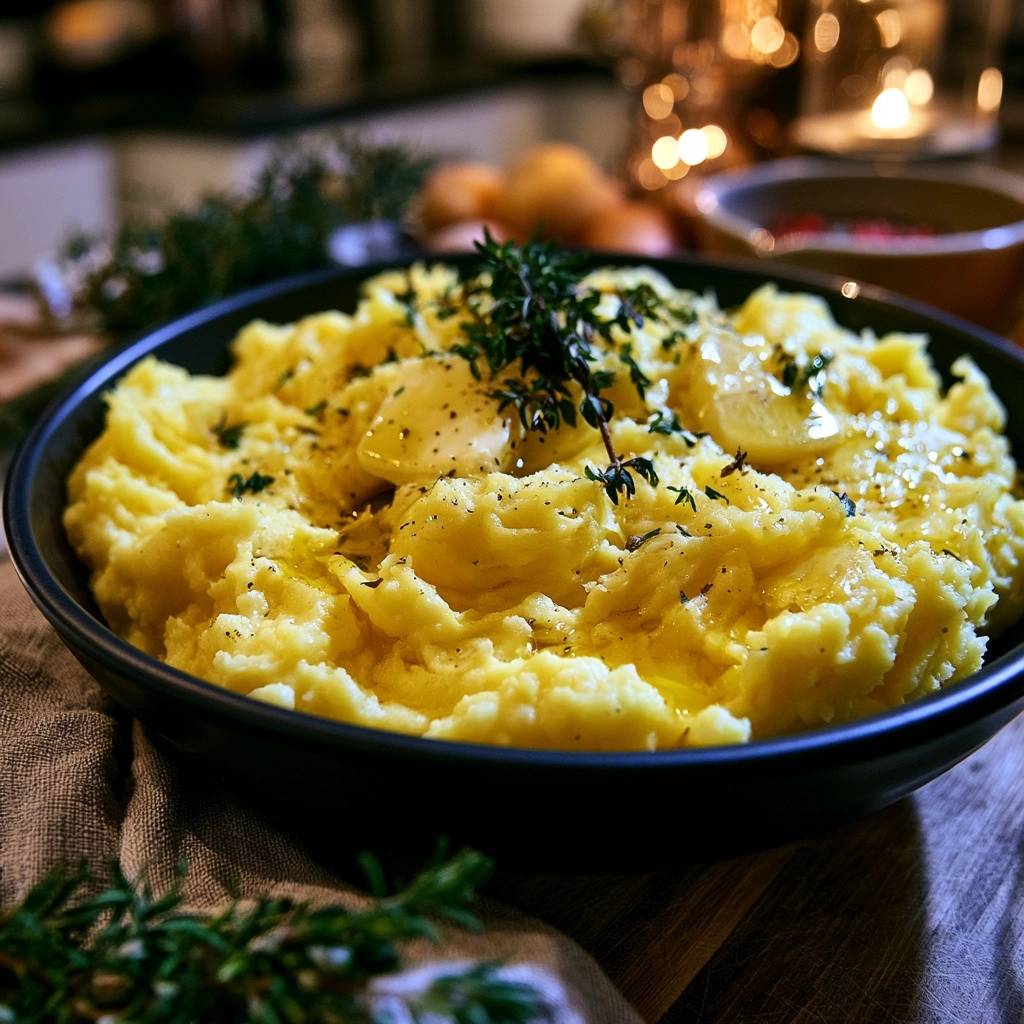
We’ve all been there. You spend forty minutes peeling, boiling, and mashing, only to end up with a bowl of sticky, glue-like paste that feels more like wallpaper adhesive than a side dish. It’s the ultimate holiday dinner heartbreak. Most home cooks assume they just over-boiled the spuds, but the real culprit is much more scientific.
The difference between “home-style” lumps and that cloud-like, professional-grade texture found in high-end steakhouses comes down to starch management. When you treat a potato like a delicate ingredient rather than a sturdy root vegetable, the results are transformative. You’re looking for a texture that holds its shape on the fork but dissolves the second it hits your tongue.
The secret to this Garlic and Herb Mashed Potatoes recipe is a specific rinsing and temperature-matching technique. By removing surface starch before the potatoes ever hit the heat, you eliminate the “glue” factor at the source. I’ve found that starting with cold water and using a “fat-first” mashing method ensures every bite is light, airy, and perfectly infused with the aroma of fresh thyme and garlic.
The Science of Starch and Potato Cell Structure
To master the perfect mash, you have to understand what’s happening inside the pot. Potatoes are packed with starch granules contained within delicate cell walls. These starches come in two main forms: amylose and amylopectin. When you heat potatoes in water, these granules swell and eventually burst. If you handle them too roughly, you create a culinary disaster.
Mechanical agitation is the enemy of a fluffy potato. When you use a high-speed mixer or over-mash with a hand tool, you rupture those swollen cell walls. This releases the starch into the surrounding moisture, creating a polymerized “gel” that results in that dreaded gummy texture. It’s essentially the same process used to make traditional paste.
This recipe’s specific rinsing and temperature-matching steps are non-negotiable. Rinsing the cut cubes removes the “leaked” starch from the surface before it can cook onto the potato. Furthermore, matching the temperature of your dairy to the temperature of your potatoes prevents the starch from “shocking,” which helps maintain a stable, silky emulsion rather than a sticky mess.
Essential Components for Garlic and Herb Mashed Potatoes
Quality ingredients are the foundation of this dish. I always reach for Yukon Gold potatoes for this specific herb-forward application. While Russets are great for baking, Yukon Golds have a naturally buttery flavor and a medium starch content that holds up beautifully to mashing without falling apart into graininess.
The fat content in your dairy matters immensely. We use heavy cream here because the high fat-to-water ratio provides a luxurious mouthfeel that whole milk simply can’t replicate. Additionally, using unsalted butter is a pro move. It allows you to control the seasoning precisely, ensuring the sea salt enhances the herbs rather than making the dish overly salty.
Freshness is your best friend when it comes to aromatics. Since we are infusing the cream, the quality of your garlic and herbs will be front and center. Look for firm garlic bulbs and vibrant, flexible thyme sprigs. These will release their essential oils into the warm cream, creating a deep, layered flavor profile that tastes sophisticated but not overwhelming.
Selecting the Right Fresh Herbs and Garlic
While thyme is the star of this recipe, you can easily experiment with rosemary or chives. Thyme offers an earthy, floral note that pairs perfectly with garlic. Rosemary is much more pungent, so use it sparingly. Chives are best added at the very end to maintain their bright, onion-like snap and vivid green color.
We use smashed garlic cloves for steeping rather than minced garlic for a very specific reason. Mincing garlic releases harsh sulfur compounds that can become bitter when heated in dairy. By smashing the cloves, you gently release the sweet, nutty essence of the garlic into the cream. This results in a subtle, infused flavor that permeates the entire batch without the unpleasant bite of raw garlic bits.
The Anti-Gummy Rinse and Cold Water Start
The first phase of this process is the “Clear Water Test.” After cubing your potatoes, place them in a bowl and run cold water over them. Toss them gently with your hands. You’ll notice the water turns cloudy almost instantly; that’s the excess starch you don’t want in your final dish. Keep rinsing until that water is crystal clear.
Starting your potatoes in cold water is a technical requirement for even cooking. If you drop potato chunks into boiling water, the outside cooks and softens long before the heat reaches the center. By the time the middle is tender, the outside has become waterlogged and mushy. Starting cold allows the temperature to rise gradually, ensuring the entire cube reaches the perfect texture simultaneously.
Simmering Techniques to Protect Potato Integrity
Once your pot reaches a boil, immediately turn the heat down to a gentle simmer. You want to see small bubbles breaking the surface, not a violent, rolling boil. A rolling boil physically bangs the potato chunks against each other and the sides of the pot. This physical damage breaks the potato cells prematurely, leaking starch into the water and ruining your hard work.
The cooking window is usually between 15 and 20 minutes. To check for doneness, use a paring knife or a fork. The tool should slide into the center of a potato chunk with zero resistance. If the potato shatters or cracks when you poke it, it’s likely overcooked. You want “fork-tender” but still structurally sound cubes.
The Steam Dry Secret for Maximum Absorption
This is the step most home cooks skip, but it’s the most critical for flavor. After draining your potatoes in a colander, don’t just start mashing. Return the empty, hot pot to the stove over very low heat. Add the potatoes back in and shake the pan constantly for about 60 to 90 seconds. You’ll see steam rising rapidly from the potatoes.
This process evaporates the residual surface moisture left over from the boiling process. Physics tells us that a “dry” potato acts like a thirsty sponge. By removing the water, you create space within the potato cells to soak up the herb-infused cream and rich butter. If you skip this, your potatoes will be diluted by flavorless water instead of being enriched by your seasoned dairy.
Infusing Aromatics into the Cream and Butter
While your potatoes are simmering, you should be preparing your flavor base. Heating the heavy cream with the smashed garlic and thyme sprigs is far more effective than stirring cold herbs into the finished mash. The heat acts as a solvent, drawing out the fat-soluble flavor compounds from the herbs and garlic and distributing them evenly throughout the liquid.
Let the mixture steep for at least five to ten minutes off the heat. This “steeping window” allows the flavors to mellow and meld. Before adding the liquid to your potatoes, strain it through a fine-mesh sieve. This ensures a silky, restaurant-quality mouthfeel. You get all the flavor of the garlic and thyme without any woody stems or mushy garlic chunks interrupting the texture.
Temperature Matching and the Folding Method
The “Fat First” rule is a game-changer for texture. Before you add a single drop of liquid, add your softened butter to the hot potatoes and begin mashing. The fat coats the individual starch molecules, creating a protective moisture barrier. This prevents the starch from hydrating too quickly when the cream is added, which is another safeguard against gumminess.
Always ensure your infused cream is warm when it hits the potatoes. Adding cold dairy to hot potatoes shocks the starch, causing it to tighten up and ruin the emulsion. Use a gentle folding motion with a spatula or a sturdy spoon to incorporate the liquid. Never beat the potatoes; stop the moment the cream is fully incorporated to keep the texture light and airy.
Essential Tools for the Perfect Mash
The tool you choose dictates the final result. For the absolute smoothest, most professional texture, a potato ricer or a food mill is the gold standard. These tools push the potato through tiny holes, breaking them down into uniform granules without over-working the starch. It results in a mash that is incredibly light, almost like a puree.
A standard hand masher works well for a more rustic, “home-style” finish, but it requires more care to avoid over-mashing. Whatever you do, stay away from the food processor or electric hand mixer. The high-speed blades act like a blender, shearing the potato cells and turning that beautiful starch into a literal bowl of glue in seconds. Stick to manual tools for the best results.
Troubleshooting Common Texture and Flavor Issues
If you find your potatoes are a bit too thin or soupy, don’t panic. You can return the mixture to the pot over very low heat and stir gently. This will help evaporate some of the excess moisture. Alternatively, ricing one extra “dry” boiled potato into the mix can help thicken the consistency without needing to add flour or artificial thickeners.
If you’ve accidentally over-salted the batch, you can balance it by adding a bit more unsalted butter or a splash of unseasoned cream. If the potatoes have already started to turn gummy because they were over-worked, your best bet is to lean into it. Spread them in a baking dish, top with plenty of shredded cheese and breadcrumbs, and turn them into a loaded potato bake. The oven’s dry heat and the added textures will mask the stickiness.
Correcting a Thin or Soupy Consistency
A soupy consistency usually happens when too much liquid is added too fast. To fix this, keep the potatoes on low heat and stir constantly with a wooden spoon. This encourages evaporation. If that doesn’t work quickly enough, you can add a small amount of dehydrated potato flakes as a last resort, though fresh potato is always preferred for flavor.
Pairing Suggestions for Herb-Infused Sides
These Garlic and Herb Mashed Potatoes are incredibly versatile. They are the natural partner for roasted meats, especially a herb-crusted chicken or a slow-roasted turkey. The earthy thyme notes also complement braised beef short ribs beautifully. The richness of the cream and butter provides a perfect foil for the deep, savory flavors of a meat-based gravy.
To balance the decadence of the dish, serve it alongside something with a bit of acidity. A red grape juice reduction or a crisp green salad with a lemon vinaigrette works wonders. The acidity cuts through the fat of the heavy cream, cleansing your palate between bites and making the whole meal feel lighter and more balanced.
Make-Ahead Strategies and Reheating Instructions
If you’re prepping for a big holiday meal, you can make these up to two hours in advance. The best way to keep them warm is in a slow cooker on the “warm” setting. To prevent a skin from forming, spread a thin layer of melted butter over the top—this is the “butter seal” method. It keeps the moisture locked in and the potatoes silky.
For leftovers, avoid the microwave if possible, as it can make the potatoes rubbery. Instead, reheat them on the stovetop in a saucepan over low heat. Add a splash of warm milk or a small pat of butter and stir gently. This helps restore the emulsion and brings back that creamy, freshly-mashed texture without drying them out.
Frequently Asked Questions
Can I use Red potatoes instead of Yukon Gold?
You can use Red potatoes, but the texture will be different. Red potatoes are waxy and hold their shape well, which makes them great for potato salad but harder to mash into a smooth consistency. They tend to stay a bit more “chunky.” If you use them, leave the skins on for a rustic look, but be extra careful not to over-work them, as waxy potatoes can turn gummy even faster than starchy ones.
Why did my potatoes turn out sticky despite rinsing?
If you rinsed them well and they are still sticky, the issue is likely over-mashing or temperature. Even with rinsing, if you use an electric mixer or mash for too long, you will eventually break the cell walls and release the internal starch. Also, ensure your cream and butter are warm; adding cold dairy to hot potatoes is a common cause of a “tacky” or sticky mouthfeel.
Can I substitute dried herbs for fresh?
You can, but use much less. Dried herbs are more concentrated than fresh. Use about one teaspoon of dried thyme for every four sprigs of fresh. However, dried herbs won’t strain out as easily as fresh sprigs, so you may end up with small green flecks in your potatoes. For the best restaurant-quality result, fresh herbs are highly recommended for the steeping process.
How do I make these dairy-free while maintaining the texture?
To keep that creamy texture without dairy, substitute the butter with a high-quality vegan butter stick (look for oil-based ones rather than water-based). Replace the heavy cream with full-fat canned coconut milk or a barista-blend oat milk. These have the fat content necessary to mimic the richness of dairy. Avoid thin almond milks, as they will make the potatoes watery.
Is it necessary to peel the potatoes for this specific recipe?
For this specific “anti-gummy” technique, peeling is recommended. The goal is a perfectly smooth, cloud-like texture. Leaving the skins on introduces fiber and tannins that change the mouthfeel. If you prefer skin-on mashed potatoes, Yukon Golds have thin enough skins to work, but you won’t be able to use a ricer, which is the best tool for preventing gumminess.
How long can I store these in the fridge?
You can store these in an airtight container in the refrigerator for up to 3 to 4 days. When reheating, you will notice they have firmed up significantly as the butter solidifies. Always add a little extra liquid (milk or cream) during the reheating process to loosen the starch and bring back the original creamy consistency. I do not recommend freezing mashed potatoes, as the dairy often separates and the potato starch can become grainy upon thawing.
Garlic and Herb Mashed Potatoes
Course: Side DishCuisine: AmericanDifficulty: easy6
servings15
minutes20
minutes35
Minutes265
kcalAmerican
Ingredients
3 pounds Yukon Gold potatoes, peeled and cut into even 1-inch chunks
3/4 cup unsalted butter (1/2 cup for mashing, 1/4 cup for topping)
3/4 cup heavy cream
4 cloves garlic, smashed
4 sprigs fresh thyme (plus extra for garnish)
1 teaspoon sea salt (plus more for boiling water)
1/2 teaspoon freshly cracked black pepper
Directions
- The Anti-Gummy Rinse: Place your cut potato chunks in a large bowl and rinse them under cold running water for 2 minutes, tossing them by hand until the water runs completely clear. This removes the surface starch that causes gumminess.
- Start in Cold Water: Place potatoes in a large pot and cover with cold water by at least an inch. Starting with cold water ensures the potatoes cook evenly from the outside in. Add a generous tablespoon of salt to the water.
- Simmer Gently: Bring to a boil, then immediately reduce to a gentle simmer. Cook for 15 to 20 minutes or until fork-tender. Do not let them boil violently, as this breaks the potato cells and releases excess starch into the water.
- The Steam Dry Secret: Drain the potatoes thoroughly in a colander. Return them to the hot, empty pot over very low heat for 60-90 seconds, shaking the pan constantly. This evaporates the remaining surface moisture so the potatoes absorb the cream and butter instead of water.
- Infuse the Liquid: While potatoes simmer, heat the heavy cream, smashed garlic, and 2 sprigs of thyme in a small saucepan until simmering. Remove from heat and let steep for 5 minutes, then strain out the solids. Keep the liquid warm.
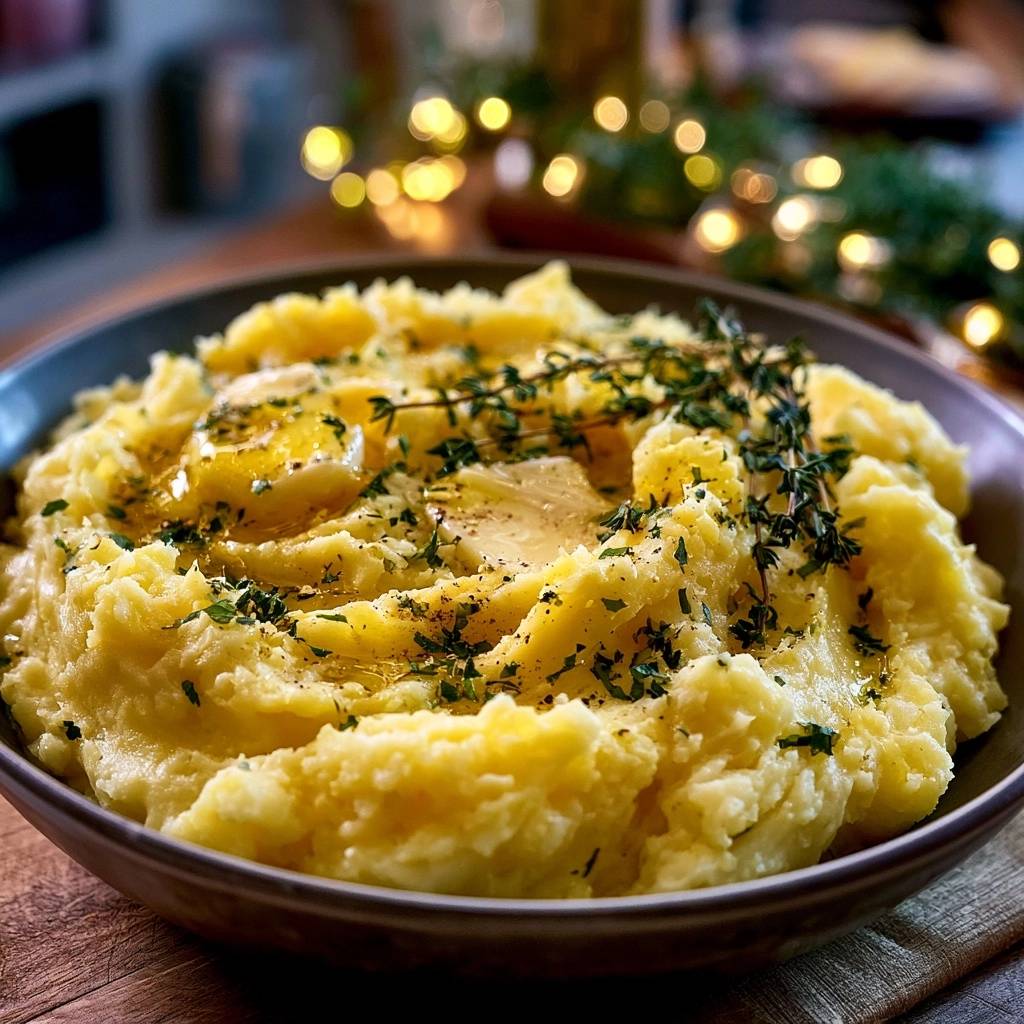
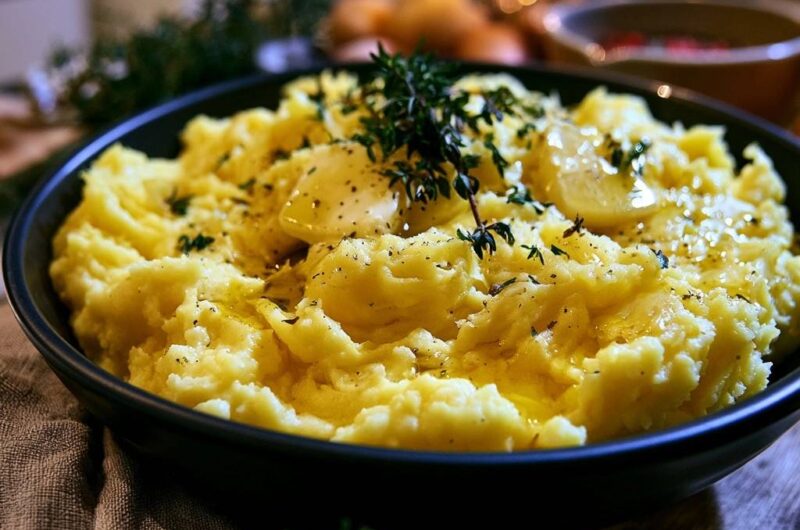
- The Temperature Match: For the texture shown in the image, use a potato masher or a ricer. While the potatoes are hot, add 1/2 cup of softened butter first. Stir gently to coat the starch molecules in fat before adding liquid. Gradually pour in the warm infused cream and fold until just combined. Do not over-mix.
- Final Presentation: Season with salt and cracked black pepper. Transfer to a serving bowl. Create small wells in the potatoes and place the remaining 1/4 cup of butter (cut into pats) on top to melt. Garnish with fresh thyme sprigs and an extra dusting of black pepper to match the visual finish.
Notes
- The secret to the texture is rinsing the cut potatoes until the water runs clear and ensuring the cream and butter are warm when added to the hot potatoes.