Mastering Garlic Rosemary Roasted Potatoes with the Anti-Soggy Method
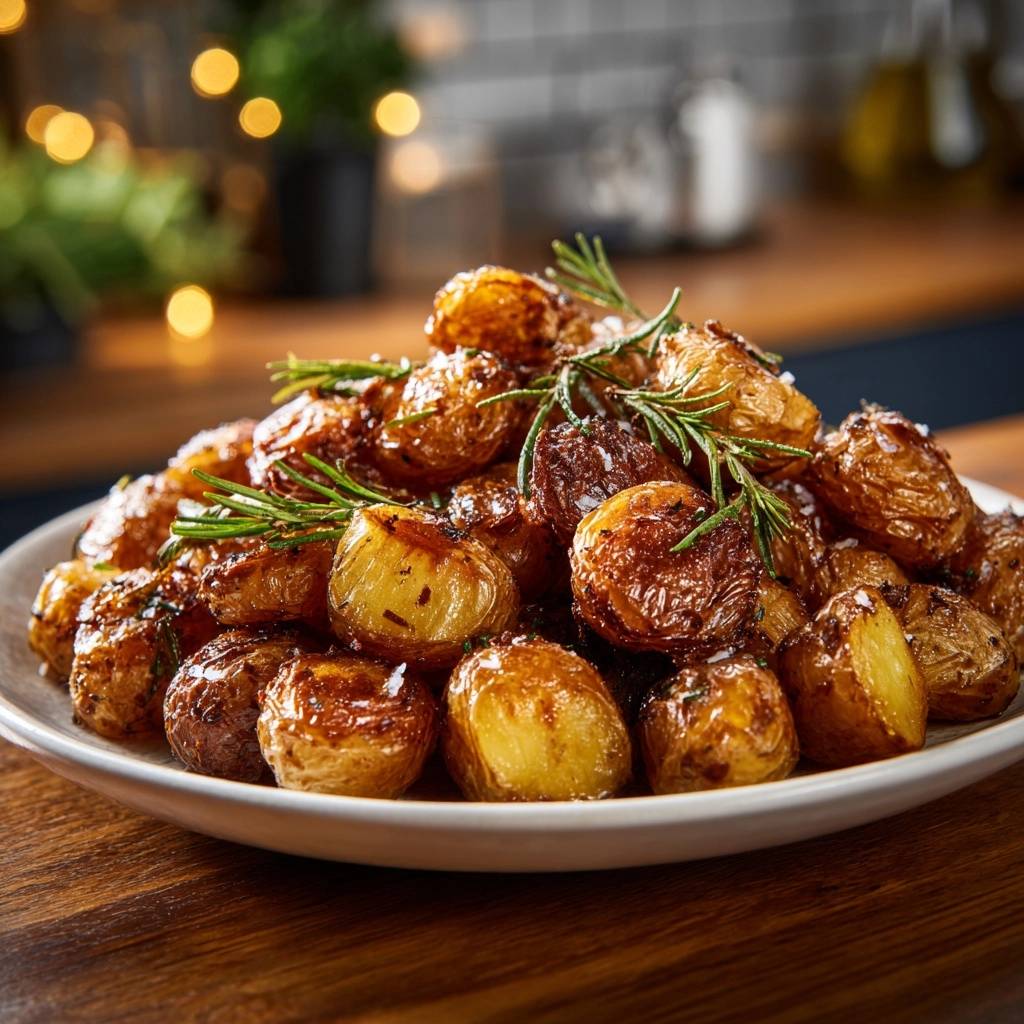
Stop settling for roasted potatoes that are soft on the outside and mushy on the inside. Most home cooks struggle with side dishes that lose their structural integrity the moment they hit the dinner plate.
The secret to that glass-like crunch isn’t just high heat. It’s a technical process involving pH manipulation and surface area maximization that creates a shatteringly crisp exterior and a creamy, cloud-like interior.
I’ve found that the real magic happens before the potatoes even touch the oven. By using a specific par-boiling technique with baking soda, we create a starchy paste on the surface that fries in the fat to form a thick, golden, bubbly crust.
If you’re after that same golden crunch, this crispy rosemary roasted potatoes recipe follows the same pre-boiling trick.
The Chemistry of the Perfect Potato Crunch
Achieving the perfect roast potato is a battle against moisture entrapment. When you throw raw potatoes directly into a hot oven, the skin often toughens before the interior can properly dehydrate, leading to a leathery texture.
To get a superior crunch, we need to trigger the Maillard reaction across as much surface area as possible. Standard roasting fails because it only browns the smooth, flat surfaces of the cut potato.
Surface Area Optimization is the goal here. By breaking down the exterior of the potato into a fuzzy, starchy slurry, we increase the surface area by tenfold, allowing the fat to penetrate and crisp every tiny crevice.
Why Baking Soda Changes Everything
Baking soda is the secret weapon in this recipe because it alters the pH of the boiling water. An alkaline environment breaks down the potato’s pectin, which is the cellular “glue” holding the vegetable together.
This breakdown happens on the exterior faster than the interior cooks. It creates a thick layer of starch that eventually dehydrates in the oven to form a crust that stays crisp even after you plate the dish.
If you were to use an acidic ingredient like vinegar, the pectin would actually strengthen. That’s great for French fries that need to hold their shape, but it’s the enemy of a rugged, bubbly roasted potato crust.
Selecting the Right Potato Variety
Not all potatoes are created equal when it comes to roasting. While Russets are great for fluffiness, they can sometimes fall apart too easily during the par-boiling stage of this specific method.
I recommend using baby yellow or Yukon Gold potatoes. These varieties have a naturally creamy, waxy profile that holds its shape while the exterior transforms into that desired starchy slurry.
Red Bliss potatoes also work well, though they have slightly less sugar than yellow varieties. The higher sugar content in yellow potatoes helps accelerate the browning process, leading to a deeper, more complex flavor.
Essential Components for Garlic Rosemary Roasted Potatoes
Quality ingredients are the foundation of this dish. Fresh rosemary is absolutely non-negotiable because dried rosemary has a needle-like texture that never softens and lacks the volatile oils needed for a punchy aroma.
For the fat, extra virgin olive oil provides a wonderful peppery bite. However, if you want a high-smoke point luxury, duck fat is an incredible alternative that produces an even thicker, more savory crust.
Don’t forget the salt. Coarse sea salt provides a necessary textural contrast and helps draw out any remaining moisture during the final stages of roasting, ensuring the potatoes don’t turn soggy as they cool.
Infusing Oil Without Burning the Aromatics
A common mistake is tossing raw minced garlic with potatoes at the start of a 45-minute roast. By the time the potatoes are done, the garlic has turned into bitter, black charcoal bits that ruin the flavor.
The “Infusion and Strain” method solves this perfectly. We gently heat the oil with the garlic and rosemary for just a few minutes to pull those flavors into the fat itself.
After straining the oil to coat the potatoes, we save the toasted garlic and rosemary bits. These get tossed back onto the tray in the final two minutes of roasting, giving you all the flavor with none of the acridity.
Phase One: The Par-boil and Roughing Technique
Always start your potatoes in a pot of cold water rather than dropping them into boiling water. This ensures the potato cooks evenly from the center to the edge, preventing a raw middle and a falling-apart exterior.
You are looking for a specific visual cue: the edges should look slightly softened and translucent. They should be tender enough to pierce with a knife but should not be crumbling into the water yet.
Once drained, let the potatoes sit in the colander for at least two minutes. This allows excess steam to evaporate, which is vital because any surface moisture will prevent the oil from adhering properly.
The Colander Shake: Creating Starchy Slurry
This is the most important step in the entire process. Once the potatoes have steamed dry, you need to shake the colander vigorously for about 30 seconds to “rough up” the edges.
You aren’t just moving them around; you are intentionally bruising the exteriors. You want to see a thick, mashed-potato-like paste forming on the surface of every single piece.
This “fuzzy” layer of starch is what eventually fries in the oven. When you toss these roughed-up potatoes in your infused oil, that paste turns into a thick slurry that dehydrates into a shatteringly crisp shell.
Phase Two: The High-Heat Roasting Process
The mechanics of your oven matter just as much as the prep. Always preheat your baking sheet inside the oven while it reaches 425°F to jumpstart the searing process the moment the potatoes hit the metal.
When you transfer the potatoes to the tray, place them flat-side down. This maximizes contact with the hot surface, ensuring the largest part of the potato gets the most intense heat and color.
You should hear an immediate, aggressive sizzle when the potatoes touch the pan. If you don’t hear that sound, your oven or your tray isn’t hot enough yet.
The Danger of Overcrowding the Pan
Physics dictates that as potatoes roast, they release moisture in the form of steam. If the potatoes are packed too tightly together, that steam gets trapped between them, effectively boiling the neighbors.
Crowding the pan is the fastest way to end up with soggy potatoes. Ensure there is at least a half-inch of “social distancing” between every potato piece to allow the hot air to circulate freely.
If you are doubling the recipe, use two separate baking sheets. It is better to rotate two pans halfway through than to pile everything onto one tray and end up with a steamed, mushy mess.
Troubleshooting Common Roasting Failures
If your potatoes turn out greasy, it usually means you didn’t build up enough of that starchy slurry during the colander shake. Without that paste to absorb the oil and crisp up, the fat just sits on the surface.
Burnt potatoes are often the result of oven hot spots or using a potato with too much surface sugar. If you notice them browning too quickly, move the tray to a higher rack or slightly reduce the temperature.
If the potatoes are sticking to the pan, leave them alone! They will naturally release from the metal once the crust has fully set. Trying to flip them too early will tear that beautiful crust right off the potato.
Flavor Variations and Herb Substitutions
While rosemary is the classic choice, you can pivot this technique for various flavor profiles. Fresh thyme and lemon zest offer a brighter, more citrus-forward experience that pairs beautifully with fish.
For a smokier vibe, try adding smoked paprika and a pinch of cumin to the oil infusion. Just remember to always use the infusion method to prevent these spices from scorching in the high heat.
Regardless of the spices you choose, the technical steps of par-boiling and roughing the edges remain the same. The method is the constant; the aromatics are your variable.
Optimal Pairings for Garlic Rosemary Roasted Potatoes
These potatoes are incredibly versatile and complement any dish that benefits from a crunchy, salty side. They are the perfect partner for a roasted chicken or a pan-seared steak where the rosemary echoes the savory notes of the meat.
They also work beautifully alongside earthy flavors like seared lamb chops or roasted root vegetables. The rosemary profile is bold enough to stand up to heavy proteins without overpowering them.
Because they stay crisp for a long time, they are also a great choice for holiday dinners where food might sit on the table for a while. They won’t lose their texture as quickly as standard mashed or boiled potatoes.
Expert Tips for Reheating and Storage
Microwaves are the absolute enemy of the “Anti-Soggy” potato. The microwave heats the water molecules inside the potato, turning that beautiful crust into a limp, rubbery skin in seconds.
To restore the original 425°F crunch, use an air fryer or a toaster oven. A quick five-minute “flash-fry” at 400°F will reactivate the fats and crisp the exterior right back up to its original glory.
Store any leftovers in an airtight container in the fridge for up to four days. I don’t recommend freezing these, as the freezing process breaks down the potato’s cellular structure and makes the interior grainy upon thawing.
Frequently Asked Questions
Can I skip the par-boiling step?
You can, but you shouldn’t. Skipping the par-boil means you won’t create the starchy slurry that is responsible for the thick, bubbly crust. Without it, you’ll just have standard roasted potatoes with a thin, smooth skin rather than a shatteringly crisp shell.
Why did my garlic turn bitter?
Garlic turns bitter when it burns. If you added the minced garlic at the beginning of the 45-minute roast, it carbonized. To fix this, follow the “Infusion Method” where you strain the garlic out and only add the bits back in during the final two minutes of cooking.
Is it possible to over-shake the potatoes?
Yes, there is a fine line between “roughed up” and “mashed.” You want the potatoes to look fuzzy and covered in a thick paste, but they should still be whole chunks. If they start losing their shape entirely, stop shaking immediately.
Can I use dried rosemary instead of fresh?
I strongly discourage using dried rosemary. Dried rosemary is very woody and doesn’t soften during roasting, which can feel like eating pine needles. Fresh rosemary provides essential oils and a much better texture for this high-heat application.
What is the best rack position in the oven?
The bottom third of the oven is usually the best spot. This position provides the most intense heat to the bottom of the baking sheet, ensuring the flat sides of the potatoes get that deep, golden-brown color and maximum crunch.
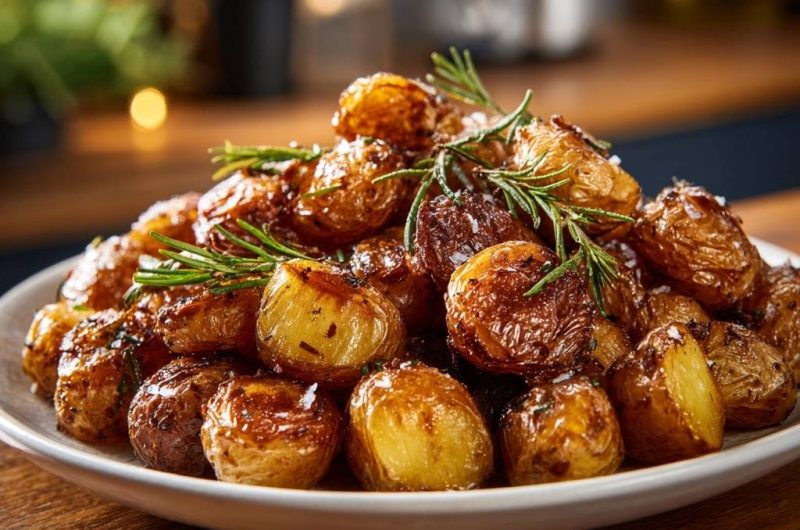
Roasted Potatoes
Course: Side DishCuisine: AmericanDifficulty: medium4
servings10
minutes45
minutes240
kcal55
MinutesThese Garlic Rosemary Roasted Potatoes use a specialized par-boiling method with baking soda to create a starchy exterior paste. When roasted at high heat, this paste transforms into a shatteringly crisp crust that avoids the common pitfall of soggy bottoms.
Ingredients
2 pounds baby yellow or red potatoes, halved
1/2 teaspoon baking soda (added to boiling water)
1/3 cup extra virgin olive oil or duck fat
4 cloves garlic, minced
3 sprigs fresh rosemary (leaves stripped and chopped, plus extra whole sprigs for garnish)
1 teaspoon sea salt, plus more for finishing
1/2 teaspoon cracked black pepper
Directions
- Preheat your oven to 425°F (220°C). Place a large, heavy-rimmed baking sheet inside the oven while it heats.
- Place the halved potatoes in a large pot and cover with cold water. Add a generous pinch of salt and the 1/2 teaspoon of baking soda. The baking soda breaks down the potato’s pectin and draws starch to the surface.
- Bring to a boil, then reduce to a simmer for 8-10 minutes until the exteriors are tender but the potatoes are not falling apart.
- Drain the potatoes thoroughly in a colander and let them sit for 2 minutes to allow excess steam to evaporate. Shake the colander vigorously for 30 seconds. This “roughs up” the edges, creating a thick layer of mashed-potato-like paste on the surface.
- In a small saucepan over low heat, combine the oil, minced garlic, and chopped rosemary. Heat for 2 minutes just until fragrant, then strain the oil into a large bowl, reserving the garlic/rosemary bits for later (this prevents them from burning during the long roast).
- Toss the roughed-up potatoes in the infused oil with salt and pepper until they are coated in a thick, starchy slurry.
- Carefully spread the potatoes onto the preheated hot baking sheet, flat-side down. You should hear an immediate sizzle. Ensure they are spaced out; crowding will steam the potatoes rather than crisping them.
- Roast for 20 minutes, then flip the potatoes. Roast for another 15-20 minutes until they are deep golden brown and the skins are blistered and bubbly.
- In the final 2 minutes of roasting, toss the reserved garlic and rosemary bits onto the tray to crisp them up without burning.
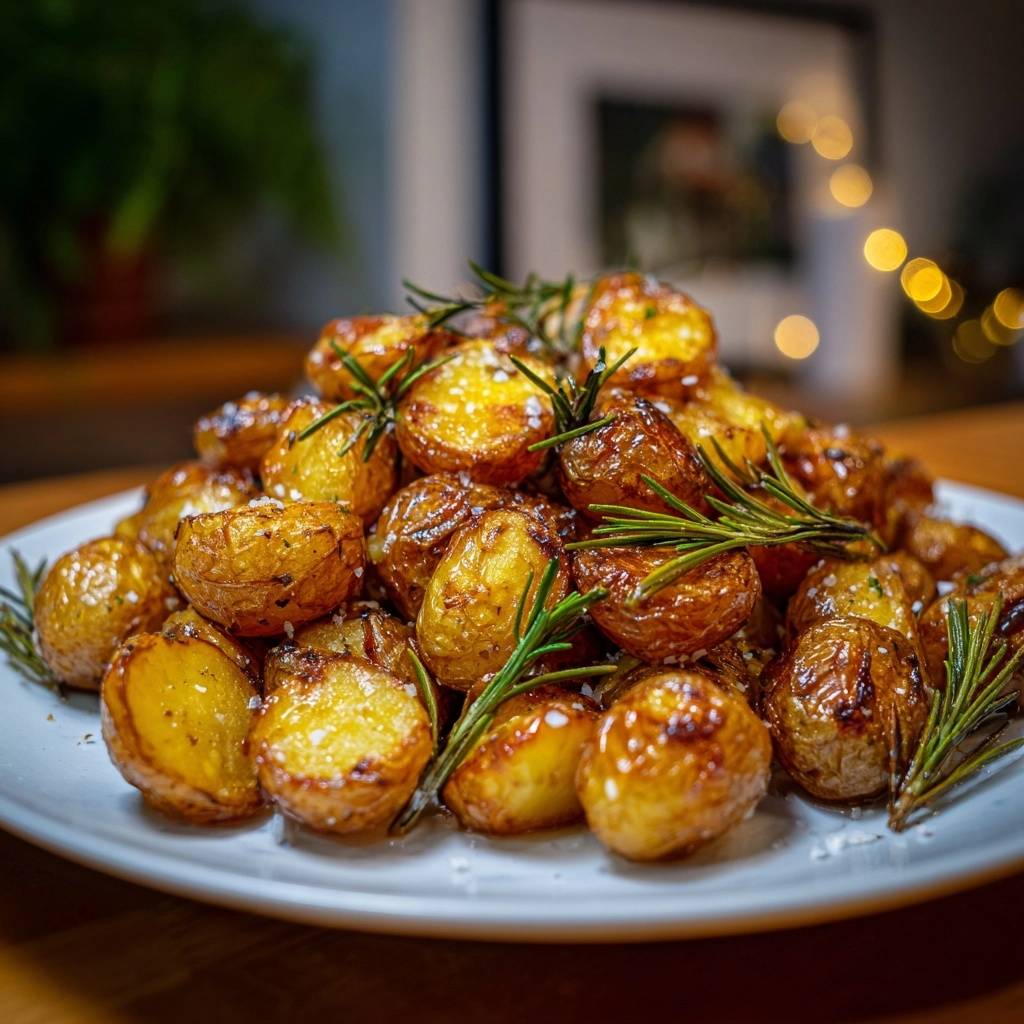
- Remove from the oven, garnish with fresh rosemary sprigs as shown in the image, and finish with a sprinkle of flaky sea salt. Serve immediately.
Notes
- The baking soda breaks down the potato’s pectin to draw starch to the surface. Straining the garlic and rosemary from the oil prevents them from burning during the high-heat roasting process.