Crispy Pan-Seared Halloumi with Spinach Risotto
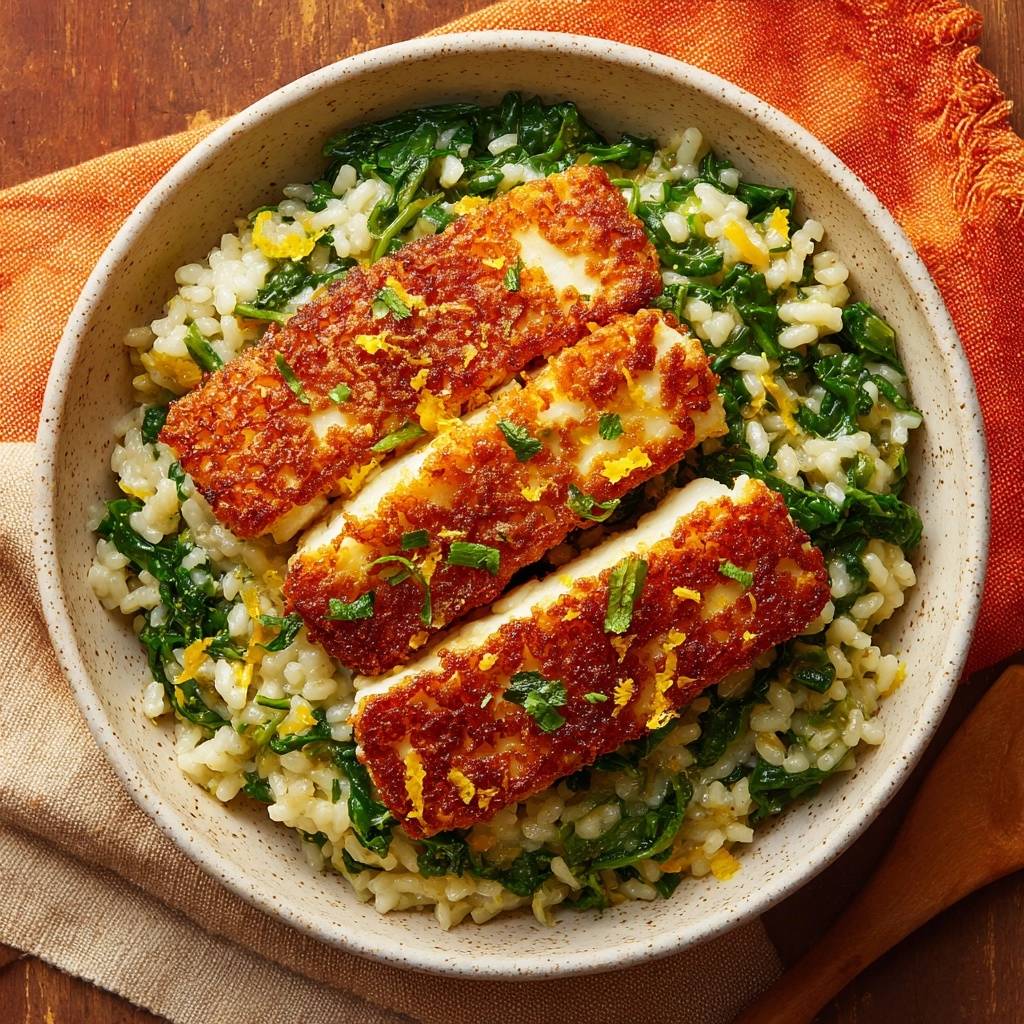
Imagine biting into a thick slice of golden halloumi that shatters with a distinct crunch before giving way to a warm, pillowy center. Most people struggle with halloumi because it often turns into a squeaky, rubbery disappointment that feels more like a pencil eraser than a gourmet meal. This recipe changes that by focusing on a specific searing technique that creates a deep, savory crust.
The secret to this dish lies in the contrast between the salty, aggressive sear of the cheese and the velvet-textured spinach risotto beneath it. We aren’t just making rice; we are creating a creamy emulsion that acts as the perfect landing pad for that crispy protein. It’s a sophisticated dinner that feels like a high-end bistro meal but comes together in one pan and a skillet.
If you want to master this, you have to control the moisture. The absolute key to that “shatteringly crispy” exterior is patting the halloumi bone-dry with paper towels before it ever touches the flour. Even a tiny bit of surface water will steam the cheese instead of searing it, robbing you of that beautiful Maillard reaction we’re after.
The Science of Achieving Shatteringly Crispy Halloumi
Halloumi is a unique cheese because it has an incredibly high melting point. While a piece of cheddar would turn into an oily puddle in a hot pan, halloumi holds its shape, allowing us to apply direct, intense heat. This physical property lets us treat the cheese almost like a piece of steak, developing a complex, browned crust through the Maillard reaction.
Surface moisture is the enemy of a good sear. When you pat the cheese dry, you ensure the heat of the oil goes directly into browning the proteins rather than evaporating water. Therefore, taking those extra thirty seconds to press the slices between paper towels is the most important step in the entire process.
The light dusting of all-purpose flour acts as a sacrificial layer. It creates a micro-crust that browns more evenly than the cheese alone. This thin barrier protects the interior from drying out, ensuring that while the outside is dark and crisp, the inside remains soft and slightly melty. You’ll see the texture transform from a matte white to a shimmering, textured gold in the pan.
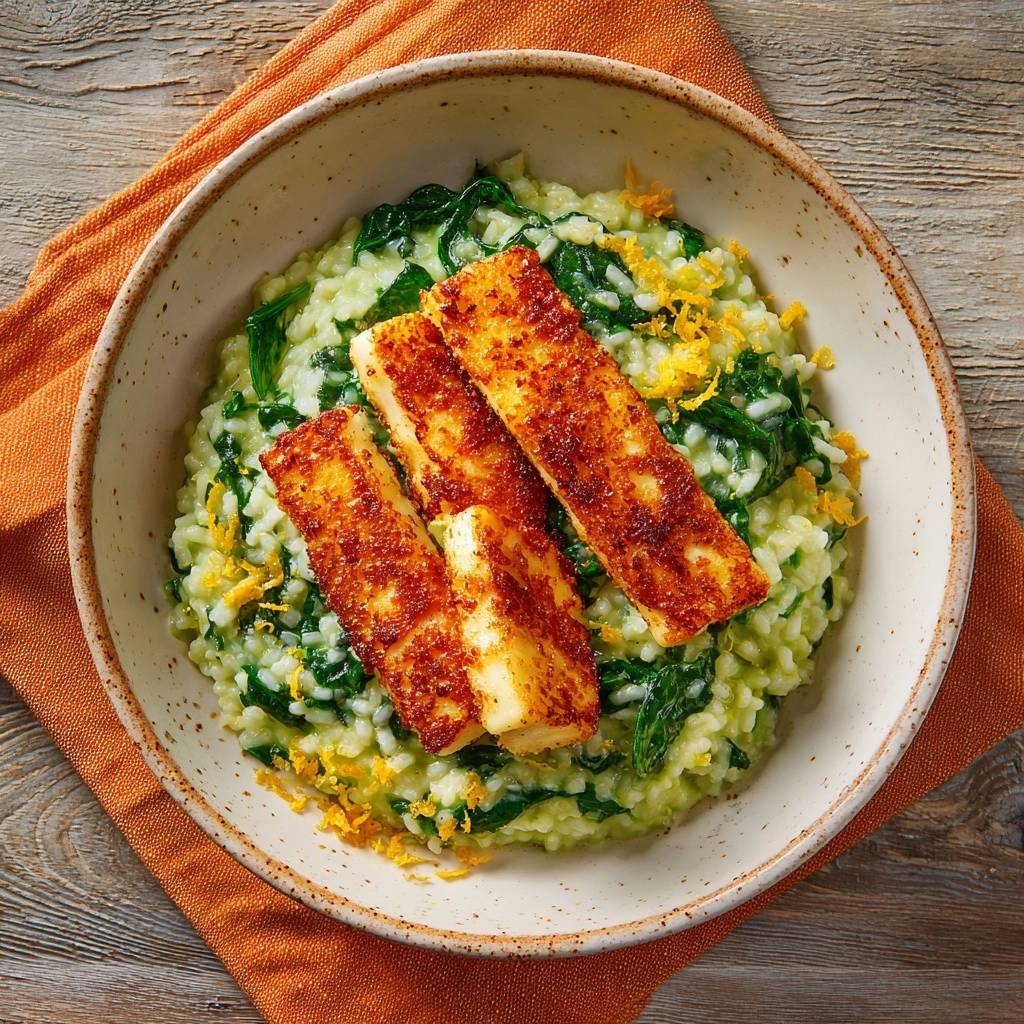
Essential Components for Spinach Risotto and Seared Cheese
The foundation of any great risotto is the rice. Arborio is the standard choice because its high starch content creates that signature “sauce” as it cooks. However, if you can find Carnaroli rice, it’s often preferred by chefs for its ability to maintain a firm “al dente” core while releasing even more starch for a creamier finish.
For a different take on this creamy rice technique, try this mushroom asparagus pea risotto with its own set of spring vegetables.
Your vegetable broth must be kept warm in a separate pot. Adding cold liquid to a hot pan shocks the rice and stops the cooking process, which leads to unevenly cooked grains that are mushy on the outside and crunchy in the middle. Keeping the broth at a low simmer ensures the temperature in your risotto pan stays consistent throughout the process.
Fresh baby spinach is non-negotiable here. Frozen spinach carries too much water and can turn the risotto a muddy gray color. Fresh leaves wilt in seconds from the residual heat of the rice, maintaining their vibrant green hue and delicate earthy flavor. High-quality butter and freshly grated Parmesan are the final touches that “mount” the sauce, providing a glossy, rich mouthfeel.
Selecting the Right Halloumi
When shopping, look for halloumi made from a traditional blend of sheep and goat milk. These varieties typically have a more complex, tangy flavor and a better structural integrity than mass-produced versions made solely from cow’s milk. Check the package for a “Product of Cyprus” label to ensure authenticity.
Be mindful of the salt content. Halloumi is naturally very salty because it is preserved in brine. This means you should be conservative when seasoning your risotto. Taste the rice at the very end, after the cheese has been placed on top, to see if it actually needs any additional salt.
The Role of Aromatics and Acid
Shallots are the unsung hero of this dish. They offer a delicate, sophisticated sweetness that yellow onions simply can’t match. Because they are smaller and have less water content, they soften beautifully into the rice without leaving behind large, crunchy chunks.
Lemon juice and zest provide the necessary “lift” to the recipe. The acidity cuts right through the heavy fats of the halloumi and the butter. Without that bright citrus finish, the dish can feel a bit one-note and heavy. The zest adds a floral aroma that hits you before you even take the first bite.
Mastering the Starch: A Foolproof Risotto Technique
The first technical step is the “tostatura,” or toasting the rice. You want to sauté the dry grains in olive oil until the edges become translucent while the center remains white. This step toasts the exterior starch, which helps the rice maintain its shape and prevents it from turning into porridge.
Agitation is your best friend. As you stir the rice, the grains rub against each other, physically knocking starch off the surface and into the broth. This is what creates the creamy consistency. If you don’t stir enough, you’ll just have boiled rice; if you stir constantly, you’ll get that luxurious, flowing texture.
Follow the “one ladle at a time” rule religiously. You want the rice to be barely covered with liquid. Wait until the pan is almost dry and you can see the bottom of the pan when you move your spoon before adding more broth. This slow hydration allows the starch to develop properly without drowning the grains.
If the texture of risotto is what you’re after, this creamy asparagus risotto avoids the gummy pitfalls too.
Step-by-Step: Searing Halloumi and Finishing the Dish
Phase 1: Start by softening your minced shallots in olive oil over medium heat. Once they are translucent and sweet-smelling, add the garlic for just thirty seconds. Then, toss in the arborio rice and stir until every grain is coated in oil and smells slightly nutty.
Phase 2: Begin the gradual hydration. Add one ladle of warm broth and stir frequently. You’ll notice the liquid bubbling and thickening as the rice releases its starch. Continue this rhythm for about 18 to 20 minutes. You are looking for the rice to be tender but still have a slight “bite” in the center.
Phase 3: While the rice is in its final minutes, prep the halloumi. Pat it dry, dredge it lightly in flour, and get your non-stick skillet shimmering hot with olive oil. Lay the slices in and leave them alone. Don’t peek! Let them develop that dark golden crust for 2 to 3 minutes before flipping.
Phase 4: The “Mantecatura” is the finishing move. Turn off the heat on the risotto. Fold in the butter, Parmesan, and chopped spinach. The spinach will wilt almost instantly. Add the lemon juice and zest now to keep the flavors bright and fresh.
Phase 5: Plating is all about speed. Risotto waits for no one. Spoon the creamy rice into warm bowls and immediately top with the hot, crispy halloumi. Garnish with fresh parsley and serve it while the cheese is at its absolute peak of crispiness.
Avoiding Common Halloumi and Risotto Mistakes
If your risotto ends up “soupy,” you likely added too much liquid at the very end. You can fix this by simmering it for an extra minute while stirring vigorously to cook off the excess. Conversely, if it’s “crunchy,” you simply haven’t cooked it long enough or your broth wasn’t hot enough. Add another half-ladle of broth and keep going.
Rubbery halloumi is usually the result of undercooking or letting it sit too long. If the crust isn’t a deep, dark brown, the proteins haven’t fully transformed, leaving the cheese with that “squeaky” texture. Always sear it last so it goes from the pan to the plate in under sixty seconds.
If you find the dish is too salty, don’t add more salt! Instead, add an extra squeeze of lemon juice or a tiny pinch of sugar. The acid or sweetness will help balance the sodium levels. You can also stir in a splash of unsalted broth or even a tablespoon of heavy cream to mellow the flavors.
Texture Variations and Ingredient Substitutions
While spinach is classic, you can easily swap it for chopped kale or arugula. If using kale, add it a few minutes earlier than you would the spinach, as it needs more time to soften. Arugula should be folded in at the very last second to maintain its peppery bite.
For a gluten-free version, replace the all-purpose flour dredge with rice flour or cornstarch. Both of these alternatives actually create an even crispier, thinner crust than wheat flour. If you want more crunch, topping the finished dish with toasted pine nuts or crushed walnuts adds a wonderful earthy contrast.
If you can’t find halloumi, “bread cheese” (Juustoleipä) is a decent substitute, though it is milder. You can also use thick slices of Paneer, though you will need to season it more aggressively as Paneer is much less salty than traditional halloumi.
Optimal Serving Suggestions and Pairings
Since this dish is quite rich and salty, you want pairings that offer high acidity and refreshment. A sparkling botanical water infused with cucumber and mint is a fantastic choice. The coolness of the cucumber cleanses the palate between bites of the creamy rice and salty cheese.
A crisp, acidic verjuice served over ice also works beautifully. It mimics the profile of a white grape juice without the alcohol, providing a sharp counterpoint to the butter and Parmesan. If you want a side dish, a simple shaved fennel and orange salad provides a crunchy, citrusy contrast that lightens the entire meal.
Roasted heirloom carrots with a touch of honey can also complement the Mediterranean flavors. The natural sweetness of the carrots balances the savory halloumi. Whatever you choose, keep the sides simple so the texture of the risotto remains the star of the show.
Expert Tips for Professional Results
Use a heavy-bottomed pan for the risotto. Thin pans create “hot spots” that can scorch the rice at the bottom while the top remains undercooked. A cast-iron enameled pot or a heavy stainless steel skillet is ideal for even heat distribution.
Perform the “Wave” test (all’onda) to check your risotto consistency. When you push a spoon through the rice, it should slowly flow back to fill the gap like a gentle wave. If it stays put like mashed potatoes, it’s too thick; add a splash of broth. If it runs like soup, it needs more reduction.
Never season with salt until the very end. Between the vegetable broth, the Parmesan cheese, and the halloumi, there is a massive amount of inherent salinity. I often find that I don’t need to add any extra salt at all, just a generous amount of freshly cracked black pepper.
Troubleshooting Your Pan-Sear and Rice Texture
Why did my halloumi stick to the pan?
This usually happens if the pan wasn’t hot enough or if you didn’t use enough oil. The oil should be shimmering and almost at the smoking point before you add the cheese. Additionally, if you try to flip the cheese too early, it will stick. Wait until a solid crust has formed; the cheese will naturally “release” from the pan when it’s ready to be flipped.
Can I make the risotto ahead of time?
Risotto is best served fresh because the starch begins to set as it cools, turning the dish thick and gummy. However, you can “par-cook” it by following the steps for about 12 minutes, then spreading the rice out on a baking sheet to cool rapidly. When ready to serve, put it back in the pan with a ladle of hot broth and finish the cooking process. Never sear the halloumi ahead of time.
What’s Next?
Try these delicious pairings:
My spinach turned brown; what happened?
Spinach turns brown when it is overexposed to heat. This usually happens if you keep the burner on after adding the greens. The residual heat of the rice is more than enough to wilt the spinach. Always turn off the flame before folding in your greens and fats to keep that bright, emerald color.
Is there a substitute for Arborio rice?
If you can’t find Arborio or Carnaroli, sushi rice is a surprisingly good substitute because it is also a short-grain, high-starch rice. The texture will be slightly stickier but still delicious. Pearl barley is another alternative; it provides a wonderful chewy texture, though it won’t create the same creamy “sauce” as traditional rice and takes about twice as long to cook.
How do I store leftovers without the cheese getting tough?
Store the risotto and halloumi in an airtight container in the fridge for up to two days. To reheat, put the risotto in a small saucepan with a splash of water or broth over low heat, stirring until creamy again. For the halloumi, do not microwave it! Re-crisp the slices in a dry, hot skillet for one minute per side to restore the texture.
Managing Prep and Storage
The prep for this dish is minimal, taking only about 10 minutes to mince the shallots and chop the spinach. Because the cooking process requires frequent stirring, I highly recommend having all your ingredients measured and ready (mise en place) before you turn on the stove. Once the rice starts to toast, things move quickly.
This dish does not freeze well. The freezing and thawing process breaks down the starch structure in the rice, resulting in a grainy, unpleasant texture. It is truly a “made-to-order” meal. If you have leftover risotto, it’s actually better to turn it into Arancini (fried rice balls) the next day rather than trying to eat it as a bowl of rice.
If you must store it, keep it in the coldest part of your refrigerator. When reviving it the next day, a tablespoon of butter and a squeeze of fresh lemon will help bring back the flavors that tend to dull when chilled. Always remember to reheat the halloumi separately to maintain that essential crunch.
How do I know when the risotto is perfectly cooked?
The best way to tell is the “smear test.” Take a single grain of rice and press it against a flat surface or between your thumb and forefinger. It should flatten out smoothly but you should see a tiny, white, firm speck in the very center. This indicates the rice is al dente. If the grain is completely white and mushy, it is overcooked; if the center is hard and opaque, it needs more time.
Can I use dried spinach instead of fresh?
No, dried spinach will not work in this recipe. It lacks the moisture and structural integrity needed to fold into the rice. If you cannot find fresh baby spinach, you can use frozen spinach, but you must thaw it completely and squeeze out every single drop of excess water using a kitchen towel before adding it to the risotto. Be aware that this will result in a much softer texture and a darker color.
What is the best oil for searing halloumi?
A high-quality extra virgin olive oil works well, but if you are worried about the smoke point, a light olive oil or avocado oil is even better. You want an oil that can handle medium-high heat without burning. Avoid using butter for the initial sear, as the milk solids in the butter will burn before the cheese has a chance to develop a proper crust. You can add a tiny knob of butter at the very end of the sear for flavor if desired.
Why is my risotto not creamy even though I’m stirring?
This usually happens if you add too much liquid at once. If the rice is swimming in broth, the grains aren’t rubbing against each other, so the starch isn’t being released. It can also happen if your heat is too low. You want a steady, active simmer. If the liquid isn’t bubbling, the starch won’t agitate properly. Increase the heat slightly and ensure you are letting the liquid absorb before adding the next ladle.
Is halloumi suitable for vegetarians?
Most halloumi is vegetarian-friendly, but you must check the label for the type of rennet used. Traditional halloumi sometimes uses animal rennet, but many modern brands use microbial (vegetarian) rennet. Since this recipe uses vegetable broth and cheese, it is a fantastic high-protein option for vegetarians as long as you verify the rennet source on your specific package of halloumi.

Halloumi
Course: Main CourseCuisine: Mediterranean FusionDifficulty: medium2
servings10
minutes25
minutes580
kcal35
MinutesA gourmet vegetarian meal featuring halloumi cheese seared to perfection using a flour-dredging technique to ensure a crunchy exterior and melty interior, paired with a vibrant spinach and parmesan risotto.
Ingredients
8 ounces halloumi cheese, sliced into thick rectangles
1 cup arborio rice
3 to 4 cups warm vegetable broth
4 cups fresh baby spinach, roughly chopped
1 shallot, finely minced
2 cloves garlic, minced
3 tablespoons olive oil, divided
2 tablespoons butter
1/4 cup grated Parmesan cheese
1 lemon, zested and juiced
2 tablespoons all-purpose flour (for dredging)
2 tablespoons fresh parsley, chopped
Salt and black pepper to taste
Directions
- Start the risotto by heating one tablespoon of olive oil in a large pan over medium heat. Add the shallot and cook until translucent, about 3 minutes. Add the garlic and cook for 30 seconds until fragrant.
- Add the arborio rice to the pan and toast for 2 minutes, stirring constantly, until the edges are translucent.
- Begin adding the warm broth one ladle at a time, stirring frequently. Wait until the liquid is almost fully absorbed before adding the next ladle. This constant stirring releases the starch for a creamy texture.
- While the rice cooks, prepare the halloumi. To achieve the heavy, textured crust shown in the image, pat the cheese slices extremely dry with paper towels. Lightly dredge each slice in the flour, shaking off any excess. This creates a barrier that crisps up instantly.
- Heat a non-stick skillet over medium-high heat with the remaining two tablespoons of olive oil. Once the oil is shimmering, place the halloumi slices in the pan. Sear for 2 to 3 minutes per side without moving them until a deep, dark golden-brown crust forms.
- Once the risotto is tender but creamy (al dente), stir in the chopped spinach, butter, Parmesan cheese, and lemon juice. The heat from the rice will wilt the spinach perfectly in about 60 seconds. If the risotto is too thick, add a final splash of broth.
- Season the risotto with salt and pepper to taste. Divide into bowls and top with the hot, crispy halloumi slices.
- Garnish generously with fresh lemon zest and parsley for a bright finish. Serve immediately while the cheese is at its peak texture.
Notes
- To ensure the halloumi does not become rubbery, pat the cheese extremely dry before dredging in flour and serve immediately while hot. Use warm broth for the risotto to maintain a consistent cooking temperature.