Mastering Mediterranean Braised Chickpea and Broccoli Ragout
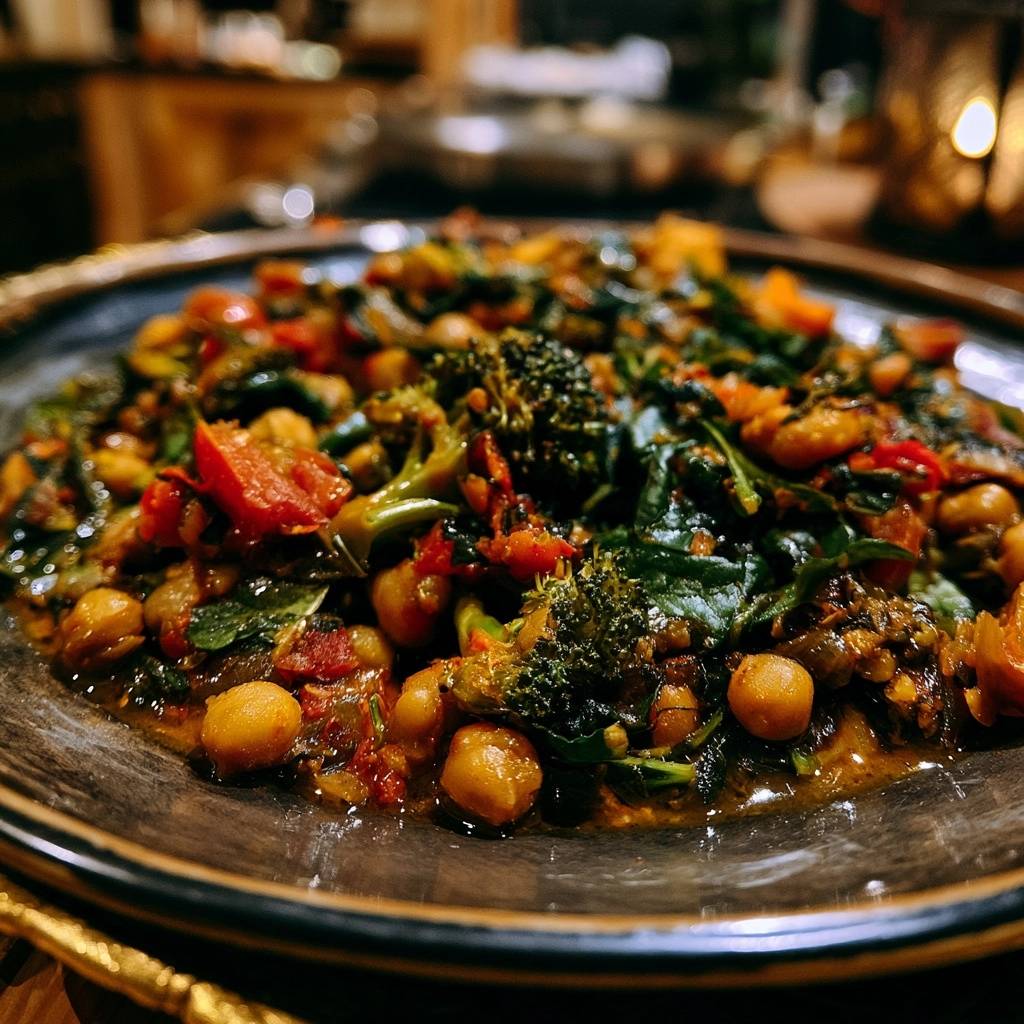
Forget those dry, uninspired sautés that leave you chewing on tough stalks and bland beans. When you crave something that feels like a warm hug in a bowl, you need to move away from the raw crunch of salads and embrace the “melt-in-your-mouth” luxury of a braised ragout. This Mediterranean Braised Chickpea and Broccoli Ragout isn’t just a quick vegetable toss; it’s a masterclass in building deep, savory satisfaction using simple plant-based ingredients.
The secret lies in what I call the “Umami Secret.” By allowing cherry tomatoes to slowly render down and aromatics to toast in high-quality oil, you create a concentrated, jam-like base. This isn’t a thin soup or a dry stir-fry. Instead, it’s a rich, savory glaze that coats every chickpea and broccoli floret, offering a depth of flavor usually reserved for stews that have simmered on the stove for hours. You’re getting all that complexity in just about thirty minutes.
I’ve found that the key to this dish’s success is the specific way we treat the chickpeas. We aren’t just heating them up; we’re blistering them in olive oil to create a sturdy exterior that stands up to the braising liquid. This ensures that while the sauce becomes silky and the broccoli turns tender, the chickpeas maintain a satisfying bite. It’s a nutrient-dense powerhouse that proves you don’t need meat to achieve a heavy-hitting, savory profile.
The Science of the Braised Ragout Method
Culinary physics plays a huge role in why this recipe works so well. Most people approach broccoli with a quick sauté, which often leaves the florets burnt on the outside and raw in the middle. We use “steam-braising” instead. By adding a small amount of vegetable broth and covering the pan, we trap moisture. This steam works to break down the tough cellulose in the broccoli stems and the skins of the chickpeas, resulting in a cohesive, uniform texture.
Before the lid goes on, however, we focus on the Maillard reaction. When you blister the chickpeas in the initial phase, the proteins and sugars on their surface react with the heat. This creates those golden-brown spots and a nutty aroma that adds a layer of complexity you can’t get from boiling or steaming alone. It’s the foundation of the dish’s savory character.
Once the liquid is added and the lid is closed, the environment inside the skillet changes. The tomatoes release their natural pectins, which act as a thickener. As the broccoli softens, it releases a bit of its own moisture, mingling with the tomato juices and olive oil to form a natural emulsion. This process transforms individual ingredients into a singular, harmonious ragout where the flavors are locked together rather than sitting separately in the pan.
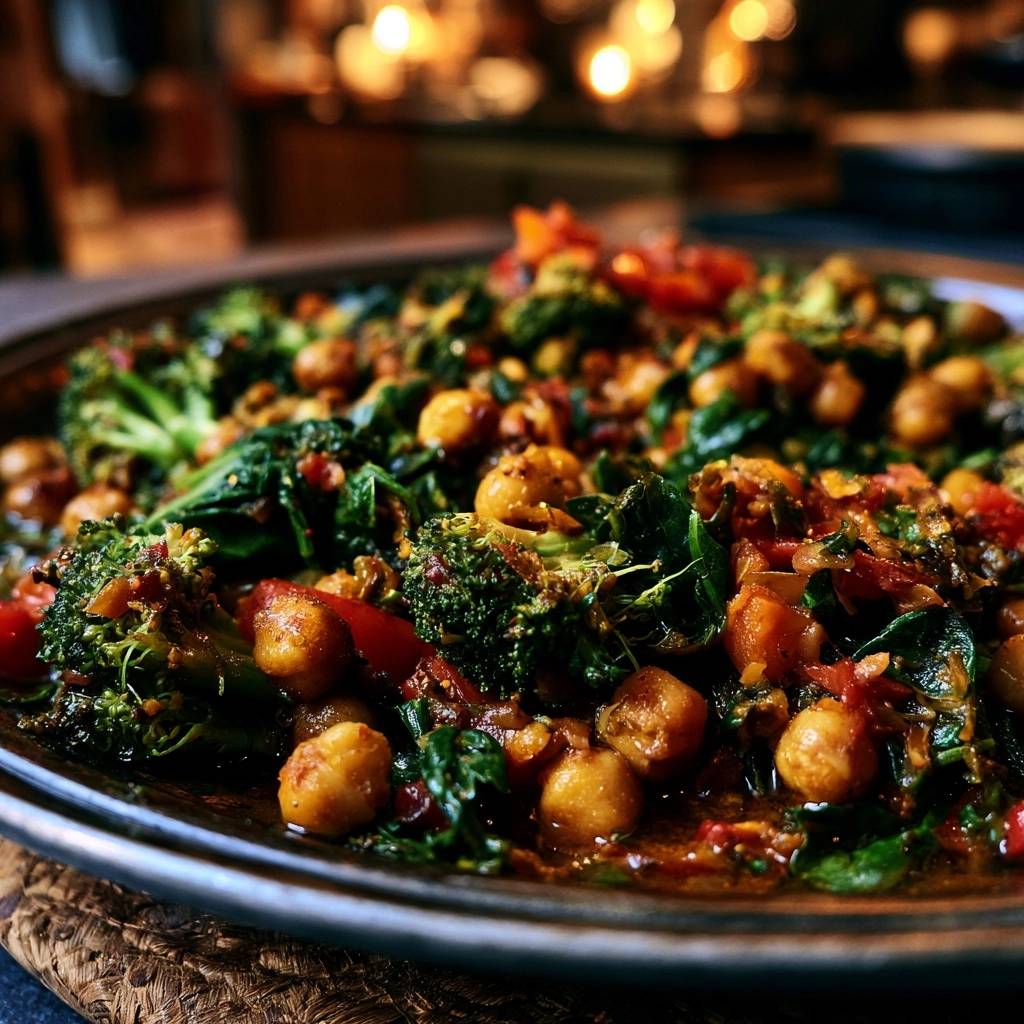
Essential Components for a Rich Mediterranean Base
Quality ingredients are the backbone of this dish, especially since the list is relatively short. For the chickpeas, canned varieties are actually preferred here. Because they’ve already been cooked in the can, their starches are ready to be released, which helps thicken the sauce during the “breakdown” method. Just make sure to rinse them thoroughly to remove any metallic taste from the canning liquid.
When prepping your broccoli, don’t you dare throw away those stems! The stems contain a wonderful sweetness and a lot of fiber. Simply peel the woody outer layer and dice the tender interior into small pieces. They’ll soften beautifully during the braise, adding a different textural dimension than the bushy florets. It’s a great way to reduce waste while bulking up the meal.
Aromatics are where the flavor begins. I use shallots instead of red onions because they offer a more delicate, sophisticated sweetness that won’t overpower the cumin and paprika. Tomato paste is another non-negotiable. It acts as an umami booster, providing a concentrated “meatiness” that anchors the entire flavor profile. Think of it as the glue that holds the spice and the oil together.
Selecting the Right Extra Virgin Olive Oil
Since this recipe calls for four tablespoons of extra virgin olive oil, the oil itself is a primary flavor component, not just a cooking medium. You want a robust, peppery oil for this ragout. A high-quality EVOO has a smoke point high enough for our medium-high blistering phase, and its grassy notes perfectly complement the earthiness of the smoked paprika and ground cumin. Don’t be shy with it; that fat is what carries the flavor to your taste buds.
Phase One: Blistering Chickpeas and Building Aromatics
We start by sweating the shallots in the oil. You’re looking for them to become translucent and soft, which takes about three to four minutes. If they start to brown too quickly, turn the heat down. The goal is sweetness, not bitterness. Once they’re soft, in go the chickpeas and the rest of the oil. This is where the transformation begins.
Increase the heat and let those chickpeas sit in the hot oil. You’ll start to hear a slight popping sound—that’s a good thing! You want to see the skins slightly blister and turn golden. This step ensures the chickpeas absorb the oil, which carries the aromatics deep into the bean. It creates a barrier so they don’t turn into mush once we add the liquid later.
Phase Two: Toasting Spices and Deglazing the Pan
Now we move to “blooming” the spices. Adding smoked paprika and cumin directly to the hot oil and tomato paste is a game-changer. These spices are fat-soluble, meaning their flavor compounds are released much more effectively in oil than in water. Stir them constantly for a minute or two until the oil turns a stunning, deep brick red.
Be very careful with the garlic during this window. Garlic can turn bitter in seconds if it burns. You’re looking for that moment when the kitchen suddenly smells incredible—that’s your cue to move to the next step. The tomato paste should look slightly darker and smell toasted, signaling that the raw metallic taste has been cooked out and replaced by pure umami.
Phase Three: The Tomato Breakdown and Steam-Braise
This is the core of the technique. Add your cherry tomatoes and use the back of your spatula to manually press down on them. You want them to burst and release their juices and seeds. Those juices contain natural sugars and pectin that will form the base of your sauce. It’s a satisfying process that turns a dry sauté into a bubbling, fragrant pan of goodness.
Pour in the vegetable broth and add the broccoli. Once you stir everything to coat the florets in that red spice base, pop the lid on. This five-minute simmer is crucial. It allows the broccoli to cook through using the flavored steam, ensuring it’s tender enough to be pierced with a fork but still holds its vibrant green color. When you lift the lid, the liquid should have reduced into a thick, glossy sauce that clings to everything.
Troubleshooting Common Ragout Textures
If you find your ragout is too watery after removing the lid, don’t panic. Just keep the heat on medium-high and stir for another minute or two. The liquid will evaporate quickly, leaving behind a concentrated glaze. On the flip side, if the pan looks dry, add an extra splash of broth or even a small knob of plant-based butter. This adds a final layer of silkiness that makes the dish feel truly gourmet.
Sometimes broccoli can have a slightly bitter edge, especially if it’s later in the season. This is why the lemon juice at the end is chemically necessary. The acid in the lemon balances the cruciferous notes of the broccoli and cuts through the richness of the olive oil. It brightens the entire dish and makes the flavors pop. Always taste and add a final pinch of salt if the flavors feel muted.
Optimal Pairings for a Complete Mediterranean Meal
This ragout is fantastic on its own, but it’s even better when you have something to soak up that incredible sauce. I love serving this over a bed of toasted lemon couscous or nutty farro. The grains provide a great textural contrast to the soft, braised vegetables. If you prefer something lighter, quinoa is a protein-packed option that works beautifully.
Don’t forget the bread! A piece of crusty sourdough or a warm, fluffy pita is essential for swiping up every last drop of the tomato-spice glaze from the bottom of the bowl. If you want to add a cooling element, a dollop of plain non-dairy yogurt on top provides a creamy tang that plays well with the smoked paprika. A sprinkle of toasted pine nuts can also add a lovely crunch.
Storage, Reheating, and Meal Prep Strategy
One of the best things about this ragout is that it actually tastes better the next day. As it sits in the fridge, the chickpeas continue to soak up the spice-infused sauce, making them even more flavorful. It stays fresh in an airtight container for about three to four days, making it a stellar candidate for your weekly meal prep routine.
When it comes to reheating, the stovetop is your best friend. Add a tiny splash of water to the pan to loosen the sauce and heat it over medium until warmed through. The microwave works in a pinch, but be careful not to overdo it, or the broccoli can become a bit too soft. I don’t recommend freezing this dish; the spinach tends to get slimy and the broccoli loses its structural integrity once thawed.
Expert Tips for the Home Cook
How do I make this spicier?
If you like a bit of heat, the best time to add it is during the spice-toasting phase. You can toss in a teaspoon of red pepper flakes or even a spoonful of harissa paste. Toasting the heat in the oil ensures it’s distributed evenly throughout the entire ragout rather than just sitting on top.
Can I substitute the broccoli with other greens?
Absolutely. Cauliflower or Romanesco are excellent direct swaps for broccoli. Just keep in mind that cauliflower might need an extra minute or two of braising time to get that perfect tender texture. You could also use kale instead of spinach, but add the kale at the same time as the broccoli since it takes longer to soften.
Is there a substitute for tomato paste?
If you’re out of tomato paste, a tablespoon of sun-dried tomato pesto is a fantastic alternative. It provides a similar concentrated tomato flavor but adds an extra layer of Mediterranean herbs and oil. It will result in an even deeper, more complex flavor profile that works perfectly with the chickpeas.
How do I achieve a silky sauce without cream?
The silkiness comes from the combination of three things: the high-quality olive oil, the starch released by the chickpeas, and the natural pectins in the cherry tomatoes. When these three elements are simmered together with the vegetable broth, they create a natural emulsion. Stirring the ragout frequently during the final two minutes helps to bind these fats and liquids into that signature glossy sauce.
How should I store leftovers?
Place your leftovers in a glass, airtight container once they have cooled to room temperature. They will keep well in the refrigerator for up to 4 days. I find that the flavors actually deepen after 24 hours, making it a perfect lunch for the following day. Avoid freezing this dish, as the texture of the broccoli and spinach will degrade significantly upon thawing.
Why is my broccoli still tough?
If your broccoli is still crunchy after the five-minute braise, it usually means the florets were cut too large or the lid wasn’t sealing properly. Make sure your florets are bite-sized and that your skillet lid fits tightly to trap the steam. You can add another 2 tablespoons of broth and cover for an additional 2 minutes to fix this without drying out the sauce.
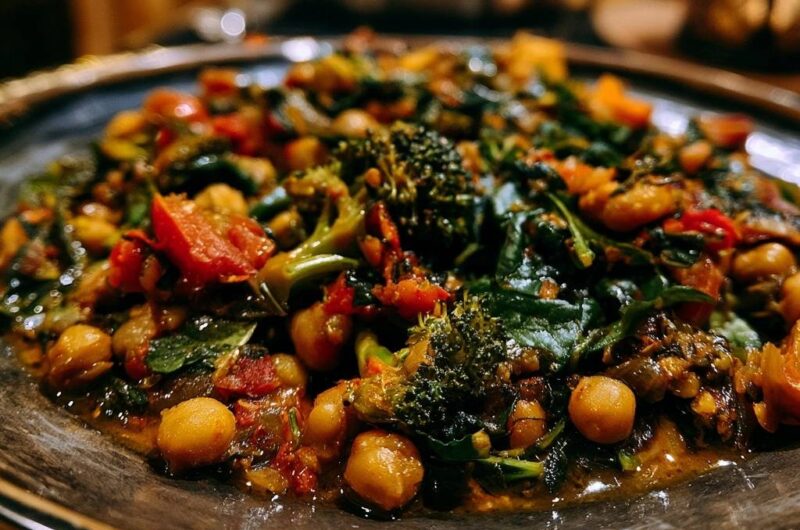
Mediterranean Braised Chickpea and Broccoli Ragout
Course: Main CourseCuisine: MediterraneanDifficulty: easy4
servings10
minutes20
minutes30
Minutes315
kcalMediterranean
Ingredients
2 cans (15 oz each) chickpeas, drained and rinsed
1 large head of broccoli, cut into small florets (including tender stems)
1.5 cups cherry tomatoes, halved
4 cups fresh baby spinach
4 tablespoons extra virgin olive oil
1 medium shallot, finely diced
3 cloves garlic, minced
1 tablespoon tomato paste
1 teaspoon smoked paprika
1/2 teaspoon ground cumin
1/2 cup vegetable broth or water
Salt and black pepper to taste
1 tablespoon fresh lemon juice
Optional: Red pepper flakes for heat
Directions
- Heat 2 tablespoons of olive oil in a large, deep skillet over medium heat. Add the shallots and cook for 3-4 minutes until translucent and soft.
- Add the chickpeas and the remaining 2 tablespoons of oil. Increase heat to medium-high and cook for 5 minutes, stirring occasionally. You want the chickpeas to soften and slightly blister, absorbing the oil.
- Stir in the garlic, tomato paste, smoked paprika, and cumin. Toast the spices and paste for 1-2 minutes until the oil turns a deep red and the mixture is highly fragrant.
- Add the cherry tomatoes and a pinch of salt. Use your spatula to press down on the tomatoes as they heat up, encouraging them to burst and release their juices.
- Pour in the vegetable broth. Add the broccoli florets and stir to coat them in the tomato-spice base. Cover the pan with a lid and reduce heat to medium. Steam-braise for 4-5 minutes. This ensures the broccoli is tender and infused with flavor, matching the soft texture shown in the image.
- Remove the lid. The liquid should have reduced into a thick, glossy sauce. Add the baby spinach and fold it into the mixture.
- Continue to cook for 2 minutes, allowing the spinach to fully wilt and the flavors to meld into a cohesive, stew-like consistency.
- Finish with lemon juice and season generously with salt and pepper. Serve warm in shallow bowls, ensuring each portion gets plenty of the concentrated pan sauce.
Notes
- The secret is allowing the tomatoes to burst and the liquid to reduce into a thick, glossy sauce. Add red pepper flakes if you prefer extra heat.