Mastering Salted Caramel Coconut Macaroon Sandwiches
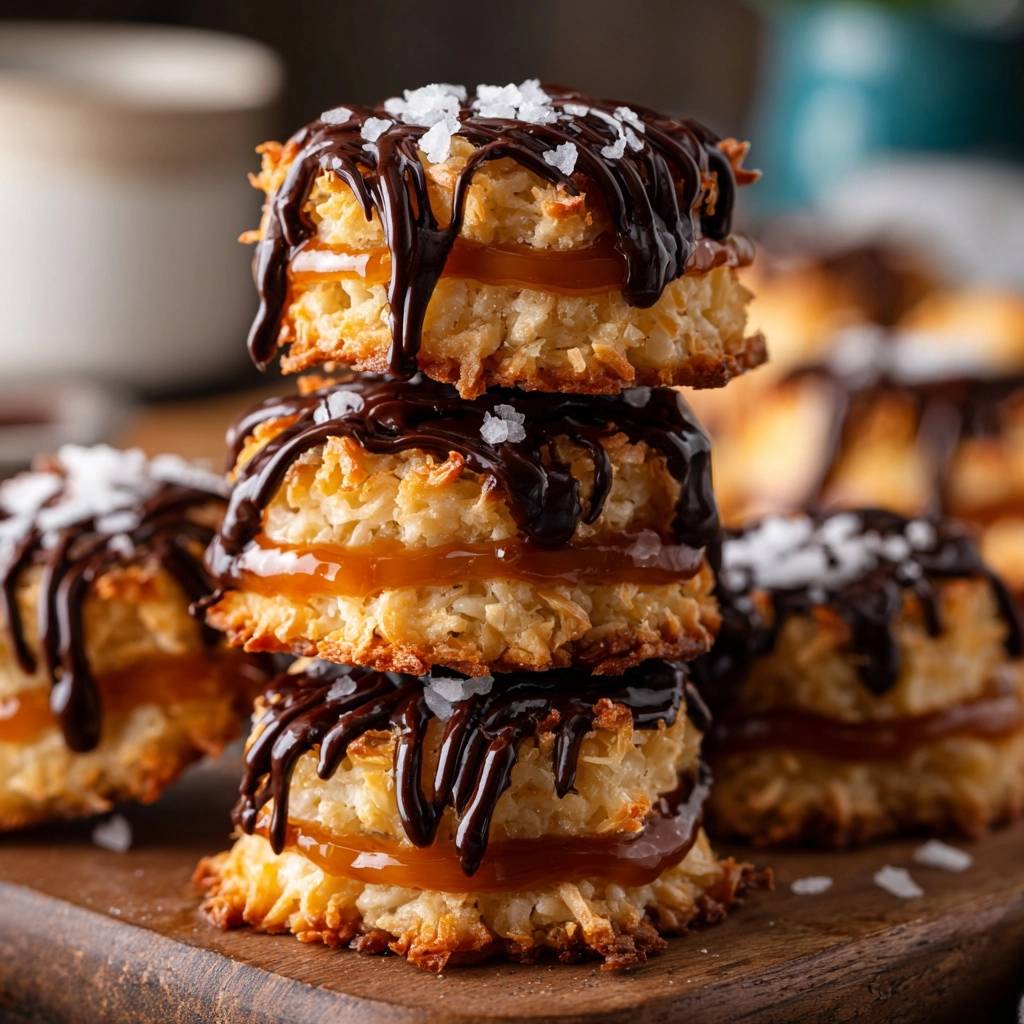
Imagine biting into a cloud that shatters like fine glass before giving way to a chewy, tropical center. Most homemade macaroons suffer from the dreaded “weeping” bottom, where sugar pools into a sticky, burnt mess that turns soggy within hours. These Salted Caramel Coconut Macaroon Sandwiches solve that structural nightmare by evolving the humble cookie into a sophisticated, multi-textured masterpiece.
The secret to this recipe lies in the transition from a simple mound of coconut to a structurally sound disc. We are aiming for a specific mouthfeel: a toasted, golden-brown shell that acts as a moisture barrier against the rich caramel filling. By mastering the “Anti-Soggy Bottom Hack,” you ensure that every sandwich remains crisp and sturdy, even after the filling is added.
Expertise in macaroon baking often comes down to moisture management. The real trick here is the double-bake method combined with an immediate move to a wire rack. If you leave these cookies to cool on a flat parchment sheet, the trapped steam will migrate back into the coconut, destroying that coveted crunch. Moving them instantly allows air to circulate around the entire surface, sealing the “pores” of the cookie.
The Structural Science of Non-Soggy Macaroons
Coconut is naturally porous and holds onto moisture with surprising tenacity. When you mix it with sweetened condensed milk, you are essentially creating a sugar-laden sponge. During the baking process, that moisture wants to escape as steam. If that steam has nowhere to go because the cookie is sitting on a hot, flat pan, it condenses at the base, leading to a mushy texture.
The “Anti-Soggy Bottom Hack” utilizes a wire cooling rack to break this cycle of re-absorption. By elevating the macaroons, you allow the dry oven air to finish the job that the heat started. Furthermore, the double-bake method increases the surface area of the toasted exterior. By flipping the discs halfway through, you create a “sear” on both sides, much like a chef sears a steak to lock in juices.
This toasted seal is your primary defense against moisture migration. When you eventually add the salted caramel, this hardened barrier prevents the sauce from soaking into the crumb. Instead of a soggy sandwich, you get a distinct contrast between the snap of the coconut and the silkiness of the caramel. It is a simple application of physics that elevates the dish from a basic treat to a professional-grade dessert.
Why Condensed Milk Ratios Matter
Most recipes call for a full 14-ounce can of sweetened condensed milk, but that is a recipe for disaster when making sandwiches. Using only 1/2 cup ensures the batter remains structural rather than fluid. Excess sugar and moisture cause the macaroons to spread and “weep” in the oven, creating thin, fragile edges that break during assembly. This reduced ratio keeps the coconut tightly bound and allows for a much higher toasted-to-chewy ratio.
Aeration via Stiff Peak Egg Whites
Whipping egg whites to stiff peaks is a non-negotiable step for a light, airy sandwich. Without this mechanical aeration, the heavy coconut and condensed milk would bake into a dense, leaden brick. When you gently fold the whites into the mixture, you are folding in thousands of tiny air bubbles. These bubbles expand in the heat, creating micro-pockets that give the sandwich its signature “lift” and tender bite.
Essential Components for Coconut Macaroon Sandwiches
Quality ingredients are the foundation of any successful bake, especially when the list is this short. Because there are so few elements, the texture and flavor of each one will be front and center. You want to choose components that provide a balance of sweetness, fat, and salt to keep the palate engaged.
Sweetened shredded coconut is the standard here because the added sugar helps with the caramelization process. However, the size of the shred matters immensely. Look for a medium-shred coconut; if the pieces are too long, the discs won’t hold their shape, and if they are too fine, the sandwich will lose its iconic “shaggy” look. The sugar in the coconut works with the condensed milk to create those crispy, browned bits that taste like toasted marshmallows.
For a perfect pairing, try our Chocolate-Dipped Caramel Shortbread Cookies Recipe.
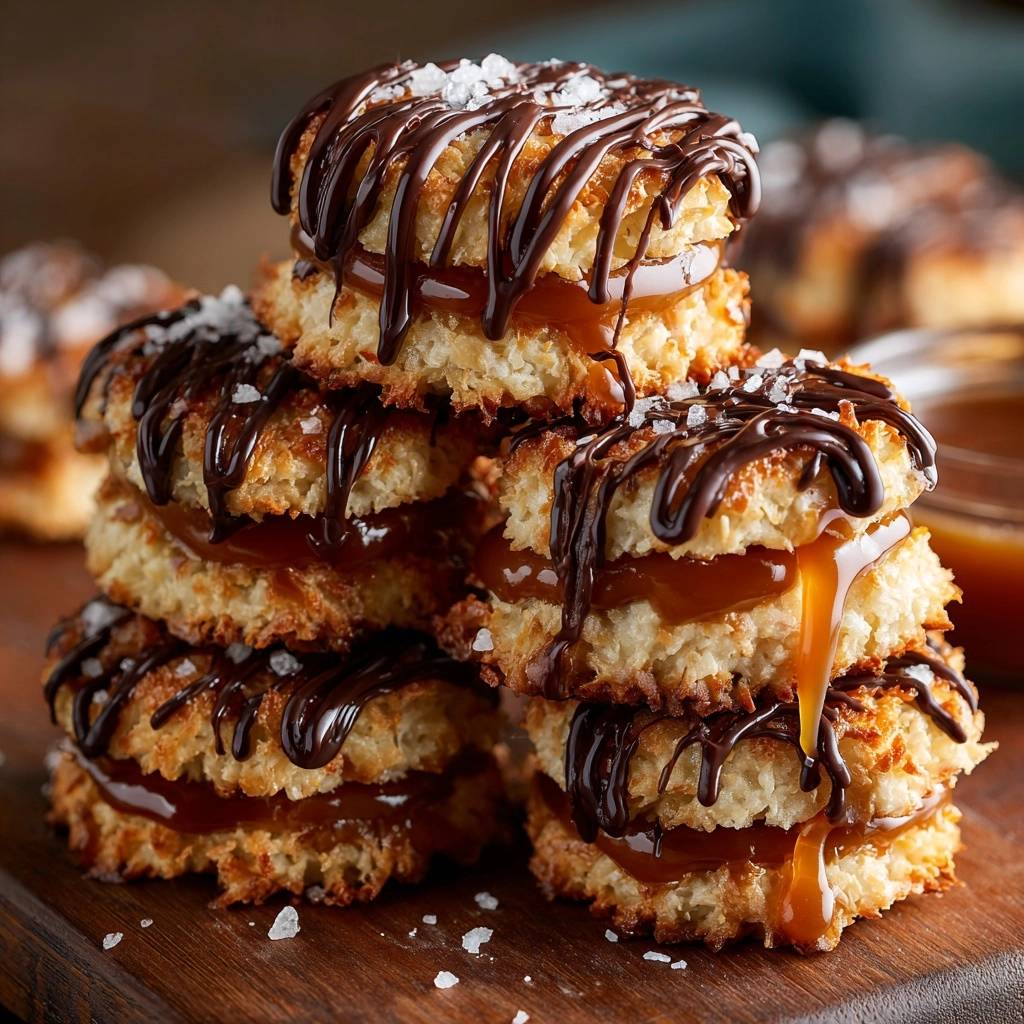
The caramel filling requires a high-viscosity, or “thick,” sauce. If you use a thin topping syrup, it will immediately run out the sides or soak into the cookie. A chilled, high-quality sea salt caramel should have the consistency of soft taffy. This ensures it stays exactly where you put it, providing a rich, gooey center that doesn’t compromise the integrity of the coconut discs.
Finally, the chocolate drizzle isn’t just for looks. Using a semi-sweet chocolate with 55-70% cacao provides a necessary bitterness. This bitterness cuts through the intense sugar of the coconut and the richness of the caramel. When topped with coarse sea salt flakes, you create a multi-dimensional flavor profile that hits every part of the tongue.
Step-by-Step: Engineering the Perfect Sandwich
Phase 1: Hydrating and Aerating the Batter
Start by mixing your coconut, 1/2 cup of condensed milk, and vanilla until every shred looks shiny and hydrated. In a separate, bone-dry bowl, whisk your egg whites and salt until they are stiff enough that you can turn the bowl upside down without them moving. Use a wide spatula to fold the whites into the coconut. Do not stir vigorously; use a “cut and fold” motion to keep those air bubbles intact until the mixture looks uniform and fluffy.
Phase 2: The Double-Sided Toasting Technique
Scoop the batter into mounds and flatten them into 1/2-inch discs with a damp spoon. Bake at 325°F for about 10 minutes until the edges just start to turn golden. Now comes the critical part: carefully flip each disc over using a thin spatula. Bake for another 8-10 minutes. You are looking for a deep, honey-gold color on both sides. This ensures the “seal” is formed, creating a sturdy base for your caramel.
Phase 3: The Critical Cooling Rack Transition
As soon as the pan comes out of the oven, move the discs to a wire rack. You will notice they feel a bit soft at first, but don’t panic. This is “carry-over cooking.” As they sit on the rack, the sugars will harden and the moisture will evaporate. Within 15 minutes, they should be firm and shatteringly crisp to the touch. If you leave them on the parchment, they will steam themselves into a soft, limp texture.
Phase 4: Assembly and Chocolate Tempering
Pair your cooled discs by size so the sandwiches look uniform. Spread a generous dollop of chilled caramel on the flat side of one disc and press the other on top. Once assembled, drizzle with melted semi-sweet chocolate. The chocolate should be warm but not hot. Immediately sprinkle the coarse sea salt over the wet chocolate so it sticks. This salt provides a crunch and a burst of flavor that balances the entire bite.
Troubleshooting Common Macaroon Failures
If you find your caramel is leaking out of the sides, it is likely too warm or too thin. You can fix this by “rimming” the sandwich—place the caramel in the center and leave a small border around the edge. Alternatively, put your caramel in the freezer for 10 minutes before assembly to increase its viscosity. This “flash-freezing” makes the caramel much easier to handle and prevents it from seeping into the coconut crumb.
Over-browned or burnt edges are usually a result of oven hot spots or thin baking sheets. To prevent this, use a heavy-gauge aluminum baking sheet which distributes heat more evenly. If your oven runs hot, try rotating the pan halfway through the first bake. Remember, the high sugar content in the condensed milk means these can go from golden to burnt very quickly, so keep a close eye on them during the final minutes.
Make-Ahead Strategies and Storage Logistics
Maintaining crispness is the biggest challenge, especially in high-humidity environments. Store these sandwiches in an airtight container with pieces of parchment paper between the layers. If you live in a very humid climate, you can even add a food-safe silica packet to the container to absorb excess moisture. While the caramel needs refrigeration to stay firm, the cold can sometimes soften the coconut, so an airtight seal is your best friend.
You can absolutely freeze these sandwiches for up to a month. To thaw, move them from the freezer to the counter, but keep them inside their airtight container until they reach room temperature. This prevents condensation from forming directly on the surface of the coconut, which would ruin the “Anti-Soggy” hack you worked so hard to achieve. Once thawed, they will be just as crunchy as the day you made them.
Expert Tips for Professional Results
Uniformity: The Cookie Scoop Advantage
When making sandwiches, uniformity is everything. Using a small cookie scoop ensures that every disc has the exact same volume of batter. This makes pairing them up much easier and ensures that they all bake at the same rate. Eyeballing the mounds often leads to uneven baking, where smaller discs burn while larger ones stay raw in the middle.
Enhancing the Toasted Profile
For a deeper, nuttier flavor, try pre-toasting about 1/2 cup of your shredded coconut in a dry skillet for 2 minutes before adding it to the mix. This adds a layer of “dark” toasted flavor that complements the sea salt and chocolate beautifully. It creates a more complex taste profile than just using raw shredded coconut alone.
The Damp Spoon Technique
Coconut batter is incredibly sticky due to the condensed milk. To get perfectly smooth, flat discs, keep a small bowl of water nearby. Dip the back of your spoon into the water before flattening each mound. The moisture creates a temporary non-stick barrier, allowing you to shape the discs perfectly without the coconut pulling away or sticking to the spoon.
Salt Gradation and Texture
Don’t swap the coarse sea salt on top for regular table salt. The gradation of salt matters for the experience. The fine salt inside the batter enhances the coconut flavor, while the large flakes on top provide a sudden, sharp contrast to the sweet chocolate. Using a high-quality flake salt like Maldon adds a delicate crunch that table salt simply cannot replicate.
Frequently Asked Questions
How long do these macaroon sandwiches stay fresh?
When stored in an airtight container in the refrigerator, these sandwiches will stay perfectly crisp for 3 to 5 days. The double-toasting method creates a moisture barrier that prevents the caramel from softening the cookie quickly. For the best texture, let them sit at room temperature for about 5 minutes before eating so the caramel softens slightly.
Why did my macaroons spread into a flat puddle in the oven?
This usually happens if you use too much sweetened condensed milk or if your egg whites weren’t whipped to stiff peaks. The 1/2 cup measurement is vital for the structural integrity of a sandwich. If the batter feels too wet or “slumped” before baking, you can fold in an extra tablespoon of coconut to tighten it up.
Can I use unsweetened coconut instead?
You can, but you will need to adjust the sweetness. Unsweetened coconut also has a slightly different fat content and texture, which may result in a less “chewy” center. If you go this route, you might need to add an extra tablespoon of condensed milk to ensure the discs don’t become too crumbly or dry.
What is the best way to melt the chocolate for the drizzle?
Use a microwave-safe bowl and heat the chocolate in 20-second intervals, stirring well between each. This prevents the chocolate from scorching. For a smoother drizzle that sets with a nice sheen, you can add half a teaspoon of coconut oil to the chocolate while melting. This also makes the chocolate slightly softer, so it doesn’t shatter and fall off when you take a bite.
My caramel is too thin; how can I thicken it?
If your caramel sauce is pourable at room temperature, it is too thin for a sandwich filling. You can thicken it by simmering it in a small saucepan for 5-10 minutes to reduce the moisture content, or by mixing in a tablespoon of powdered sugar. Always ensure the caramel is completely chilled before you attempt to assemble the sandwiches.
Can I make these without egg whites?
Egg whites are the primary binding and aerating agent in this specific recipe. While some macaroon recipes use flour or extra condensed milk as a binder, they will result in a much denser, heavier cookie that won’t have the light, crisp texture required for a sandwich. For this “Anti-Soggy” version, the egg whites are essential.

Salted Caramel Coconut Macaroon Sandwiches
Course: DessertCuisine: AmericanDifficulty: medium12
sandwiches20
minutes25
minutes285
kcal45
MinutesA crisp and toasted coconut macaroon sandwich filled with thick sea salt caramel and drizzled with semi-sweet chocolate. This recipe uses a specific double-sided toasting method to ensure the cookies remain crunchy and never soggy.
Ingredients
14 ounces sweetened shredded coconut
1/2 cup sweetened condensed milk (Note: Using the full 14oz can makes the batter too wet for sandwiches; 1/2 cup ensures a structural, toasted crunch)
1 teaspoon vanilla extract
2 large egg whites
1/4 teaspoon salt
1/2 cup thick, high-viscosity sea salt caramel sauce (chilled)
4 ounces semi-sweet chocolate, melted
Coarse sea salt flakes for topping
Directions
- Preheat your oven to 325°F (165°C). Line a large baking sheet with parchment paper.
- In a large bowl, combine the shredded coconut, 1/2 cup sweetened condensed milk, and vanilla. Mix until the coconut is evenly hydrated.
- In a separate clean glass or metal bowl, whisk the egg whites and salt until they form stiff peaks. Gently fold the egg whites into the coconut mixture. This aerates the heavy coconut, preventing a dense, soggy center.
- Use a small cookie scoop to drop 24 mounds onto the baking sheet. Use the back of a damp spoon to flatten them into uniform discs about 1/2 inch thick.
- Bake for 10-12 minutes. Remove from the oven and carefully flip each disc over. Bake for an additional 8-10 minutes. This “Double-Sided Toast” ensures both sides are sealed and golden, preventing the caramel from soaking into the cookie.
- The Anti-Soggy Bottom Hack: Immediately move the macaroons to a wire cooling rack. Do not let them cool on the hot pan or parchment paper, as trapped steam will soften the bottoms. Let them cool completely until they are firm and crisp to the touch.
- Once cooled, pair the discs by size. Spread a thick layer of chilled caramel sauce on the flat side of one macaroon and press the second macaroon on top to create a sandwich.
- Place the sandwiches on a clean rack. Drizzle generously with melted semi-sweet chocolate, allowing it to drip down the sides as seen in the image.
- Immediately sprinkle with coarse sea salt flakes while the chocolate is wet.
- Refrigerate for 20 minutes to set the chocolate and firm up the caramel before serving. The double-toasting and rack-cooling ensures these stay crunchy for days.
Notes
- Using only 1/2 cup of sweetened condensed milk instead of the full can is crucial for structural integrity. The double-bake and immediate transfer to a cooling rack prevents steam from softening the bottoms.