Mastering the Tropical Mango Smoothie Bowl
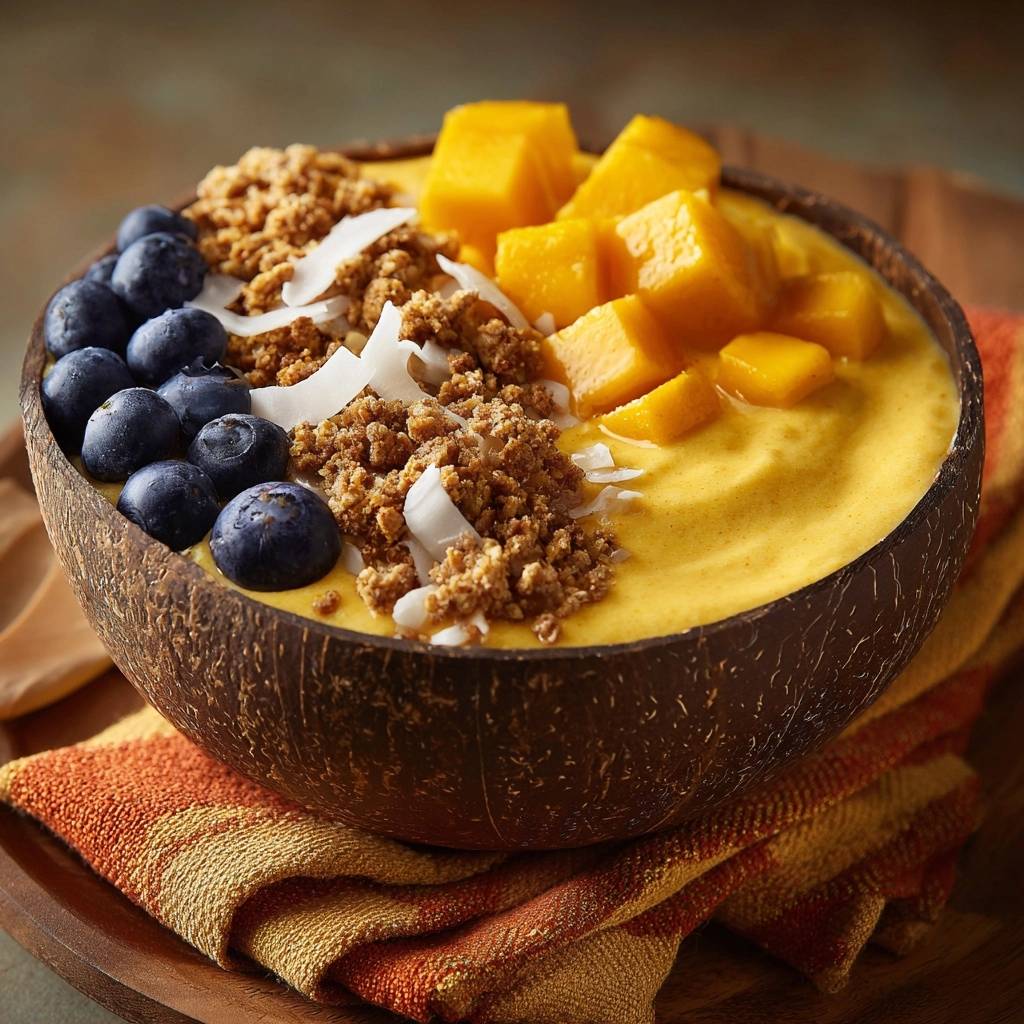
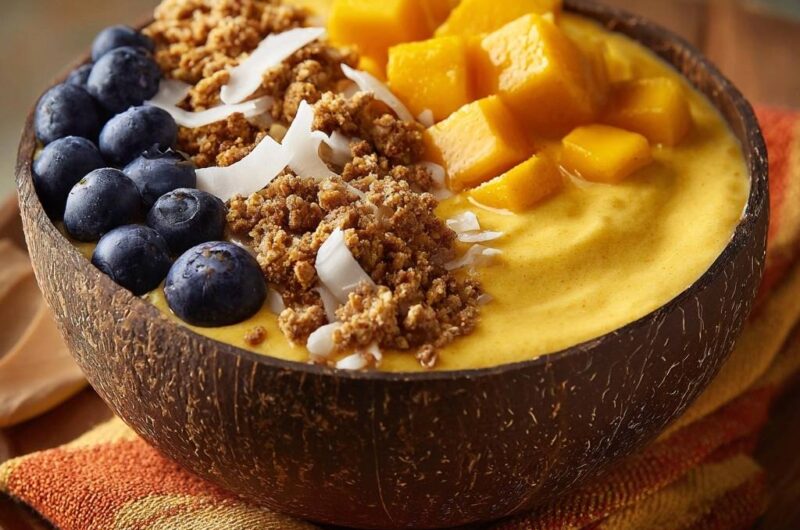
Imagine sitting on a sun-drenched porch, digging your spoon into a thick, velvety base that feels more like premium soft-serve than a breakfast drink. The vibrant orange hue of the mango glows against the deep blue of fresh berries, and every bite offers a satisfying crunch of toasted granola. This isn’t just a snack; it’s a refreshing escape that stays frosty until the very last spoonful.
Most people struggle with smoothie bowls because they end up with a thin, lukewarm soup that can’t support the weight of a single blueberry. We’re fixing that today by focusing on structural integrity and temperature control. With only 340 calories and a 10-minute prep time, this Tropical Mango Smoothie Bowl provides a nutrient-dense meal that feels like a decadent dessert without the sugar crash.
The secret to that elusive, spoonable texture lies in the “frozen-to-liquid” ratio. You’ve got to resist the urge to pour in extra milk when the blender resists. By using a specific sequence of blending and a chilled bowl, you’ll create a dense, pectin-rich emulsion that holds its shape perfectly. I’ve found that even a two-tablespoon difference in liquid can be the line between a masterpiece and a mess.
The Physics of a Thick Tropical Mango Smoothie Bowl
Creating a thick bowl is more about physics than cooking. When you use frozen fruit, the tiny ice crystals within the mango and banana fibers act as the structural “skeleton” of the dish. If you use room temperature fruit and add ice cubes, you’re essentially diluting the flavor and creating a grainy, slushy texture that separates within minutes.
The goal is to reach the “Soft Serve” benchmark. This happens when the natural sugars and fibers in the mango bond with the healthy fats in the coconut milk at sub-zero temperatures. This emulsification creates a creamy, heavy base that is dense enough to prevent your toppings from sinking to the bottom of the bowl.
Essential Components for the Base and Toppings
Every ingredient in this bowl serves a functional purpose. Frozen mango is the star because it’s naturally high in pectin, which creates a much creamier, smoother base than watery fruits like strawberries or watermelon. The frozen banana acts as a natural sweetener and thickener, providing that signature “nice cream” pull that makes the texture so addictive.
For a thicker, spoonable texture, the same trick works in this green smoothie bowl.
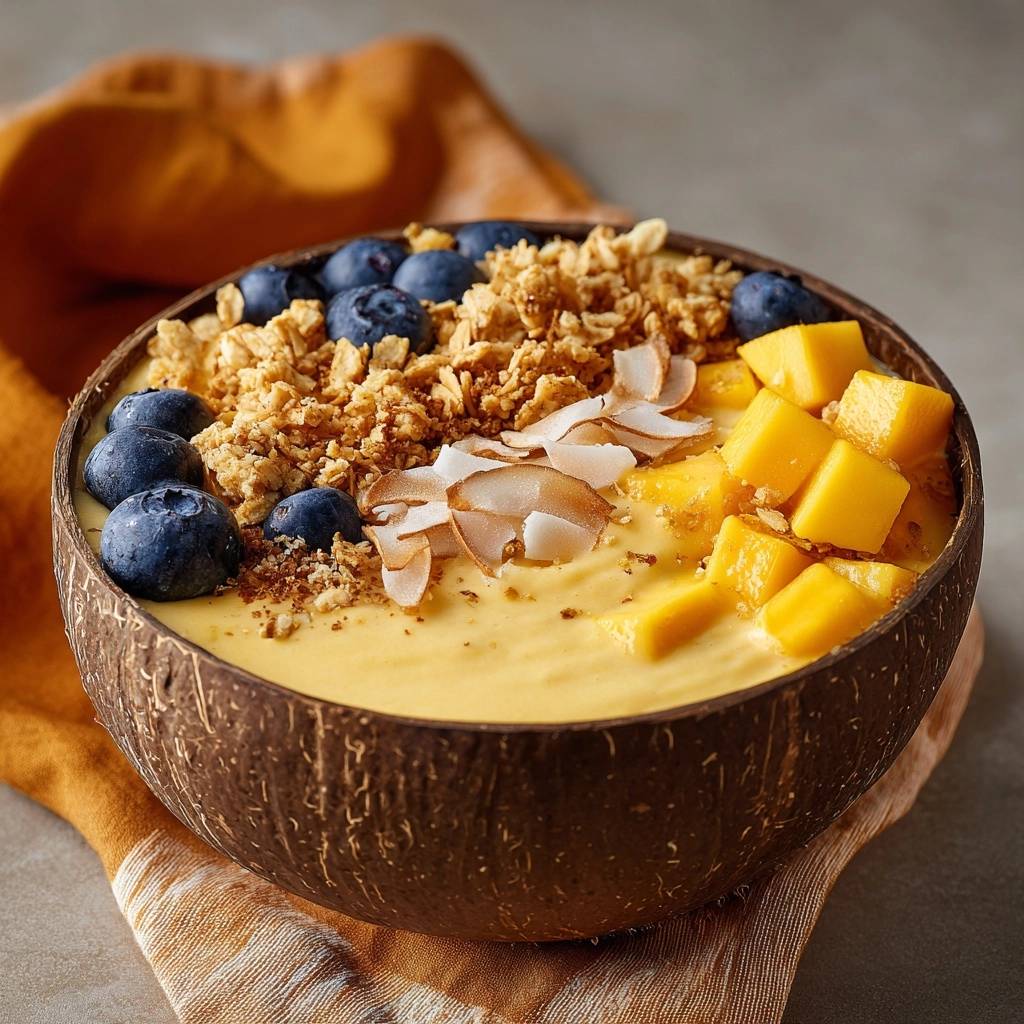
For the liquid, unsweetened coconut milk is the gold standard. It provides the necessary fats to carry the tropical flavors without adding refined sugars. To balance the velvet-smooth base, you need a “Topping Contrast.” The crunch of granola and the chew of large coconut flakes aren’t just for looks; they provide the sensory variety that makes a smoothie bowl more satisfying than a standard shake.
Selecting and Freezing Your Fruit
If you’re freezing your own fruit, look for Ataulfo mangos if they’re in season. They have a buttery, non-fibrous texture and a smaller pit. To prevent your blender from struggling, flash-freeze your mango cubes and banana slices on a parchment-lined tray for two hours before moving them to a bag. This prevents the fruit from turning into one giant, unbreakable block.
The Role of Chilled Coconut Milk
Never use room temperature coconut milk from the pantry. If the liquid is warm, it will immediately begin melting the microscopic ice crystals in your frozen fruit, leading to a runny consistency. Chilling the milk ensures the entire mixture stays as close to freezing as possible during the high-friction blending process.
Required Tools for Professional Results
This recipe is highly equipment-dependent. A high-speed blender with at least 1200 watts of power is the best tool for the job because it can pulverize frozen chunks without needing a lot of liquid. If your blender came with a plastic tamper tool, now is the time to use it. The tamper allows you to manually push the frozen fruit into the blade vortex, which is the only way to achieve a thick blend without thinning it out with extra milk.
Step-by-Step: Blending the Perfect Tropical Mango Smoothie Bowl
Achieving the perfect blend requires patience and a three-phase approach. Don’t just flip the switch to high and hope for the best. You need to guide the ingredients through a transformation from solid chunks to a smooth, frozen cream.
If you enjoy the creamy texture here, try this cinnamon apple walnut yogurt bowl for a similar base with a warm autumn twist.
Phase 1: The Low-Speed Pulse
Start your blender on the lowest possible setting. You want to pulse the motor to break the large frozen mango chunks into a consistency that looks like colorful snow. This prevents the motor from overheating and ensures that the friction from the blades doesn’t generate enough heat to melt your base before it’s even smooth.
Phase 2: Managing the Liquid Ratio
This is where most people fail. Only add your coconut milk one tablespoon at a time if the blender stalls. You are looking for the “four-blade vortex,” where the thick mixture folds over itself in four distinct quadrants. If it looks like a whirlpool, it’s already too thin. The mixture should be so thick that you have to scrape it out of the blender jar with a spatula.
Phase 3: The Chilled Bowl Transfer
Before you even start the blender, pop your serving bowl into the freezer for five or ten minutes. Transferring a frozen mixture into a room-temperature ceramic bowl causes the edges to melt instantly. A chilled bowl creates a thermal barrier that keeps your Tropical Mango Smoothie Bowl firm and frosty while you take the time to arrange your toppings.
Artistic Topping Arrangement for Texture and Flavor
Plating is about more than just a pretty picture. I recommend the “Stripe Method” for the best eating experience. Place your fresh blueberries in a tight cluster on one side to provide a pop of tart acidity. Follow this with a wide stripe of granola and coconut flakes down the center for a consistent crunch in every bite. Finally, pile the fresh, juicy mango cubes on the opposite side. This layout ensures that you get a bit of everything on your spoon without the toppings getting soggy.
Troubleshooting Common Smoothie Bowl Failures
If your blender stalls and makes a high-pitched whining sound, you likely have an air pocket around the blades. Stop the blender, use your spatula to press the fruit down, and try again. If you accidentally add too much liquid and the base becomes watery, don’t panic. You can save it by blending in a tablespoon of chia seeds and letting it sit for two minutes to thicken, or by adding another half-cup of frozen mango to soak up the excess moisture.
What to Pair with Your Smoothie Bowl
A tropical mango smoothie bowl goes well with something baked or a creamy side that echoes the fruit and coconut notes.
- For a bright, citrusy contrast, slice a piece of Glazed Lemon Blueberry Loaf alongside the bowl — the tangy glaze and berries cut through the mango sweetness.
- Add a warm, chewy side of Creamy Coconut Rice with Toasted Flakes to double down
Flavor Variations and Nutritional Swaps
You can easily customize this bowl while keeping the structural integrity intact. For an anti-inflammatory boost, blend in a half-teaspoon of ground turmeric; it pairs beautifully with the mango’s flavor profile. If you prefer a more neutral taste, substitute the coconut milk with cashew milk, which offers a similar creaminess. You can also add a scoop of your favorite plant-based protein powder, but you may need an extra splash of liquid to account for the dry powder.
Expert Tips for Meal Prep and Storage
Smoothie bowls are best eaten immediately, but you can meal prep “Smoothie Packs” to save time. Portion your frozen mango and banana into individual silicone bags so you can just grab, dump, and blend. Avoid blending the bowl ahead of time and re-freezing it. Because home freezers don’t churn the mixture as they freeze, the bowl will turn into a solid, icy brick that loses its creamy mouthfeel.
Frequently Asked Questions
Why is my smoothie bowl melting so fast?
The most common culprits are a warm blender jar and room-temperature toppings. The friction of the blades generates heat, so if you blend for too long, the base warms up. Additionally, using fresh fruit as a topping adds heat to the surface. Try using frozen berries as a topping to help maintain the core temperature of the bowl for a longer period.
Can I use fresh mango instead of frozen?
Using fresh mango will result in a traditional, drinkable smoothie rather than a scoopable bowl. To get a thick consistency with fresh fruit, you would have to add a significant amount of ice. Unfortunately, ice dilutes the vibrant “Tropical Mango” flavor and creates a watery finish. For the best results, always use fruit that has been frozen solid.
What is the best granola for this recipe?
Look for a granola that is nut-heavy and low in sugar. Nut-based granolas tend to stay crunchy longer when they come into contact with the cold smoothie base. Avoid granolas with small, powdery oats, as they tend to absorb moisture quickly and turn soggy before you can finish your meal.
How do I make this without a high-speed blender?
If you don’t have a high-wattage blender, use a food processor instead. Food processors have wider blades that are much better at processing frozen fruit with minimal liquid. It might take a minute or two longer, and you’ll need to stop and scrape the sides down frequently, but the resulting texture will be much thicker than what a standard upright blender can produce.
Is this smoothie bowl suitable for a keto diet?
Mango and bananas are naturally high in sugar and carbohydrates, so this specific recipe is not keto-friendly. To adapt it for a low-carb lifestyle, you would need to significantly reduce the mango portion and replace it with frozen cauliflower rice or avocado for bulk, then sweeten the base with a keto-approved sweetener like monk fruit.
Mango Smoothie Bowl
Course: BreakfastCuisine: AmericanDifficulty: easyYields1
servingPrep Time10
minutesCook TimeMinutesCalories340
kcalTotal Time10
MinutesA vibrant and refreshing smoothie bowl featuring frozen mango and banana blended with coconut milk to a soft-serve consistency, topped with fresh fruit, granola, and coconut flakes.
Ingredients
2 cups frozen mango chunks
1/2 cup frozen banana slices
1/4 cup unsweetened coconut milk (chilled)
1/2 cup fresh blueberries
1/4 cup granola
2 tablespoons large coconut flakes
1/2 cup fresh mango, cubed for topping
Directions
- To solve the watery base problem, ensure your mango and banana are frozen solid. Do not use room temperature fruit with ice, as ice dilutes the flavor and creates a grainy, slushy texture rather than a creamy one.
- Place the frozen mango and frozen banana into a high speed blender.
- Add the chilled coconut milk. Start with only 1/4 cup. The most common mistake is adding too much liquid too early.
- Use the blender tamper tool to push the frozen fruit down into the blades. Pulse on low speed at first to break up the large chunks.
- Increase to high speed for only 15 to 20 seconds. If the blender stalls, add one additional tablespoon of coconut milk at a time until a thick, soft-serve consistency is reached.
- Immediately scoop the thick mixture into a chilled bowl (a coconut shell bowl is recommended for the visual aesthetic shown). Using a cold bowl prevents the edges from melting instantly.
- Arrange the toppings in distinct sections: place the fresh blueberries in a cluster on one side, followed by a generous layer of granola and coconut flakes in the center, and the fresh mango cubes on the opposite side. Because the base is properly thickened, the toppings will sit perfectly on the surface. Serve immediately.
Notes
- Using a chilled bowl and avoiding ice cubes are the keys to maintaining a thick, spoonable texture that supports heavy toppings.