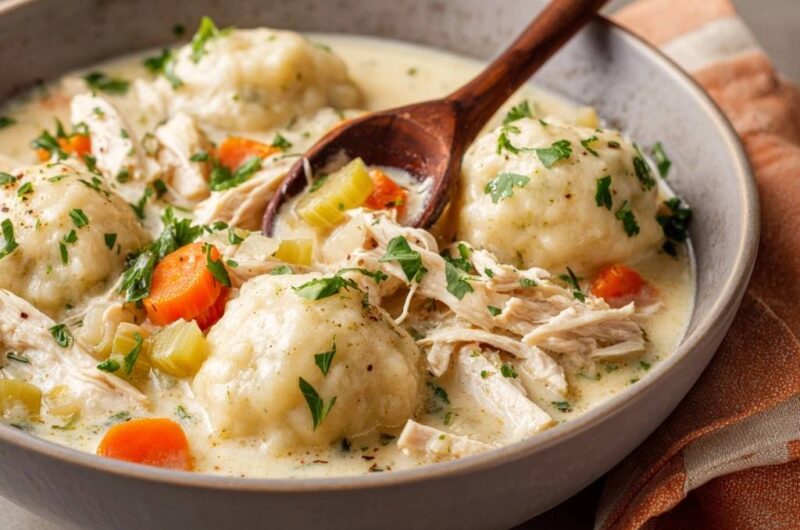
Mastering Creamy Homemade Chicken and Dumplings
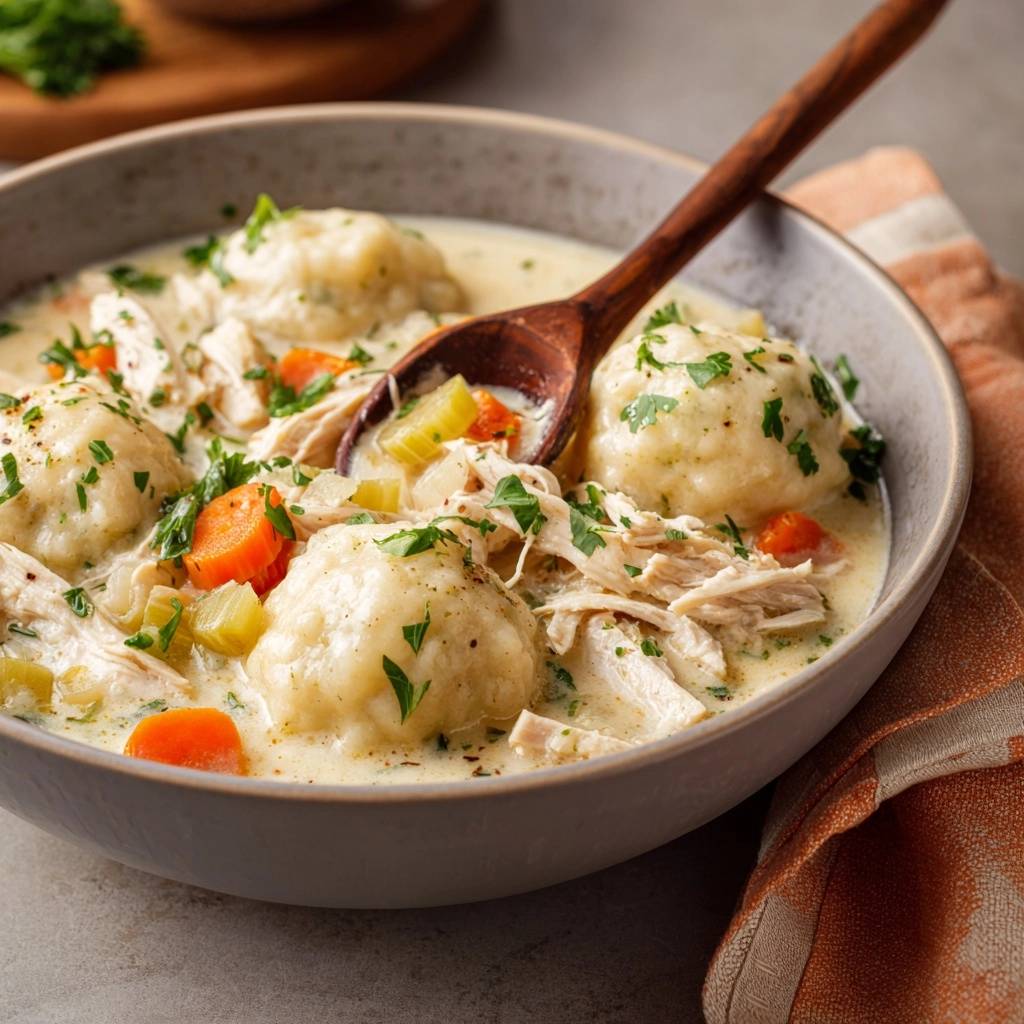
Most people think the hardest part of a great stew is the flavor, but with chicken and dumplings, the real challenge is the texture. We’ve all been there: you’re craving a bowl of pure comfort, but you end up with doughy lumps that are raw in the middle or, worse, a gummy mess that dissolves into the broth. It’s frustrating when a dish that should feel like a warm hug turns into a kitchen fail.
The secret to achieving that elusive, pillowy texture isn’t a hidden ingredient; it’s a combination of temperature control and the “no-peek” rule. By mastering the way steam interacts with your dough, you can ensure every bite is light, airy, and perfectly cooked. This recipe focuses on a foolproof method that guarantees success even if you’ve struggled with heavy dumplings in the past.
I’ve found that the absolute key to success is using a heavy-bottomed Dutch oven. These pots hold heat more consistently than thin stainless steel, which prevents the temperature from dropping when you drop the cold dough into the pot. If the simmer stays steady, the dumplings start rising immediately, trapping air before they have a chance to get waterlogged.
The Anatomy of a Perfect Dumpling
A perfect dumpling is essentially a steamed biscuit that lives on top of a savory lake. To get that lift, we rely on the chemical reaction between baking powder and heat. When the dough hits the simmering liquid, the baking powder releases carbon dioxide gas, creating tiny bubbles that expand and make the dough fluffy. If your dumplings are dense, it’s often because the baking powder is expired or the dough was handled too much.
Gummy dumplings usually happen for two reasons: the liquid wasn’t hot enough or the lid was lifted too early. If the broth is just lukewarm, the starch in the flour starts to leak out into the soup before the structure of the dumpling can set. This creates a slimy exterior. You want a gentle, consistent simmer where small bubbles are breaking the surface, ensuring the heat is high enough to cook the flour quickly without boiling the dumplings to pieces.
Why Steam Trumps Boiling
While the bottom of the dumpling sits in the broth, the top and center are actually cooked by trapped steam. This is why the “No-Peek” rule is so vital. Every time you lift the lid to check on progress, you release the pressurized steam and drop the internal temperature of the pot. This causes the dumplings to deflate and results in a heavy, leaden texture. Keeping the lid tight ensures the starch cooks evenly from the outside in.
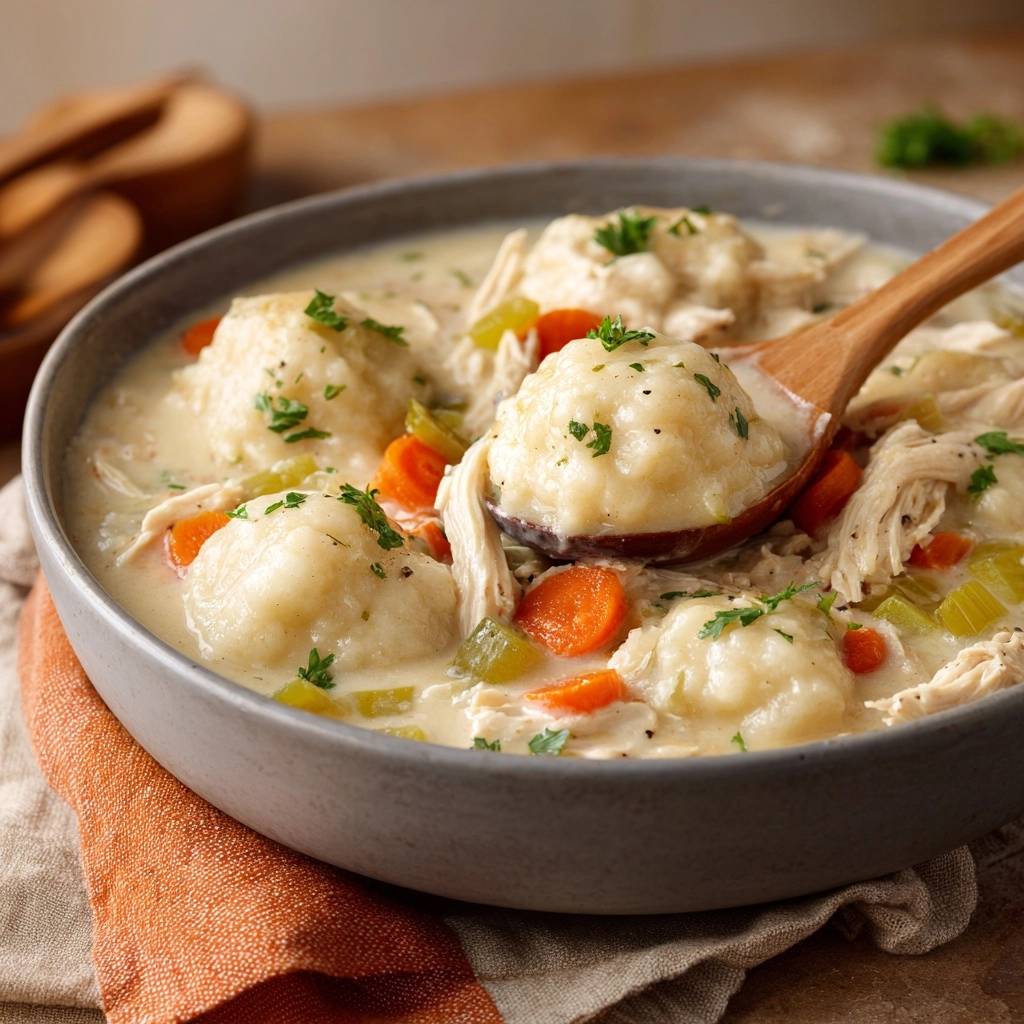
Essential Components for the Creamy Base
The foundation of this dish starts with a classic mirepoix: carrots, celery, and onion. These vegetables provide a sweet, earthy depth that balances the richness of the cream. I always recommend using unsalted butter for sautéing. Since chicken broth can vary wildly in saltiness, starting with unsalted butter gives you total control over the final seasoning. You can always add salt, but you can’t take it away once it’s in the pot.
A light roux is created by sprinkling flour over the softened vegetables. This step is crucial because it thickens the broth into a velvety sauce rather than a thin soup. By cooking the flour with the butter for at least a minute, you remove the “pasty” raw taste, leaving behind a nutty, toasted aroma that enhances the entire base.
Selecting Your Poultry: Rotisserie vs. Poached
If you’re short on time, a rotisserie chicken is a fantastic shortcut. It brings a pre-seasoned, roasted flavor that adds instant complexity to the stew. However, if you have an extra twenty minutes, poaching your own chicken in the broth provides a much softer, more tender texture. Home-poached meat tends to soak up the creamy sauce better than pre-roasted meat, which can sometimes be a bit dry.
Regardless of which you choose, I recommend shredding the chicken by hand rather than dicing it with a knife. Hand-shredded pieces have more surface area and “nooks” for the creamy sauce to cling to. Aim for bite-sized pieces that are about the same size as your sliced carrots for a consistent mouthfeel in every spoonful.
The Role of Heavy Cream and Broth
Using low-sodium chicken broth is a non-negotiable for me. As the stew simmers and reduces, the flavors concentrate. If you start with full-sodium broth, the dish can become unpleasantly salty by the time the dumplings are done. The heavy cream is the finishing touch that provides a silky, luxurious mouthfeel. While you could use milk, it won’t have the same stability; heavy cream resists curdling and gives the broth a beautiful, opaque richness.
The same low-sodium broth technique is key for achieving rich flavor without salt overload in this creamy chicken and dumplings recipe.
Step-by-Step: Building the Flavor Foundation
Start by melting your butter until it’s foaming but not browned. Toss in your carrots, celery, and onions, and listen for that gentle sizzle. You aren’t looking to caramelize the vegetables here; you just want them to soften and become translucent. This usually takes about five to seven minutes. Once the onions look clear, add the garlic and thyme. You’ll smell the garlic immediately—that’s your cue to move to the next step.
When you sprinkle the flour over the vegetables, stir it constantly. You’ll notice a “fond” or a light brown film starting to form on the bottom of the pot. This is flavor gold! When you gradually whisk in the chicken broth, use your spoon to scrape those browned bits off the bottom. They will dissolve into the liquid, adding a deep, savory color and a boost of umami to your base.
Mixing the Dough Without Overworking
This is the part where most people go wrong. When you combine your flour, baking powder, milk, and melted butter, use a fork and stir just until the flour streaks disappear. The dough should look like a “shaggy mass”—lumpy, sticky, and not at all smooth. If you keep stirring until it’s perfectly smooth, you’re developing gluten. Overworked gluten creates “rubber ball” dumplings that are tough and chewy instead of light and tender.
Think of this dough like biscuit dough. You want to handle it as little as possible. If the dough feels a bit too wet, don’t panic. A sticky dough is actually better than a dry, floury one because it will stay moist during the steaming process. Just make sure there are no large pockets of dry flour left in the bottom of the bowl before you start scooping.
The Precision Drop and Steam Phase
Use a small cookie scoop or two spoons to drop mounds of dough about 1.5 inches wide. Don’t make them too big, as they will nearly double in size as they steam. Space them out across the surface of the simmering broth. They might look crowded, but they should have just enough room to expand without merging into one giant sheet of dough.
Once the last scoop is in, drop the lid on immediately. Set a timer for 15 minutes and walk away. Resist every urge to check on them! The steam needs that constant, trapped heat to penetrate the center of the dumplings. If you peek, the temperature drops, the steam escapes, and you risk the dumplings sinking or becoming gummy. Trust the process and let the steam do the heavy lifting.
Troubleshooting Common Texture Issues
If you finish the 15 minutes and find your broth is a bit thinner than you’d like, don’t worry. You can gently move the dumplings to one side and simmer the liquid uncovered for a few minutes to reduce it. However, keep in mind that the sauce will naturally thicken as it cools slightly in the bowls. If the dumplings look “sunken,” it usually means the broth wasn’t simmering vigorously enough when they were dropped in.
To check for doneness without ruining the batch, take one dumpling out and cut it in half. The center should look like a fluffy, moist cake. If it looks wet or translucent in the very middle, put the lid back on and give it another 2 to 3 minutes. Usually, if you followed the “no-peek” rule and kept a steady simmer, they will be perfectly opaque and firm to the touch right at the 15-minute mark.
Flavor Variations and Herb Swaps
While parsley and thyme are the classic choices, you can easily shift the flavor profile. For a woodier, more autumnal vibe, try adding a teaspoon of chopped fresh rosemary or sage to the broth. If you want a brighter, spring-style version, stir in a cup of frozen peas and some sliced leeks during the final simmer. The leeks add a mild, onion-like sweetness that pairs beautifully with the heavy cream.
You can also experiment with the dough itself. Adding a tablespoon of chopped chives or a pinch of cracked black pepper directly into the flour mixture gives the dumplings a decorative look and an extra layer of flavor. Just remember to keep the ratios of dry to wet ingredients the same so you don’t mess with the chemistry of the rise.
If you enjoy adding herbs to your dumpling dough, try the same trick with this creamy chicken vegetable stew for extra freshness.
Optimal Sides for a Rich Stew
Since this dish is incredibly rich and hearty, you’ll want sides that offer a bit of acidity or crunch to cleanse the palate. A simple arugula salad with a sharp lemon vinaigrette is my favorite pairing. The peppery greens and citrus cut right through the heavy cream and buttery dough. It makes the whole meal feel much more balanced.
Roasted green beans with a splash of balsamic vinegar or even a side of quick-pickled cucumbers also work wonders. You want something crisp and bright to contrast with the soft, pillowy texture of the dumplings. Avoid serving this with heavy starches like mashed potatoes or bread, as the dumplings already provide plenty of satisfying carbs.
What to Serve Alongside Chicken and Dumplings
Chicken and dumplings are hearty and creamy, so a crisp, tangy slaw cuts through the richness and adds a contrast in texture.
- For a creamy, tangy crunch, try this Poppy Seed Coleslaw — the vinegar dressing brightens each spoonful of stew.
- If you prefer a classic, crunchy side, this Southern Style Coleslaw brings a cool, crisp bite that balances
Make-Ahead Strategies and Storage
Chicken and dumplings are best eaten fresh, but you can definitely prep ahead. You can make the creamy chicken and vegetable base up to two days in advance and store it in the fridge. When you’re ready to serve, bring the base back to a simmer on the stove and then mix and drop your fresh dumplings. This ensures the dumplings have that perfect, airy texture that just doesn’t hold up as well after being refrigerated.
I don’t recommend freezing the finished dish with the dumplings included. The freezing and thawing process breaks down the starch in the dough, making them mushy and grainy. If you want to freeze it, freeze only the chicken and vegetable base. When you’re ready to eat, thaw the base, heat it up, and make a fresh batch of dough for the best results.
Expert Tips for Success
One of the best things you can do for your stew is to use a heavy-bottomed pot like a cast-iron Dutch oven. These pots distribute heat evenly, which prevents the bottom of your creamy sauce from scorching while the dumplings steam on top. If you use a very thin pot, you might find the bottom of the stew burns before the dumplings are fully cooked through.
Finally, always wait until the very last second to add your fresh parsley. Fresh herbs are delicate, and their bright green color and volatile oils disappear quickly when exposed to high heat. Stirring them in just before serving ensures that every bowl looks vibrant and tastes fresh. It’s that final pop of color that makes the dish look as good as it tastes.
Can I use a slow cooker?
You can make the chicken base in a slow cooker, but the dumplings are tricky. Slow cookers often don’t get hot enough to create the steam needed for fluffy dumplings, which can lead to a gummy texture. If you use one, turn it to the “High” setting for at least 30 minutes before dropping the dough, and ensure you don’t lift the lid at all during the final cooking phase.
What if my dough is too sticky?
Flour measurements can change depending on the humidity in your kitchen. If your dough looks more like a liquid batter than a soft dough, add extra flour one teaspoon at a time until it holds its shape on a spoon. Be careful not to add too much, though; a slightly sticky dough is the secret to a moist, tender dumpling that doesn’t turn into a dry “sinker.”
How do I reheat leftovers?
The dumplings will soak up a lot of the liquid as they sit in the fridge. When reheating, place the leftovers in a small saucepan and add a splash of chicken broth or a tablespoon of water. Heat it over low power, stirring very gently so you don’t break the dumplings apart. This thins the sauce back to its original creamy consistency without making the dough mushy.
Can I use dried herbs instead of fresh?
Yes, you can substitute dried herbs, but remember the 1:3 ratio: use one teaspoon of dried herbs for every three teaspoons (one tablespoon) of fresh. Dried herbs should be added at the beginning of the simmer so they have time to rehydrate and release their oils. Save the fresh parsley for the garnish at the end, as dried parsley doesn’t offer much flavor or color.
Chicken and Dumplings
Course: Main CourseCuisine: AmericanDifficulty: mediumYields6
servingsPrep Time15
minutesCook Time35
minutesCalories480
kcalTotal Time50
MinutesA comforting, hearty meal featuring shredded chicken, fresh vegetables, and a creamy broth topped with light and airy homemade dumplings cooked to perfection using steam.
Ingredients
2 pounds shredded cooked chicken (rotisserie or poached)
6 cups low sodium chicken broth
1 cup heavy cream
3 tablespoons all-purpose flour (for the roux)
4 tablespoons unsalted butter (divided: 2 for sautéing, 2 for dough)
3 large carrots, sliced into rounds
3 stalks celery, chopped
1 yellow onion, diced
2 cloves garlic, minced
2 cups all-purpose flour (for dumplings)
1 tablespoon baking powder
1 teaspoon salt
3/4 cup whole milk
2 tablespoons fresh parsley, finely chopped
1/2 teaspoon black pepper
1/2 teaspoon dried thyme
Directions
- In a large Dutch oven or heavy pot, melt 2 tablespoons of butter over medium heat. Add the carrots, celery, and onion. Sauté for 5-7 minutes until the onions are translucent. Add the garlic and dried thyme, cooking for 1 minute more until fragrant.
- Sprinkle 3 tablespoons of flour over the vegetables and stir for 1 minute to cook out the raw flour taste. Gradually whisk in the chicken broth to ensure no lumps form. Bring to a boil, then reduce heat and simmer for 10 minutes.
- Stir in the shredded chicken and heavy cream. Season with salt and black pepper. Adjust the heat to maintain a very gentle simmer (small bubbles, not a rolling boil).
- In a medium bowl, whisk together the 2 cups of flour, baking powder, and salt. Add 2 tablespoons of melted butter and the milk. Stir with a fork just until a soft, sticky dough forms. Do not overmix, or the dumplings will be tough.
- Using a small cookie scoop or two spoons, drop rounded mounds of dough (about 1.5 inches wide) directly onto the surface of the simmering liquid. Space them out as they will expand.
- Immediately cover the pot with a tight-fitting lid. This is the most important step: do not lift the lid for 15 minutes. The trapped steam is what cooks the dumplings through to the center, creating a light, fluffy texture rather than a gummy one.
- After 15 minutes, remove the lid. The dumplings should be puffed, opaque, and firm to the touch. Garnish generously with fresh parsley and serve immediately in deep bowls.
Notes
- The secret to the perfect pillowy texture is all about the simmer temperature and the no-peek rule. Do not lift the lid for 15 minutes while the dumplings steam.