Orange Rosemary Glazed Chicken Recipe
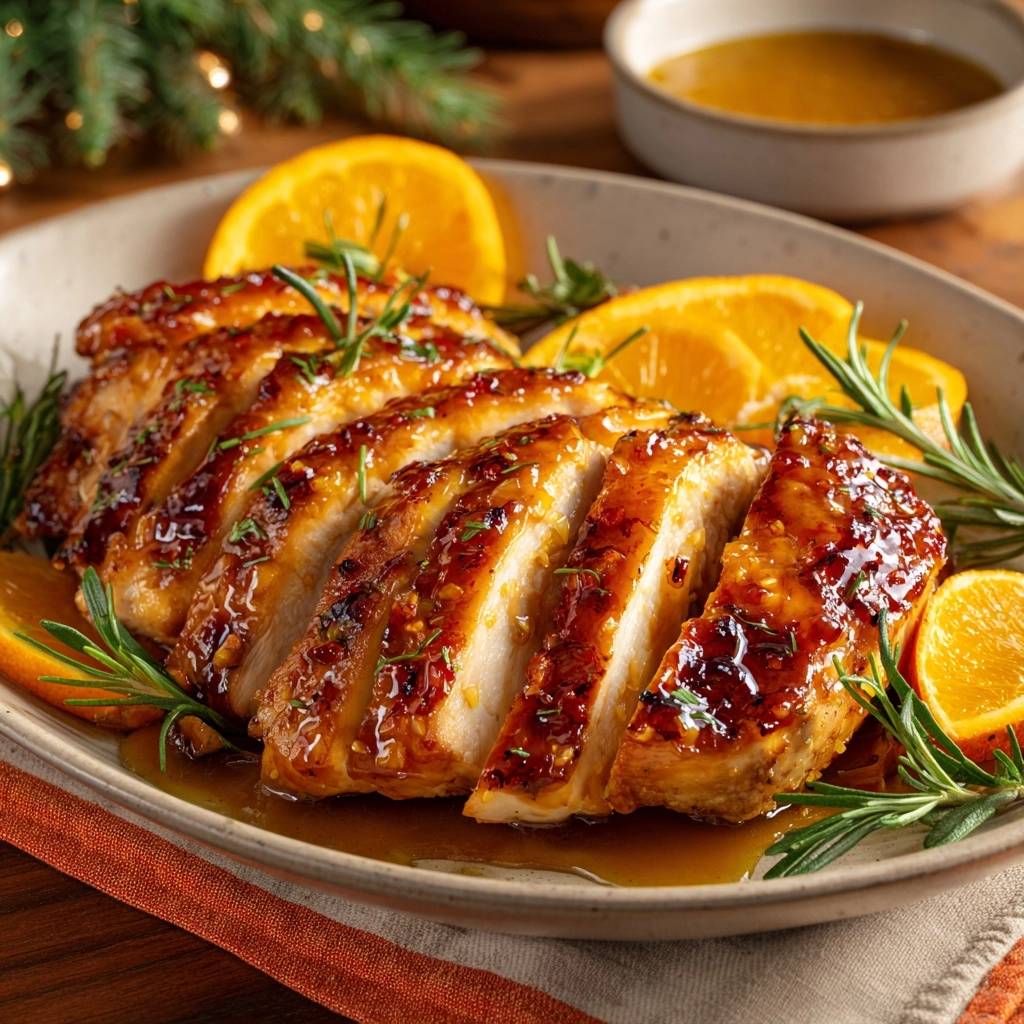
Nothing ruins a holiday meal faster than dry chicken breasts. You’ve been there, right? That tough, flavorless bite that everyone pokes at politely. But this orange rosemary glazed chicken changes everything. You’ll have juicy, tender perfection on the table in just 45 minutes for 4 servings.
Here’s why it works so well. A quick citrus brine locks in moisture with orange juice’s acids and salt’s pull, while a fast sear builds a golden crust. Then, low baking under a shiny glaze seals the deal. Plus, it’s packed with protein and a vitamin C boost from fresh oranges.
The real game-changer? Pounding the breasts to an even 1/2-inch thickness before brining. It ensures no dry edges and perfect searing every time. You’ll taste the difference immediately.
Why Citrus Brine Transforms Chicken
Acid-Salt Magic for Juiciness
Fresh orange juice brings citric acid that gently tenderizes chicken proteins. It breaks them down just enough without turning the meat mushy. Meanwhile, salt pulls moisture into the cells through osmosis, so your chicken stays juicy even after cooking.
Compared to a plain salt brine, this citrus version infuses bright flavor right away. However, stick to 30 minutes max. Longer risks over-tenderizing, leaving you with a mealy texture. That’s the science that makes this foolproof.
Pounding Technique for Even Cooking
Start by wrapping each chicken breast in plastic. Then, gently pound to 1/2-inch thickness with a meat mallet’s flat side. You want uniform pieces, so the brine penetrates evenly and cooking finishes at the same time.
This prevents those dry outer edges while the center catches up. No mallet? Use a rolling pin or heavy pan. In addition, it creates more surface for that irresistible sear.
Key Ingredients for Orange Rosemary Glazed Chicken
Fresh Oranges vs Bottled Juice
Grab two large fresh oranges for about 1 cup juice total. They deliver zest-like brightness and natural pulp that thickens the glaze beautifully. Bottled juice often tastes flat with additives that dull the flavor.
Therefore, squeeze them yourself for that vibrant tang. In season, try blood oranges for a deeper color and subtle berry note. Slice extras for garnish to amp up the presentation.
Herb and Aromatics Breakdown
Fresh rosemary sprigs and chopped leaves layer piney, woodsy notes that perfectly balance the citrus. Four sprigs go into the pan for aroma, while 1 tablespoon chopped sticks to the chicken for bite.
Minced garlic adds savory depth without overpowering. Use extra-virgin olive oil for searing its high smoke point, and honey triggers caramelization in the glaze. These ratios for 4 breasts keep everything balanced and bold.
Chicken Breast Selection Guide
Pick 6-ounce boneless, skinless breasts for quick, even cooking. Fresh ones yield the best texture, but if thawing frozen, do it in the fridge overnight. Organic often stays juicier due to less processing.
Season with 1 teaspoon salt and 1/2 teaspoon pepper total. That amount enhances natural flavors without overwhelming the orange rosemary star.
This method of getting a crisp sear also works beautifully for these lemon thyme glazed chicken thighs.
Brining Phase: Locking in Orange Flavor
Whisking the Brine Solution
Juice one orange for 1/2 cup, then whisk with 1 tablespoon olive oil, 1/2 teaspoon salt, and 1 minced garlic clove. The oil emulsifies everything for even coating. Whisk vigorously until it looks slightly cloudy and uniform.
A medium bowl works best. You’ll smell that fresh citrus punch right away, signaling it’s ready.
Marinating and Pat-Dry Process
Submerge pounded chicken in the brine, cover, and fridge for 30 minutes. Flip halfway for full contact. Excess moisture on the surface? Pat dry thoroughly with paper towels afterward.
This step is crucial. Otherwise, it steams instead of searing, losing that crisp crust. Plastic wrap keeps things tidy and contained.
Searing for Golden Crust
Skillet and Oil Prep Essentials
Choose a large oven-safe skillet, like cast iron, for seamless stove-to-oven. Heat 1 tablespoon olive oil over medium-high until it shimmers and ripples. That’s your cue it’s hot enough.
Don’t overcrowd the pan. Cook in batches if needed. This ensures a proper sear instead of steaming.
Seasoning and 3-Minute Sear
After patting dry, rub chicken with remaining salt, pepper, chopped rosemary, and garlic. Sear 3 minutes per side until golden-brown. Listen for that sizzle, and see the Maillard reaction create flavor-packed crust.
Check internal temp around 140F pre-oven. It finishes cooking gently later for ultimate juiciness.
Glaze Creation and Oven Baking
Quick Orange Honey Glaze Mix
While searing, juice the second orange for 1/2 cup and whisk with 2 tablespoons honey plus 1 tablespoon olive oil. It should coat the back of a spoon thickly. Taste and adjust if you want more tang or sweet.
This happens fast, so multitasking keeps things efficient.
Baking with Rosemary Sprigs
Preheat oven to 375F. Brush chicken with half the glaze, tuck rosemary sprigs around edges. Bake 8-10 minutes, brushing with remaining glaze halfway.
Use a thermometer for 165F internal. Pan juices will bubble and concentrate into a glossy sauce. Rest 5 minutes to let juices redistribute. Oh man, the aroma alone will have everyone hovering.
If you enjoy the bright citrus notes in this glaze, you’ll love these cranberry orange chicken thighs for a similar flavor twist.
Science of Perfectly Juicy Glazed Chicken
Brine vs Sear Temperature Dynamics
The brine’s low pH tenderizes without breaking down proteins too far. Then, high-heat sear creates a Maillard barrier that traps moisture inside. Low 375F bake gently finishes without drying out.
Hit exactly 165F, and you maximize juiciness. Going higher squeezes out those precious liquids. That’s why thermometers are non-negotiable here.
Glaze Caramelization Chemistry
Honey’s sugars reduce with citrus into a sticky lacquer as it bakes. Rosemary’s essential oils release in the heat, mingling with garlic for depth. Resting lets juices flow back into the meat.
Slice against the grain for even more tenderness. The result? Glossy, crave-worthy bites every time.
Avoiding Common Mistakes in Glazed Chicken
Over-Brining Pitfalls
Brine longer than 30 minutes, and the acid makes chicken mushy. You’ll notice a soft, almost stringy texture. Stick to the timer, and always pat dry to avoid steaming.
If it happens, shorten next time. Fresh batches always outperform.
Baking Temp and Thermometer Errors
Oven over 375F dries the edges fast. No thermometer? You risk undercooking or overdoing it. Skipping the 5-minute rest lets juices escape on the board.
Pro tip: Foil tent during rest to keep heat gentle.
Flavor Variations for Orange Rosemary Glaze
Citrus Twists and Herb Swaps
Mix lemon and lime juice for a sharper tang. Swap rosemary for thyme’s earthier vibe, or add grated ginger for spice. Tofu works great too, pressed and brined the same way for vegan juicy results.
These tweaks keep it exciting without straying far.
Sweetener and Thickness Adjustments
Maple syrup replaces honey for a woodsy note. Want thicker glaze? Stir in a cornstarch slurry before brushing. Low-carb? Erythritol caramelizes similarly.
Test small batches first to nail your perfect balance.
What to Serve With Orange Rosemary Chicken
This citrus-and-herb chicken pairs nicely with something soft to soak up the glaze. Two options that work well:
- The Savory Cranberry Brie Monkey Bread brings a tangy, cheesy pull-apart that echoes the orange notes without competing.
- For a simpler side, the Soft Buttery Garlic Herb Dinner Rolls add a mild garlic warmth and a tender texture to mop up the glaze.
Ideal Pairings for Glazed Chicken
Vegetable and Grain Sides
Roast root veggies like carrots in the pan juices for absorbed flavor. Quinoa or wild rice adds nutty texture contrast. A simple citrus arugula salad cuts the richness perfectly.
These sides elevate weeknight dinners to special status.
Grape juice and Simple Starters
Crisp sparkling grape juice mirrors the citrus notes beautifully. Start with grilled asparagus or a green salad drizzled in olive oil. Keep it light to let the chicken shine.
Storage and Reheating Guide
Make-Ahead and Freezer Tips
Store leftovers in an airtight container in the fridge up to 3 days. For freezing, portion unglazed chicken up to 2 months; thaw overnight and re-glaze. Avoid freezing the full dish, as glaze can separate.
Label with dates for easy tracking.
Reheating Without Drying
Best in a 300F oven covered with foil for 10-15 minutes. Add a splash of broth if needed. Microwave works in a pinch but covered and stirred, though it softens the crust.
Revive with extra fresh glaze for that just-baked shine.
Orange Rosemary Glazed Chicken FAQ
Can I Use Bone-In Chicken?
Yes, but increase baking to 18-22 minutes since bones slow cooking. Brine penetrates less, so pound thinner if possible. It stays juicier overall, though skinless is easier for even glazing.
Substitute Dried Rosemary?
Use 1 teaspoon dried per fresh sprig, but rehydrate in warm orange juice first for better oil release. Fresh wins for vibrant pine flavor and aroma. Dried works in a pinch without much loss.
Gluten-Free or Dairy-Free?
This recipe is naturally gluten-free and dairy-free. Just check your honey source for purity. No adjustments needed for either diet.
Scale for Larger Crowds?
Double the brine and glaze, but sear in batches to avoid steaming. For 8+, switch to sheet pans in the oven after initial sear. Maintain brine ratios for juiciness.
Why Pound the Breasts?
Pounding creates even 1/2-inch thickness for uniform brining and cooking. It prevents dry edges and ensures the whole breast hits 165F together. Brine soaks in faster too.
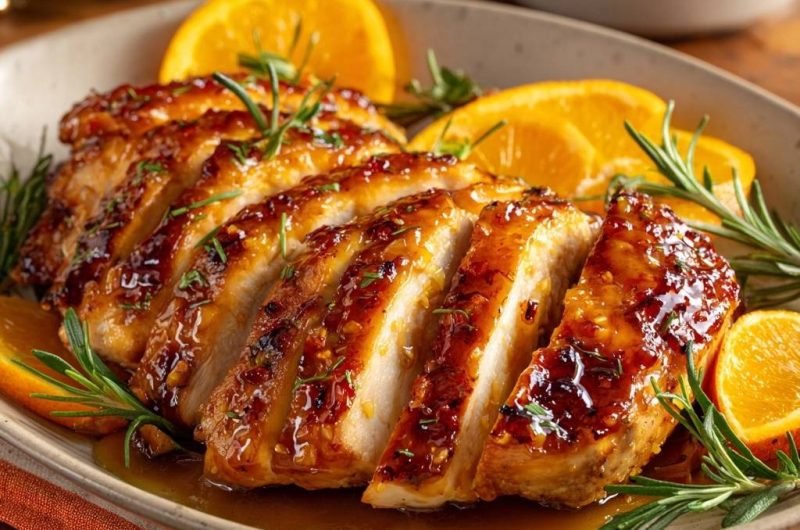
Orange Rosemary Chicken
Course: Main CourseCuisine: AmericanDifficulty: medium4
servings40
minutes20
minutes450
kcal60
MinutesFix dry chicken forever with a quick citrus brine, sear, and low bake under a glossy orange-rosemary glaze for juicy, tender perfection.
Ingredients
4 boneless skinless chicken breasts (about 6 oz each)
2 large oranges (juice from both, plus slices for garnish and glaze)
3 tablespoons olive oil, divided
4 sprigs fresh rosemary (plus 1 tablespoon chopped leaves)
2 garlic cloves, minced
2 tablespoons honey
1 teaspoon salt
1/2 teaspoon black pepper
Directions
- Make the brine to solve dryness: In a bowl, whisk 1/2 cup fresh orange juice (from 1 orange), 1 tablespoon olive oil, 1/2 teaspoon salt, and 1 minced garlic clove. Pound chicken breasts to even 1/2-inch thickness with a meat mallet (wrap in plastic first). Submerge in brine, cover, and marinate in fridge for 30 minutes. This acid-salt combo tenderizes and moisture-locks without overcooking issues. Pat dry thoroughly after.
- Preheat oven to 375F. Heat 1 tablespoon olive oil in large oven-safe skillet over medium-high. Season chicken with remaining salt, pepper, chopped rosemary, and remaining minced garlic. Sear 3 minutes per side until golden (don’t overcrowd).
- While searing, make glaze: Juice remaining orange (about 1/2 cup), mix with honey and 1 tablespoon olive oil in small bowl.
- Remove skillet from heat, brush chicken generously with half the glaze. Add rosemary sprigs around edges. Bake 8-10 minutes until internal temp hits 165F (use thermometer for foolproof juiciness). Brush with remaining glaze halfway through.
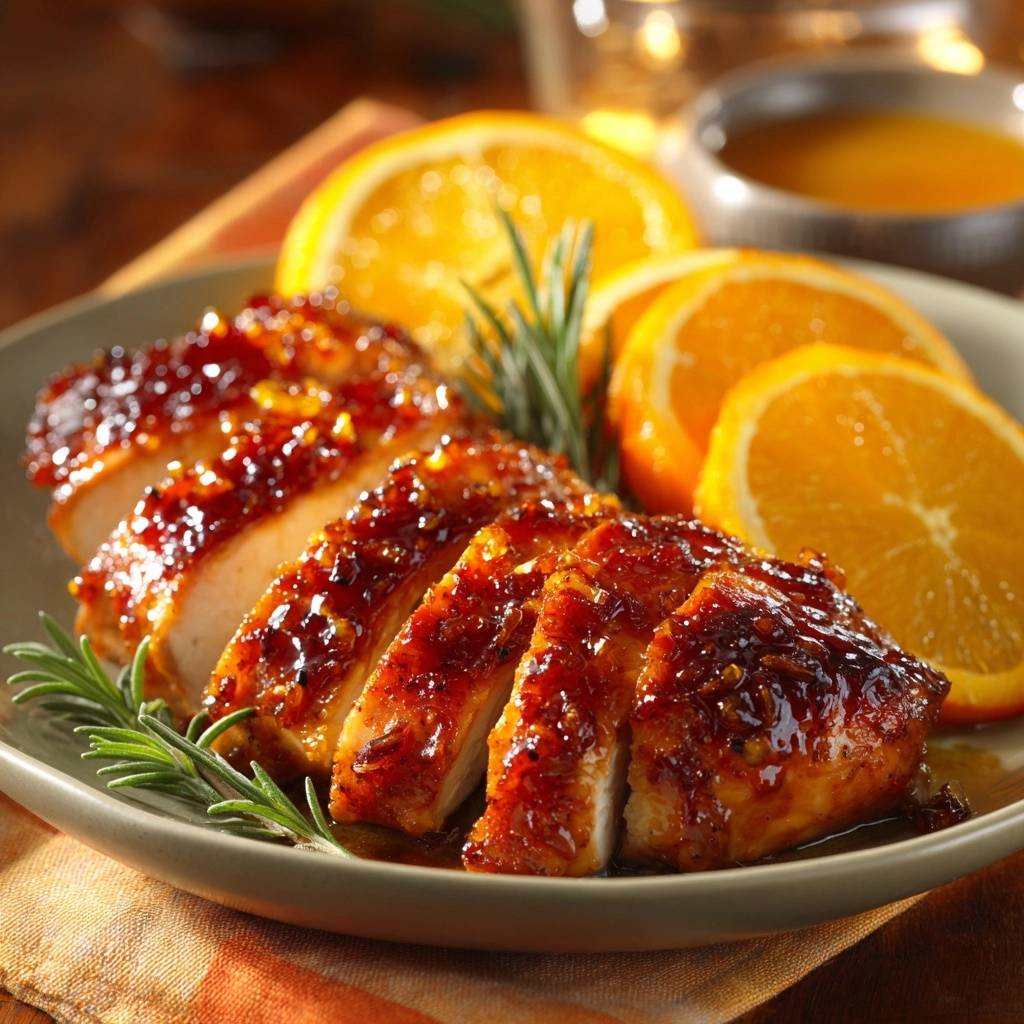
- Rest 5 minutes, slice, and garnish with orange slices and rosemary. Serve with pan juices. Juicy, glossy perfection every time!
Notes
- Pound chicken to even 1/2-inch thickness for uniform cooking. Use a meat thermometer to ensure 165F internal temperature. Resting 5 minutes after baking locks in juices.