Classic Beef Lasagna with Perfect Texture
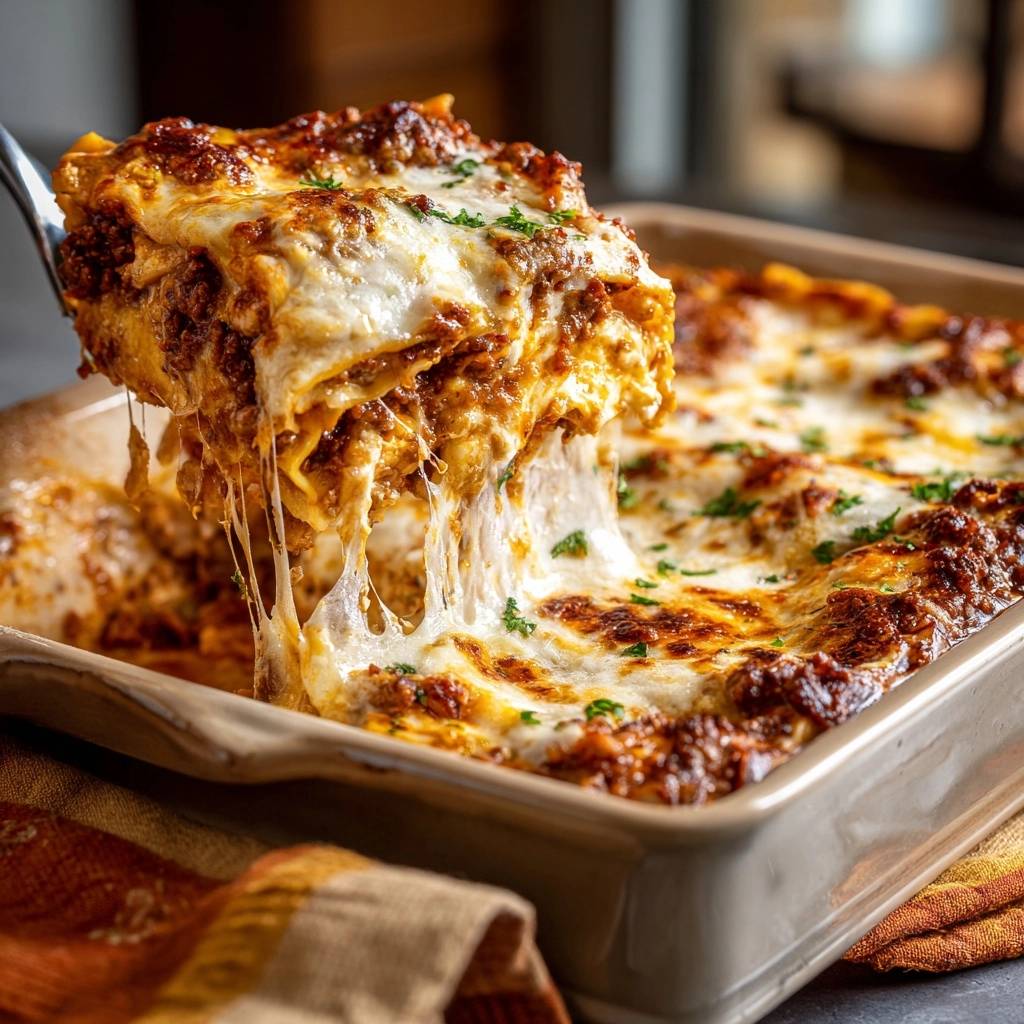
Picture this: you cut into your lasagna, and instead of a clean slice with that glorious cheese pull, you get a watery mess that slides off the plate. Frustrating, right? This classic beef lasagna fixes that every time. You drain the ricotta to kick out excess whey, reduce the sauce until it’s thick and rich, and use a smart layering trick. Suddenly, dinner delivers perfect texture that holds up beautifully.
Why does this matter so much? Most recipes skip these steps, leaving you with soupy layers that drown the flavors. However, this method locks in moisture control from the start. In addition, it amps up the taste because concentrated sauce means bolder beef and herb notes.
Here’s the expertise kicker: pressing the ricotta between paper towels for 10 minutes squeezes out up to half a cup of liquid. That simple move prevents pooling and gives you firm, sliceable lasagna. Oh man, the first bite melts in your mouth with epic cheesiness.
Why Classic Beef Lasagna Fails
Classic beef lasagna often ends up watery because ricotta releases whey during baking, and under-reduced sauce adds extra liquid. For instance, undrained ricotta can dump a half cup of moisture into your layers. Therefore, slices fall apart instead of holding that perfect structure.
Skipping the rest period worsens it too. Hot lasagna steams when cut, turning firm layers soggy. However, this recipe counters every pitfall. You simmer sauce uncovered to evaporate water, drain ricotta thoroughly, and rest the dish 20 minutes. Clean cuts and cheese pull guaranteed.
Sauce Reduction Prevents Soggy Layers
Simmer your sauce uncovered for 20 minutes over medium heat. This evaporates excess water, thickening it to a rich, spoonable consistency. You’ll see it change from soupy to glossy, and the aroma deepens with concentrated tomato sweetness.
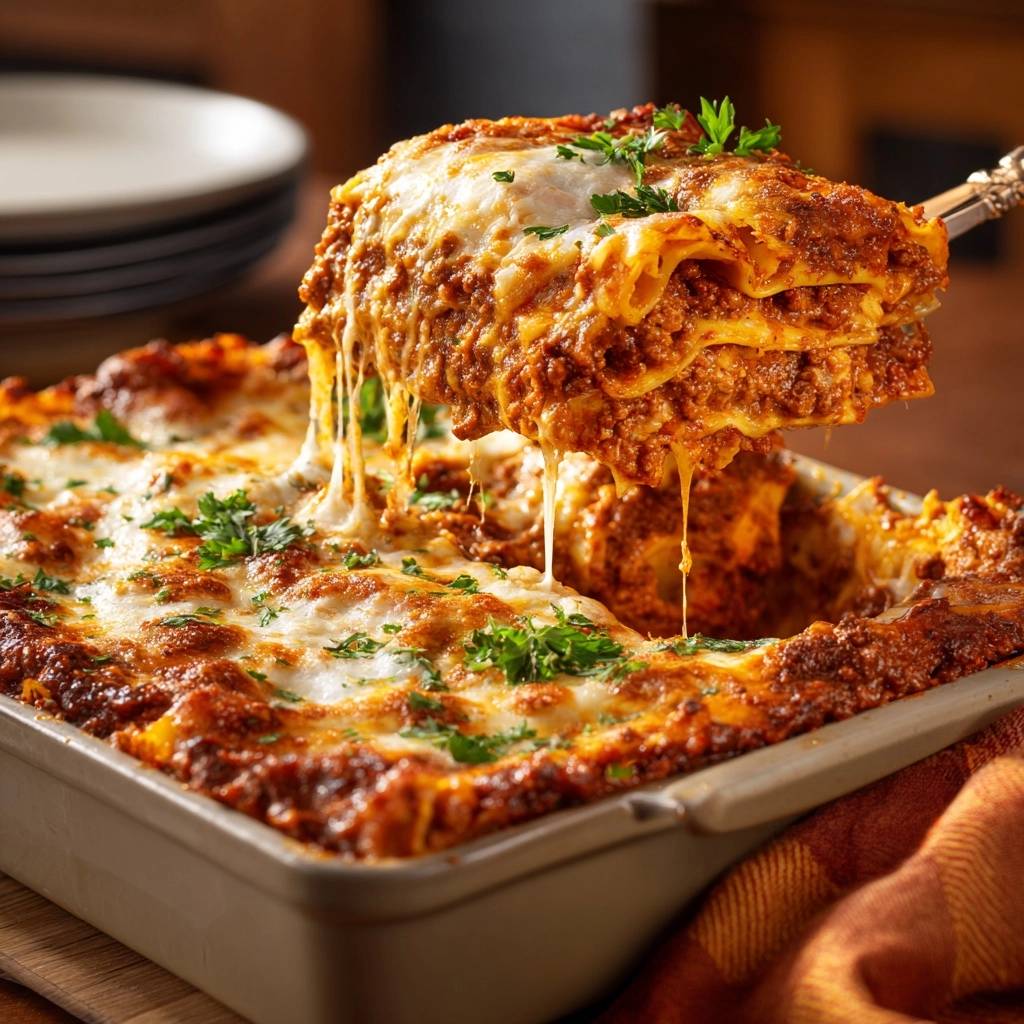
Watery sauce soaks noodles and dilutes flavors, but reduced sauce clings perfectly. In addition, it boosts umami without extra salt. Taste it midway; adjust seasoning if needed.
Ricotta Draining Removes Hidden Moisture
Ricotta holds whey, a watery liquid that separates when heated. Spread your mix on triple paper towels, top with another layer, and press gently for 10 minutes. It loses about 25% weight, yielding a drier, firmer filling.
Before, it’s loose and milky; after, it’s spreadable and stable. This step alone transforms soggy lasagna into sliceable perfection. No more hidden moisture ruining your bake.
Meat Sauce Foundation for Classic Beef Lasagna
Start with 1 pound ground beef for hearty richness that anchors every bite. Finely chop 1 onion and mince 4 garlic cloves; they build sweet, aromatic depth. Then, 28 ounces crushed tomatoes and 15 ounces tomato sauce form the base, while 2 tablespoons tomato paste thickens and umami-fies.
Dried oregano and basil, 2 teaspoons each, deliver balanced Italian flair. Fresh parsley adds brightness later. Drain beef fat after browning to avoid greasiness. No onions? Use shallots. These picks ensure robust flavor without sogginess.
Salt and pepper to taste keep it simple. Pro tip: freshly ground pepper heightens earthiness. This foundation supports no-watery layers perfectly.
Browning Beef Builds Deep Flavor
Heat a large skillet over medium, add beef, onion, and garlic. Cook 8 minutes until beef browns and onions soften. The Maillard reaction creates caramelized bits for savory depth; don’t rush or meat dries out.
Drain fat with a spoon or paper towels. You’ll smell sweet onions mingling with garlic. This step sets up flavor that simmering intensifies.
Herb and Tomato Paste Ratios
Stir in 2 teaspoons oregano and basil; they balance tomato acidity with earthy warmth. Tomato paste, 2 tablespoons, adds concentrated umami without sharpness. Taste tests show this ratio prevents blandness.
Dried herbs pack more punch than fresh here, releasing oils slowly. Adjust if you love extra zing.
Creamy Ricotta Filling Essentials
Mix 15 ounces ricotta with 1 egg for binding power that holds layers during baking. Add 1/4 cup grated Parmesan for nutty sharpness and 1/4 cup chopped fresh parsley for fresh contrast. A pinch of salt ties it together.
Egg sets the structure like cement, preventing crumble. Parmesan melts smoothly, unlike pre-grated which clumps. Drain this mix to nix whey; it’s game-changing.
Pressing Out Whey for Firm Layers
Layer ricotta mix on three paper towels, cover with one more, and press lightly. Wait 10 minutes; whey soaks through, leaving dry filling. Science says heat expels it anyway, but pre-draining stops pooling.
No paper towels? Use cheesecloth over a colander. Before-and-after: soupy to sturdy. This ensures firm, non-runny lasagna.
Layering Technique for Classic Beef Lasagna
Preheat to 375°F. In a 9×13 dish, spread 1 cup meat sauce. Add 4 no-boil noodles edge-to-edge, dollop 1 cup drained ricotta and spread thin, sprinkle 1 cup mozzarella, then 1 cup sauce. Repeat twice, ending with sauce and remaining cheese.
Exact cups prevent dryness or sogginess. Dollop ricotta to avoid clumps; spread evenly for balance. No-boil noodles hydrate from sauce moisture perfectly here.
Pro tip: nudge noodles into place gently. This builds stable layers that bake firm.
No-Boil Noodles Absorb Just Right
No-boil noodles draw moisture from precise sauce layers, cooking tender without mush. Use 12 total, 4 per layer; don’t overlap or edges dry. Exact 1-cup measures keep hydration spot-on.
Too much sauce drowns them; too little toughens. This control yields al dente bite.
Cheese Distribution for Even Melt
Shred 4 cups mozzarella fresh for superior melt. Layer 1 cup per level, saving extra for top. Dollop ricotta prevents pockets; spread for creamy uniformity.
This ratio delivers gooey pulls in every bite without grease.
Baking Science Behind Firm Classic Beef Lasagna
At 375°F, foil-covered baking steams noodles tender for 30 minutes. Uncover for 20 minutes to bubble and golden cheese via convection. Rest 20 minutes; starches set, proteins firm for clean slices.
Lower temps undercook noodles; higher dries edges. This timing nails texture. Garnish with parsley for pop.
Smell the herbs blooming? That’s success. Let it rest tented in foil to stay warm.
Foil vs. Uncovered Bake Phases
Foil traps steam, hydrating no-boil noodles without sogginess. Remove it to crisp cheese and evaporate any steam. 30 then 20 minutes prevents rubbery bits.
Convection browns evenly. Peek at 25 covered if oven runs hot.
Resting Sets Structure
20 minutes lets starch gelatinize and proteins coagulate, locking layers. Cut early, and steam releases, pooling liquid. Test: it firms like pie.
For a lasagna with that same sturdy structure, try this classic beef lasagna recipe.
Tent foil keeps it hot. Patience pays off in perfect slices.
Avoiding Common Classic Beef Lasagna Mistakes
Top errors include skipping ricotta drain, rushing sauce reduction, overloading sauce, ignoring rest, and low oven temp. Undrained ricotta floods layers; quick sauce stays thin. This recipe fixes all with draining, 20-minute simmer, cup measures, 20-minute rest, and 375°F.
Cheap cheese doesn’t melt right. Use quality shreds. Over-saucing drowns; stick to plan for wins.
Overloading Sauce Drowns Layers
Measure 1 cup per layer to just cover noodles. Visual: shiny but not swimming. Excess creates steam pockets that weep.
Reduce longer if saucy. Precision keeps it firm.
Skipping Rest Ruins Slices
Rest 20 minutes for steam escape and structure set. Tent foil serves it warm. Early cuts mean runny mess.
Plan ahead; it’s worth it.
Make-Ahead and Freezing Classic Beef Lasagna
Assemble fully, cover tightly, fridge up to 2 days. Bake later, adding 10 minutes covered. Or freeze assembled up to 3 months; thaw overnight, bake as directed.
Portion into singles for easy family meals. Label with dates. This saves weeknights big time.
Freezer Packaging Without Texture Loss
Double-wrap in plastic then foil to block freezer burn. Thaw in fridge 24 hours. Reheat at 350°F covered 30 minutes, uncover 10.
Noodles hold up great; sauce stays thick.
Pairing Sides with Classic Beef Lasagna
Crisp green salad with vinaigrette slices through richness, refreshing each bite. Garlic bread sopps up sauce perfectly. Roasted veggies add earthiness.
This same technique keeps the noodles from getting mushy in my classic beef lasagna.
Sparkling water with lemon cuts heavy creaminess. Contrasts brighten the hearty beef layers.
What to Serve with Lasagna
A rich, hearty beef lasagna calls for something fresh and bright on the side. These two salads cut through the richness with acidity and crunch.
- Balance the lasagna’s layers with a cool, tangy Italian Tomato Salad that stays crisp and never turns watery.
- Add a creamy, crunchy contrast with Summer Zucchini & Burrata Salad — the burrata softens the bite while the zucchini keeps things light.
Classic Beef Lasagna Flavor Variations
Mix spinach into ricotta for green boost. Swap beef for Italian sausage, keeping fat drain. Add zucchini slices in layers for veggie twist.
Spice with red pepper flakes. Core moisture tricks stay; scale herbs up. Keeps it classic yet fresh.
Equipment Choices for Best Results
Use 9×13 metal dish; it heats faster than glass for even baking. Large skillet fits sauce without spilling. Heavy-duty foil seals steam tight.
No fancy tools needed. Basics deliver pro results.
Frequently Asked Questions About Classic Beef Lasagna
Can I Use Regular Lasagna Noodles?
Yes, parboil 12 noodles 8 minutes until pliable, shock in ice water, pat dry thoroughly. They absorb less sauce, so reduce liquid by 1/2 cup or simmer extra 5 minutes. No-boil simplifies, but regulars give chewier bite if dried well. Adjust bake: covered 35 minutes.
How to Fix Watery Classic Beef Lasagna?
Next time, drain ricotta 15 minutes and simmer sauce 25. For baked watery lasagna, bake uncovered 10-15 more minutes at 375°F to evaporate. Drain excess from dish first. Prevention beats rescue; follow cup measures strictly.
Is Classic Beef Lasagna Gluten-Free Possible?
Absolutely, swap no-boil for gluten-free lasagna noodles; check tomato labels for hidden gluten. Thicken sauce extra with paste since GF noodles absorb differently. Layer same way; bake times hold. Structure firms with draining tricks.
Storage Time for Leftovers?
Store airtight in fridge up to 4 days; reheat slices at 350°F covered 20 minutes. Freezes well assembled or baked up to 3 months; double-wrap, thaw overnight, bake 350°F covered 30-40 minutes. Avoid multiple freezes to keep texture.
Scaling for Smaller 8×8 Dish?
Halve all ingredients for 8×8; use 3 noodle layers (9 total). Sauce: 1/2 cup base, 1/2 cup per layer. Ricotta/mozz half too. Bake same times; it fits snugly. Perfect for 4 servings.
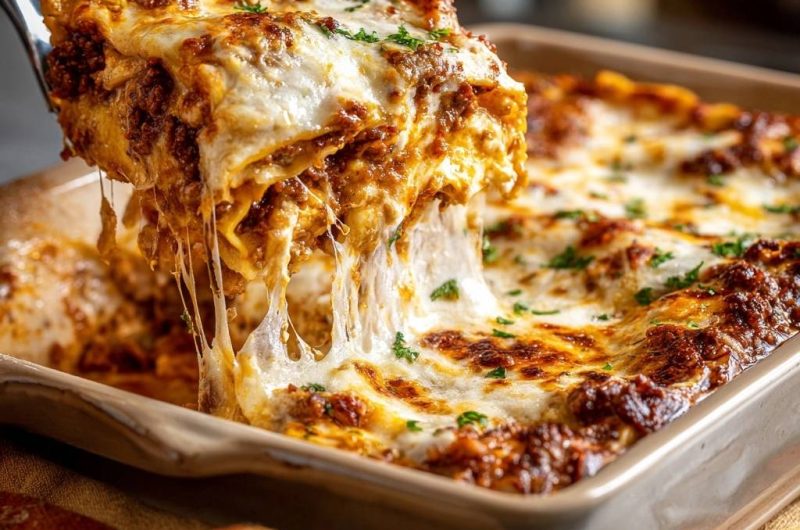
Beef Lasagna
Course: Main CourseCuisine: ItalianDifficulty: medium12
servings30
minutes1
hour450
kcal90
MinutesTired of lasagna that turns into a soupy mess? This foolproof recipe drains the ricotta, reduces the sauce, and uses a simple layering trick to lock in perfect texture every time. No more watery disappointment, just clean slices with epic cheese pull.
Ingredients
1 pound ground beef
1 onion, finely chopped
4 cloves garlic, minced
28 ounces crushed tomatoes
15 ounces tomato sauce
2 tablespoons tomato paste
2 teaspoons dried oregano
2 teaspoons dried basil
Salt and black pepper to taste
15 ounces ricotta cheese
1 egg
1/4 cup grated Parmesan cheese
1/4 cup chopped fresh parsley
12 no-boil lasagna noodles
4 cups shredded mozzarella cheese
Extra parsley for garnish
Directions
- Make the sauce: In a large skillet over medium heat, cook ground beef, onion, and garlic until beef is browned and onions are soft, about 8 minutes. Drain excess fat. Stir in crushed tomatoes, tomato sauce, tomato paste, oregano, basil, salt, and pepper. Simmer uncovered for 20 minutes, stirring occasionally, until thickened. This reduces moisture for no watery layers. Cook until no pink remains and it reaches 160°F (71°C).
- Prep ricotta: While sauce simmers, mix ricotta, egg, Parmesan, parsley, and a pinch of salt in a bowl. Spread mixture on a triple layer of paper towels, top with another layer, and press gently to drain excess whey for 10 minutes. This is the key step, folks, it eliminates up to 1/2 cup liquid that ruins texture.
- Preheat oven to 375 degrees F. Spread 1 cup meat sauce in a 9×13-inch baking dish. Layer 4 no-boil noodles, 1 cup ricotta mixture (dolloped and spread), 1 cup mozzarella, and 1 cup sauce. Repeat layers twice more, ending with remaining sauce and mozzarella on top.
- Cover tightly with foil and bake 30 minutes. Remove foil and bake 20 minutes more until cheese is bubbly and golden. Let rest 20 minutes before slicing, this sets the layers for perfect, non-runny cuts. Garnish with parsley. Slice and serve the lasagna that stays together!
Notes
- Key tips: Drain ricotta on paper towels to remove excess whey, simmer sauce uncovered to thicken, and let lasagna rest 20 minutes before slicing for perfect layers.