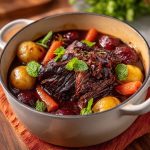
Plum-Braised Beef Stew: Tender Results Guaranteed
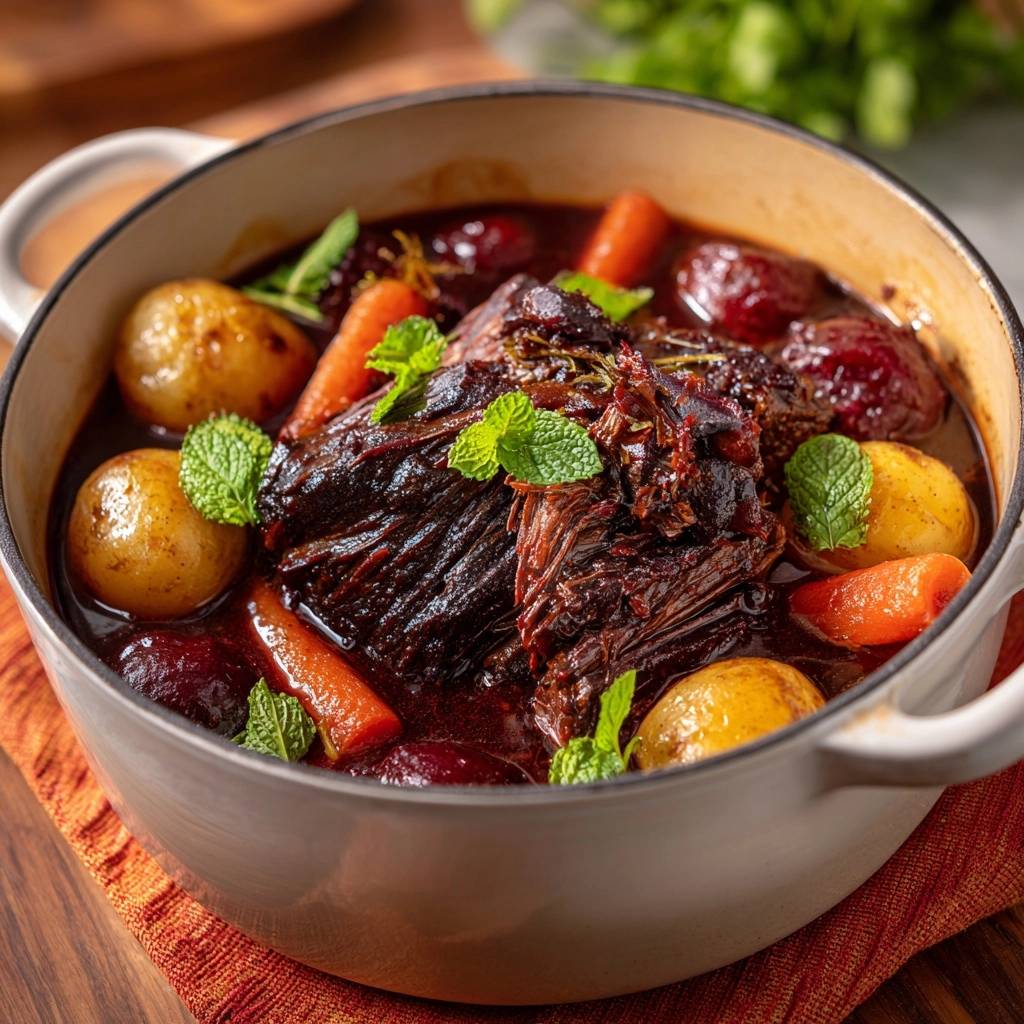
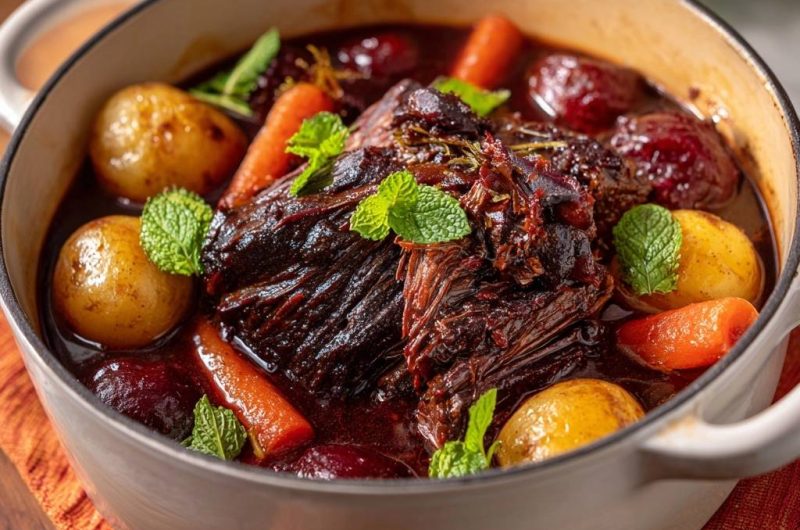
Ever pulled a braised beef stew from the oven only to find tough, chewy chunks that no amount of chewing can conquer? You’re not alone. This plum-braised beef stew fixes that frustration with juicy, fork-tender meat every time. Plums bring natural pectin and acidity that transform the sauce into a moisture-locking hug around the beef.
So why does this fruit-braised stew stand out from the usual suspects? Traditional recipes lean on tomatoes or grape juice, but fresh plums release juices that tenderize collagen without overpowering the savory depth. In addition, the low-and-slow oven braise at 300°F turns tough cuts into melt-in-your-mouth bliss. You’ll crave that sweet-tart glaze clinging to every bite.
Here’s the expertise-proven tip: Sear the beef chunks in batches over medium-high heat until deeply browned. That Maillard reaction builds a flavor foundation no store-bought stew can match, and it kickstarts the moisture seal. Oh man, the aroma alone will have your kitchen smelling like a cozy winter dream.
Why Plums Elevate Braised Beef Stew
Plums’ Role in Moisture and Tenderness
Plums shine in this plum-braised beef stew because they release pectin as they cook. This natural thickener creates a glossy sauce that clings to the beef, locking in juices. Unlike tomato-based stews, plums’ gentle acidity breaks down collagen faster without bitterness.
Therefore, the pH balance from plums tenderizes the meat evenly. You get that silky texture where the beef shreds effortlessly. Fresh plums beat dried ones here; their juice infuses every layer with subtle sweetness.
Beef Chuck vs Short Ribs Selection
Chuck roast works best for plum-braised beef stew due to its rich marbling. That intramuscular fat melts during the braise, basting the meat from within. Short ribs offer even more gelatinous tenderness if you prefer bone-in flavor.
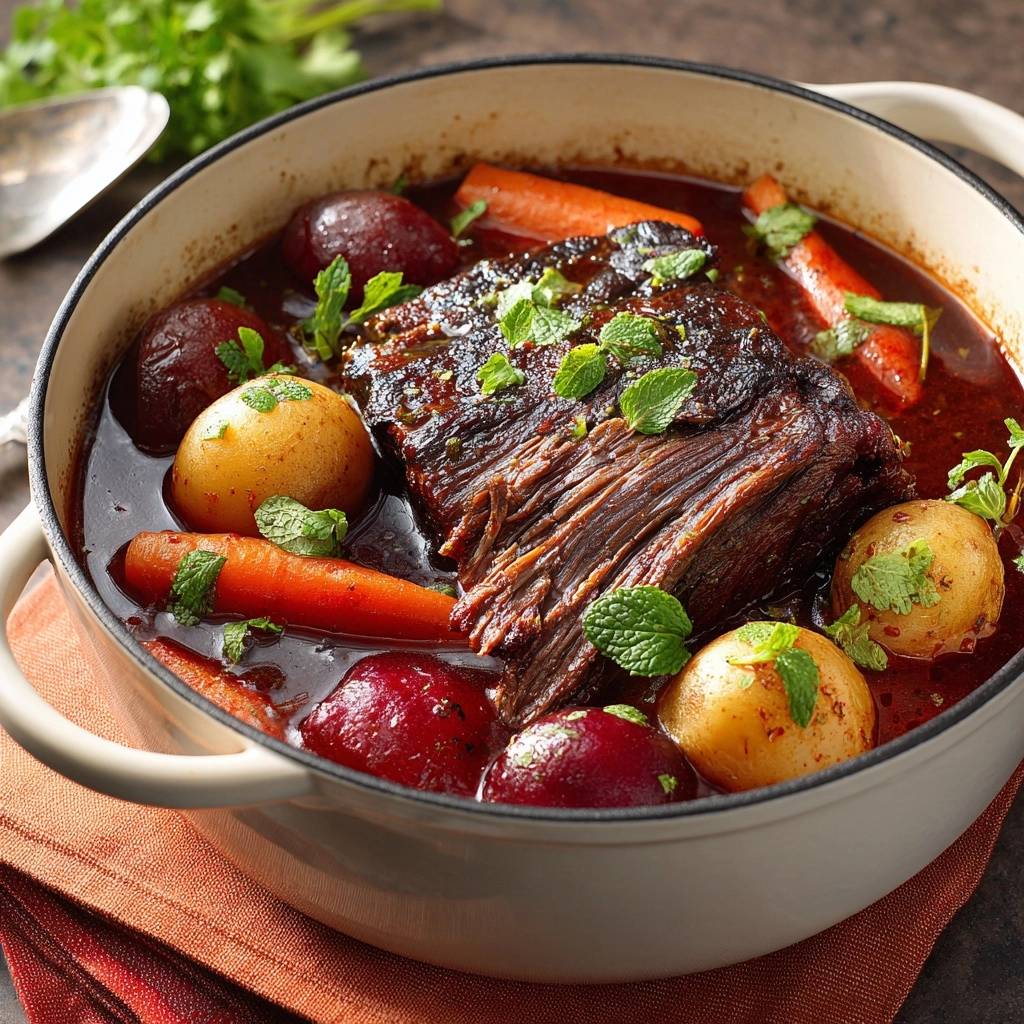
However, choose cuts at least 2 inches thick to avoid dryness. Ask your butcher for well-marbled pieces; they source from local farms for superior quality. Trim excess exterior fat before cubing to prevent greasy sauce.
Key Ingredients for Plum-Braised Beef Stew
Vegetable Base: Potatoes and Carrots
Baby potatoes hold their shape perfectly in long braises, unlike russets that turn mushy. Cut carrots into 2-inch chunks so they cook evenly alongside the beef. This ensures a satisfying bite in your plum-braised beef stew.
In addition, fresh, firm veggies release just enough starch to thicken the broth naturally. Source organic if possible; wash and pat dry before adding. No peeling needed for that earthy flavor boost.
Fresh Plums: Pitting and Halving Technique
Select plums that yield slightly to pressure but aren’t mushy. Slice around the pit with a sharp knife, twist halves apart, and pop the pit out cleanly. Halve them for maximum juice release during the braise.
Prune plums give deeper flavor if available. Therefore, you’ll notice how their skins soften into the sauce, adding color and pectin. Pit over a bowl to catch drips; that juice is gold for the stew.
Herbs and Broth Foundations
Fresh rosemary sprigs deliver piney notes that cut through plum sweetness beautifully. Dried herbs lose potency in long cooks, so stick to fresh. Bruise stems lightly before adding for better oil release.
Low-sodium beef broth lets you control seasoning in plum-braised beef stew. Homemade tastes richer, but quality store-bought works fine. Always taste before serving; adjust salt to highlight those fruit-forward flavors.
Science of Low-Slow Plum Braising
Collagen to Gelatin Transformation
Searing first triggers the Maillard reaction, browning proteins for deep flavor. Then, the 300°F oven slowly converts tough collagen into gelatin over 2.5-3 hours. Steam trapped under the lid keeps everything moist.
This precise temp prevents boiling, which toughens meat. In plum-braised beef stew, plums’ moisture amplifies the effect. You’ll see the beef shrink slightly then plump up juicy as gelatin forms.
Plum Pectin Thickening Mechanism
Heat activates pectin in plum skins, gelling the sauce without flour. Their acidity also tenderizes beef fibers gently. Compare to apple braises; plums offer brighter tartness.
Therefore, no need for cornstarch roux. The result is a velvety broth that coats your spoon. Pro tip: Riper plums thicken faster, so taste midway if adjusting sweetness.
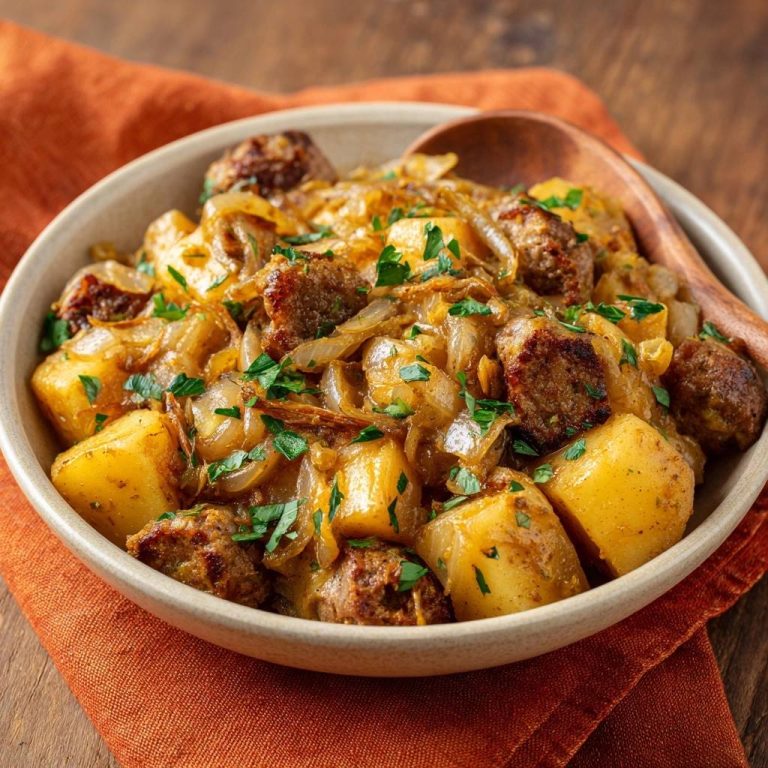
This resting technique also works beautifully for a slow-simmered beef and potato stew.
Essential Equipment for Braised Beef Stew
Dutch Oven Seal and Heat Distribution
Enameled cast iron Dutch ovens rule for plum-braised beef stew. Thick walls distribute heat evenly at low temps, and oven-safe lids create a perfect steam seal. Aim for at least 5-quart size.
Braisers work too if you lack one. However, test the lid fit; a tight seal traps moisture for tender results. Avoid thin pots that hotspot and dry out edges.
Other Tools: Tongs and Oven Thermometer
Long heat-resistant tongs flip beef chunks without overcrowding the pan. An oven thermometer ensures true 300°F; home ovens often run hot. Instant-read checks internal beef temp at 195-205°F for doneness.
Searing Phase: Building Plum-Braised Flavor Base
Seasoning and Batch Searing Method
Season beef generously with 2 teaspoons salt and 1 teaspoon pepper per pound. Heat olive oil until shimmering, not smoking. Sear chunks 4-5 minutes per side in batches; overcrowding steams instead of browns.
Those crispy bits, or fond, dissolve later for umami bomb. Therefore, patience here pays off in richer plum-braised beef stew. Remove to a plate; juices mingle back in.
Post-Sear Deglazing with Vegetables
Lower to medium heat, add carrots, potatoes, plums, and rosemary. Stir 2 minutes to scrape up fond and coat everything in beefy drippings. The kitchen fills with sweet, earthy aromas.
This step amplifies depth without extra stock. In addition, plums start softening, releasing juices early. Don’t rush; that fond is flavor gold.
Oven Braising: Achieving Fork-Tender Beef
Broth Level and Tight Lid Setup
Nestle beef among veggies, pour broth to just cover meat. Bring to a simmer on stovetop; bubbles should barely break surface. Cover tightly; add foil under lid if steam escapes.
Full coverage and seal trap humidity for self-basting in plum-braised beef stew. Pro tip: Peek once at 2 hours to ensure liquid hasn’t evaporated.
Timing and Doneness Check
Braise undisturbed at 300°F for 2.5-3 hours. Test at 2.5 by piercing with a fork; it shreds cleanly when ready. Internal temp hits 195-205°F for pull-apart magic.
Don’t overcook; beef toughens past that. Therefore, oven time varies by cut size, but sensory check trumps clock.
Finishing Touches for Plum-Braised Beef Stew
Fat Skimming and Mint Garnish
Spoon off surface fat for a cleaner sauce; it rises post-braise. Snip fresh mint leaves or chiffonade for bright contrast to rich plum-braised beef. Scatter just before serving.
Mint cuts richness perfectly. That pop of green and cool herbiness elevates the whole dish.
Resting Before Serving
Let stew rest off-heat 10-15 minutes. Flavors meld, sauce thickens slightly. Serving hot from oven makes broth too thin.
If you enjoy this stew’s rich depth, the same slow-cooking method works beautifully for a savory pot roast.
Avoiding Common Braised Beef Stew Pitfalls
Preventing Dry or Tough Meat
Avoid searing overcrowd, low liquid, or loose lids; they dry out beef. Stick to 300°F low-and-slow for collagen melt. In plum-braised beef stew, plums’ moisture helps, but seal matters most.
Therefore, batch sear and check broth level. Undercooking leaves it chewy; patience guarantees tenderness.
Balancing Plum Sweetness and Savory
Taste after 2 hours if plums seem too ripe; splash in 1 teaspoon vinegar. Chunk veggies large to prevent mush. Salt pulls flavors together.
This keeps plum-braised beef stew balanced, not dessert-like. Fresh herbs reinforce savoriness.
Make-Ahead and Storage for Beef Stew
Prep and Braise Scheduling
Sear beef a day ahead; refrigerate. Braise fresh for best texture in plum-braised beef stew. Full stew tastes even better next day as spices bloom.
Therefore, weekend prep feeds weeknights easily. Reheat gently to preserve tenderness.
Freezing and Reheating Guide
Portion cooled stew into freezer bags; flatten for space. Freeze up to 3 months. Thaw overnight in fridge, reheat stovetop with broth splash to loosen sauce.
Potatoes hold up well; avoid microwaving to prevent graininess. Texture stays plush.
Pairing Sides with Plum-Braised Beef Stew
Crusty Bread and Simple Salads
Tear crusty sourdough to sop up that glossy plum sauce. Pair with arugula salad tossed in lemon vinaigrette; greens cut the richness. It’s a match made in comfort food heaven.
Bread’s crunch contrasts stew’s silkiness perfectly. Keep salad light for balance.
Grain or Polenta Options
Creamy polenta absorbs plum-braised flavors like a dream. Stir in butter and cheese at end. Or cook farro pilaf with broth for nutty chew.
Pairing Suggestions
This plum-braised beef stew is rich and savory with a subtle sweetness. To balance the deep flavors, you want something cool, crisp, and tangy on the side.
- For a creamy counterpart that cuts through the stew’s richness, try this Creamy Poppy Seed Coleslaw with its bright dressing and crunchy texture.
- If you prefer more acidity and crunch
Plum-Braised Beef Stew FAQ
How Do I Store Leftovers and Can It Freeze?
Store plum-braised beef stew in an airtight container in the fridge for up to 4 days. It reheats beautifully, with flavors deepening. For freezing, portion into bags flat; it keeps 3 months without texture loss. Thaw overnight and warm gently on stovetop with a splash of broth to revive sauce silkiness. Potatoes stay firm if not over-reheated.
Why Is My Braised Beef Still Tough?
Tough beef usually means insufficient braise time, high oven temp, or loose lid letting steam escape. Ensure 300°F exactly, full liquid coverage, and tight seal for 2.5-3 hours. Test doneness by shredding with a fork; if resistant, return covered for 30 more minutes. Low-and-slow converts collagen fully; rushing skips that step.
What Can I Substitute for Fresh Plums?
Use prune plums if available for similar pectin, or rehydrate 8-10 dried plums in hot broth first and reduce fresh quantity. Apples or pears work but add less acidity; compensate with a lemon squeeze. Stick close to fresh for best moisture-locking in plum-braised beef stew.
Can I Make This in a Slow Cooker?
Absolutely; sear beef and veggies first on stovetop for flavor. Transfer to slow cooker, add broth to cover, and cook low 8 hours or high 5 hours. Reduce liquid by 1/2 cup since less evaporates. Check tenderness at 7 hours; it yields similar juicy results to oven method.
Is Plum-Braised Beef Stew Gluten-Free?
Yes, naturally gluten-free with whole ingredients. Double-check beef broth label for additives. Use tamari if needed elsewhere, but this recipe stays pure. Perfect for gluten-sensitive eaters without tweaks.
How Do I Scale for a Smaller Batch?
Halve all ingredients for 4 servings; use 2.5-quart Dutch oven. Braise time stays 2.5-3 hours, but check liquid midway and add 1/2 cup broth if low. Freeze halves for quick meals; tenderness holds perfectly.
Plum-Braised Beef Stew
Course: Main CourseCuisine: AmericanDifficulty: mediumYields6
servingsPrep Time20
minutesCook Time3
hoursCalories550
kcalTotal Time200
MinutesTired of braised beef that turns out tough and chewy? This recipe nails fork-tender, juicy beef every time with a simple low-and-slow braise in a fruit-enriched sauce that locks in moisture.
Ingredients
3 pounds beef chuck roast or short ribs, cut into large chunks
1 pound baby potatoes
4 large carrots, cut into chunks
8-10 fresh plums, pitted and halved
4 sprigs fresh rosemary
Salt and black pepper to taste
2 tablespoons olive oil
4 cups beef broth
Fresh mint leaves for garnish
Directions
- Season beef generously with salt and pepper. Heat olive oil in a large Dutch oven over medium-high heat. Sear beef chunks in batches until deeply browned on all sides, about 4-5 minutes per batch. Remove and set aside. This builds flavor and starts the moisture-locking process.
- Lower heat to medium. Add carrots, potatoes, plums, and rosemary to the pot. Stir for 2 minutes to coat in beef drippings.
- Return beef to the pot, nestling it among the vegetables. Pour in beef broth until meat is just covered. Bring to a simmer.
- Cover tightly with lid and transfer to a 300°F oven. Braise for 2.5-3 hours undisturbed. The key to no more dry meat: low temp, full coverage, and tight seal trap steam, breaking down collagen into gelatin for juicy tenderness without drying out. Check at 2.5 hours; beef is done when it shreds easily with a fork.
- Remove from oven. Skim excess fat if desired. Garnish with fresh mint. Serve hot.
Notes
- The key to no more dry meat: low temp (300°F), full coverage with broth, and tight seal trap steam, breaking down collagen into gelatin for juicy tenderness.