Mastering Creamy Spinach and Bacon Rigatoni Without the Watery Mess
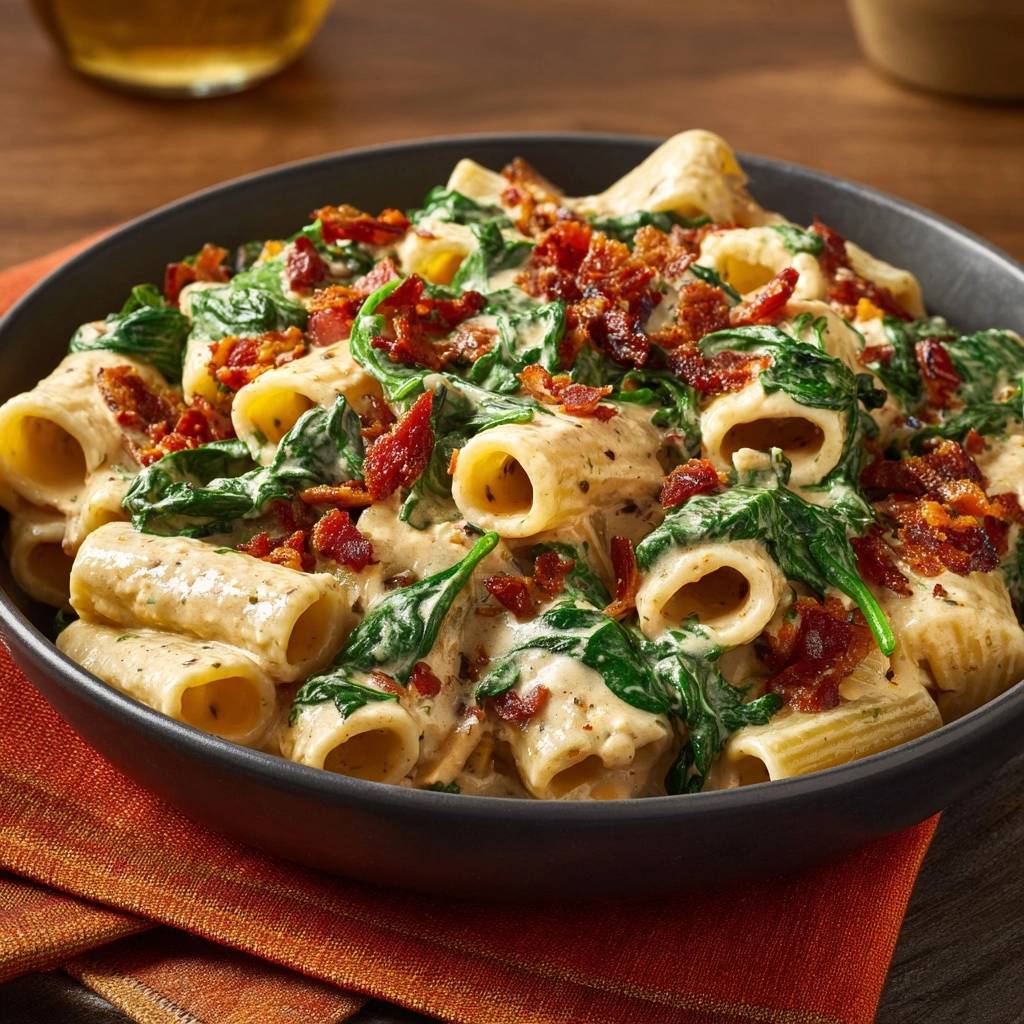
We’ve all been there. You spend thirty minutes at the stove dreaming of a velvety, decadent pasta, only to plate it and watch a thin, grey puddle form at the bottom of the bowl. It’s frustrating when a cream sauce breaks or turns into a watery soup the moment the vegetables hit the pan. This Creamy Spinach and Bacon Rigatoni is designed specifically to end that heartbreak by focusing on a stable, restaurant-grade emulsion.
The secret lies in the contrast of textures. You have the smoky, shatteringly crisp thick-cut bacon playing against the tender bite of rigatoni and a sauce that actually clings to the pasta. By controlling the moisture release of the greens and using the natural starches from the cooking water, we create a glaze that is thick, glossy, and incredibly rich. It’s the kind of comfort food that feels sophisticated because the technique is flawless.
If you want to ensure your sauce never breaks, remember this one rule: never let the cream reach a rolling boil once you’ve added the cheese. High heat is the enemy of a smooth cheese sauce, as it causes the proteins in the parmesan to clump and the fats to separate. Keep the heat low and gentle, and you’ll be rewarded with a silkiness that rivals any high-end Italian bistro.
The Anatomy of a Non-Watery Cream Sauce
Creating a sauce that stays thick requires a basic understanding of emulsion. In this recipe, we are forcing fat and water to play nice together. The heavy cream and parmesan provide the fat, while the reserved pasta water provides the liquid. Without a binding agent, these two would stay separate, leaving you with a greasy mess. However, the starchy water acts as a bridge, helping the fats and liquids bond into a cohesive, creamy coating.
Reduction is your best friend when building flavor and viscosity. When you simmer the heavy cream and milk for a few minutes before adding the cheese, you’re evaporating excess water. This concentrates the dairy solids and creates a naturally thicker base. Therefore, skipping the reduction step usually results in a sauce that feels “thin” on the tongue, even if you add extra cheese later.
If you enjoy the smoky richness of bacon in pasta, you’ll love this creamy shrimp bacon fettuccine alfredo for a similar hearty twist.
Furthermore, the timing of the starch addition is critical. By tossing the pasta vigorously in the skillet with that splash of starchy water, you’re creating a mechanical emulsion. The friction of the pasta rubbing against the pan, combined with the heat and the starch, creates a velvet-like finish. This isn’t just a sauce sitting on top of noodles; it’s a sauce that has become one with the pasta.
Why Rigatoni is the Superior Pasta Shape
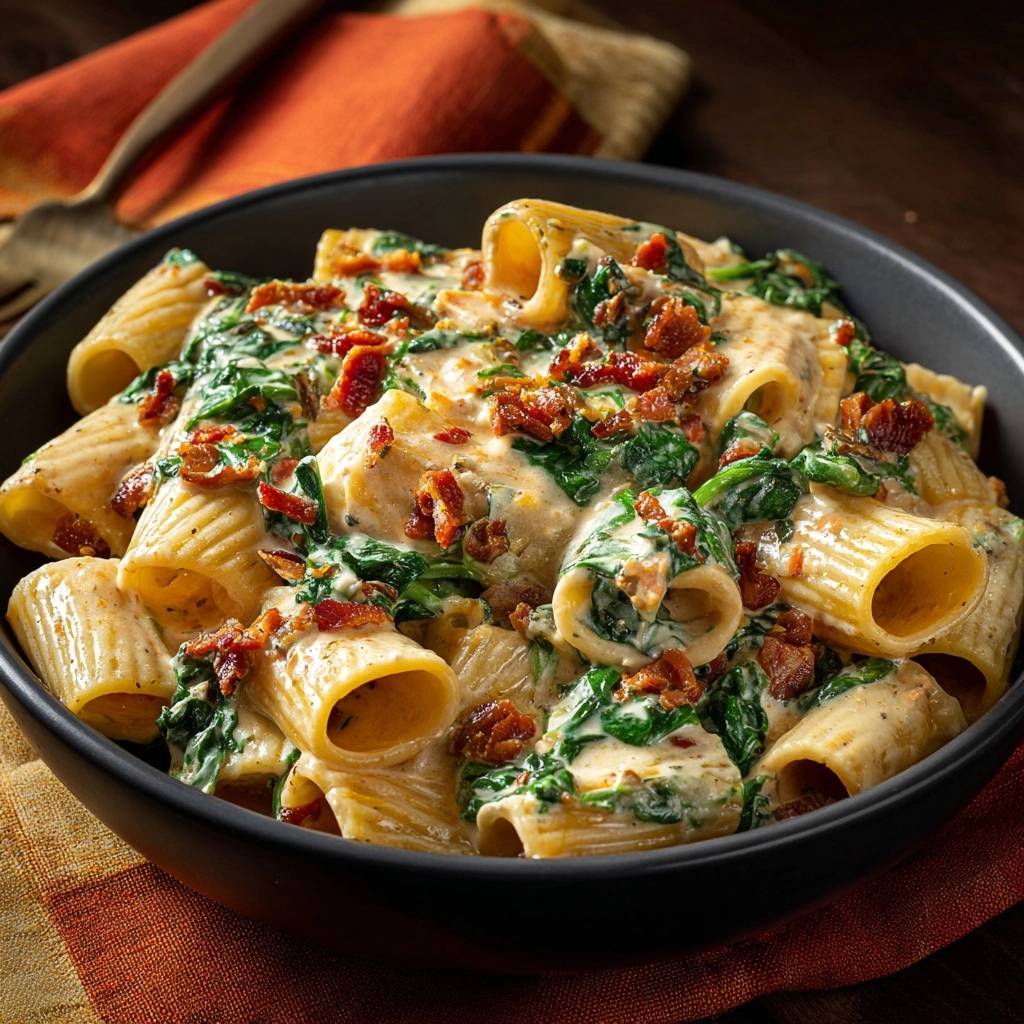
While you could technically use any noodle, rigatoni is the undisputed king for heavy cream sauces. Its large central cavity acts like a pipe, trapping bits of crispy bacon and wilted spinach inside every bite. This ensures you get a bit of everything in one forkful rather than having all your toppings sink to the bottom of the bowl.
Additionally, the ridges on the outside of rigatoni (the “rigate” part) provide extra surface area for the sauce to grab onto. Unlike smooth pasta like fettuccine, which can be slippery, the texture of rigatoni creates friction. This structural integrity is vital when dealing with a rich sauce, as it maintains a balanced ratio of pasta to cream in every mouthful.
Essential Components for Creamy Spinach and Bacon Rigatoni
Quality ingredients make a massive difference when the recipe is this simple. Firstly, always reach for heavy cream rather than half-and-half or whole milk alone. The higher fat content in heavy cream makes it much more stable under heat, meaning it’s less likely to curdle or “break” when you add acidic elements or high-heat seasonings.
When it comes to the parmesan, please grate it yourself from a block. Pre-shredded cheeses are coated in potato starch or cellulose to prevent clumping in the bag. Unfortunately, that coating also prevents the cheese from melting smoothly into your sauce, often resulting in a grainy or “sandy” texture. A fine microplane grate will ensure the cheese melts the second it hits the warm cream.
For the bacon, thick-cut is the way to go. It provides a meaty chew that doesn’t get lost once it’s folded into the sauce. If you use thin-cut bacon, it often dissolves into the moisture of the cream, losing that satisfying crunch. Lastly, stick to fresh baby spinach. Frozen spinach is packed with water and will almost certainly turn your beautiful white sauce into a watery, grey mess regardless of your technique.
The Role of Rendered Bacon Fat
Don’t wash that pan after frying the bacon! The “fond,” or those little brown bits stuck to the bottom of the skillet, is concentrated flavor gold. By keeping exactly one tablespoon of the rendered bacon fat to sauté your garlic, you’re layering the smoky essence of the meat directly into the base of the sauce.
This same technique is key to keeping the sauce silky in a creamy bacon spinach rigatoni.
This fat acts as the initial flavor carrier. When the garlic hits that hot bacon fat, it infuses the oil, which then infuses the cream. It creates a depth of flavor that you simply can’t get from butter or olive oil alone. It’s the bridge that connects the salty meat to the sweet cream.
Step-by-Step: Building the Perfect Emulsion
Phase one begins with the par-boil. You must cook your rigatoni for 2 or 3 minutes less than the package says. The pasta should feel slightly too firm to eat. This is intentional because the pasta will finish cooking inside the sauce. This allows the tubes to “drink” the cream, flavored with bacon and garlic, rather than just being coated by it.
Phase two is the reduction. When you add the cream and milk to the skillet, look for small, tight bubbles around the edges. You don’t want a violent, rolling boil, which can scald the dairy. Instead, a gentle simmer for about four minutes will reduce the volume slightly and thicken the consistency. You’ll know it’s ready when it lightly coats the back of a wooden spoon.
Phase three is the marriage of ingredients. This is where the magic happens. Use a spider strainer to move the pasta directly from the water to the cream. That little bit of water clinging to the noodles is actually helpful. Add your reserved half-cup of starchy water and toss vigorously. You want to see the sauce transform from a liquid into a thick, glossy glaze that clings to every ridge.
Handling Spinach to Prevent Moisture Leaks
The most common mistake in this dish is overcooking the spinach. Spinach is mostly water held within delicate cell walls. The moment those walls collapse from too much heat, they dump all that water into your sauce. This is why we only stir the spinach for 30 to 45 seconds.
You are looking for the spinach to just barely wilt and turn a vibrant, bright green. It should still have some structure. If it starts looking dark green and slimy, you’ve gone too far. By adding it at the very last second, you keep the sauce thick and the flavor of the greens fresh and peppery.
Troubleshooting Common Pasta Sauce Failures
If your sauce looks broken or oily, the heat was likely too high when the cheese was added. To fix this, remove the pan from the heat entirely and add a tablespoon of room-temperature heavy cream, whisking rapidly. Often, the shot of cool liquid and the mechanical whisking can pull an emulsion back together.
On the other hand, if the sauce is too thick and won’t move in the pan, don’t panic. Simply add more pasta water, one tablespoon at a time. The starch in the water will loosen the sauce without making it watery. It’s a delicate balance, so go slow. You can always add more, but you can’t take it out.
If the sauce feels bland, it usually needs more salt or acid. While we don’t use lemon here, extra parmesan often does the trick. The cheese is naturally salty and provides the savory “umami” kick that wakes up the heavy cream. Always taste your sauce right before serving to ensure the black pepper and salt levels are perfect.
Flavor Variations and Ingredient Swaps
While this bacon and spinach combo is a classic, you can easily customize the dish. If you want a bit of acidity to cut through the fat, try adding a handful of chopped sun-dried tomatoes. They provide a chewy, tart contrast that pairs beautifully with the smoky bacon. Just be sure to pat them dry if they are packed in oil.
For a protein boost, seared chicken breast strips are a natural fit. Sauté them in the bacon fat before you start the sauce, then set them aside and toss them back in at the end. If you prefer an earthy flavor, sautéed cremini mushrooms can replace the bacon for a different profile, though you’ll lose that specific smoky saltiness.
Herb-wise, dried oregano provides a nice earthy backbone, but fresh basil added at the very end can brighten the whole dish. If you like heat, don’t be shy with the red pepper flakes. They cut through the richness of the heavy cream and keep the dish from feeling too “heavy” on the palate.
What Goes Well With a Creamy Pasta Dish?
When you have a rich, creamy pasta as the main event, bread-based sides help soak up any extra sauce and add a contrast in texture. Here are two options that pair nicely.
- The Savory Cranberry Brie Monkey Bread brings a tangy, cheesy pull-apart that cuts through the creaminess of the pasta.
- For a lighter, crustier side, try the
Get the full recipe in your inbox in seconds – perfect for shopping and cooking.
Rigatoni
Course: Main CourseCuisine: AmericanDifficulty: easy4
servings10
minutes20
minutes620
kcal30
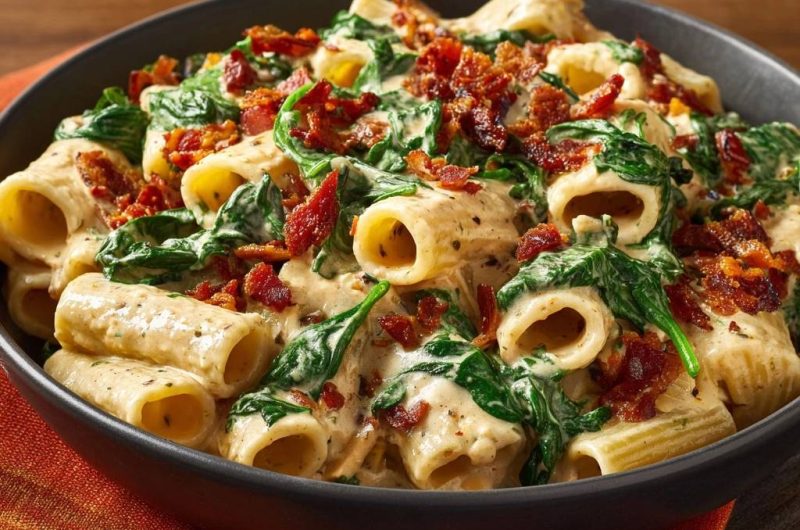
MinutesA rich and savory pasta dish featuring rigatoni coated in a thick parmesan cream sauce, crispy thick-cut bacon, and fresh baby spinach. The recipe focuses on emulsion and proper spinach handling to ensure a perfect sauce consistency.
Ingredients
1 pound rigatoni pasta
8 slices thick-cut bacon, finely chopped
6 ounces fresh baby spinach
1.5 cups heavy cream
1/2 cup whole milk
1.5 cups freshly grated parmesan cheese (finely grated for melting)
4 cloves garlic, minced
1/2 teaspoon freshly cracked black pepper
1/2 teaspoon dried oregano
1/4 teaspoon red pepper flakes (optional)
1/2 cup reserved starchy pasta water
Directions
- Bring a large pot of heavily salted water to a boil. Cook the rigatoni for 2-3 minutes less than the package directions for al dente. The pasta must be firm so it can finish cooking in the sauce, absorbing the cream rather than releasing excess water.
- While the pasta cooks, fry the chopped bacon in a large, deep skillet over medium heat until very crispy and deep red. Remove the bacon with a slotted spoon and drain on paper towels. Discard all but 1 tablespoon of the rendered fat.
- Add the minced garlic to the skillet with the remaining bacon fat and sauté for 30 seconds until fragrant but not browned. Pour in the heavy cream and milk. Bring to a gentle simmer and let it reduce for 3-4 minutes until it begins to thicken slightly.
- Reduce heat to low. Whisk in the parmesan cheese one handful at a time, stirring constantly until completely smooth. Add the black pepper, oregano, and red pepper flakes.
- Add the fresh baby spinach to the sauce. Stir for only 30-45 seconds until just wilted. Do not overcook; over-processing the spinach is the primary cause of watery sauce as the cell walls collapse and release moisture.
- Using a spider strainer, transfer the pasta directly from the water into the sauce. Add 1/4 cup of the reserved starchy pasta water. Increase heat to medium and toss vigorously for 2 minutes. The starch in the water and the surface of the pasta will emulsify with the fats, creating a thick, velvet-like glaze that coats the ridges of the rigatoni.
- If the sauce is too thick, add a tiny splash more pasta water. Fold in half of the crispy bacon.
- Serve immediately in warm bowls, topping generously with the remaining crispy bacon bits and extra cracked black pepper to match the visual texture of the dish.
Notes
- To prevent a watery sauce, ensure the spinach is only wilted for 30 to 45 seconds and use reserved starchy pasta water to emulsify the sauce. Always grate your parmesan fresh for the smoothest melt.