Mastering the Caramel Pecan Crunch Cheesecake
Nothing ruins a beautiful holiday dessert faster than a giant crack running through the center of your cheesecake. Most bakers assume those unsightly splits happen because the oven was too hot, but the truth is usually found in the cooling process. When a cheesecake cools too quickly, it shrinks. If the edges are stuck to the pan, the cake pulls itself apart from the center, resulting in a deep canyon that no amount of topping can truly hide.
The secret to a professional, smooth surface lies in managing thermal shock and surface tension. By using a gradual temperature drop and a specific release technique, you can control how the proteins in the eggs and cream cheese settle. This method ensures the cake remains structurally sound while maintaining a dense, creamy interior. You’re not just baking a dessert; you’re managing the physics of moisture and heat to create a masterpiece.
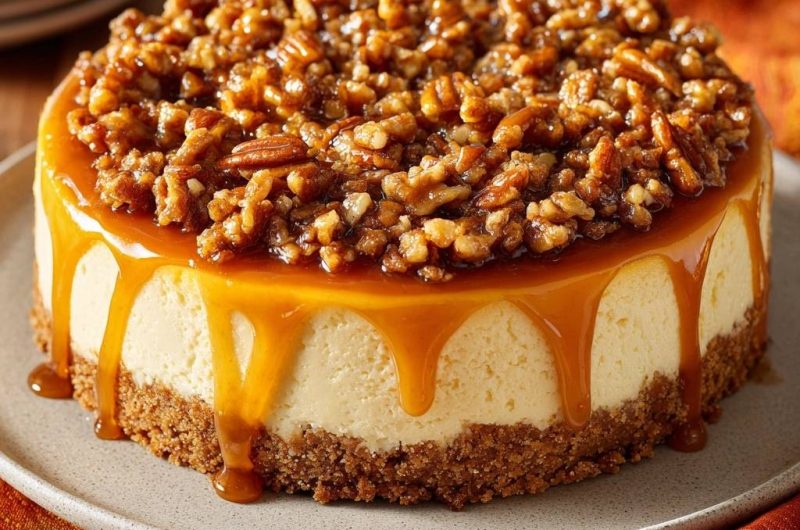
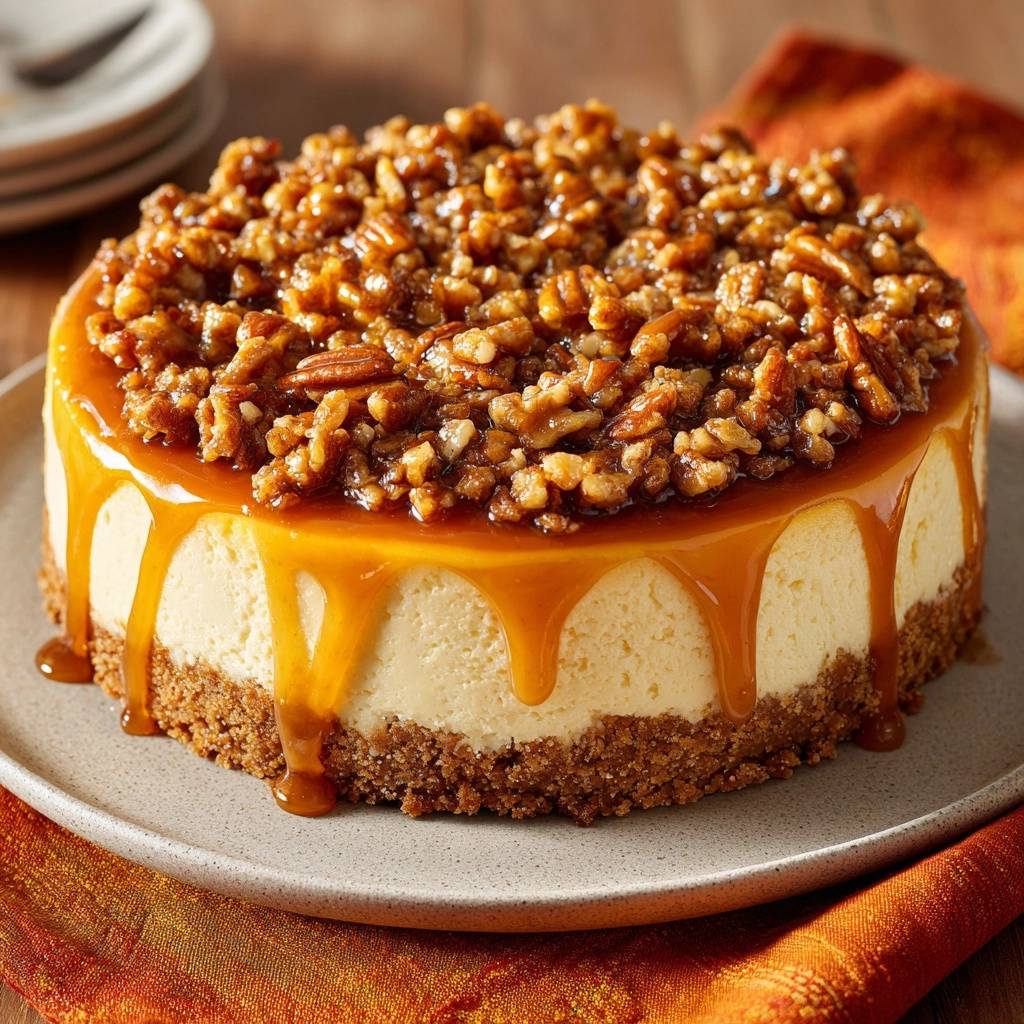
This Caramel Pecan Crunch Cheesecake delivers a sensory experience that balances a heavy, high-walled graham cracker crust with a silky filling. The topping provides a necessary shatter of salted, glazed pecans against the velvet texture of the cake. To achieve this, you must ensure your ingredients are perfectly emulsified before they ever hit the pan. One pro tip: always use a wooden spoon to prop the oven door during the final stage to let the heat escape slowly.
Essential Components for the Perfect Cheesecake Base
A standard crust often feels like an afterthought, but for a heavy cheesecake, the base acts as the foundation. Using 2.5 cups of graham cracker crumbs allows you to build high walls halfway up the sides of the springform pan. This architecture contains the batter and provides a crunchy contrast in every single bite. Without that extra volume of crumbs, the crust often ends up too thin to support the weight of the dense filling.
Salted butter is the preferred choice here because it cuts through the intense sugar in the graham crackers and the caramel topping. When you mix the melted butter with the crumbs and brown sugar, the texture should feel exactly like wet sand. If it’s too dry, the crust will crumble when sliced; if it’s too greasy, it will turn soggy. Pressing the mixture firmly into the pan with the bottom of a measuring cup ensures it stays put.
Pre-baking the crust for 10 minutes is a non-negotiable step for structural integrity. This brief stint in the oven toasts the crumbs and melts the sugar, effectively “gluing” the crust together. If you skip this, the moisture from the cheesecake batter will soak into the crumbs, leaving you with a soft, mushy base instead of a crisp, golden shell. Always let the crust cool completely before adding your filling to prevent the bottom from steaming.
Selecting the Right Cream Cheese and Dairy
For a truly decadent Caramel Pecan Crunch Cheesecake, you must use full-fat ingredients. Low-fat or “light” cream cheese contains more water and fillers, which can prevent the cake from setting properly and result in a grainy texture. The fat in full-fat cream cheese and sour cream provides the structural stability needed to hold that iconic “jiggle” without collapsing once the cake is sliced.
Room temperature ingredients are a functional requirement, not a suggestion. If you try to beat cold cream cheese, you’ll end up with tiny white lumps that are impossible to smooth out later. Over-mixing the batter to get rid of those lumps introduces too much air, which leads to the cake puffing up and then cracking. Sour cream adds a subtle tang that balances the richness of the cheese, offering a more complex flavor profile than heavy cream alone.
That same rich caramel sauce works beautifully in this caramel apple pecan upside-down cake.
The Role of Pecans and Caramel Quality
Texture is everything when it comes to the topping. Using a mix of pecan halves and smaller pieces creates a varied mouthfeel that makes the crunch more interesting. The halves look beautiful for presentation, while the smaller pieces ensure that every forkful has a bit of nutty flavor. Toasting them in butter and sugar creates a candy-like shell that protects the nut from softening once it hits the caramel sauce.
The quality of your caramel sauce dictates the final look of the dish. You need a thick, high-quality sauce that coats the back of a spoon. If the caramel is too thin, it will run straight off the cake and pool at the bottom, potentially making the crust soggy. A thick sauce stays put, allowing the salted pecans to nestle into the glaze. Adding sea salt to the topping is vital; it provides a savory counterpoint that prevents the dessert from feeling cloying.
The Science of the Water Bath (Bain-Marie)
A water bath, or bain-marie, is the most effective way to ensure even baking. Water cannot rise above 212°F, so it acts as a heat buffer for the delicate eggs in the cheesecake. This prevents the outer edges from overcooking and curdling before the center has a chance to set. Without the steam and temperature control of a water bath, the edges of your cheesecake would likely become rubbery and brown.
The biggest risk with a water bath is a soggy crust caused by water leaking into the springform pan. To prevent this, use heavy-duty aluminum foil. Standard foil is too thin and easily develops microscopic tears. Wrap the bottom and sides of the pan in at least two or three overlapping layers of the heavy-duty stuff. This creates a watertight seal that keeps your graham cracker base perfectly dry while the cake steams.
Step-by-Step: Mixing the Caramel Pecan Crunch Cheesecake Filling
The mixing process happens in three distinct phases to ensure a smooth result. In the first phase, you cream the softened cheese and sugar together until the grit of the sugar disappears. This is the only stage where you should use medium speed. You want the mixture to look like thick frosting. Scrape the bowl frequently to ensure no hidden lumps of cheese are clinging to the bottom or the beaters.
The second phase involves adding the sour cream and vanilla. At this point, you are simply emulsifying the fats. The mixture should look glossy and uniform. Finally, the third phase is the most critical: adding the eggs. Turn your mixer to the lowest possible setting. You want to incorporate the eggs just until the yellow streaks vanish. If you beat the eggs too much, you’ll incorporate air bubbles that turn your cheesecake into a souffle, which will inevitably collapse and crack.
The Gradual Cooling Method to Prevent Cracks
Once the timer goes off, you need to check for the “2-inch jiggle.” When you gently shake the pan, the edges should be firm and slightly puffed, but the center should move like set gelatin. If the whole cake ripples, it needs more time. If the center is stiff, it’s overbaked. Once you hit that perfect jiggle, turn the oven off and prop the door open about an inch with a wooden spoon. This allows the temperature to drop slowly over an hour.
If you love the texture of a chilled cheesecake, try this creamy New York cheesecake for another classic twist.
After the hour in the oven is up, move to the “Release Technique.” Take a thin, flexible knife and carefully run it around the inside edge of the pan. Do this while the cake is still warm. As the cheesecake continues to cool on the counter and then in the fridge, it will naturally shrink. By loosening the edges now, the cake can pull inward toward the center without any tension. This is the ultimate insurance policy against surface cracks.
Preparing the Salted Pecan Crunch Topping
Glazing the pecans in a skillet is a quick process that requires your full attention. As the butter melts and the brown sugar begins to liquify, it will transition from a grainy paste to a smooth, bubbling glaze. You must stir constantly to prevent the butter from burning. Once the pecans smell fragrant and are thoroughly coated, remove them from the heat immediately. The sugar can go from caramelized to burnt in a matter of seconds.
Transfer the hot pecans to a sheet of parchment paper and spread them out into a single layer. This is a crucial step for maintaining the “crunch.” If they cool in a big clump, they will stay sticky and soft. As the sugar cools on the parchment, it hardens into a crisp shell. Once they are completely cool to the touch, you can break them apart and pile them onto the cheesecake. This ensures the topping stays crunchy even after it hits the caramel.
Troubleshooting Common Cheesecake Failures
If your cheesecake feels too soft after the recommended chilling time, it was likely undercooked. However, always wait at least 6 to 12 hours before judging the texture, as the fats need time to fully solidify. If the crust is soggy despite the foil, you might have a small leak; next time, try placing the foiled pan inside a slightly larger cake pan, then putting that “sleeve” into the water bath for extra protection.
Lumpy batter is almost always the result of cold ingredients. If you see lumps while mixing, stop and let the bowl sit at room temperature for 20 minutes before continuing. If your caramel is running off the sides too quickly, it might be too warm. Let the caramel sauce cool until it is just barely warm to the touch before drizzling. If it’s still too thin, you can simmer it in a small saucepan for a few minutes to reduce the water content and thicken it up.
Equipment: Why the Springform Pan is Essential
A springform pan is the only way to successfully remove a cheesecake without destroying it. The latch on the side expands the metal ring, allowing you to lift it straight up and off the cake. Light-colored metal pans are generally better for cheesecakes because they absorb heat more slowly and evenly than dark pans. Dark pans can cause the edges of the crust to over-brown before the filling is done.
When choosing a roasting pan for the water bath, make sure it is significantly wider than your 9-inch springform. You need enough space for the hot water to circulate freely around the sides of the cake. If the fit is too tight, the water won’t be able to regulate the temperature effectively. A large rectangular roasting pan or a wide, deep skillet usually works best for this purpose.
What to Serve with Your Cheesecake
A rich caramel pecan crunch cheesecake calls for something tangy or buttery to balance it. These two options lean into complementary fruits and warm spices.
- For a tart contrast that cuts through the sweetness, spread some Creamy Cranberry Apricot Cheese Spread on crackers or toast alongside your cheesecake slice.
- If you want a warm,
Make-Ahead Strategies and Storage Logistics
Cheesecake is the ultimate make-ahead dessert because it actually tastes better after a long chill. While 6 hours is the minimum, a full 24 hours in the refrigerator allows the flavors of the vanilla and cream cheese to meld and the texture to become incredibly dense and creamy. Always store the cake in the refrigerator, covered loosely with foil or plastic wrap once it has cooled completely to prevent it from absorbing fridge odors.
If you want to freeze the cheesecake, do so without the caramel or pecan topping. Wrap the chilled, firm cake tightly in plastic wrap and then a layer of foil. It will stay fresh for up to two months. To serve, thaw it slowly in the refrigerator overnight. Adding the fresh caramel and crunchy pecans just before serving will make the cake taste like it was made that very morning.
Expert Tips for Clean Slicing and Presentation
To get those professional, sharp edges on every slice, use the “Hot Knife Method.” Run a long, thin knife under hot tap water for a few seconds, wipe it dry, and make one clean slice. Wipe the knife clean and reheat it before every single cut. This prevents the creamy filling from sticking to the blade and dragging through the next slice. It takes a little extra time, but the visual result is worth the effort.
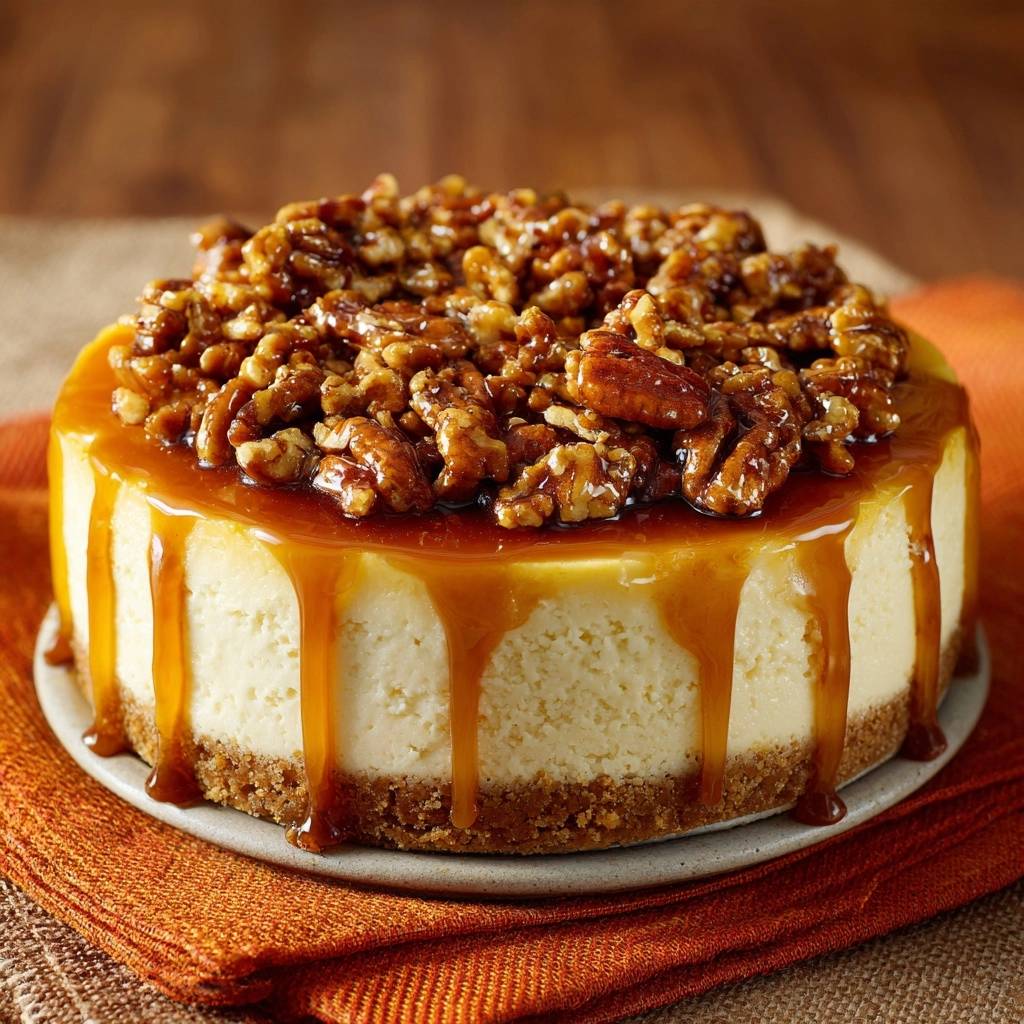
For the best presentation, wait to add the caramel and pecans until you are nearly ready to serve. If the cake sits in the fridge with the topping for more than 48 hours, the pecans may eventually lose their crunch as they absorb moisture from the cheesecake. Piling the pecans high in the center and letting the caramel drip naturally down the sides creates an inviting, rustic look that highlights the homemade quality of the dessert.
Frequently Asked Questions
Can I use a different nut instead of pecans?
Yes, walnuts or hazelnuts make excellent substitutes. However, pecans are traditional because their high oil content creates a buttery flavor that pairs perfectly with brown sugar and caramel. If you use hazelnuts, try to peel the skins off first to avoid any bitter aftertaste. Walnuts will provide a slightly more earthy, tannic flavor that balances the sweetness of the caramel well.
What if I don’t have a roasting pan for the water bath?
If you don’t have a pan large enough to hold the springform, you can place a pan filled with boiling water on the oven rack directly below the cheesecake. This creates a humid environment which helps prevent cracking, but it doesn’t offer the same direct temperature regulation as a true bain-marie. If you use this method, keep a close eye on the cake as it may cook slightly faster.
How do I know if my caramel sauce is thick enough?
Perform the “spoon coating” test. Dip a metal spoon into the room-temperature caramel. It should coat the back of the spoon thickly, and if you run your finger through it, the line should stay clean without the caramel running back together. If it’s too thin, simmer it on the stove for 5-10 minutes to reduce it. Remember that caramel thickens significantly as it cools.
Why did my crust crumble when I sliced it?
A crumbling crust usually means there wasn’t enough “glue” or it wasn’t pressed firmly enough. Ensure you are using the full 8 tablespoons of butter and that you press the crumbs down with significant pressure using a flat-bottomed tool. Also, make sure you don’t over-bake the crust during the initial 10-minute pre-bake, as burnt sugar can become brittle and shatter easily.
Is the sour cream replaceable with Greek yogurt?
You can use full-fat Greek yogurt as a substitute for sour cream, but it will slightly change the mouthfeel. Greek yogurt is generally more acidic and has less fat than sour cream, which can result in a slightly firmer, tangier cake. If you choose this route, make sure the yogurt is plain and full-fat to maintain as much of the original creamy texture as possible.
Cheesecake
Course: DessertCuisine: AmericanDifficulty: mediumYields12
servingsPrep Time25
minutesCook Time1
hour5
minutesCalories580
kcalTotal Time150
MinutesThis decadent cheesecake features a thick graham cracker crust, a creamy vanilla filling, and a crunchy glazed pecan topping. It utilizes a specific water bath and cooling method to ensure a perfectly smooth surface without cracks.
Ingredients
Crust:
2.5 cups graham cracker crumbs (for a thick, high-walled crust)
8 tablespoons melted salted butter
1/3 cup brown sugar
Filling:
32 ounces cream cheese, softened to room temperature
1 cup granulated sugar
1 cup full-fat sour cream, room temperature
1 tablespoon vanilla extract
4 large eggs, room temperature
Topping:
1.5 cups pecan halves and pieces
1/4 cup brown sugar
2 tablespoons butter
1/2 teaspoon sea salt
1 cup thick caramel sauce (warmed slightly for drizzling)
Directions
- Preheat your oven to 325°F (163°C). Mix graham cracker crumbs, melted butter, and brown sugar until it resembles wet sand. Press the mixture firmly into the bottom and halfway up the sides of a 9-inch springform pan. Bake for 10 minutes, then set aside to cool completely. Wrap the outside of the pan in two layers of heavy-duty aluminum foil to prevent water seepage.
- In a large bowl, beat the softened cream cheese and sugar on medium speed until completely smooth and creamy (about 3 minutes). Scrape the sides of the bowl. Add sour cream and vanilla, mixing until just combined.
- Reduce mixer speed to the lowest setting. Add eggs one at a time, mixing just until the yellow disappears. Do not overbeat, as incorporating air causes the cake to puff and then crack during cooling.
- Pour the batter over the cooled crust. Place the foil-wrapped springform pan inside a larger roasting pan. Fill the roasting pan with hot water until it reaches halfway up the sides of the springform pan.
- Bake for 60 to 70 minutes until the edges are set and slightly puffed, but the center still has a 2-inch “jiggle” when gently shaken.
- To solve the cracking problem: Turn off the oven and prop the door open only one inch using a wooden spoon. Let the cheesecake sit in the water bath inside the oven for exactly one hour. This gradual cooling prevents the thermal shock that causes splitting.
- Remove from the oven and immediately run a thin, flexible knife around the edge of the cake to ensure it isn’t sticking to the pan. Let it cool completely on the counter, then refrigerate for at least 6 hours (preferably overnight).
- For the topping: Melt 2 tablespoons of butter in a skillet over medium heat. Add the pecans, brown sugar, and sea salt. Stir constantly for 3-5 minutes until the sugar has melted into a glaze and the pecans are fragrant and toasted. Transfer to parchment paper to cool.
- To assemble: Remove the sides of the springform pan. Pour the caramel sauce over the top of the chilled cheesecake, allowing it to drip naturally down the sides. Pile the glazed pecan crunch mixture high in the center of the cake before serving.
Notes
- To prevent cracks, ensure all filling ingredients are at room temperature before mixing. Use a wooden spoon to prop the oven door open during the cooling phase to avoid thermal shock.