Mastering Hearty Beef Tagliatelle Bolognese
Stop serving pasta that sits in a puddle of thin, flavorless liquid. We’ve all been there, staring at a plate where the meat and sauce have completely separated from the noodles. It’s frustrating when you spend time at the stove only to end up with a watery mess that lacks that deep, savory punch you get at a high-end trattoria.
The secret to a restaurant-quality Bolognese is all about the emulsion. By using a specific starch-binding technique and a slow reduction, you can ensure your sauce clings perfectly to every ribbon of pasta. This creates a rich, velvety finish that stays unified on the plate from the first bite to the last. It’s the difference between a cafeteria meat sauce and a true Hearty Beef Tagliatelle Bolognese.
Expertise in this dish comes down to one counterintuitive rule: don’t drain the fat. While it’s tempting to pour off the liquid after browning your 80/20 beef, that fat is the vehicle for flavor. When you combine it with starchy pasta water and heavy cream at the end, it transforms into a glossy coating rather than a greasy pool. Trust the process and let the science of the kitchen work for you.
The Science of a Non-Watery Bolognese
A broken sauce is usually the result of physics, not just bad luck. In a standard meat sauce, you have water-based ingredients like tomato juice and fat-based ingredients like beef tallow. Naturally, these two don’t want to mix. If you just toss them together, the water will eventually leak out, leaving that dreaded puddle at the bottom of your bowl.
To prevent this, we rely on a stable emulsion. The acidity in the tomatoes helps break down the proteins in the beef, while the slow reduction process evaporates excess water. As the liquid cooks down, the flavors concentrate, and the sauce thickens naturally. The grated carrot plays a hidden role here too, acting as a natural thickener that adds body without the need for cornstarch or flour.
When you reach the end of the simmer, you’ll notice the oil just beginning to separate at the edges of the pan. This is actually a good sign! It means the water has evaporated sufficiently. By adding the pasta and its cooking liquid back into this concentrated base, you re-bind everything into a cohesive, silky masterpiece that won’t break apart on the plate.
Why Starch-Binding Prevents Liquid Separation
Pasta water is often called “liquid gold” for a reason. As the tagliatelle boils, it releases amylose and amylopectin, which are types of starch molecules. These molecules act as a bridge between the oil-based fats from the beef and the water-based tomato juices. When you toss the pasta in the skillet, these starches grab onto both the fat and the water, locking them together in a tight, creamy bond.
Essential Components for Hearty Beef Tagliatelle Bolognese
Choosing the right pasta shape is the first step toward success. While spaghetti is a pantry staple, it’s too thin to support the weight of a chunky, hearty beef sauce. Tagliatelle or pappardelle are superior because their wide, flat surface area acts like a canvas. The sauce has more room to grip the noodle, ensuring you get a perfect ratio of meat to pasta in every forkful.
The quality of your tomatoes will define the final flavor profile. If you can find them, high-quality crushed tomatoes or San Marzano varieties offer a natural sweetness and lower acidity than standard canned marinara. This recipe also relies on heavy cream for its signature “velvety” finish. The dairy rounds out the sharp edges of the tomato and adds a luxurious mouthfeel that makes the dish feel special.
Finally, never reach for the pre-shredded cheese in a green can. Freshly grated Parmesan is non-negotiable here. Pre-shredded cheeses are coated in potato starch or cellulose to prevent clumping in the bag, which means they won’t melt smoothly into your sauce. Freshly grated cheese melts instantly, contributing to the thick, glossy emulsion we’re striving for.
Selecting the Right Beef Blend
For the best results, use an 80/20 ground beef blend. The 20% fat content is essential because fat carries the aromatics of the garlic and onion throughout the entire dish. As the beef browns, the fat renders down and mingles with the tomato paste, creating a base that is deeply savory. A leaner blend, like 90/10, often results in dry, crumbly meat that feels disconnected from the sauce.
The Role of Aromatics and Deglazing Agents
The trinity of onion, garlic, and finely grated carrot forms the aromatic backbone of the Bolognese. The carrot is the secret weapon; it melts into the sauce, providing a subtle sweetness that balances the acidity of the tomatoes. When it comes to deglazing, a rich beef broth with a splash of balsamic vinegar adds savory depth and a sophisticated acidity.
Step-by-Step: Building the Meat Base
Start by heating your oil until it’s shimmering, then add the beef. Here is the key: leave it alone. Use the “undisturbed sear” technique by letting the meat sit for 3 to 4 minutes without stirring. This triggers the Maillard reaction, creating a dark brown crust that packs way more flavor than meat that is simply grayed through. Once that crust forms, you can break it into small crumbles.
After the vegetables have softened, stir in the tomato paste. You want to cook this for about two minutes until it shifts from a bright, vibrant red to a dark “brick red” hue. This step is vital because it caramelizes the sugars in the paste and removes that raw, metallic tin-can taste. You’ll smell the difference as it becomes fragrant and slightly smoky before you add any liquid.
The Reduction and Simmering Phase
Patience is your best friend during the simmering phase. You need at least 25 to 30 minutes for the flavors to truly marry. During this time, the sauce will transform from a loose tomato mixture into a thick, concentrated ragu. Keep the heat low so the sauce bubbles gently; a violent boil will toughen the meat and might cause the sauce to scorch on the bottom of the pan.
Look for the visual indicator of “oil separation” at the edges of the skillet. You’ll see small droplets of reddish oil bubbling up around the perimeter. This signifies that the excess water has evaporated, leaving behind a concentrated beef and tomato base. This is the exact moment your sauce is ready to meet the pasta and begin the final transformation into a glossy emulsion.
Executing the Mantecatura Technique
Mantecatura is the Italian term for the process of finishing pasta in the sauce to create a creamy consistency. To do this correctly, you must cook your tagliatelle “molto al dente.” This means taking it out of the boiling water about 2 to 3 minutes before the package says it’s done. The pasta should still have a firm, almost chalky bite in the very center because it’s going to finish cooking inside the sauce.
Transfer the undercooked noodles directly into the skillet with the meat sauce. Pour in the heavy cream and about half a cup of that starchy reserved pasta water. Now, increase the heat to medium and toss everything vigorously with tongs. You aren’t just mixing; you are beating air and starch into the fats. You’ll see the liquid transform from a thin splash into a thick, creamy coating that clings to every strand of tagliatelle.
Watch the consistency closely. If the sauce looks too “tight” or dry, add another splash of pasta water. The goal is a glossy, fluid movement. Once you remove the pan from the heat and stir in the Parmesan, the sauce will thicken even further. The result is a unified dish where the pasta and sauce are one, rather than two separate components sharing a plate.
Troubleshooting Common Bolognese Issues
If you find your sauce has become too salty, don’t panic. You can often balance the salt by adding an extra splash of heavy cream or a tiny pinch of granulated sugar to counteract the sodium. If the sauce is too thick and won’t coat the noodles, add your reserved pasta water one tablespoon at a time. The starch in the water will loosen the sauce without making it watery.
Sometimes the oil might completely separate, looking greasy rather than creamy. This usually happens if the heat was too high when you added the cheese or cream. To fix a broken sauce, add a splash of very hot water and whisk or toss the pasta vigorously. The rapid movement and extra moisture can often pull the emulsion back together, restoring that silky texture you’re looking for.
Fixing a Lack of Depth
If the sauce tastes “flat” or too much like raw tomatoes after simmering, it likely needs more time or more concentrated flavor. Try stirring in an extra teaspoon of tomato paste and letting it simmer for another 10 minutes. Often, a lack of depth is simply a sign that the water hasn’t evaporated enough to let the beef and aromatics shine.
Serving and Presentation Standards
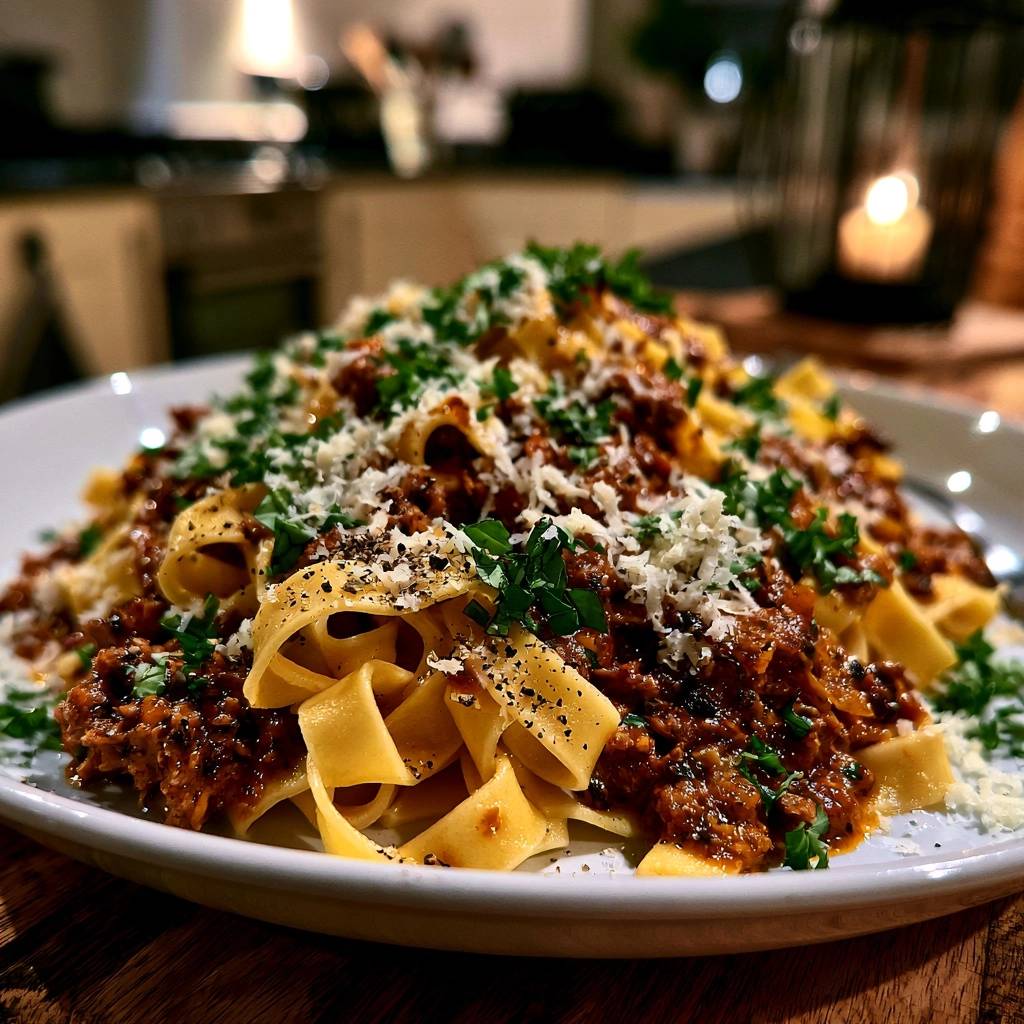
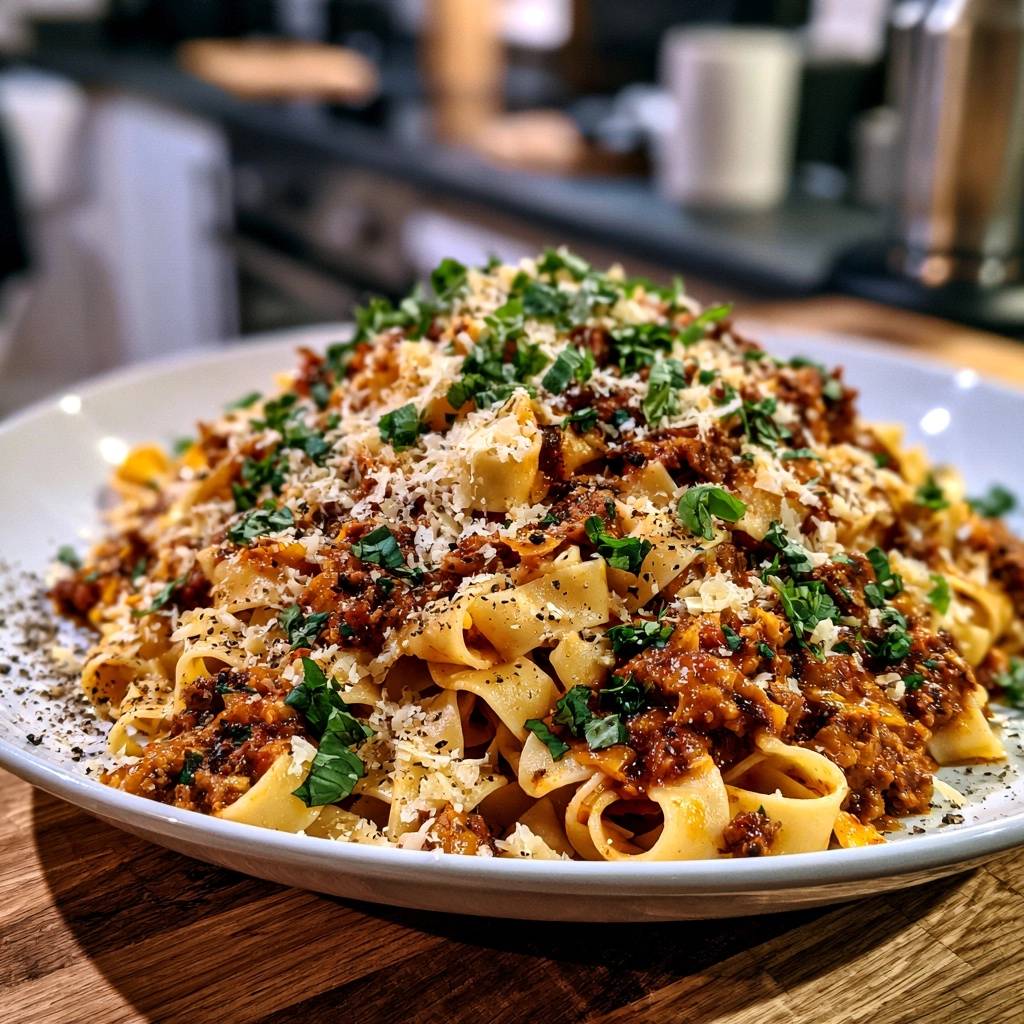
To get that professional look, use a large carving fork or long tongs to twirl the tagliatelle into a high mound in the center of the bowl. This keeps the heat trapped inside the pasta and looks much more appetizing than a flat pile. Spoon any extra meat sauce from the bottom of the pan directly over the top of the mound so it trickles down the sides.
Garnish is not just for looks; it’s for balance. A heavy dusting of fresh parsley adds a bright, grassy note that cuts through the richness of the beef fat. Similarly, a generous amount of coarse cracked black pepper provides a spicy bite that complements the creamy texture. Serve it immediately while the emulsion is at its peak silkiness.
Make Ahead and Storage Instructions
Bolognese sauce is famous for tasting even better the next day. As it sits in the fridge, the aromatics continue to infuse the meat, creating a deeper flavor profile. You can easily make the sauce a day in advance and store it in an airtight container. When you’re ready to eat, simply reheat the sauce in a skillet and cook fresh pasta to finish using the mantecatura technique.
If you have leftovers that are already mixed with pasta, store them in the fridge for up to three days. When reheating, the starches will have tightened up, so you’ll need to add a splash of water or broth to loosen the sauce back to its original consistency. While the sauce itself freezes beautifully for up to three months, I don’t recommend freezing the cooked pasta, as it tends to become mushy and lose its structure.
Expert Tips for Success
Should I use a Dutch Oven?
A Dutch oven is the ideal vessel for this recipe. The heavy cast-iron bottom provides superior heat retention, which ensures the beef browns evenly without dropping the pan temperature. The high sides also help prevent splattering during the reduction phase and give you plenty of room to toss the pasta vigorously without making a mess on your stove.
Can I substitute the Heavy Cream?
You can use whole milk as a lighter alternative, which is actually more traditional in some parts of Italy. However, be aware that you will lose some of that ultra-silky, luxurious mouthfeel that heavy cream provides. Avoid using non-dairy milks like almond or soy; they lack the specific fat structure needed to create a stable emulsion with the beef fat and tomato acid, often resulting in a grainy texture.
Why is my pasta sticking together?
Pasta sticks when there isn’t enough room for it to move or when the water isn’t salty enough. Use a large pot with plenty of water. Never add oil to your pasta water! While people think it prevents sticking, it actually coats the noodles in a slick film that prevents the Bolognese sauce from clinging to the pasta later. The starch-binding process only works if the pasta surface is clean.
How do I scale this for a crowd?
You can easily double or triple this recipe for a dinner party. Just keep in mind that a larger volume of liquid will take longer to reduce. You may need to increase the simmering time by 10 to 15 minutes to reach the proper thickness. Always ensure your skillet is large enough to hold all the pasta and sauce together for the final tossing stage, as that is where the magic happens.
How long does the sauce last in the freezer?
The beef sauce stays fresh in the freezer for up to three months if stored in a heavy-duty freezer bag or airtight container. For the best results, thaw it in the refrigerator overnight before reheating. Do not freeze the pasta with the sauce, as the noodles will absorb all the moisture and turn into a soft, unappealing texture once thawed and reheated.
What if I don’t have Tagliatelle?
If you can’t find tagliatelle, pappardelle is the next best choice because of its wide ribbons. Fettuccine is a decent third option. Avoid thin shapes like angel hair or spaghetti, and stay away from small shapes like penne or macaroni for this specific recipe. The goal is to have long, wide strands that can be coated thoroughly by the emulsified meat sauce.
Hearty Beef Tagliatelle Bolognese
Course: Main CourseCuisine: ItalianDifficulty: easy4
servings15
minutes45
minutes60
Minutes620
kcalItalian
Ingredients
1 pound ground beef (80/20 blend for best flavor)
12 ounces dried tagliatelle or pappardelle pasta
1 jar (24 ounces) high-quality marinara or crushed tomatoes
3 cloves garlic, minced
1 small onion, finely diced
1 medium carrot, finely grated (adds sweetness and body)
2 tablespoons tomato paste
1/2 cup beef broth plus 1 tablespoon balsamic vinegar
1/2 cup heavy cream
3/4 cup freshly grated Parmesan cheese (plus extra for garnish)
1/2 cup fresh parsley, finely chopped
2 tablespoons olive oil
Salt and coarse black pepper to taste
Directions
- Heat olive oil in a large, deep skillet or Dutch oven over medium-high heat. Add the ground beef and cook undisturbed for 3-4 minutes to develop a dark brown crust. Break the meat into very small crumbles and cook until fully browned. Do not drain the fat unless it is excessive; it is needed for the emulsion. Cook until no pink remains and it reaches 160°F (71°C).
- Add the diced onion and grated carrot. Sauté for 5 minutes until the vegetables are soft and beginning to caramelize. Add the garlic and tomato paste, stirring constantly for 2 minutes until the paste turns a deep brick red.
- Pour in the beef broth and balsamic vinegar to deglaze the pan, scraping up all the browned bits from the bottom. Let the liquid reduce by half.
- Stir in the crushed tomatoes. Reduce heat to low and simmer, uncovered, for 25-30 minutes. The sauce should thicken significantly and the oil should just begin to separate at the edges.
- While the sauce simmers, cook the tagliatelle in a large pot of heavily salted boiling water. Crucial Step: Remove the pasta 2 to 3 minutes before the package directions say it is done. It must be “molto al dente” (very firm).
- Before draining, reserve 1 cup of the starchy pasta water.
- Add the undercooked pasta directly into the simmering sauce. Pour in the heavy cream and 1/2 cup of the reserved pasta water.
- Increase heat to medium and toss vigorously with tongs for 2 to 3 minutes. This “mantecatura” process allows the pasta to finish cooking inside the sauce, while the starch and cream emulsify with the meat fats to create a thick, glossy coating. If the sauce is too tight, add a splash more pasta water.
- Remove from heat. Stir in 1/2 cup of the Parmesan cheese until melted.
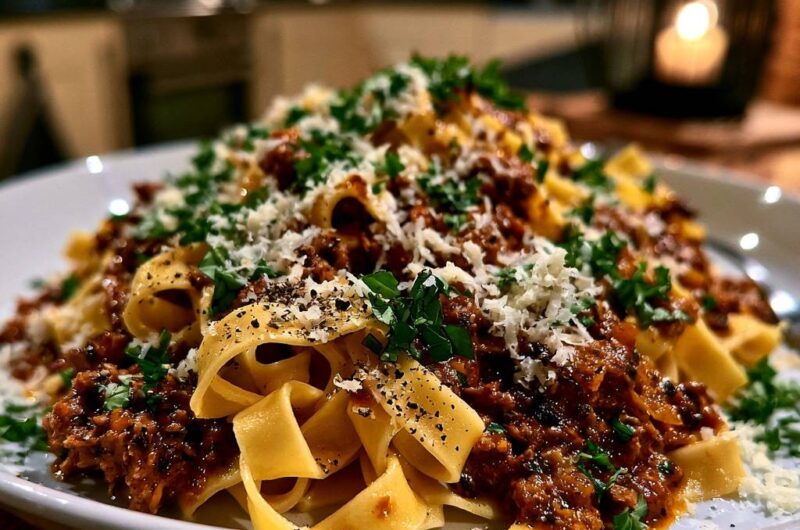
- Plate the pasta in high mounds. Top generously with the remaining Parmesan, a heavy dusting of fresh parsley, and a significant amount of coarse cracked black pepper to match the visual finish.
Notes
- The secret to the sauce is the mantecatura process, where the pasta finishes cooking in the sauce to create a perfect emulsion.