Mastering Crispy Shrimp and Cheese Jalapeno Poppers
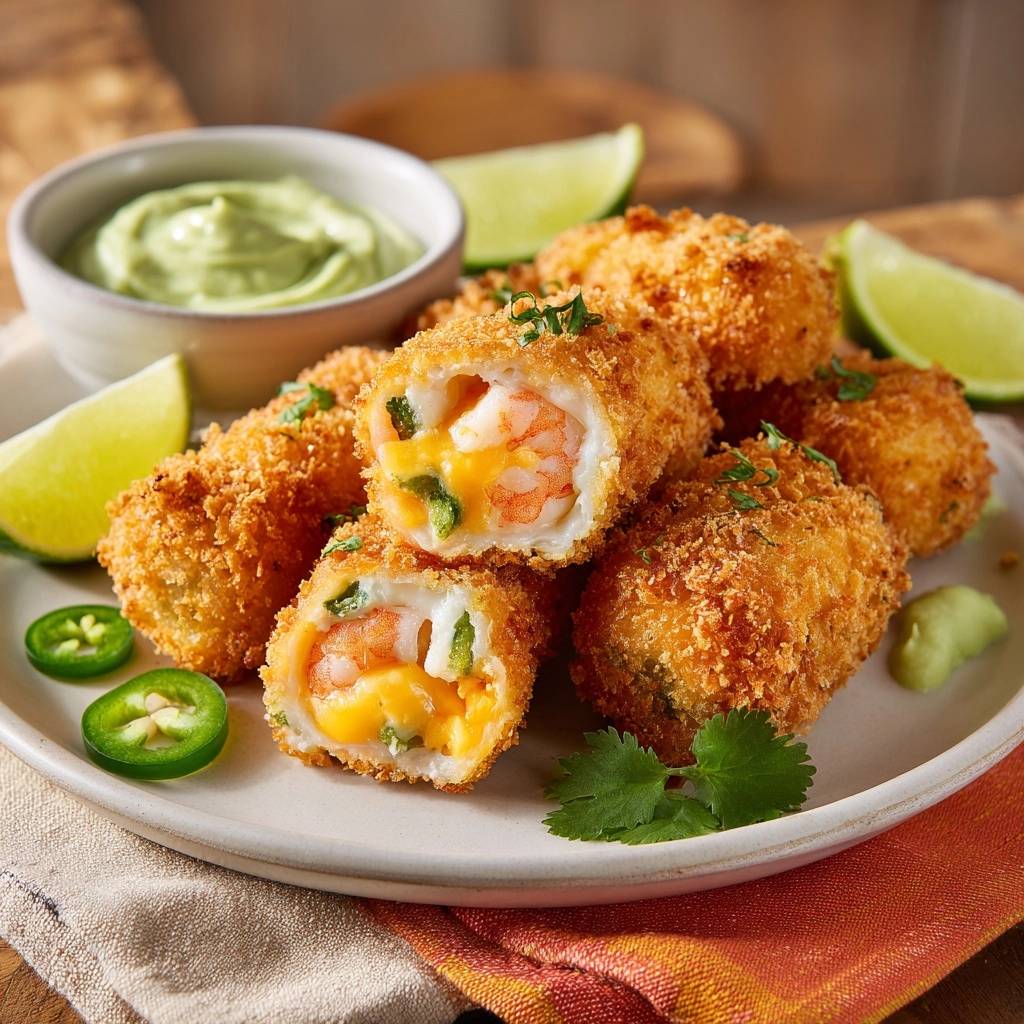
Imagine biting into a golden, craggy crust that shatters instantly, revealing a molten center of sharp cheddar and a perfectly succulent, snappy shrimp. The heat from the jalapeno hits you just a second later, but it’s immediately mellowed out by a cool, creamy cheese blend. These aren’t those sad, hollowed-out appetizers you find in the freezer aisle; these are substantial, restaurant-quality bites that actually stay together when you fry them.
If you enjoy the mild heat and creamy texture here, you can find a similar satisfying richness in this cheesy spinach shrimp dip.
Most people struggle with poppers because the cheese liquefies and escapes into the oil, leaving you with a greasy pepper shell and a mess in your skillet. We’re fixing that today by using a specific structural layering technique. By encasing the shrimp within a triple-cheese blend and utilizing a reinforced double-crust, we create a pressurized seal that keeps the goodness inside where it belongs.
The real secret to success here is the short stint in the freezer before the peppers ever touch the flour. Chilling the filling ensures the cheese doesn’t reach its melting point too quickly. This gives the Panko crust enough time to turn a deep mahogany brown while the shrimp inside steams to perfection in its own cheesy cocoon. You’ll never deal with a “cheese blowout” again if you follow this cold-start method.
The Anatomy of a Leak-Proof Jalapeno Popper
A great popper is all about structural integrity. The jalapeno acts as a sturdy green vessel, but it needs help to hold onto its contents during the violent bubbling of a deep fry. When you slice the peppers, you’re creating a boat that must be balanced correctly so it doesn’t tip or spill its cargo.
The shrimp serves a dual purpose here. Beyond the incredible flavor, it acts as a solid core that displaces the cheese, meaning there is less liquid volume trying to burst through the breading. By pressing the shrimp into the center, you create a “thermal buffer” where the cheese protects the delicate seafood from the direct heat of the oil, keeping it juicy rather than rubbery.
If you like working with shrimp and cheese in this recipe, you will also enjoy the creamy texture of this baked shrimp spinach dip.
Why Shrimp and Jalapeno are a Perfect Match
There’s a reason shrimp and peppers show up together in so many coastal cuisines. The natural, mild sweetness of the shrimp provides a beautiful contrast to the earthy, grassy heat of the jalapeno. It’s a sophisticated upgrade from the standard cream-cheese-only filling that can sometimes feel one-note.
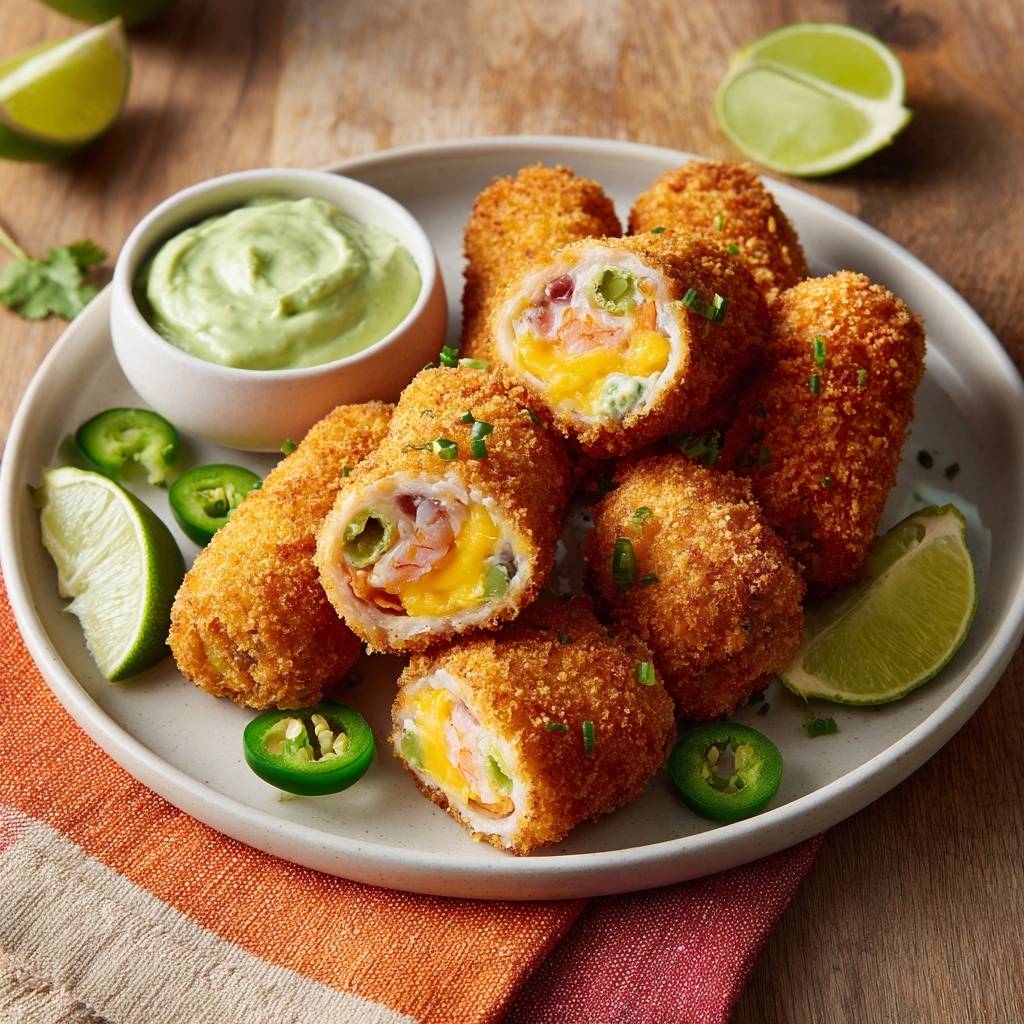
As the popper fries, the shrimp essentially poaches inside the cheese mixture. This keeps the texture tender and snappy. When you take a bite, you get that initial crunch, the creamy melt of the dairy, and then the firm, meaty texture of the shrimp to round it all out.
Essential Components for Crispy Shrimp and Cheese Jalapeno Poppers
Quality ingredients make or break this dish. For the shrimp, look for “large” or “jumbo” sizes (usually 21/25 count) so they fill the cavity of the pepper properly. Make sure they are completely peeled and deveined. If you leave the tails on, they’ll poke through your breading and create a hole where cheese can leak out.
The cheese blend is a strategic trio. Sharp cheddar brings the punchy flavor you crave, while softened cream cheese provides the smooth base. However, the mozzarella is the secret weapon. Because mozzarella has a lower melting point and a “stretchy” protein structure, it acts as a binder that holds the other cheeses together as they heat up.
Selecting and Preparing the Peppers
When shopping, look for jalapenos that are straight rather than curved, as they are much easier to fill and bread evenly. If you see small brown lines on the skin—often called “stretch marks”—that’s a sign the pepper grew slowly and likely packs more heat. Choose smooth, bright green peppers if you want a milder experience.
To prep them, slice them lengthwise and use a small spoon to scrape out the seeds and the white pith. The pith is where most of the capsaicin lives. If you want a truly mild popper, be diligent about removing every bit of that white ribbing. If you like a challenge, leave a few seeds behind.
The Triple-Cheese Binding Strategy
Using only one type of cheese is a recipe for disaster. Straight cheddar is delicious but oily; when it melts, the fats separate and run right out of the breading. By mixing it with cream cheese, you create a stable emulsion that stays thick even when hot.
The mozzarella adds that iconic “cheese pull” and helps the mixture cling to the walls of the pepper. Always use freshly shredded cheese if possible. Pre-shredded bags are coated in potato starch to prevent clumping, which can interfere with how smoothly the cheese melts inside your popper.
The Science of the Double-Dredge Technique
This is where the magic happens. A single layer of breading is rarely enough to contain melting cheese. We use a double-dredge method to create a reinforced, airtight seal. The first layer of flour sticks to the damp pepper, the egg acts as the glue, and the Panko provides the texture. By repeating the egg and Panko steps, you’re building a literal wall of protection.
This second coating fills in any tiny gaps or “bald spots” where the pepper skin might be peeking through. If the oil can see the pepper, the cheese can find a way out. A thick, double-layered crust ensures that the steam stays trapped inside, which is exactly what cooks the shrimp perfectly in under four minutes.
Panko vs. Traditional Breadcrumbs
Don’t swap Panko for regular breadcrumbs here. Panko is made from crustless bread that is processed into large, airy flakes. These flakes have more surface area, which means more crunch. Because they are so light, they don’t soak up as much oil as fine breadcrumbs, leaving your poppers feeling light rather than heavy and greasy.
When you press the Panko onto the egg-washed pepper, really give it a firm squeeze with your hands. You want those flakes to be embedded into the egg layer so they don’t fall off the moment they hit the hot oil. That “shatter” texture is only possible with a well-adhered Panko coating.
Seasoning the Flour for Maximum Flavor
The biggest mistake home cooks make is only seasoning the filling. If your crust is bland, the whole dish feels unfinished. By whisking garlic powder and smoked paprika into your flour, you’re building flavor from the very first layer. The paprika also helps the crust achieve a beautiful, vibrant golden-orange hue during the fry.
Step-by-Step: Constructing Your Shrimp-Stuffed Poppers
Start by mixing your cheeses until they are completely smooth. Use a small spatula to pack the mixture into the jalapeno halves, leaving just enough room for the shrimp. Press the shrimp down firmly into the cheese. You want the cheese to bulge slightly around the sides of the shrimp so it’s fully cradled.
Now comes the most important part: the freeze. Put your stuffed (but not yet breaded) peppers in the freezer for 20 to 30 minutes. You aren’t trying to turn them into ice blocks; you just want the cheese to be firm and the pepper to be very cold. This “cold start” is your insurance policy against leaks. Once chilled, move through your dredging station quickly and get them back into the heat.
Frying to Perfection: Temperature and Timing
Oil temperature is everything. You need it at 350°F. If the oil is too cool, the breading will sit there and absorb grease like a sponge, resulting in a soggy, heavy mess. If it’s too hot, the Panko will burn before the shrimp inside has a chance to turn pink and opaque.
A heavy-bottomed pot like a Dutch oven is best for frying because it holds heat well. When you drop cold poppers into the oil, the temperature will naturally dip. A heavy pot helps the oil recover its temperature faster, ensuring that the crust starts crisping the very second it hits the liquid.
Managing Batches and Oil Recovery
Patience is a virtue when frying. Only cook 4 or 5 poppers at a time. Overcrowding the pot will cause the oil temperature to plummet, and you’ll end up with oily poppers. Between batches, wait a minute or two for the oil to come back up to 350°F. Use a thermometer to be sure; guessing is the easiest way to ruin a good batch.
Troubleshooting Common Popper Problems
If you find your cheese is still leaking, it usually means the breading wasn’t thick enough or the oil wasn’t hot enough. Ensure you are doing that second dip in the egg and Panko, focusing specifically on the open “top” of the pepper where the cheese is exposed. That area needs the most protection.
For a soggy crust, the culprit is usually the draining method. Never drain fried foods on paper towels; the steam gets trapped underneath and turns the bottom of the popper soft. Always use a wire cooling rack set over a baking sheet. This allows air to circulate around the entire popper, keeping it crisp on all sides.
Optimal Pairings and Serving Suggestions
These poppers are rich, so you need something bright and acidic to cut through the fat. A squeeze of fresh lime juice over the top right before serving is non-negotiable. The citrus wakes up the flavor of the shrimp and tames the richness of the cheddar.
Serve these with a side of avocado crema. The cool, velvety texture of the avocado is the perfect foil for the spicy jalapeno. A sprinkle of fresh cilantro adds a pop of color and a fresh, herbal finish that ties the seafood and pepper together beautifully.
Non-Alcoholic Beverage Pairings
To balance the heat, reach for something bubbly and refreshing. A sparkling limeade with a splash of agave is a classic choice. If you want something with a bit more bite, a spicy ginger beer works wonders to complement the jalapeno’s spice. For a more floral option, a chilled hibiscus iced tea provides a tartness that cleanses the palate between bites.
Make-Ahead and Storage Instructions
You can prep these poppers up to 24 hours in advance. Simply follow the recipe through the breading stage, then keep them in the refrigerator on a parchment-lined tray. This actually helps the breading set even more firmly. If you want to keep them longer, flash-freeze them on a tray for two hours, then toss them into a freezer bag for up to three months.
When you’re ready to eat, you can actually fry them directly from frozen. Just add an extra minute or two to the cook time to ensure the shrimp is heated through. This makes them the ultimate “emergency” appetizer for unexpected guests.
Reheating Without Losing the Crunch
Whatever you do, stay away from the microwave. It will turn your beautiful Panko crust into a rubbery, sad mess. To revive leftovers, use an air fryer at 375°F for about 3 to 5 minutes. If you don’t have an air fryer, a standard oven at 400°F on a wire rack will do the trick. You want high, dry heat to crisp that oil back up.
Expert Tips for the Home Chef
First, wear gloves when seeding the jalapenos. The oils can stay on your skin for hours, and you’ll regret it the moment you touch your eyes. Second, make sure your shrimp are bone-dry before you put them in the cheese. Use a paper towel to pat them down; any excess moisture will create steam that can blow the breading off from the inside out.
If you’re making a large batch, use a piping bag (or a plastic bag with the corner snipped off) to fill the peppers with the cheese mixture. It’s much faster and cleaner than using a spoon. Finally, always use a clip-on fry thermometer. Maintaining that 350°F mark is the difference between a greasy failure and a crispy masterpiece.
How to Adjust the Heat Level
If you love spice, leave the white membranes (the ribs) inside the pepper. That’s where the heat is concentrated. For a very mild version, you can actually par-boil the seeded jalapeno halves for 2 minutes before stuffing them. This leaches out some of the heat and softens the pepper, though you’ll need to be extra careful when breading them as they will be more fragile.
Frequently Asked Questions
Can I use frozen shrimp for this recipe?
Yes, you can absolutely use frozen shrimp. Just make sure they are fully thawed and, most importantly, patted completely dry with paper towels. Any lingering ice crystals or water will turn into steam during frying, which can cause the breading to pull away from the pepper or cause the oil to splatter dangerously.
Why did my breading fall off during frying?
This usually happens for two reasons. Either the peppers weren’t dried before the first flour dip, or you didn’t shake off the excess flour. If the flour layer is too thick, it creates a dry barrier that prevents the egg from actually “grabbing” the pepper. Always tap the pepper firmly after the flour dip to ensure only a thin, dusty coating remains.
Can I bake these instead of frying?
You can bake them at 400°F for about 15-20 minutes, but the texture will be different. Frying creates an immediate seal that keeps the cheese inside. In the oven, the cheese has more time to heat up and expand before the crust sets, increasing the risk of leaks. If you bake them, use a dark baking sheet to help the bottoms crisp up as much as possible.
What is the best substitute for Panko?
If you can’t find Panko, crushed saltine crackers or unsweetened cornflakes are your best bet. They provide a similar “shatter” texture that standard fine breadcrumbs lack. Avoid using toasted breadcrumbs, as they are often too fine and will result in a gritty rather than crunchy exterior.
How do I know when the shrimp is cooked inside?
By the time the Panko has reached a deep golden brown (usually 3 to 4 minutes at 350°F), the shrimp will be perfectly cooked. Shrimp cooks very quickly, and the internal temperature of the cheese will easily reach the 145°F required for seafood. If you are worried, you can use an instant-read thermometer to check the center of one popper.
What’s Next?
Try these delicious pairings:
- Turmeric Roasted Cauliflower with Lime and Cilantro
- Mastering the Ultra Creamy Cheesy Chicken Casserole
Shrimp and Cheese Jalapeno Poppers
Course: AppetizerCuisine: AmericanDifficulty: medium4
servings25
minutes10
minutes380
kcal35
MinutesA delicious twist on a classic appetizer featuring jalapenos stuffed with a blend of cream cheese, cheddar, and mozzarella, topped with a whole shrimp and double-fried for a shatteringly crisp exterior.
Ingredients
12 large jalapenos, halved and seeded
12 large shrimp, peeled, deveined, and tails removed
1 cup sharp cheddar cheese, shredded
4 ounces cream cheese, softened
1/2 cup mozzarella cheese, shredded (for better “stretch” and binding)
1 cup all-purpose flour
2 large eggs, beaten
2 cups Panko breadcrumbs
1 teaspoon garlic powder
1/2 teaspoon smoked paprika
Vegetable oil for frying
Lime wedges and fresh cilantro for garnish
Avocado crema for dipping
Directions
- In a small bowl, mix the softened cream cheese, shredded cheddar, and mozzarella. The combination of cheeses creates a thicker, more stable filling that resists leaking.
- Stuff each jalapeno half with a spoonful of the cheese mixture. Press one shrimp firmly into the center of the cheese, ensuring the cheese surrounds the shrimp to act as a thermal buffer.
- Place the stuffed peppers on a tray and freeze for 20-30 minutes. This is the critical step. Chilling the filling ensures the cheese doesn’t reach its melting point and run out before the crust has time to set and brown.
- Set up a dredging station with three bowls: flour mixed with garlic powder and paprika, beaten eggs, and Panko breadcrumbs.
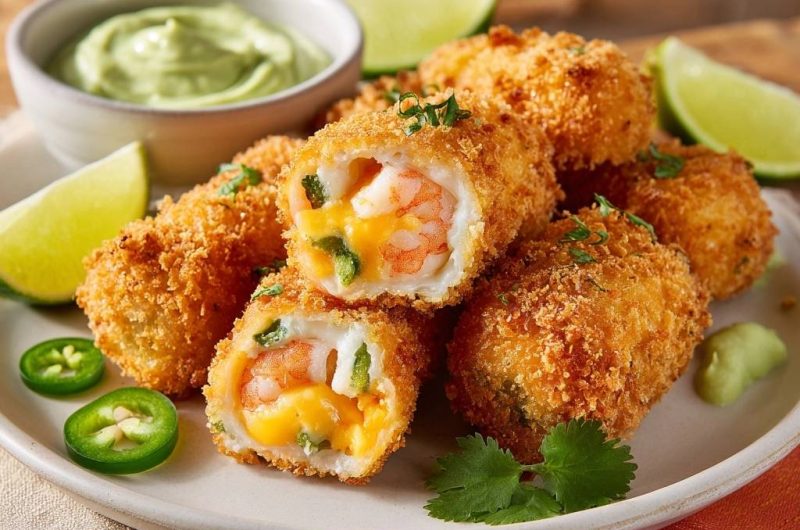
- Coat each chilled pepper thoroughly in flour, shaking off the excess. Dip into the egg, then the Panko. For the ultimate leak protection and the thick, golden crust shown in the image, dip the pepper back into the egg and then the Panko a second time. This double-crust creates a reinforced, airtight seal.
- Heat 2 inches of oil in a heavy skillet or Dutch oven to 350 degrees F.
- Fry the poppers in batches for 3 to 4 minutes, turning occasionally, until the exterior is a deep, uniform golden brown.
- Drain on a wire rack to maintain the shatteringly crisp texture. Serve immediately with lime wedges, fresh cilantro, and avocado crema.
Notes
- The secret to preventing cheese leakage is the 20 to 30 minute freezing step and the double-coating technique which creates a reinforced seal.