Roasted Butternut Squash with Cranberries, Feta and Pepitas
Why This Roasted Butternut Squash Transforms Fall Meals
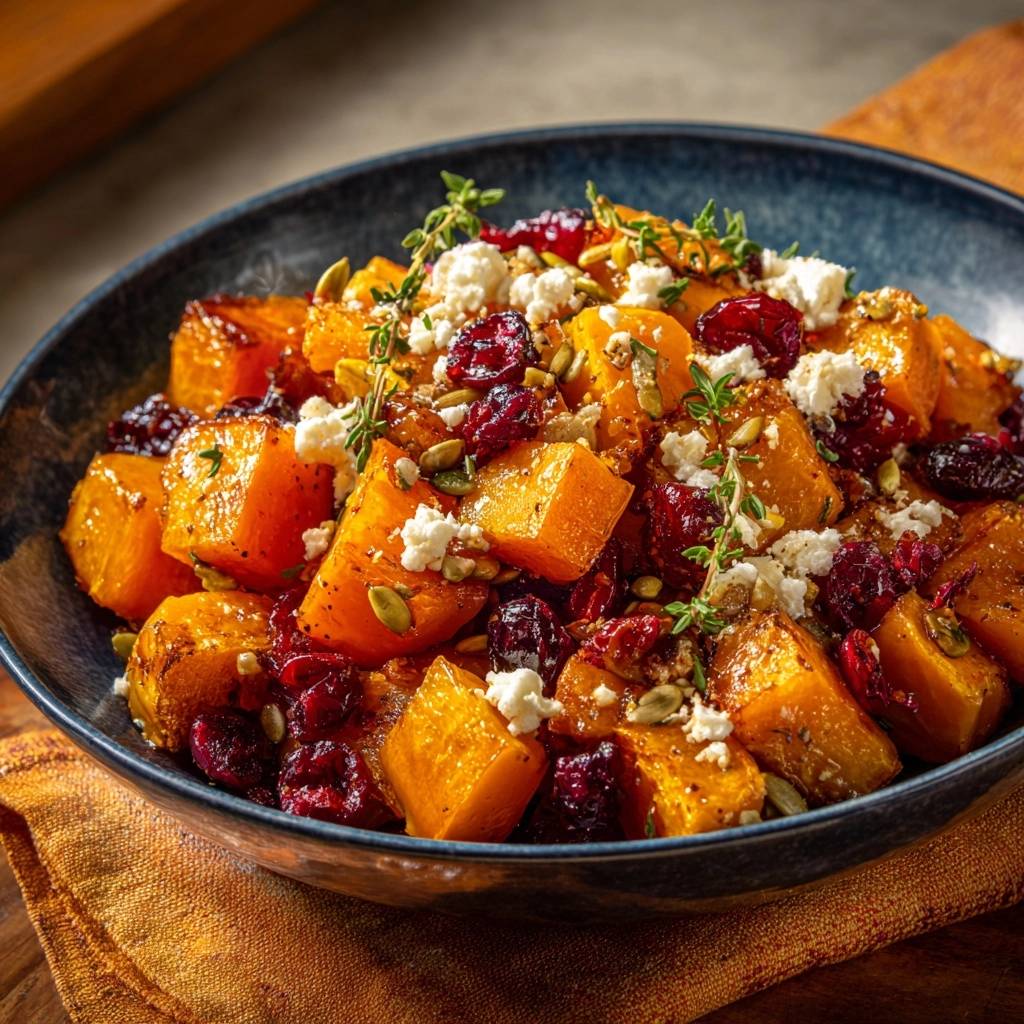
Ever pull roasted butternut squash from the oven only to find it dry and tough? You’re not alone. This roasted butternut squash with cranberries, feta and pepitas fixes that frustration fast. High-heat roasting with a smart oil toss creates glossy, caramelized edges that lock in moisture, turning bland cubes into tender bites.
That’s why busy cooks love it. In just 30 minutes, you get fall’s best flavors without the hassle. The cranberries add tart pop, feta brings creamy salt, and pepitas deliver crunch, all while the squash shines.
Here’s the pro tip that makes it foolproof: coat every cube with about one tablespoon of oil per pound. It conducts heat evenly, so you avoid steam and get that perfect caramelization every time.
Key Ingredients for Roasted Butternut Squash with Cranberries
Start with a 3-pound butternut squash, peeled, seeded, and cubed into 1-inch pieces. Firm, heavy ones hold moisture best during roasting. Then toss in 2 tablespoons olive oil, 1 teaspoon salt, and 1/2 teaspoon black pepper for seasoning that enhances natural sweetness.
More Pairings for Your Autumn Table
If you’re enjoying the sweet-savory balance of roasted squash with cranberries and feta, here are two dishes that share similar flavors or a cozy, hearty feel.
- For another fruit-and-cheese combination, try these Blue Cheese, Walnut & Cranberry Stuffed Baked Pears — the tangy blue cheese and toasted walnuts echo the feta and pepitas in the main dish.
- Pair the squash with a bold, spicy main like Jalapeno Popper Stuffed Meatloaf; the creamy, peppery filling contrasts nicely with the sweet roasted squash and tart cranberries.
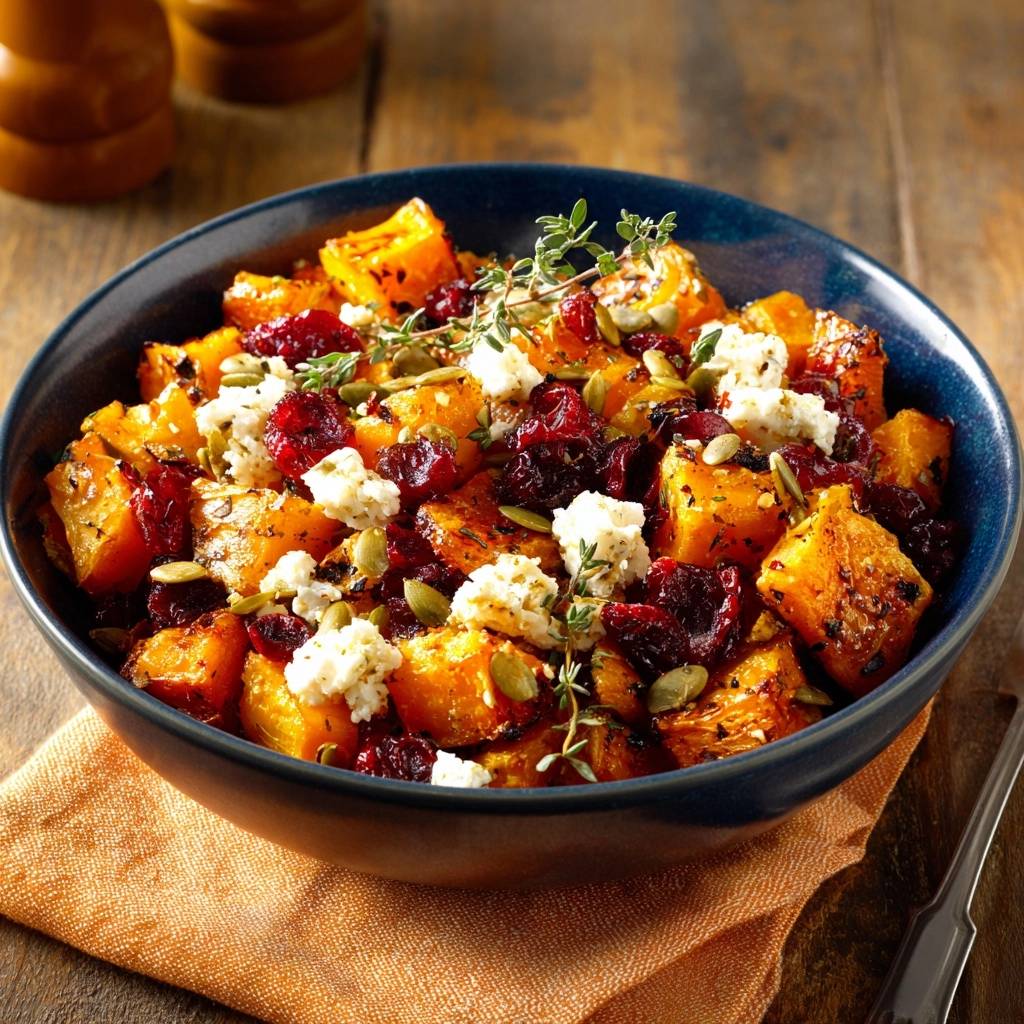
Dried cranberries (1/2 cup) provide chewy tartness that balances the squash’s earthiness. Crumbled feta (1/2 cup) adds creamy, salty richness, while 1/4 cup pepitas bring nutty crunch. Finish with 2 tablespoons fresh thyme leaves for an earthy lift.
Fresh cranberries work too, but dried ones plump up nicely without extra water. For vegan swaps, use plant-based feta. These picks make your roasted butternut squash with cranberries unforgettable.
Selecting Perfect Butternut Squash
Pick a squash with smooth tan skin and a heavy feel for ripeness. It means more flesh and less stringy bits. A 3-pound size roasts evenly without overwhelming your sheet pan.
Store it in a cool, dark spot for up to two weeks before prepping. Avoid soft spots, as they lead to mushy results.
Why Pepitas Elevate Texture
Pepitas outshine other seeds with their green hull-free pop and nutty taste. Toast them lightly first for extra flavor. Plus, they’re packed with magnesium for a nutrition boost.
In this roasted butternut squash with cranberries, feta and pepitas, they contrast the soft squash perfectly.
Mastering High-Heat Roast Technique
Preheat your oven to 425 degrees F and line a large baking sheet with parchment. This high temp triggers caramelization fast. Spread squash in a single layer to roast, not steam.
Toss 1-inch cubes with oil, salt, and pepper until they sheen lightly. Space them out generously. Roast 25 to 30 minutes, flipping halfway for even browning.
Phase 1: Prepping and Tossing Cubes
Peel and seed the squash, then cut uniform 1-inch cubes. They cook evenly this way. Toss thoroughly so every piece glistens with oil, salt, and pepper.
That sheen seals in juices. Skimp here, and you’ll get dryness.
Phase 2: Roasting and Flipping
Slide into the hot oven for 25 to 30 minutes. Flip at the 15-minute mark with a spatula for all sides to caramelize. Look for glossy edges and fork-tender centers.
Avoid burnout by not overcrowding. Pull them out golden, not charred.
Phase 3: Cooling and Final Toss
Let cool 5 minutes so add-ins don’t wilt. Gently toss with cranberries, feta, pepitas, and thyme. Serve warm for melty feta or room temp for easy potlucks.
This timing keeps textures distinct and flavors bright.
Science of Caramelized Roasted Butternut Squash
At 425 degrees F, the Maillard reaction browns sugars for deep flavor. Oil helps conduct heat evenly and traps moisture inside cubes. Without it, you get dry results.
A single layer allows air flow, promoting roast over steam. Low heat at 350 degrees just softens without browning. Cranberries’ pectin softens slightly, blending tartness seamlessly.
Therefore, this method delivers glossy roasted butternut squash with cranberries, feta and pepitas every time.
Avoiding Dry Squash in Roasts
Common pitfalls kill roasted butternut squash: overcrowding traps steam, skimping on oil dries it out, uneven cubes cook patchy, and skipping the flip burns one side. High heat at 425 beats 350’s mush.
Fixes are simple. Use enough oil for sheen, space cubes, cut uniform sizes, and flip midway. You’ll see glossy transformation instead of chalky disappointment.
In addition, parchment prevents sticking. These tweaks guarantee juicy results.
Overcrowding Fixes
If cubes touch, grab a second sheet. Airflow crisps edges. Crowded pans steam veggies soft and sad.
Oil Ratio Precision
Stick to 1 tablespoon per pound. Avocado oil works if you prefer neutral taste. Measure by weight for accuracy.
Flavor Twists for Butternut Squash with Cranberries
Swap feta for goat cheese for tangier creaminess. Use walnuts instead of pepitas for deeper crunch. Drizzle maple syrup post-roast for subtle sweet.
For the best caramelization, try this same approach with a roasted butternut squash and feta combination.
Try balsamic glaze for vinegary zip, rosemary over thyme for piney notes, or fresh cranberries for juicier pop. Pomegranate arils add jewel-like burst.
For vegan, skip feta or use coconut-based. All keep the core high-heat roast. Experiment with roasted butternut squash cranberries variations confidently.
Pairing Roasted Butternut Squash with Cranberries
Pair with grilled chicken for protein balance. Quinoa bowls or lentil stew make hearty mains. As a side, it shines next to kale salad or wild rice.
For a different take on the same ingredient, try these crispy parmesan butternut squash wedges for a salty, cheesy crust.
Herbal tea or sparkling cider complements the fall vibes. On holiday tables, it boosts vitamin A intake. The feta and pepitas add satisfying synergy.
Prep Ahead for Butternut Squash Roasts
Cube squash a day early and chill in an airtight container. Roast fresh that day for best texture. Mix cranberries and feta separately; store up to 3 days.
Freeze roasted portions flat for 1 month. Thaw overnight, then reheat at 375 for 10 minutes to refresh crispness. Avoid refreezing raw cubes; they turn watery.
Equipment Choices for Even Roasting
Use a rimmed half-sheet pan to catch juices. Parchment beats foil for no-stick release. A sharp peeler speeds squash prep without waste.
Air fryer adaptation? 400 degrees F for 20 minutes, shaking halfway. Rimmed edges prevent oven messes.
Troubleshooting Roasted Butternut Squash Recipes
Crunchy squash? Cut smaller cubes or add 5 minutes. Soggy? Pat dry pre-toss and ensure spacing. Feta melting? Add only after cooling.
Too bitter? Choose ripe, heavy squash. For 8 servings, double and use two pans. These fix roasted butternut squash issues fast.
Can I Make Roasted Butternut Squash with Cranberries Ahead?
Yes, roast up to 2 hours early and toss add-ins just before serving. It holds warm beautifully. For longer, refrigerate and reheat at 350 for 10 minutes; sprinkle fresh pepitas after.
Why Is My Roasted Butternut Squash Dry?
Usually overcrowding or too little oil. Space cubes single-layer and use 1 tablespoon oil per pound for sheen. Flip halfway traps juices inside for glossy tenderness.
What Can I Substitute for Feta in This Recipe?
Goat cheese crumbles similarly with tang. For dairy-free, try vegan feta or skip for nut-based cheese. It keeps the salty creaminess without overpowering cranberries.
Does Roasted Butternut Squash with Cranberries Freeze Well?
Freeze roasted squash alone in portions for 1 month; avoid freezing with feta as it weeps. Thaw in fridge, reheat at 375 for 12 minutes, then add toppings fresh.
Can I Use Fresh Cranberries Instead of Dried?
Absolutely, chop 3/4 cup fresh ones. They release pectin for slight sauce-like binding but add more tartness. Roast them with squash for 5 minutes less to prevent mush.
How Do I Know When the Squash Is Done Roasting?
Fork pierces easily with golden, caramelized edges. No white centers remain. If unsure, roast 2 extra minutes; high heat at 425 ensures even doneness without drying.
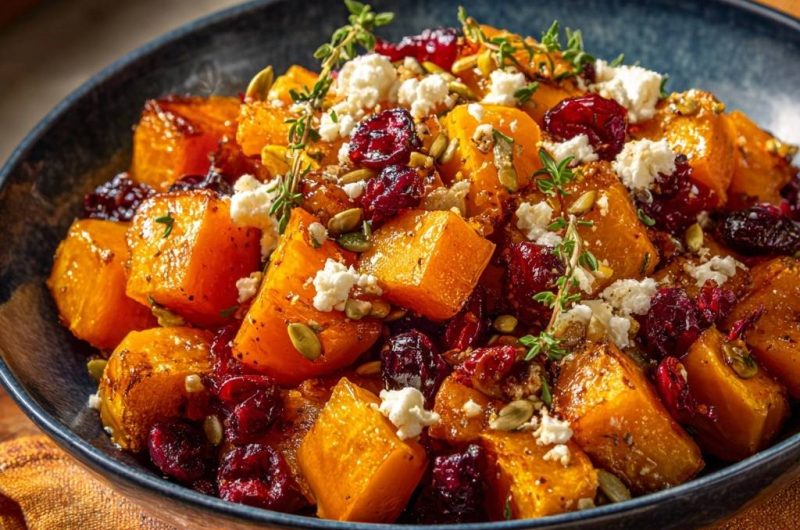
Roasted Butternut Squash
Course: Side DishCuisine: AmericanDifficulty: easy6
servings15
minutes30
minutes240
kcal45
MinutesDry roasted butternut squash is a common frustration, but this recipe fixes it with a simple high-heat, oil-toss technique that locks in moisture while creating glossy caramelization.
Ingredients
1 medium butternut squash (about 3 pounds), peeled, seeded and cut into 1-inch cubes
2 tablespoons olive oil
1 teaspoon salt
1/2 teaspoon black pepper
1/2 cup dried cranberries
1/2 cup crumbled feta cheese
1/4 cup pepitas (pumpkin seeds)
2 tablespoons fresh thyme leaves
Directions
- Preheat oven to 425 degrees F. Line a large baking sheet with parchment paper.
- In a large bowl, toss squash cubes with olive oil, salt and pepper until evenly coated. The key to no more dry squash: use enough oil to lightly sheen every piece (about 1 tablespoon per pound of squash) and spread in a single layer with space between cubes so they roast instead of steam.
- Roast for 25 to 30 minutes, flipping pieces halfway through with a spatula. This high-heat flip ensures even caramelization and traps juices inside for tender, glossy results without dryness.
- Remove from oven and let cool slightly. Toss with dried cranberries, feta, pepitas and thyme. Serve warm or at room temperature.
Notes
- Use enough oil to lightly sheen every piece (about 1 tablespoon per pound of squash) and spread in a single layer with space between cubes so they roast instead of steam. High-heat flip ensures even caramelization and traps juices inside for tender, glossy results without dryness.