Mastering Rose Petal Snickerdoodles: The Secret to a Crisp, Floral Finish
Most home bakers have experienced the heartbreak of a cookie that looks perfect on top but reveals a greasy, soggy bottom once lifted. This is especially common with Snickerdoodles, where the high sugar content and butter ratio can easily turn a soft cookie into an oily mess. When you add delicate botanical elements like rose petals, the stakes get even higher because you need a sturdy, crisp base to support those elegant floral notes.
The transition from a standard cinnamon cookie to a sophisticated Rose Petal Snickerdoodle requires more than just a garnish. It demands a shift in how we handle temperature and moisture. By mastering the “Anti-Soggy” technique, you can create a cookie that offers a satisfying snap followed by a melt-in-your-mouth center, all while highlighting the perfume of dried roses.
The secret to this specific recipe lies in the precise cooling rack timing. Most people leave their cookies on the hot baking sheet for far too long, which allows residual heat to create steam underneath the dough. Moving your cookies to a wire rack after exactly 120 seconds is the non-negotiable step that locks in the crisp texture and prevents the butter from feeling heavy or greasy on the palate.
The Chemistry of the Perfect Snickerdoodle Snap
What separates a Snickerdoodle from a basic sugar cookie is the inclusion of cream of tartar. This acidic byproduct of winemaking serves two vital roles: it provides the signature “tang” that balances the sweet cinnamon and prevents the sugar in the dough from crystallizing. This lack of crystallization is exactly what gives the cookie its iconic chewy-yet-crisp dichotomy.
Furthermore, the 400°F oven temperature is a deliberate choice for structural integrity. While many cookies bake at 350°F, this high-heat environment forces the edges of the dough to set almost instantly. This rapid “setting” prevents the fat from spreading too thin, ensuring the cookie stays puffed and develops those beautiful, deep cracks on the surface.
Why Butter Temperature Dictates Cookie Structure
The most common mistake in cookie baking is using butter that is too soft. If your butter is oily or starting to melt, the emulsion in the dough will fail before it even hits the oven. You want your butter to be “cool to the touch,” meaning it should be pliable enough to cream but still hold its shape firmly.
You can test this by pressing your finger into the stick of butter. It should leave a clean dent without your finger sliding through or any oil appearing on the surface. This specific temperature ensures that the air bubbles you beat into the butter stay trapped, leading to a light, airy crumb rather than a dense, greasy base.
Essential Components for Rose Petal Snickerdoodles
Quality ingredients are the foundation of this botanical treat. All-purpose flour is the gold standard here because its moderate protein content provides enough structure to hold the rose petals without making the cookie as tough as bread. Using a lower-protein cake flour would result in a cookie that is too fragile to handle the cooling rack transition.
Large eggs are equally important for moisture balance. They act as the primary binder, and their fat content helps emulsify the sugar and butter. Always use room-temperature eggs, as cold eggs can cause the “cool but soft” butter to seize up, resulting in a lumpy batter that won’t bake evenly.
Selecting Culinary-Grade Rose Petals
Safety is paramount when working with florals. Never use roses from a florist or a grocery store bouquet, as these are almost always treated with systemic pesticides not meant for consumption. Look specifically for “culinary-grade” dried rose petals, which are grown under food-safe conditions.
Different varieties offer different flavor profiles. Damask roses are highly prized for their deep, classic perfume, while other varieties might have more citrusy or peppery undertones. When paired with cinnamon, the rose adds a sophisticated top note that transforms a childhood classic into a modern dessert.
The Role of Parchment vs. Silicone Mats
While silicone mats are popular for their eco-friendliness, parchment paper is the superior choice for preventing soggy bottoms. Parchment is slightly porous, meaning it can absorb a tiny fraction of the butter fat as the cookies bake. This wicking action helps the bottom of the cookie crisp up effectively.
In contrast, silicone is completely non-porous and repels fat. This often causes the butter to pool underneath the cookie, leading to a fried, greasy texture on the base. For the cleanest, snappiest finish, stick with high-quality parchment paper.
Step-by-Step: Engineering the Anti-Soggy Cookie
Creating the perfect cookie is an engineering feat that involves three distinct phases. By following these steps, you ensure that the texture is controlled from the moment the butter hits the bowl to the moment the cookie hits the cooling rack.
Phase 1: Achieving the Pale and Fluffy Base
The creaming phase is where you build the cookie’s internal structure. Beat the cool butter and sugar together until the mixture looks pale and noticeably fluffy. This isn’t just about mixing; it’s about aerating. If you skip this, your cookies will be flat and heavy.
When you add the eggs, do so one at a time. This allows the fats and liquids to emulsify properly. If you dump them in all at once, the batter might “break” or look curdled. A broken batter leads to an uneven bake and a greasy mouthfeel.
Phase 2: The Cinnamon-Sugar Encapsulation
Rolling the dough balls in the cinnamon-sugar mixture is more than just a flavor step. This coating acts as a barrier that helps the cookie hold its shape while creating that iconic crackled aesthetic. Be generous with the coating; every millimeter of the dough should be covered.
As the cookie expands in the high heat of the oven, the sugar crust stretches and cracks. This creates the “valleys” where the rose petals will eventually nestle. A heavy coating ensures that the spice flavor is prominent enough to stand up to the floral aroma of the roses.
Phase 3: The High-Heat Bake and Rose Application
Watch your timer closely during the 8 to 10-minute bake. You are looking for the cookies to be puffed and set at the edges, but they should still look slightly soft in the very center. They will continue to firm up as they cool, so don’t wait for them to look “hard” in the oven.
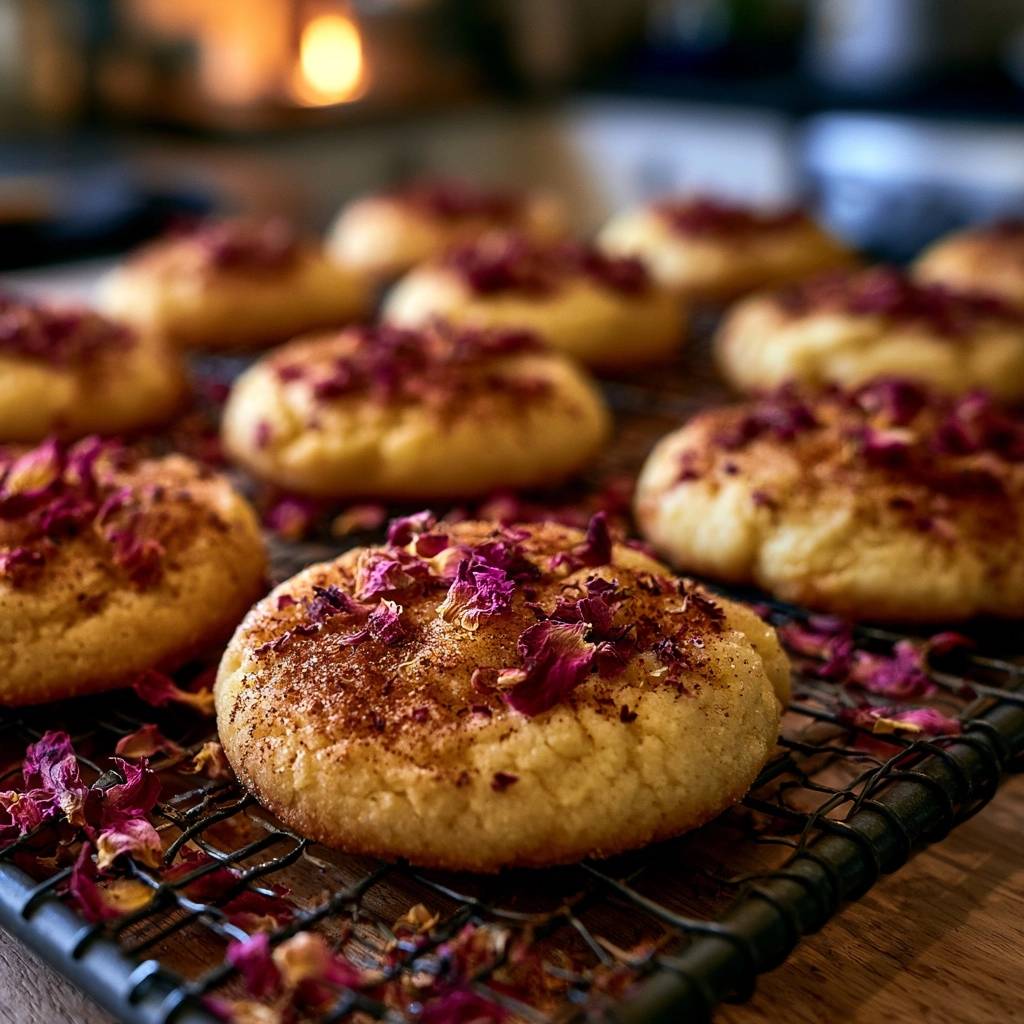
As soon as the tray comes out, sprinkle the dried rose petals over the warm cookies. The residual heat from the molten sugar and cinnamon will act like a natural glue. Press them very gently with the back of a spoon to ensure they stick without crushing the delicate cookie structure.
The Two-Minute Rule: Preventing Residual Steam
This is the most critical part of the process. A hot baking sheet continues to cook the bottom of the cookies long after they leave the oven. If left there, the heat trapped between the parchment and the cookie creates steam, which is the primary cause of a soggy, limp texture.
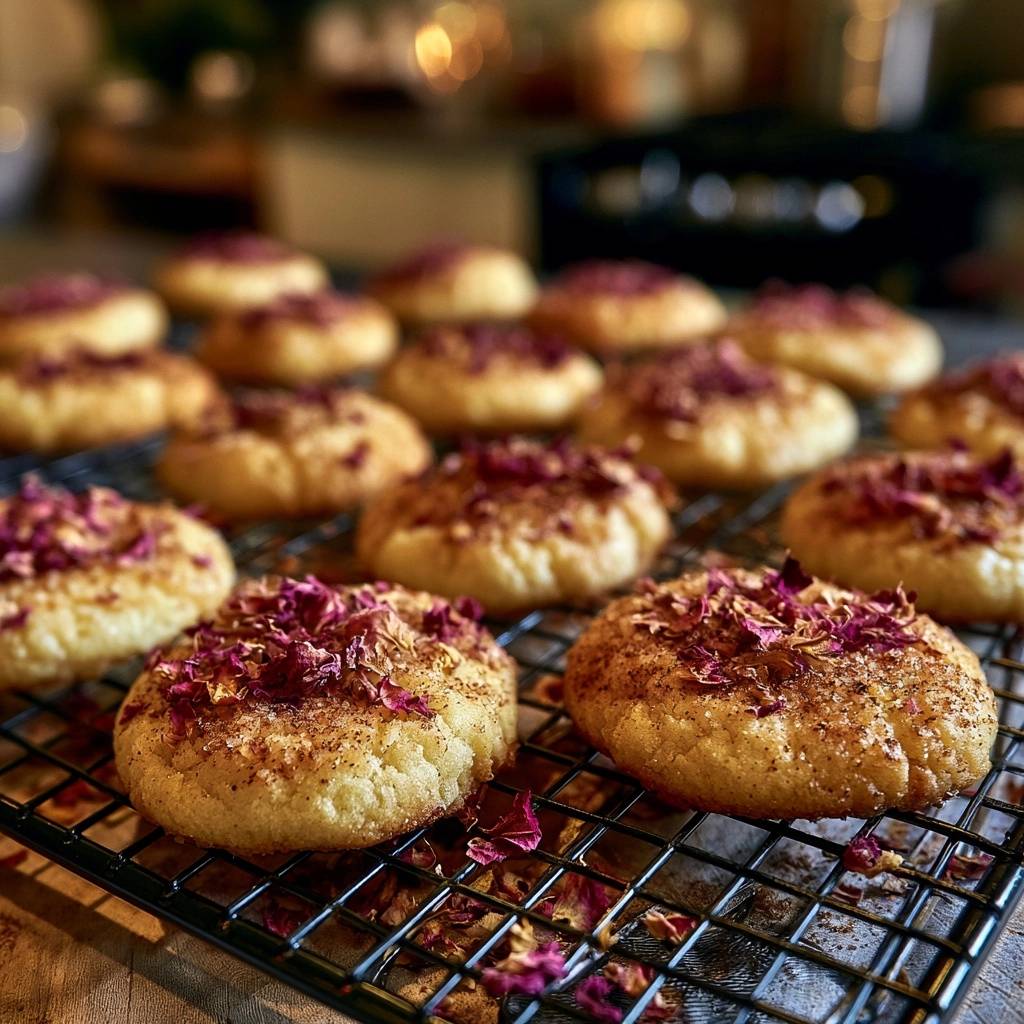
Set a timer for exactly 120 seconds once the tray is out. After two minutes, the cookies will be firm enough to move but still warm enough to finish setting. Transferring them to a wire rack allows air to circulate around the entire cookie, including the bottom, which locks in that perfect snap.
Troubleshooting Common Snickerdoodle Failures
If your cookies come out flat and thin, your butter was likely too warm or you over-creamed the mixture. Next time, try chilling the dough balls for 15 minutes before rolling them in sugar. This helps the fat stay solid longer once it hits the high heat of the oven.
If the cookies are tough or bready, you probably overmixed the flour. Once the dry ingredients are added, mix only until you no longer see white streaks. Overworking the dough develops gluten, which is great for pizza but terrible for a delicate, snappy Snickerdoodle.
If your rose petals are falling off, you likely waited too long to apply them. The sugar crust cools and hardens quickly. You must apply the florals while the cookies are still “molten” from the oven to ensure a permanent bond.
Flavor Variations and Botanical Swaps
Once you master the base recipe, you can experiment with other botanical pairings. A Cardamom-Rose variation is stunning; simply replace half the cinnamon with ground cardamom. The herbal, citrus notes of cardamom play beautifully with the floral rose petals.
You could also try a Lavender-Lemon version by adding fresh lemon zest to the dough and replacing the rose petals with culinary lavender. Just remember to keep the core ratios of butter, sugar, and cream of tartar the same to maintain that perfect “anti-soggy” structure.
Storage Logistics and Texture Preservation
To keep these cookies crisp, store them in an airtight glass container once they are completely cool. Glass is better than plastic for preserving the delicate scent of the rose petals, as plastic can sometimes absorb and dull floral aromas.
If the cookies soften after a few days, you can “refresh” them in a 300°F oven for about 3 to 5 minutes. This will re-crisp the bottom and reactivate the oils in the cinnamon and rose. Just be careful not to leave them in too long, or the rose petals may lose their vibrant color.
Expert Troubleshooting: Your Questions Answered
Can I use fresh rose petals from my garden?
It is not recommended to use fresh petals because they have a very high moisture content. As the petals sit on the warm cookie, they will wilt and release water, which can make the top of your cookie soggy and ruin the texture. Dried culinary petals provide a concentrated flavor and a much better crunch.
Why did my cookies not develop the classic cracks?
This usually happens if your baking soda is old or if your oven temperature is too low. The “cracking” is caused by a rapid rise and the drying of the surface sugar. Double-check that your baking soda is fresh (less than six months old) and use an oven thermometer to ensure you are truly hitting that 400°F mark.
Can I chill the dough overnight before baking?
Yes, and this actually improves the flavor! Chilling the dough allows the flour to fully hydrate and the flavors of the vanilla and butter to deepen. If you chill the dough overnight, let it sit on the counter for about 10 minutes before rolling so it is pliable enough to form into balls.
How do I keep the rose scent from fading over time?
The aromatic oils in dried roses are sensitive to light and heat. Store your finished cookies in a cool, dark pantry rather than on a sunny countertop. Keeping them in a tightly sealed jar will also prevent the floral scent from dissipating into the air, ensuring every bite is as fragrant as the first.
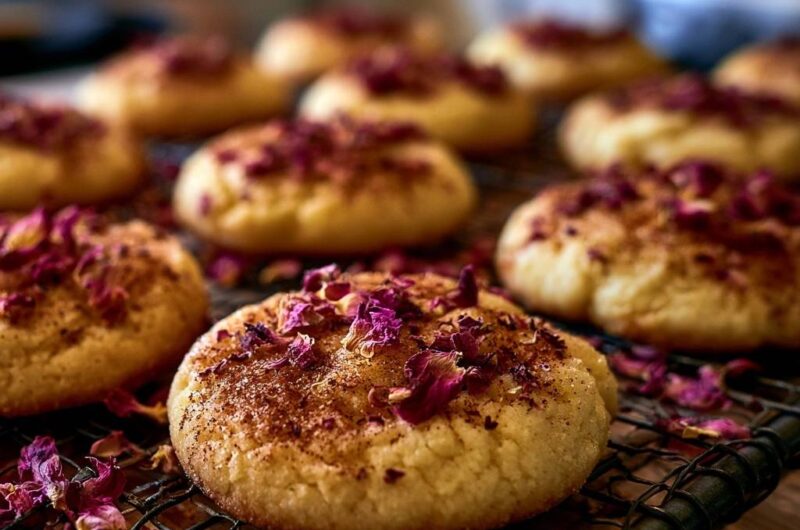
Rose Petal Snickerdoodles
Course: DessertCuisine: AmericanDifficulty: easy24
cookies15
minutes10
minutes25
Minutes145
kcalAmerican
Ingredients
1 cup unsalted butter, softened but still cool to the touch
1.5 cups granulated sugar
2 large eggs
1 teaspoon vanilla extract
2.75 cups all-purpose flour
2 teaspoons cream of tartar
1 teaspoon baking soda
0.25 teaspoon salt
2 tablespoons granulated sugar (for rolling)
2 teaspoons ground cinnamon (for rolling)
0.25 cup dried culinary-grade rose petals
Directions
- Preheat your oven to 400 degrees F. This high heat is crucial for setting the edges quickly to prevent spreading and ensuring a crisp base.
- In a large bowl, cream the butter and 1.5 cups sugar. The butter must be cool to the touch, not oily or melted, to prevent a soggy base. Beat until pale and fluffy.
- Add eggs one at a time, followed by the vanilla extract.
- Sift together the flour, cream of tartar, baking soda, and salt. Gradually add the dry ingredients to the wet mixture until just combined. Do not overmix.
- In a small bowl, mix the 2 tablespoons of sugar with the cinnamon.
- Shape the dough into 1-inch balls. Roll each ball in the cinnamon-sugar mixture until heavily and evenly coated.
- Place balls 2 inches apart on a baking sheet lined with parchment paper (parchment helps wick away excess moisture better than an ungreased pan).
- Bake for 8 to 10 minutes. The cookies should be puffed and set with slight cracks, but still soft in the center.
- Immediately upon removing from the oven, sprinkle the dried rose petals generously over the warm cookies. Press very lightly so they adhere to the molten sugar and cinnamon crust.
- To solve the soggy bottom problem, move the cookies to a wire cooling rack after exactly 2 minutes on the pan. Leaving them on the hot tray too long creates steam that ruins the texture. The wire rack allows air to circulate underneath, locking in the crisp bottom and preventing the residual heat from making the centers greasy.
Notes
- To prevent a soggy base, ensure butter is cool to the touch and move cookies to a wire cooling rack exactly 2 minutes after baking to allow air circulation.