Mastering Mediterranean Garlic Butter Spaghetti: The Emulsion Method
Stop settling for sticky, clumped together noodles that lose their texture the moment they hit the sauce. We’ve all been there, staring at a bowl of gummy pasta where the oil sits at the bottom and the noodles feel heavy and dry. It’s frustrating when you want a light, vibrant Mediterranean meal but end up with a tangled mess that lacks that restaurant-quality sheen.
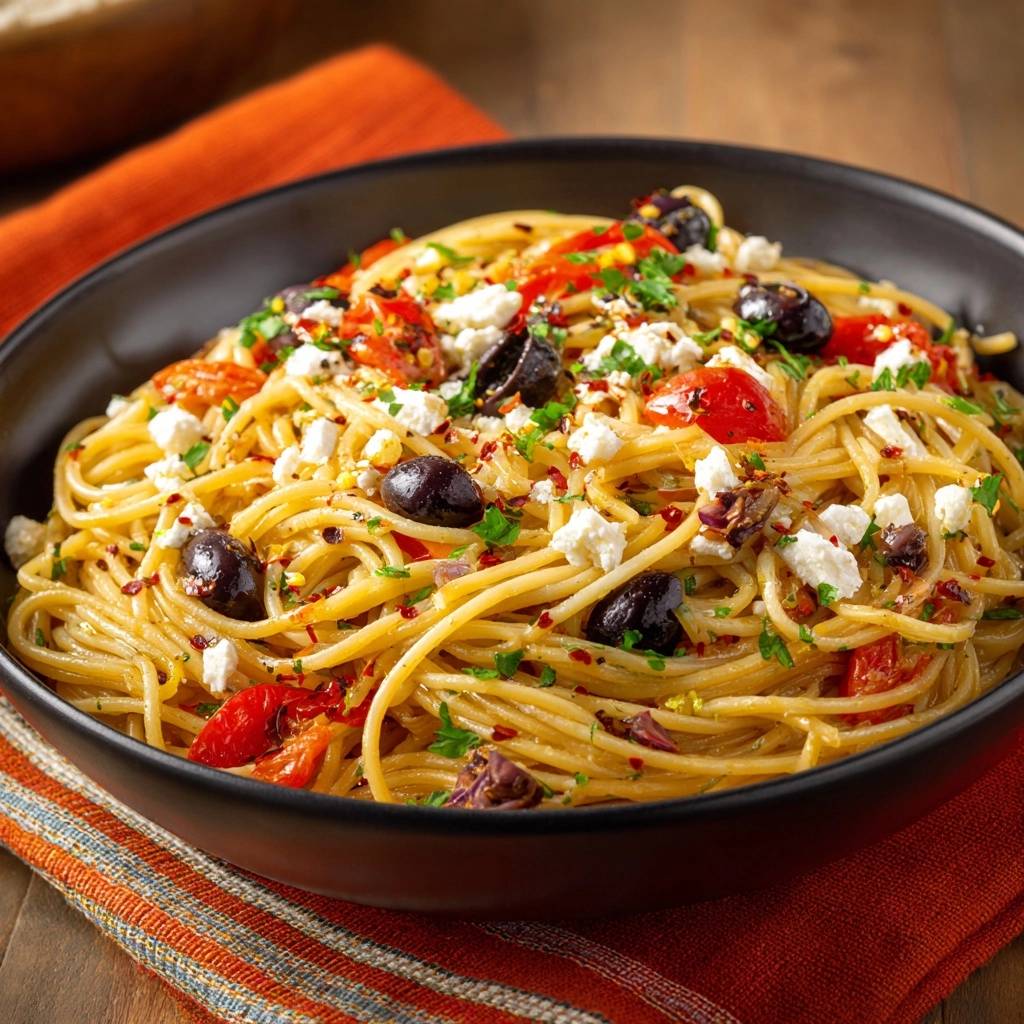
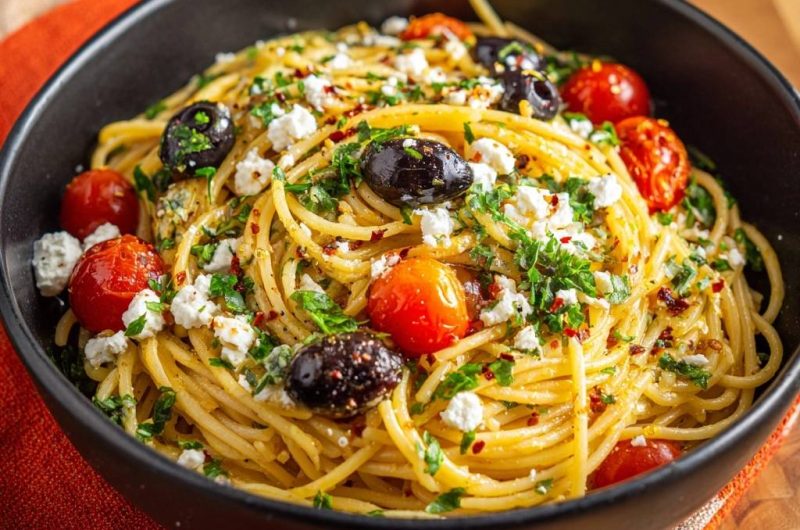
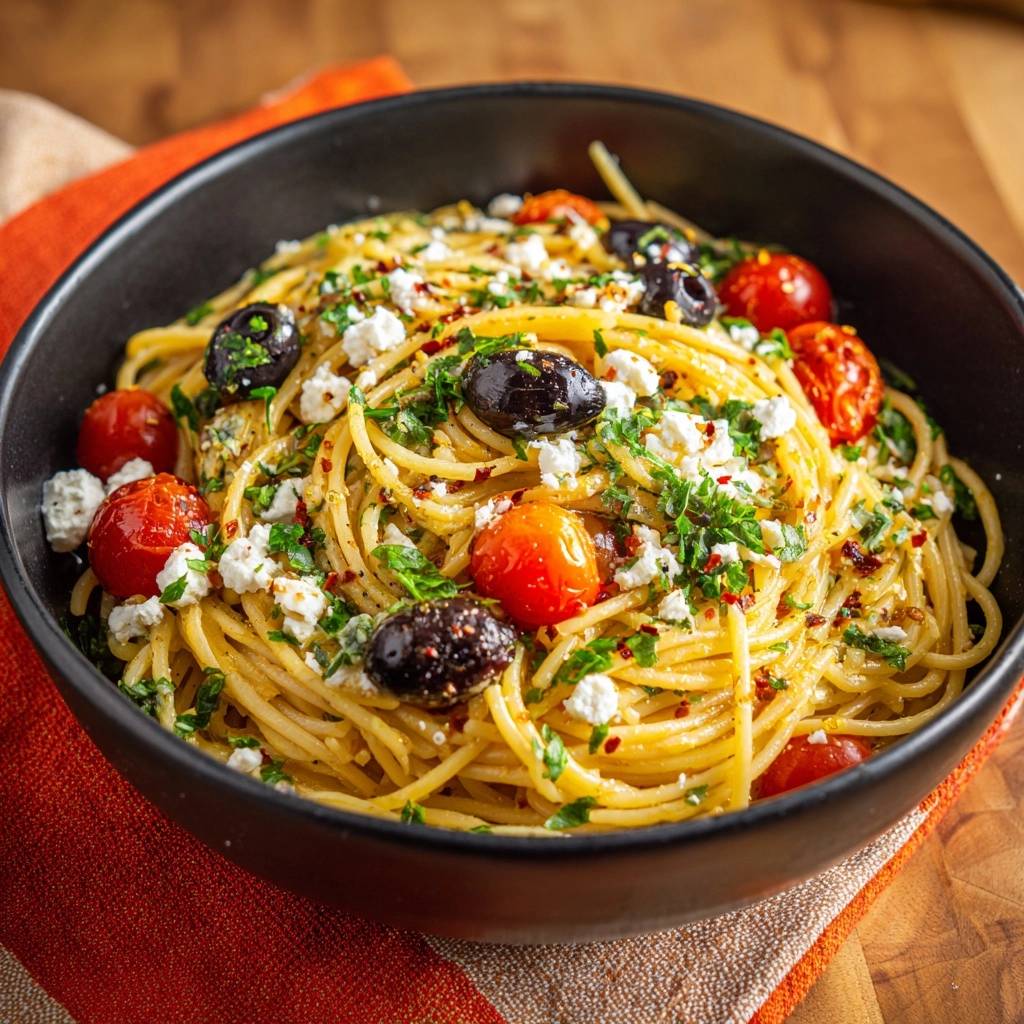
The secret to fixing this isn’t more oil; it’s all about the starch emulsion. By using a specific pasta water binding technique, you create a silky, glossy coating that clings to every strand. This method ensures your Mediterranean Garlic Butter Spaghetti stays perfectly al dente, allowing the blistered cherry tomatoes and briny Kalamata olives to shine against a backdrop of rich, garlic-infused butter.
I’ve found that the real trick lies in the “mechanical agitation” during the final two minutes of cooking. You aren’t just mixing ingredients; you’re physically forcing the starchy water and fats to marry into a creamy glaze. This transformation happens right in your skillet, turning humble pantry staples into a dish that feels incredibly luxurious without being heavy.
What to Serve with This Pasta
That garlic butter spaghetti has a rich, buttery sauce that begs for something cool and creamy on the side. A couple of simple dips round out the meal without extra effort.
- For a smooth, nutty contrast, pair it with Silky Homemade Hummus – the chickpea spread adds protein and a mellow flavor that balances the garlic.
- If you want something tangy and fresh, try the Whipped Feta Burst Tomato Dip; its salty, creamy texture and sweet tomato bursts match the pasta’s Mediterranean
The Science of the Starch-Water Emulsion
Most home cooks treat pasta water like a waste product, but in professional kitchens, it’s known as “liquid gold.” As the spaghetti boils, it releases amylose starch into the water, turning it cloudy and slightly viscous. This starch acts as a natural emulsifier, serving as a bridge between the fats (the olive oil and butter) and the liquid components of the sauce.
When you add that reserved water to your skillet, the starch molecules wrap around the fat droplets, preventing them from separating. Instead of an “oil slick” at the bottom of your bowl, you get a cohesive, translucent sauce that coats the pasta evenly. This scientific reaction is what gives the dish its velvety mouthfeel and prevents the noodles from sticking together as they cool.
Why “Al Dente” is Non-Negotiable
To master this dish, you must pull the pasta from the boiling water while it still has a firm “snap” in the center. We call this the “padella” method, where the pasta finishes its final stage of cooking directly in the sauce. If the spaghetti is already soft when it hits the skillet, it will overcook and turn mushy as it absorbs the garlic butter.
By undercooking the noodles by exactly two minutes, you leave room for the wheat protein to maintain its structural integrity. The pasta acts like a sponge during those final moments, soaking up the flavors of the garlic, oregano, and red pepper flakes. This results in a noodle that is flavorful all the way through, rather than just being coated on the outside.
Essential Components for Mediterranean Garlic Butter Spaghetti
Since this recipe relies on a few simple ingredients, quality is everything. Extra virgin olive oil provides the fruity, peppery backbone of the sauce, while a small amount of unsalted butter adds a necessary richness. The butter contains milk solids that help stabilize the emulsion, giving the sauce a body that oil alone cannot achieve.
Kalamata olives are the preferred choice here because of their deep, grape juice-like saltiness. Unlike standard green olives, Kalamatas have a soft texture that mimics the tenderness of the blistered tomatoes. When paired with the sharp, aromatic garlic, these ingredients create a balanced profile of fat, acid, and salt.
Selecting the Right Pasta Shape
While you can technically use any shape, long, round noodles like spaghetti or linguine are superior for oil-based sauces. The smooth surface area of the long strands allows the emulsion to glide and coat every inch. Tubular shapes like penne are often too heavy and tend to trap the olives and tomatoes inside rather than letting them mingle with the sauce.
If you can find it, look for “bronze-die” extruded pasta. You’ll notice the surface of the dry noodles looks slightly dusty or rough rather than shiny. That rough texture is intentional; it creates more surface area for the starch to cling to, which significantly improves sauce adhesion and prevents the “slippery noodle” syndrome.
The Role of High-Quality Feta and Aromatics
Feta cheese provides the essential hit of salinity that cuts through the richness of the butter. However, you don’t want the feta to melt into a puddle. By folding it in at the very end, the residual heat softens the cheese just enough to make it creamy while keeping the distinct crumbles intact.
Fresh parsley is another non-negotiable component. While dried oregano works beautifully for the base infusion, fresh parsley adds a bright, grassy finish that wakes up the palate. The red pepper flakes should provide a gentle “back-of-the-throat” heat that lingers without masking the delicate sweetness of the sautéed garlic.
Step-by-Step: Achieving the Perfect Silk Texture
Achieving that perfect restaurant finish requires moving through three distinct phases. You’ll start with a slow infusion, move to a high-heat blister, and finish with the vigorous emulsion. Each step builds a layer of flavor and texture that contributes to the final success of the dish.
Phase 1: Infusing the Fat Without Burning Garlic
Start by heating your olive oil and butter over medium-low heat. This low temperature is critical because garlic contains natural sugars that burn quickly. If the garlic turns brown or dark, it becomes bitter and acrid, ruining the entire base of your sauce.
You are looking for the garlic to become translucent and soft, releasing a sweet, buttery aroma. Once you see tiny bubbles forming around the minced garlic and the red pepper flakes start to tint the oil a pale orange, you’ve successfully infused the fat. This slow start ensures the flavor is deeply embedded in every drop of oil.
Phase 2: Blistering Tomatoes for Maximum Juice Retention
Once the garlic is fragrant, turn the heat up to medium and toss in the whole cherry tomatoes. You aren’t trying to make a marinara here; you want the tomatoes to stay whole and plump. The goal is to blister the skins until they look tight and slightly charred in spots.
This creates a “pop” factor when you eat the dish. The high heat creates a pressurized burst of acidity inside the tomato. When you eventually bite into one, that fresh juice acts as a natural palate cleanser against the rich garlic butter. If they start to break down into a mushy sauce, pull the pan off the heat immediately.
Phase 3: The Vigorous Toss and Water Integration
This is where the magic happens. Add your undercooked spaghetti and half a cup of the starchy water to the skillet. Increase the heat to medium-high and use your tongs to toss the pasta vigorously. You want to see the liquid bubbling and swirling around the noodles.
This physical motion knocks starch off the pasta and forces it to bind with the oil. If the pan looks dry or the noodles are sticking, add more water a splash at a time. You’ll know it’s ready when the liquid transforms from a watery puddle into a glossy, translucent glaze that hugs the spaghetti. It should look slightly “too wet” in the pan, as it will thicken the moment it hits the plate.
Troubleshooting Common Pasta Texture Issues
The most common complaint with this style of pasta is a “gummy” texture. This usually happens if the pasta was overcooked in the initial boiling phase or if there wasn’t enough agitation in the skillet. If the noodles feel heavy, it’s likely because the starch didn’t fully emulsify with the fat, leaving the pasta to sit in a pool of oil.
To prevent this, always lean toward undercooking the pasta. You can always add more water and cook it longer in the pan, but you can’t fix a noodle that has already lost its structure. If the pasta feels “tacky” or sticky, a small splash of fresh hot water and a quick toss over high heat will usually loosen the proteins and restore the silkiness.
What to Do if Your Sauce is Too Dry
If you find the sauce disappearing or the pasta looking matte rather than shiny, don’t reach for more oil. Instead, use the “incremental splash” method with your reserved pasta water. The water provides the moisture needed to keep the emulsion alive without making the dish greasy.
Remember that pasta continues to absorb liquid even after you turn off the stove. If the sauce looks perfect in the pan, it might be too dry by the time it reaches the table. Aim for a sauce that looks a bit loose and fluid; it will tighten up to the perfect consistency during the thirty seconds it takes to garnish and serve.
Preventing the Feta from Turning Grainy
Feta can sometimes take on a grainy, unpleasant texture if it’s exposed to direct, high heat for too long. This is why the “Residual Heat” rule is so important. Always remove the skillet from the burner before folding in your cheese.
The heat trapped within the pasta strands is more than enough to soften the feta into a creamy state. By following this rule, you maintain the structural integrity of the cheese. You get those beautiful white crumbles that offer a burst of saltiness, rather than a grey, broken sauce that looks curdled.
Flavor Variations and Regional Swaps
This recipe is a fantastic canvas for customization. If you want a punchier, more “Puttanesca” style flavor, try adding two tablespoons of drained capers during the tomato blistering phase. The fried capers add a sharp, vinegary pop that complements the olives perfectly.
For a bit of crunch, toss in a handful of toasted pine nuts or slivered almonds just before serving. If you’re looking to boost the nutritional value, you can fold in two cups of fresh baby spinach or arugula during the final emulsion phase. The greens will wilt in seconds from the heat of the pasta, adding color and a peppery bite without requiring extra cooking time.
Optimal Pairings for a Mediterranean Feast
Because this spaghetti is rich with butter and garlic, you want side dishes that offer high acidity and crunch. A crisp cucumber and red onion salad with a simple lemon vinaigrette is the perfect companion. The cool, watery crunch of the cucumbers balances the warm, silky texture of the pasta.
For a perfect pairing, try our Mastering Creamy Lobster Tagliatelle Without the Watery Mess.
Charred lemon broccolini is another excellent choice. The slight bitterness of the charred greens cuts through the feta’s creaminess. And of course, no Mediterranean meal is complete without a piece of crusty sourdough or a baguette. You’ll want that bread to mop up every last drop of the garlic butter emulsion left at the bottom of your bowl.
Frequently Asked Questions
Can I use pre-minced garlic from a jar?
I strongly recommend using fresh garlic cloves for this recipe. Jarred garlic is often preserved in citric acid or water, which gives it a sour, metallic aftertaste. Since garlic is the primary flavor profile here, you need the natural essential oils found in fresh cloves to achieve that sweet, aromatic butter sauce. Freshly minced garlic also softens much better than the rubbery bits found in a jar.
How do I reheat leftovers without the pasta getting oily?
Microwaving leftover pasta usually causes the emulsion to break, leaving you with a pool of oil and dry noodles. Instead, place the leftovers in a small skillet over medium heat. Add a tablespoon or two of water (or broth) and toss the pasta constantly as it heats up. The added moisture and movement will re-emulsify the fats, bringing back that silky texture from the night before.
Is there a dairy-free substitute for the butter and feta?
You can absolutely make this dairy-free. Substitute the butter with a high-quality vegan butter alternative that is designed for melting, as this will help with the emulsion. For the feta, you can use an almond-based feta crumble or simply omit it and add a sprinkle of nutritional yeast and extra sea salt to mimic that savory, salty profile.
Why is my pasta water not cloudy enough?
If your pasta water looks too clear, you might be using too much water in your boiling pot. The “Small Pot” secret is to use just enough water to cover the pasta by an inch or two. This concentrates the starch, making the water much cloudier and more effective at binding your sauce. If you’ve already cooked the pasta and the water is thin, let it boil down for a few minutes on its own to concentrate the starches before adding it to the skillet.
Can I add protein like shrimp or chicken?
Yes, protein works beautifully here. To keep the textures right, sear your shrimp or seasoned chicken strips in the skillet with a little oil before you start the garlic infusion. Once the protein is cooked through, remove it from the pan and set it aside. Follow the recipe as written, then fold the cooked protein back into the pasta at the very end when you add the parsley and feta. This prevents the meat from becoming overcooked and rubbery while the sauce finishes.
If you enjoy this method of searing protein for texture, the same principle applies to this creamy shrimp fettuccine alfredo to keep the sauce smooth.
Spaghetti
Course: Main CourseCuisine: MediterraneanDifficulty: easyYields4
servingsPrep Time10
minutesCook Time15
minutesCalories485
kcalTotal Time25
MinutesA vibrant pasta dish featuring cherry tomatoes, Kalamata olives, and feta cheese, bound together by a glossy garlic butter emulsion that ensures perfectly al dente noodles every time.
Ingredients
1 pound spaghetti
1/2 cup extra virgin olive oil
2 tablespoons unsalted butter
6 cloves garlic, minced
1 pint cherry tomatoes, left whole
1/2 cup whole Kalamata olives, pitted
1/2 cup crumbled feta cheese
1/2 cup fresh parsley, finely chopped
1 teaspoon red pepper flakes
1/2 teaspoon dried oregano
Salt and black pepper to taste
1 cup reserved starchy pasta cooking water
Directions
- Bring a large pot of heavily salted water to a boil. Add the spaghetti and cook for exactly 2 minutes less than the package directions for al dente. The pasta should still have a firm “snap” in the center.
- While the pasta cooks, heat the olive oil and butter in a large skillet over medium-low heat. Add the minced garlic, red pepper flakes, and dried oregano. Sauté slowly for 2-3 minutes until the garlic is fragrant and softened, but not browned.
- Add the whole cherry tomatoes to the skillet. Increase the heat to medium and cook for 4 minutes, tossing occasionally. You want the skins to blister and tighten, but the tomatoes should remain whole and plump rather than breaking down into a mushy sauce.
- Before draining the pasta, scoop out 1 cup of the cloudy, starchy cooking water. Drain the pasta.
- Add the undercooked spaghetti and the whole Kalamata olives directly into the skillet with the garlic and tomatoes. Pour in 1/2 cup of the reserved pasta water.
- Increase heat to medium-high. Use tongs to toss the pasta vigorously for 2 minutes. This mechanical agitation pulls starch from the noodles and binds it with the oil and butter, creating a glossy, translucent glaze. If the pan looks dry, add the remaining pasta water a splash at a time.
- Remove from heat. Fold in the fresh parsley and half of the crumbled feta. The residual heat will slightly soften the cheese without melting it completely.
- Transfer to a bowl and top with the remaining feta and an extra sprinkle of red pepper flakes. Serve immediately while the emulsion is at its silkiest.
Notes
- The secret to avoiding gummy pasta is the mechanical agitation in the pan which creates a starch emulsion between the pasta water and fats.