Mastering Pesto Chicken Zucchini Noodles Without the Watery Mess
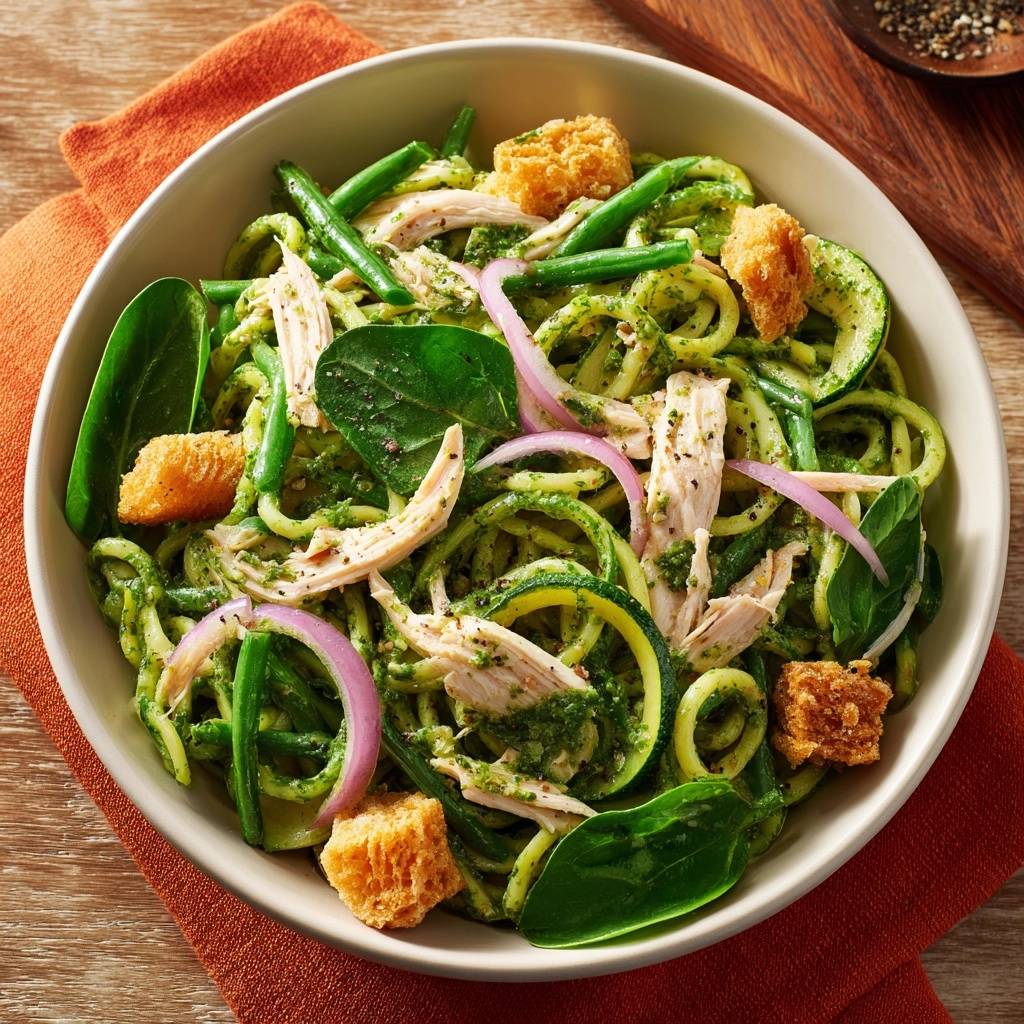
Switching from heavy, carb-loaded pasta to vibrant zucchini noodles feels like a win for your energy levels, but the reality often falls short. You’re looking for a satisfying, al dente bite, yet you end up with a puddle of green-tinted water at the bottom of your bowl. It’s a common frustration that turns many people away from this nutrient-dense alternative, but I’m here to tell you that “zoodle soup” isn’t an inevitability.
The secret to a restaurant-quality bowl of Pesto Chicken Zucchini Noodles lies in mastering moisture management. By treating the zucchini like a delicate vegetable rather than a sturdy grain, you can achieve a texture that actually holds onto your sauce. We’re going to use a specific “Anti-Soggy Bottom” method that ensures every forkful is crisp, flavorful, and perfectly coated in herbaceous pesto.
I’ve found that the absolute game-changer is the “salt-and-squeeze” technique combined with a high-heat flash sear. Most home cooks skip the salt or cook the noodles for far too long, which causes the vegetable’s cell walls to collapse and release all their internal liquid. If you follow this specific drying process, you’ll transform the zucchini from a limp vegetable into a legitimate pasta contender that stands up to the bold flavors of garlic and basil.
The Science of Moisture: Why Zucchini Turns Mushy
Zucchini is roughly 95% water, which is why it’s so refreshing but also why it’s a nightmare to cook as a noodle. Inside every zucchini cell is a vacuole filled with water; when you apply heat, those cell walls weaken and the water comes rushing out. If you toss raw zucchini directly into a warm sauce, that water dilutes your pesto, turning a rich sauce into a thin, flavorless liquid.
Therefore, we have to use chemistry to our advantage before the noodles ever touch the pan. Through the process of osmosis, applying salt to the surface of the spiralized strands draws that internal moisture out through the cell membranes. You’ll actually see the noodles “sweat” as the salt works its way in, making the strands more flexible and less likely to snap or leak during the cooking process.
In addition to salting, the duration of heat exposure is critical. Traditional pasta needs time to hydrate in boiling water, but zucchini noodles only need enough heat to take the raw edge off. If they stay in the pan for more than two minutes, the heat destroys the structural integrity of the fiber. By removing the water first and then using a lightning-fast sear, you lock in the crunch while keeping the sauce thick and creamy.
The Salt-and-Squeeze Technique Explained
Start by placing your spiralized zucchini in a large colander and sprinkling it evenly with half a teaspoon of salt. You don’t need a ton of salt, just enough to initiate that osmotic pull. Let it sit for at least 10 minutes; you’ll notice the noodles start to look glossy and the bottom of the colander will begin to drip.
Once the time is up, don’t just shake them dry. Transfer the noodles to a clean, lint-free kitchen towel—avoid paper towels as they’ll just shred and stick to your food. Wrap the towel around the noodles and squeeze firmly. You’ll be shocked at how much liquid comes out, but this is exactly what you want to leave behind to ensure a concentrated flavor in your final dish.
Essential Components for Pesto Chicken Zucchini Noodles
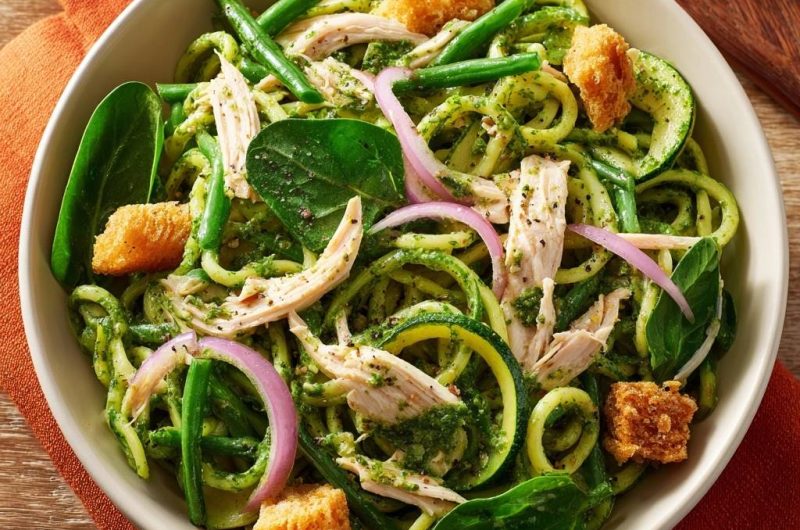
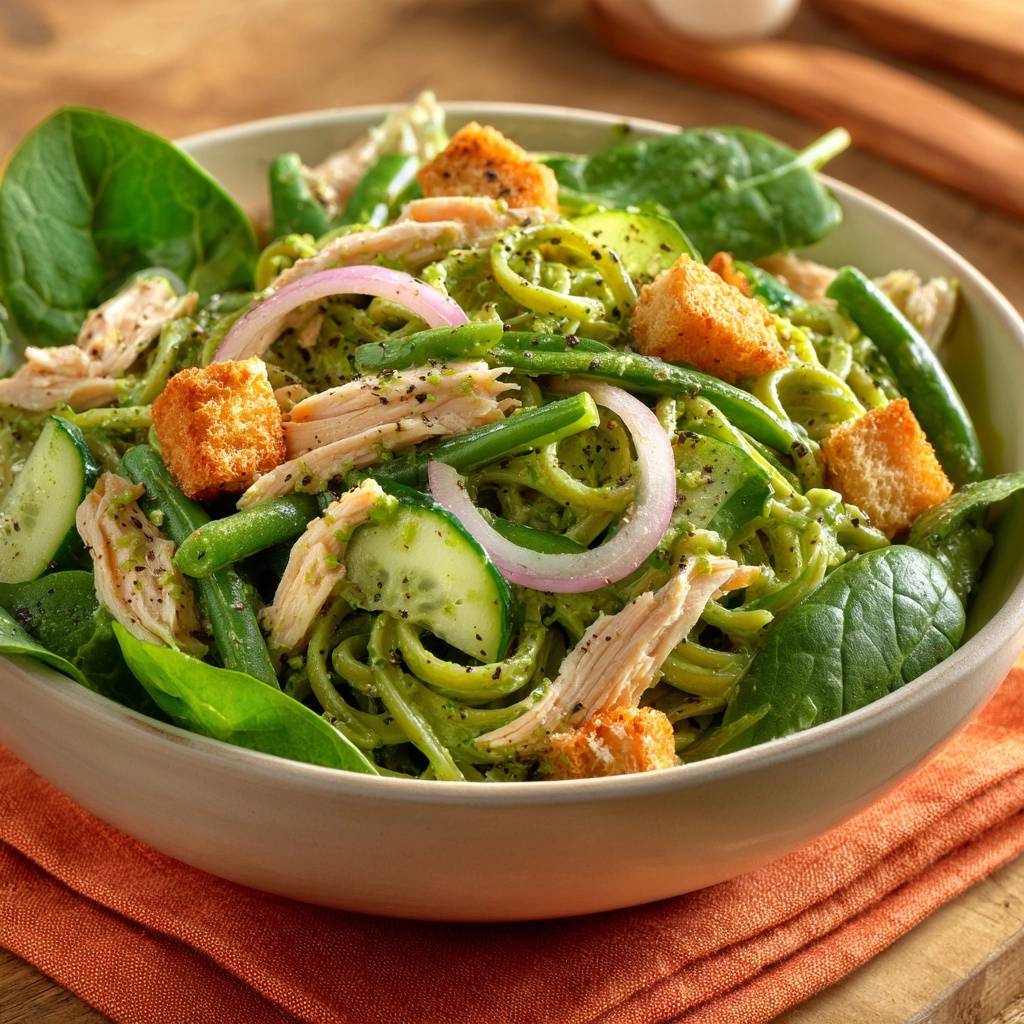
Since this dish has a short ingredient list, the quality of each component really shines through. I prefer using shredded chicken breast because the ragged edges of the meat provide more surface area for the pesto to cling to. Unlike smooth cubes of chicken, shredded meat integrates into the noodle nests, ensuring you get a bit of protein in every single bite.
In addition to the chicken, the sourdough croutons aren’t just a garnish; they’re a structural necessity. They provide a sharp, buttery crunch that offsets the softness of the wilted spinach and the snap of the zucchini. When that sourdough hits the pesto, it absorbs the garlic and oil without becoming soggy, adding a much-needed rustic texture to the meal.
Selecting the Best Zucchini for Spiralizing
When you’re at the grocery store, reach for medium-sized zucchinis that feel heavy for their size. Avoid the “jumbo” ones you might see at a farmer’s market; those oversized squash are mostly seeds and air. The larger the zucchini, the more watery the core becomes, which leads to flimsy noodles that fall apart.
If you love this technique for avoiding watery noodles, the same careful method helps create a perfectly textured hearty chicken orzo soup.
A medium zucchini has a tighter cell structure and a smaller seed pocket. This means your spiralizer will produce long, continuous ribbons that have a consistent thickness. Look for skin that is dark green and free of soft spots, as the skin provides the essential structural “spine” for each noodle strand.
Pesto Profiles: Homemade vs. Store-Bought
The thickness of your pesto is the deciding factor in how well it coats the zucchini. If you’re making it from scratch, keep the oil-to-basil ratio slightly lower than usual to create a thick paste. A thicker pesto acts as a barrier, preventing any remaining moisture in the zucchini from escaping and thinning out the meal.
If you’re using a jarred version, look for one where the oil hasn’t completely separated. You can easily “brighten” a store-bought pesto by stirring in a little fresh lemon zest or a clove of finely grated raw garlic. This adds a punch of freshness that mimics a sauce made just minutes ago, perfectly complementing the light nature of the zoodles.
Step-by-Step: Executing the Flash-Sear Method
Cooking zucchini noodles is more like a stir-fry than a pasta boil. You need to move quickly and keep the heat high. This isn’t the time for a slow simmer; we want to sear the exterior of the vegetables to develop flavor while keeping the interior crisp and fresh.
Phase 1: Prepping the Aromatics and Greens
Firstly, get your skillet or wok shimmering hot with a tablespoon of olive oil. Toss in your thinly sliced red onions and the blanched green beans. I always recommend blanching the beans in boiling water for two minutes beforehand, then shocking them in ice water. This preserves their bright green color and ensures they are tender-crisp by the time the onions soften.
Sauté these for about two minutes. You’re looking for the onions to become translucent and fragrant without turning brown. This creates a savory base of flavor that will permeate the entire dish once the noodles and sauce are added.
Phase 2: The 120-Second Zoodle Sear
Now, add your dried, squeezed zucchini noodles to the hot pan. You should hear a distinct sizzle the moment they hit the oil. Use tongs to toss them vigorously, ensuring every strand gets a moment of contact with the high heat. This flash-sear evaporates any lingering surface moisture and warms the noodles through.
However, you must be disciplined here. Do not cook them for more than two minutes. If you see the noodles starting to look translucent or limp, they’re already overdone. You want them to be warm and flexible but still possess that “al dente” snap when you bite into them.
Phase 3: Residual Heat Integration
This is the most important step: turn off the heat completely. The residual heat in the pan is more than enough to finish the dish. Add your shredded chicken, the fresh baby spinach, and the pesto. Toss everything together gently but thoroughly.
By turning off the burner, you prevent the pesto from breaking or becoming oily. The spinach will wilt perfectly in about 30 seconds just from the heat of the noodles and the pan. This method keeps the colors vibrant and the flavors sharp, resulting in a beautiful, cohesive sauce that clings to every strand.
If the texture of zucchini noodles is what you’re after, you’ll find the same attention to detail in this grilled chicken pesto pasta salad.
Troubleshooting Common Zoodle Failures
If your noodles end up too salty, it’s likely because the salt wasn’t fully removed during the squeezing process. Next time, give the salted noodles a very quick rinse under cold water before wrapping them in the towel to squeeze. This removes the excess surface salt while still benefiting from the moisture-drawing effects of the “sweat” period.
In addition, if you find the sauce isn’t sticking, your noodles were likely still too wet. Ensure you are using a heavy-duty kitchen towel and really putting some muscle into the squeeze. If the noodles are dry to the touch before they hit the pan, the pesto will have no trouble adhering to the surface.
Flavor Variations and Dietary Swaps
While chicken is the classic choice, this recipe is incredibly versatile. You can easily swap the protein or adjust the pesto to fit different dietary needs without sacrificing the texture we’ve worked so hard to achieve.
Protein Alternatives Beyond Chicken
If you want to change things up, seared halloumi cheese makes a fantastic salty addition that mimics the chew of a noodle. Alternatively, pan-seared chickpeas add a lovely earthiness and a bit of crunch. If you’re a fan of seafood, a piece of flaky white fish or some quick-seared shrimp works beautifully.
Just remember to keep your protein choice relatively dry. If you’re adding shrimp, pat them dry with a paper towel before searing. Adding excess liquid from the protein will undo all the hard work you did drying out the zucchini!
Nut-Free and Dairy-Free Pesto Adjustments
For those with allergies, you can create a stunning nut-free pesto using toasted sunflower seeds or pepitas. They provide that essential fatty crunch without the risk. To keep the dish dairy-free, replace the parmesan in the pesto with a tablespoon of nutritional yeast. It provides a similar “cheesy” umami hit that rounds out the basil and garlic perfectly.
Optimal Pairings for a Low-Carb Italian Dinner
This dish is quite light, so it pairs well with sides that offer a bit of acidity or sweetness. A simple side of roasted cherry tomatoes, blistered in the oven with a drizzle of balsamic glaze, provides a juicy contrast to the herbaceous pesto. The acidity of the tomatoes cuts through the richness of the pine nuts and olive oil.
In addition, a crisp arugula salad with a sharp lemon vinaigrette is a great way to round out the meal. The peppery bite of the arugula complements the basil, while the lemon juice helps cleanse the palate between bites of the savory chicken and zucchini.
Storage and Meal Prep Realities
I’ll be honest with you: cooked zucchini noodles do not store particularly well. Once they’ve been heated, the cell structure continues to break down, and they will inevitably become watery if left in the fridge overnight. This is a dish that is truly at its best the moment it leaves the pan.
However, you can meal prep the components. Spiralize your zucchini, salt it, squeeze it dry, and store the raw, “dehydrated” noodles in an airtight container with a dry paper towel. Store the shredded chicken and pesto separately. When you’re ready to eat, the actual cooking process only takes five minutes, giving you a fresh meal with zero sogginess.
Pairings to round out your meal
These two recipes share key ingredients or cooking techniques with the pesto chicken zucchini noodles, making them natural additions to your table.
- The spinach artichoke pull-apart bread brings a warm, cheesy side that soaks up any extra pesto sauce, plus its garlicky flavor matches the chicken and zucchini.
- If you have extra zucchini on hand, turn it into crispy zucchini fritters for a crunchy contrast
How to Reheat Without Losing Texture
If you do have leftovers, avoid the microwave at all costs. The microwave heats from the inside out, which will turn your zucchini into mush instantly. Instead, heat a dry skillet over medium-high heat and toss the leftovers for about 30 to 60 seconds.
This quick “re-sear” wakes up the flavors of the pesto and warms the chicken without further breaking down the vegetable fibers. It won’t be quite as crisp as the first time, but it will be significantly better than a microwaved bowl of soggy noodles.
Expert Tips for Professional Results
Firstly, use a ceramic or high-quality non-stick pan. Zucchini noodles are delicate, and if they stick to the bottom of the pan, they’ll tear and release moisture. A smooth surface allows you to toss them easily, ensuring an even cook in that short 120-second window.
Secondly, never peel your zucchini. The dark green skin is where most of the nutrients live, but more importantly, it acts as a structural “skeleton” for the noodle. Without the skin, the soft flesh of the zucchini has nothing to hold it together, and it will turn into a mash almost immediately upon hitting the heat.
Finally, finish the dish with a coarse grind of fresh black pepper. The large flakes of pepper provide a floral, spicy finish that cuts through the richness of the pesto. It’s a small detail, but it’s the difference between a home-cooked meal and something that feels like it came from a professional kitchen.
Frequently Asked Questions
How do I store leftover Pesto Chicken Zucchini Noodles?
Store any leftovers in an airtight container in the refrigerator for no more than 24 hours. Because zucchini is so high in water, it will continue to release liquid as it sits, even after being cooked. For the best experience, store the components separately and only combine and cook them when you are ready to eat. This dish does not freeze well, as the freezing process destroys the zucchini’s cell walls, resulting in a very mushy texture upon thawing.
Why did my zucchini noodles turn out watery even after squeezing?
This usually happens for two reasons: either the pan wasn’t hot enough or you cooked them for too long. If the pan isn’t shimmering hot, the zucchini will steam in its own juices rather than searing. Additionally, if you cook them for more than two minutes, the heat will force out the remaining internal moisture. Ensure you are using high heat and a very short cooking time to keep them dry and crisp.
Can I use a different vegetable if I don’t have zucchini?
Yes, yellow summer squash is a perfect 1:1 substitute and behaves almost exactly like zucchini. You can also use sweet potato or butternut squash noodles, though these are much heartier and will require a longer cooking time (about 5-7 minutes) and do not require the salt-and-squeeze method since they have a much lower water content.
Is there a way to make this dish more filling?
If you find the zucchini noodles aren’t quite enough to keep you full, try a “half-and-half” approach. Mix your zucchini noodles with a small portion of whole-wheat spaghetti or fiber-rich chickpea pasta. This gives you the volume and nutrients of the vegetables with the added satiety of complex carbohydrates. Adding extra healthy fats, like sliced avocado or extra pine nuts on top, can also help keep you satisfied longer.
What if I don’t have a spiralizer?
You don’t need a fancy gadget to make this recipe! You can use a standard vegetable peeler to create long, thin ribbons (often called “zucchini pappardelle”). Alternatively, a julienne peeler will create thin, spaghetti-like strands. The salt-and-squeeze method remains exactly the same regardless of the shape of your noodles.
Pesto Chicken Zucchini Noodles
Course: Main CourseCuisine: AmericanDifficulty: easyYields2
servingsPrep Time15
minutesCook Time10
minutesCalories385
kcalTotal Time25
MinutesA low-carb pasta alternative featuring spiralized zucchini, shredded chicken, and fresh basil pesto. This recipe uses a salt-and-drain method to ensure the noodles stay crisp and flavorful rather than watery.
Ingredients
2 large zucchinis, spiralized
1 cup cooked chicken breast, shredded
1/2 cup fresh basil pesto
1/2 cup fresh green beans, trimmed and blanched
1/4 red onion, thinly sliced into half-moons
1 cup fresh baby spinach
1/2 cup large sourdough croutons
1 tablespoon olive oil
1/2 teaspoon salt (for sweating zucchini)
Black pepper to taste
Directions
- Place the spiralized zucchini in a colander and sprinkle with 1/2 teaspoon of salt. Toss to coat and let it sit for 10 minutes. This is the critical step to draw out excess water. After 10 minutes, wrap the noodles in a clean kitchen towel and squeeze firmly to remove as much liquid as possible.
- Heat the olive oil in a large skillet or wok over medium-high heat. The pan must be shimmering hot to ensure the vegetables sear quickly rather than steaming in their own juices.
- Add the sliced red onions and blanched green beans to the skillet. Saute for 2 minutes until the onions are slightly softened but still vibrant.
- Add the dried zucchini noodles to the pan. Toss vigorously for only 1 to 2 minutes. Do not overcook; the goal is to warm them through while maintaining an “al dente” snap.
- Turn off the heat immediately. Add the shredded chicken, fresh baby spinach, and pesto to the warm pan. Toss everything together until the pesto coats the noodles evenly and the spinach just begins to wilt from the residual heat.
- Transfer the mixture to serving bowls. Top with the sourdough croutons and a generous crack of fresh black pepper. Serve immediately to ensure the noodles stay crisp and the croutons remain crunchy.
Notes
- The secret to avoiding a watery base is to salt the zucchini for 10 minutes and squeeze out all excess liquid using a kitchen towel before cooking.