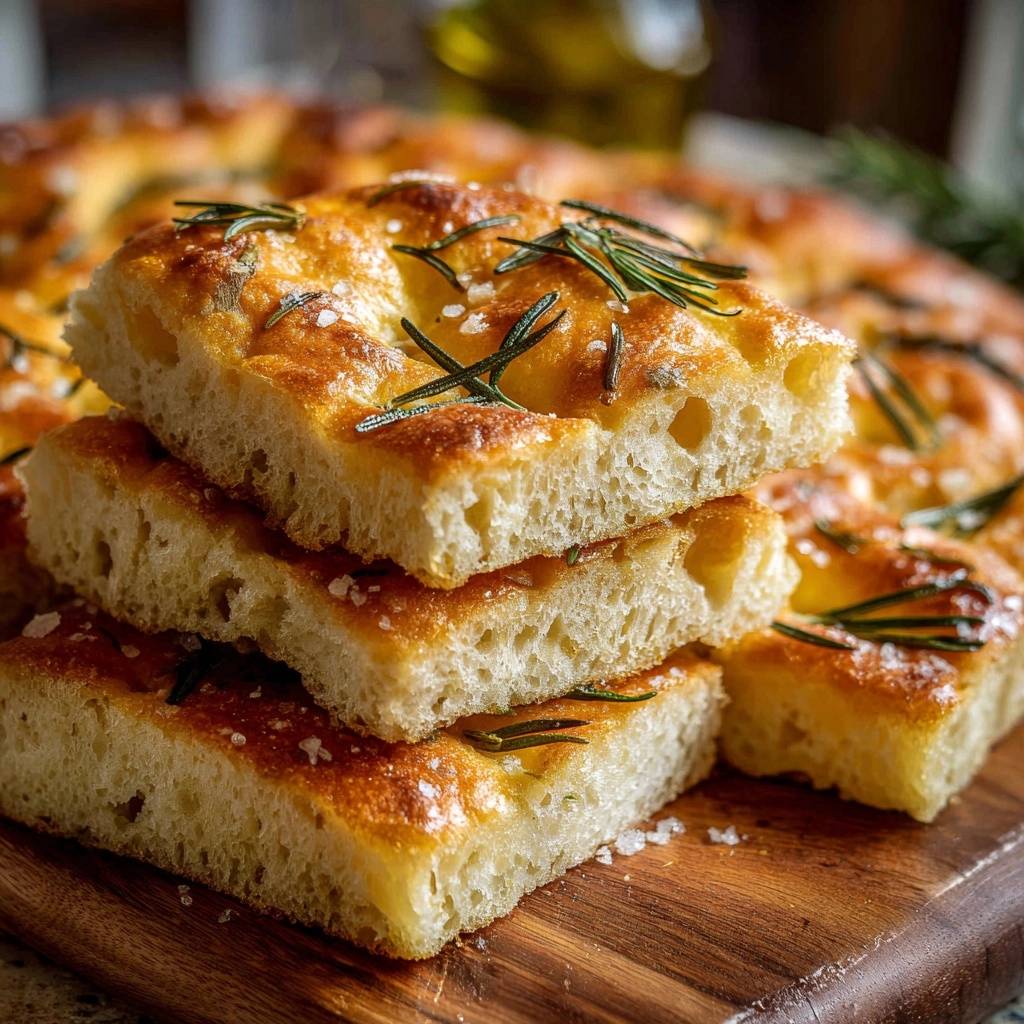
Rosemary Sea Salt Focaccia with Massive Air Bubbles

Why High-Hydration Dough Transforms Focaccia
Why does most focaccia turn out flat and dense? You’ve probably ended up with sad, chewy slabs lacking those irresistible air pockets. This Rosemary Sea Salt Focaccia fixes that forever. It uses an 80% high-hydration dough and a simple stretch-and-fold method, no kneading required.
Therefore, you get massive bubbles and a tall, open crumb every time. The overnight cold proof seals the deal. It builds flavor and traps gas for a foolproof rise that beats any store-bought version.
You can use that same cold-proof technique to build incredible flavor in this savory cranberry brie monkey bread.
Here’s the expertise kicker: the secret lies in those stretch-and-folds during the first two hours. They strengthen gluten gently, so your Rosemary Sea Salt Focaccia rises sky-high without deflating. Oh man, the first bite cracks crisp, then yields to airy softness. You’ll crave it daily.
Essential Ingredients for Rosemary Sea Salt Focaccia
You’ll need 500 grams bread flour, 400 ml warm water (about 100F), 10 grams instant yeast, 10 grams sea salt, 100 ml olive oil (divided, plus extra for drizzling), 6-8 sprigs fresh rosemary, and flaky sea salt for topping. Each plays a starring role.
First, bread flour’s high protein content builds the structure for big bubbles. In addition, warm water activates the yeast fast without killing it. Instant yeast skips proofing, unlike active dry, saving you time.
Sea salt goes in early but not with yeast directly, so it enhances flavor without slowing fermentation. Olive oil adds richness and crispiness. Fresh rosemary beats dried for its punchy, piney aroma. Flaky sea salt gives that addictive crunch. No buttermilk? Don’t worry, this stays simple.
Bread Flour’s Role in Open Crumb Structure
Bread flour has 12-14% protein, perfect for stretch-and-folds. It forms strong gluten strands that trap gas for open crumb. All-purpose flour fails here; it’s weaker and leads to dense results.
Therefore, weigh your flour precisely. Your Rosemary Sea Salt Focaccia will thank you with height and holes.
Olive Oil Quantities for Crisp Exterior
Use 100 ml total: 50 ml in the dough for tenderness, 50 ml in the pan for a frying effect, and extra drizzle for shine. Extra virgin olive oil brings fruity notes and heart-healthy fats.
However, don’t skimp on the pan oil. It creates that golden, crunchy bottom everyone loves.
Science of Stretch-and-Fold for Strong Gluten
High-hydration dough at 80% water hydrates proteins slowly. Traditional kneading deflates it, but stretch-and-folds align gluten strands gently. This traps CO2 for huge bubbles.
In addition, each fold strengthens the network without toughness. You’ll see the dough transform from shaggy to smooth and elastic. Basic bread science backs this: glutenin and gliadin form when stretched, not pounded.
Therefore, skip the stand mixer. Your hands build better structure for Rosemary Sea Salt Focaccia’s signature texture.
Why Cold Fermentation Builds Flavor
Cold proofing slows yeast, letting enzymes break starches into sugars overnight. This creates malty depth and retains CO2 for epic rise. Room-temp proof rushes it, leading to flat, bland loaves.
That same cold fermentation trick works beautifully for these golden sesame dinner rolls too.
However, 12-24 hours in the fridge guarantees tall focaccia. The dough smells richer too.
Step-by-Step: Mixing Shaggy Rosemary Focaccia Dough
Whisk 500 grams bread flour, 10 grams instant yeast, and 10 grams sea salt in a large bowl. Add 400 ml warm water and 50 ml olive oil. Mix with a wooden spoon just 1 minute until shaggy and sticky.
This sticky mess signals success; it’s too wet for kneading. Wet your hands if it sticks. Cover and rest 30 minutes. The dough relaxes, smelling faintly yeasty already.
Mastering Four Stretch-and-Fold Rounds
Wet your hands, grab one edge, stretch up high, and fold over the center. Rotate the bowl 90 degrees and repeat four times per round. Rest 30 minutes, then do three more rounds over 2 hours total.
Avoid tears by stretching gently. The dough gains strength, turning silky and bubbly. This prevents flat Rosemary Sea Salt Focaccia.
Overnight Cold Proof for Tall Focaccia Rise
Cover tightly and refrigerate 12-24 hours. Cold slows yeast for flavor and gas balance. Next day, preheat to 450F.
Pour 50 ml olive oil into a 9×13-inch pan and spread. Gently transfer dough, stretching to edges without punching down. Let rise in a warm spot 30-45 minutes until puffy and jiggly.
Dimpling Technique for Signature Texture
Oil your fingers and dimple deeply every 2 inches, pressing to the pan bottom. Embed rosemary sprigs in dimples. Drizzle generously with olive oil and sprinkle flaky sea salt.
Dimples hold toppings and create olive oil pools for crisp edges. Your focaccia looks pro now.
Baking Rosemary Sea Salt Focaccia to Golden Crisp
Bake at 450F on the middle rack 20-25 minutes, rotating halfway. Look for deep golden brown and crisp top. Internal temp hits 205F.
Cool on a wire rack slightly, then slice into squares. Pro tip: serve warm for peak crunch. Store airtight up to 2 days.
What to Serve Alongside Your Focaccia
This airy, herb-scented focaccia is perfect for dipping, sopping up sauces, or balancing a richer main dish. Here are two ideas that pair well with its crisp crust and soft crumb.
- The creamy, nutty Pesto Parmesan Shells echo the rosemary’s savory notes and add a soft, chewy texture that complements the bread.
- A bowl of Shrimp and Mussel Spaghetti brings briny seafood and a light broth that’s ideal for soaking up with a torn piece of focaccia.
Avoiding Common Mistakes in Focaccia Baking
Flat rise? Check yeast freshness and proof times. Dense crumb means low hydration or overworking; stick to the recipe. Soggy bottom? Use full pan oil.
Burning rosemary? Press sprigs deep. Always weigh ingredients; eyeballing fails. Therefore, your Rosemary Sea Salt Focaccia rises perfectly.
Equipment Choices for Perfect Results
A 9×13 metal pan conducts heat for crisp bottoms; glass traps moisture and steams. Use a digital scale for precision and thermometer for water temp. Proofing box speeds the final rise if your kitchen’s chilly.
Flavor Variations on Rosemary Sea Salt Focaccia
Swap rosemary for thyme or oregano. Add garlic-infused oil, halved cherry tomatoes, or olives pressed in. Lemon zest brightens it up.
It’s vegan already. For gluten-free, use a 1:1 blend but expect smaller bubbles; hydration stays key.
Pairing Rosemary Sea Salt Focaccia with Meals
Dip it in olive oil or pair with minestrone soup. It shines in panzanella salad or as sandwich bread with mozzarella and veggies. Perfect antipasti side too.
However, slice thick for meals. The crisp salt and herbal punch elevate everything.
Make-Ahead and Freezing Rosemary Sea Salt Focaccia Guide
Freeze dough after cold proof; thaw overnight in fridge, then proof and bake. Baked slices freeze well up to 1 month; reheat at 350F.
Scale up for holidays: double for two pans. Pro tip: par-bake, freeze, then finish fresh.
Rosemary Sea Salt Focaccia FAQ
Can I use active dry yeast instead of instant?
Yes, but proof it first in the warm water for 5-10 minutes until foamy. Then mix with flour and salt. This ensures activation, though instant yeast is faster and more reliable for high-hydration doughs like this Rosemary Sea Salt Focaccia.
Why is my focaccia flat or lacking big bubbles?
Common culprits include dead yeast, insufficient stretch-and-folds, or skipping the overnight cold proof. Test yeast with warm water first, do all four fold rounds fully, and fridge it 12+ hours for gas trapping. Weigh flour accurately too; too much deflates it.
How do I store leftovers and can it freeze?
Store airtight at room temp up to 2 days; beyond that, refrigerate up to 4 days and reheat at 350F to crisp. Freeze baked slices in a zip bag up to 1 month; thaw and reheat directly. Don’t freeze raw dough longer than 2 weeks or flavor fades.
What if I don’t have time for overnight proofing?
It’s possible with a 2-3 hour room-temp bulk ferment after folds, then proceed. However, expect flatter height and less flavor. Cold proof is worth planning for massive air bubbles in your Rosemary Sea Salt Focaccia.
Can I substitute bread flour or adjust for a smaller pan?
Bread flour is best for gluten strength; all-purpose works but yields denser crumb. For an 8×8 pan, halve everything (250g flour, 200ml water, etc.) and bake 18-22 minutes. Keep 80% hydration ratio for bubbles.
Why is the dough so sticky and hard to handle?
That’s normal for 80% hydration; it creates steam for open crumb. Always wet your hands generously before folds or transferring. Resist adding flour, or you’ll get tough, flat focaccia. Patience pays off with airy results.

Rosemary Sea Salt Focaccia
Course: BreadCuisine: ItalianDifficulty: medium1
loaf (9×13-inch pan, 12-16 servings)30
minutes25
minutes250
kcal60
MinutesTired of dense, flat focaccia? This 80% hydration dough uses stretch-and-folds and overnight cold proof for huge bubbles and airy texture.
Ingredients
500 grams bread flour
400 ml warm water (about 100F)
10 grams instant yeast
10 grams sea salt
100 ml olive oil, divided, plus extra for drizzling
6-8 sprigs fresh rosemary
Flaky sea salt for topping
Directions
- In a large bowl, whisk flour, yeast, and salt. Add warm water and 50 ml olive oil. Mix with a wooden spoon or spatula just until a shaggy, sticky dough forms, about 1 minute. No kneading, this high hydration is key to airy texture.
- Cover and let rest 30 minutes. Perform stretch-and-folds: Wet your hands, grab one edge of dough, stretch up and fold over center. Rotate bowl 90 degrees, repeat 4 times. Cover and rest 30 minutes. Do 3 more rounds of stretch-and-folds every 30 minutes (total 2 hours). This builds structure for huge bubbles without deflating the dough.
- Cover tightly and refrigerate overnight (12-24 hours). Cold proof develops flavor and traps gas for foolproof tall rise, solving flat focaccia forever.
- Next day, preheat oven to 450F with rack in middle. Pour 50 ml olive oil into 9×13-inch baking pan, spread evenly. Gently transfer dough to pan, stretching to edges without punching down.
- Let rise in warm spot 30-45 minutes until puffy. Dimple surface deeply with oiled fingers every 2 inches, pressing to bottom of pan. Press rosemary sprigs into dimples, drizzle generously with olive oil, and sprinkle with flaky sea salt.
- Bake 20-25 minutes until golden brown and crisp on top, rotating halfway. Cool slightly on wire rack, then slice into squares. Store airtight up to 2 days.
Notes
- Use bread flour for best gluten development. Cold proof is essential for flavor and structure. Store airtight up to 2 days.