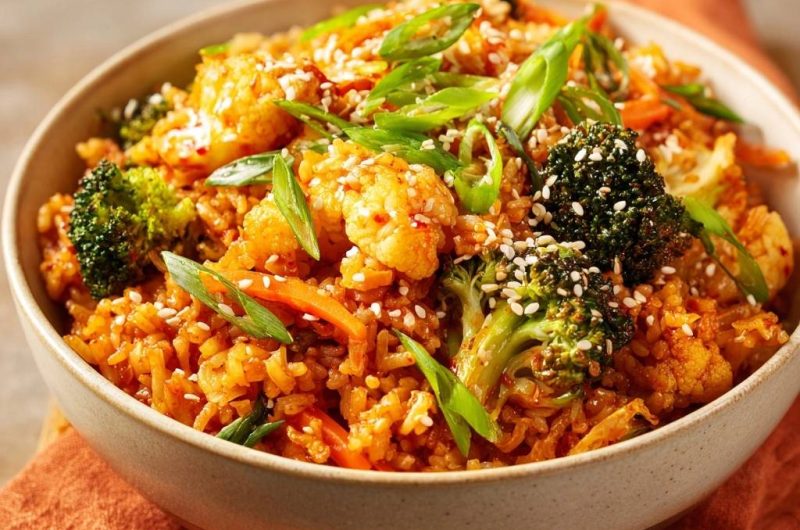
Gochujang Veggie Fried Rice: Crisp Veggies Guaranteed
Why Gochujang Veggie Fried Rice Transforms Weeknights
Nothing ruins fried rice faster than limp, watery broccoli and cauliflower that turn the whole dish into mush. You’ve stir-fried with high hopes, only to end up with a soggy mess. This Gochujang Veggie Fried Rice fixes that forever with a simple blanch-shock-dry method. It pulls out hidden moisture so your veggies stay crisp-tender and vibrant.
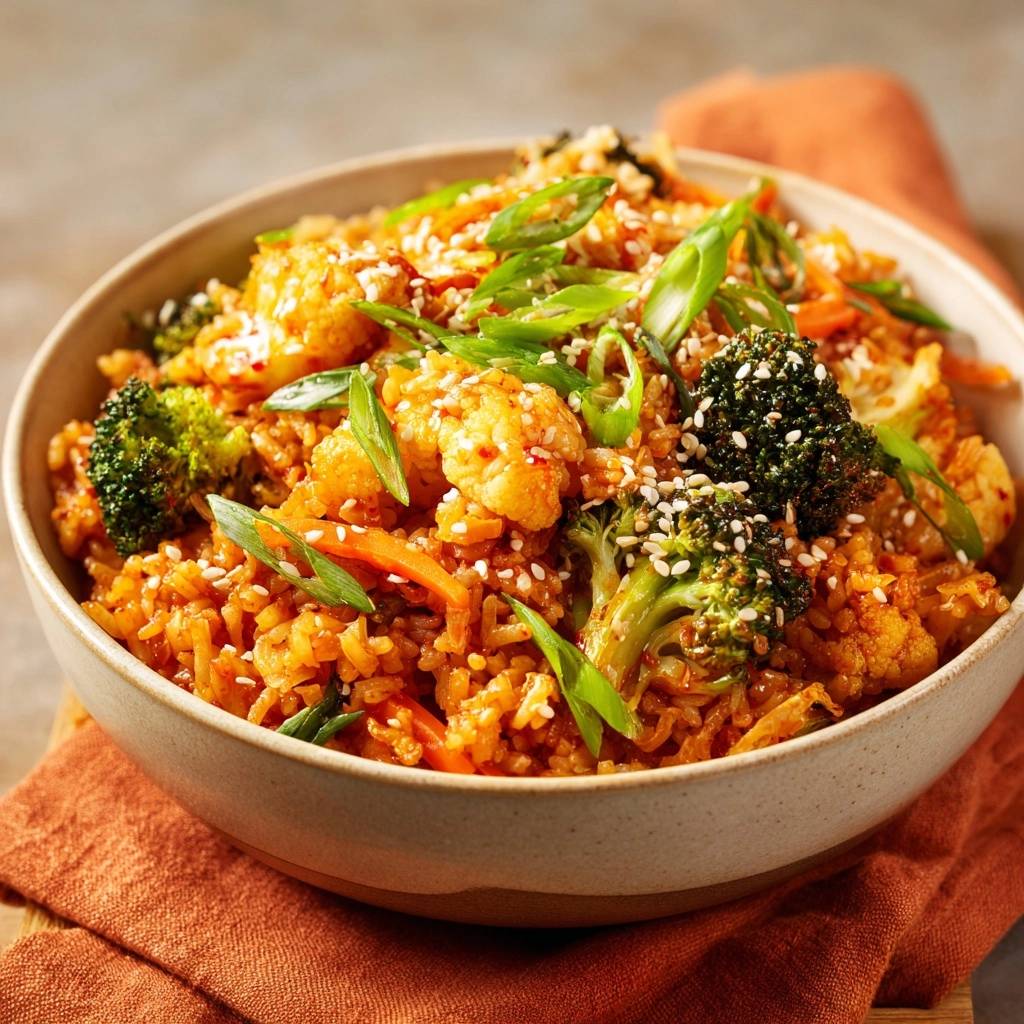
Therefore, weeknights get a serious upgrade. You whip this up in about 20 minutes, packing in nutrition from broccoli, cauliflower, and carrots without the usual steam-fest. Plus, gochujang brings that fermented umami heat that coats every grain perfectly. No more takeout cravings when you’ve got this bold, spicy kick at home.
The real secret? That ice bath shock after blanching halts enzymes instantly, locking in color and crunch. Pat those florets bone-dry afterward, and they char beautifully instead of sweating. Oh man, the first bite hits with smoky wok hei and that sweet-spicy glaze, it’s pure satisfaction.
Key Ingredients for Gochujang Veggie Fried Rice Success
Day-old chilled jasmine rice forms the backbone here. It absorbs less moisture during frying, so grains stay separate and fluffy. Freshly cooked rice steams everything, but chilled rice from last night’s leftovers fries up perfectly.
Broccoli and cauliflower florets need to be small and uniform. They blanch evenly that way, turning bright and crisp without overcooking. Carrots sliced thin add sweetness and crunch, while green onions bring fresh bite at the end.
Gochujang delivers deep, fermented heat that’s way better than plain chili paste. Mix it with soy sauce for salty umami and sesame oil for nutty finish. Vegetable oil handles high wok heat without burning, and a sprinkle of toasted sesame seeds adds crunch. Everything’s vegan, by the way.
Day-Old Rice: Foundation of Separate Grains
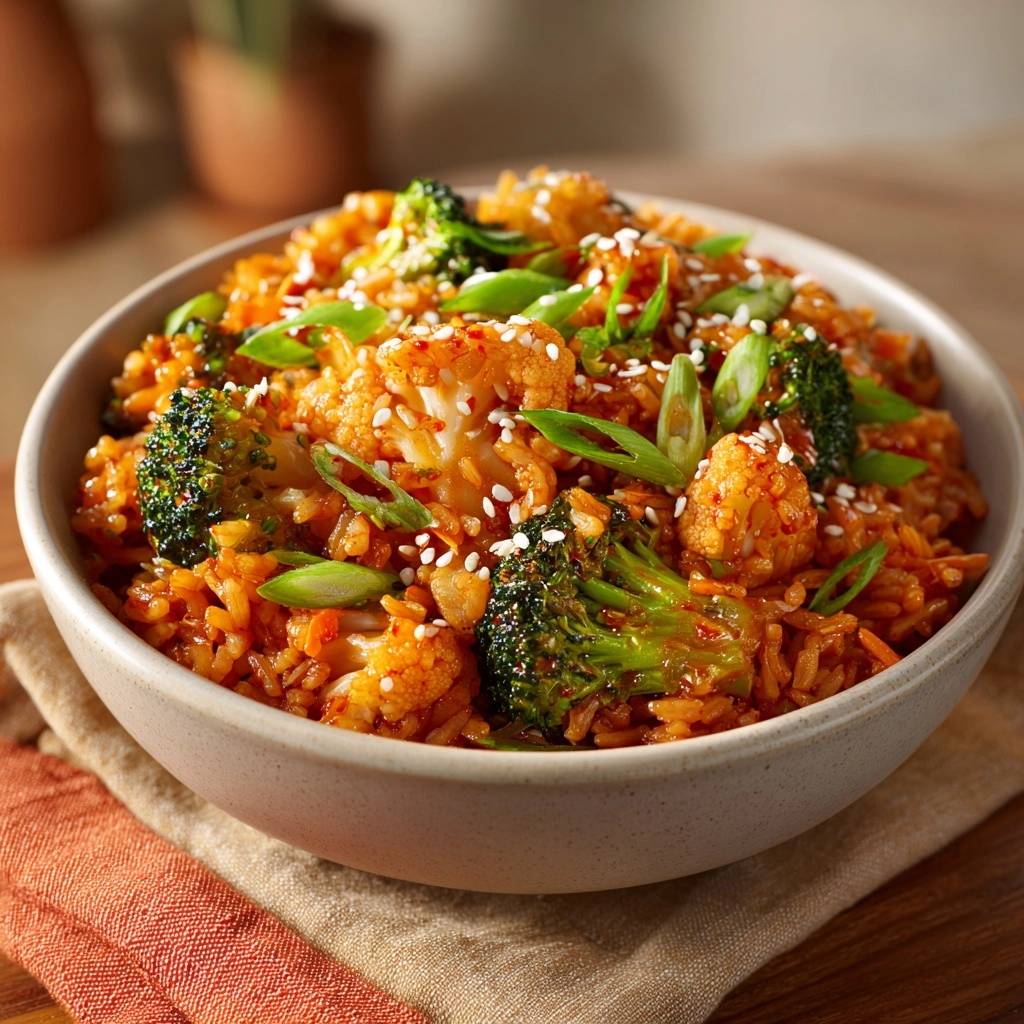
Chilled jasmine rice works best because starch retrogradation happens overnight. Grains firm up and release less sticky starch when fried. Store cooked rice in the fridge uncovered first to dry it out, then cover for up to 3 days.
No jasmine? Basmati holds up well too, with similar light texture. Just avoid short-grain varieties, as they clump more. Break up big clumps gently before frying for pro results.
Broccoli and Cauliflower: Prepping for Crispness
Cut florets into small, bite-sized pieces, about 1-inch across. Uniform size ensures even blanching and no raw centers. Check freshness by snapping a stem, it should crunch loudly.
Fresh produce from farmers markets or well-stocked grocery bins gives the best color pop. Avoid big frozen bags, as they hold extra ice water.
Gochujang and Sauces: Building Bold Flavor Layers
Grab a good gochujang like Haechandle brand for smooth fermentation without grit. Low-sodium soy sauce prevents over-salting, especially since you taste at the end. Sesame oil’s toasty aroma blooms on high heat, so don’t skip it.
Whisk them smooth first to avoid clumps. This emulsion coats rice evenly for that glossy, spicy shine.
If you enjoy the savory-sweet balance here, you’ll love these sticky glazed teriyaki meatballs for another quick weeknight option.
Science of Crisp Gochujang Veggie Fried Rice Texture
The blanch-shock-dry method evaporates excess veggie moisture through osmosis. Hot salted water draws out water from cells, then the ice bath slams the door on enzymes that soften texture. Patting super dry removes surface water that would steam your wok instead of searing.
In addition, high-heat frying triggers Maillard reaction for nutty char on veggies. Chilled rice’s retrograded starch resists breaking down, so no gluey mess. Common pitfalls like skipping the dry step lead to steaming, not stir-frying.
Picture this: broccoli goes from dull green to vivid emerald, carrots soften with sweet edges, and rice pops loose. It’s all about controlling water at every stage for that addictive contrast.
Blanch-Shock Method: Evaporating Hidden Moisture
Boil heavily salted water like pasta water, it seasons veggies lightly. Blanch broccoli and cauliflower 1-2 minutes max until just tender-crisp. Plunge into ice water 1:1 ratio ice to water immediately, it shocks cells shut for 1 minute.
Drain in a colander, then spread on towels. Press gently to wick away every drop, or spin in a salad spinner. This step alone prevents 90% of sogginess.
High-Heat Stir-Fry: Achieving Wok Hei Char
Heat oil until it shimmers and smokes lightly, around 375°F if you measure. That’s when wok hei, that smoky breath, develops. Carbon steel woks hold heat best, but a large cast-iron skillet works too.
Avoid overcrowding, it drops temp and steams. Toss constantly for even char spots that taste incredible.
Step-by-Step: Blanching Veggies for Gochujang Fried Rice
Start with a large pot of salted water boiling furiously. Drop in small broccoli and cauliflower florets together. Time exactly 1-2 minutes, they turn bright green and smell fresh, not grassy.
Therefore, scoop them out fast into an ice water bath. Swish for 1 minute until cold to touch, this stops cooking dead. Drain thoroughly, then pat with paper towels or a lint-free kitchen towel until no moisture remains. Pro tip: do this ahead for seamless wok action.
Over-blanching makes them mushy later, so err short. You’ll smell the sweetness peak right before they’re done.
Step-by-Step: Building Gochujang Veggie Fried Rice in Wok
First, whisk gochujang, soy sauce, and sesame oil in a bowl until silky smooth. No lumps means even coating later. Set it aside while you heat things up.
If you enjoy the quick cooking method used for those crisp veggies, you might like this garlic ginger chicken and broccoli with silky velveting.
Heat 1 tablespoon vegetable oil in your wok over screaming high heat until shimmering. Add thin carrot slices, stir-fry 1 minute until they soften slightly and color brightens. Push to one side, add dried florets, toss 2-3 minutes for char without wilting.
In addition, add the last tablespoon oil to the empty side. Dump in chilled rice, break clumps with spatula edge. Fry 3 minutes until hot and grains dance free. Pour sauce over, toss vigorously 1 minute to glaze everything. Stir in green onions and sesame seeds, taste for salt. Serve steaming hot.
Carrot Slices First: Timing for Tenderness
Slice carrots thin, like matchsticks or coins under 1/8-inch. They soften in 1 minute on high heat, turning vibrant orange with sweet edges. Watch for that slight give when poked.
Rice Integration: Separating Every Grain
Cold rice fries best, it sheds moisture fast. Use a metal spatula or wok paddle to smash clumps against the wok. After 3 minutes, grains separate with a light toast smell.
Sauce Toss: Even Gochujang Distribution
Pour sauce in a circle to spread evenly, avoid dumping center. Toss hard for 1 minute as heat drops slightly. You’ll see glossy red coat every piece perfectly.
Avoiding Soggy Gochujang Veggie Fried Rice Pitfalls
Warm rice clumps and steams, so chill it first overnight. Skipping the pat-dry turns veggies watery fast. Low heat below shimmering just simmers, not fries.
However, overcrowding drops wok temp, leading to mush. Fix by batching if needed. Over-saucing drowns flavor, so taste incrementally.
Spot wilting? It smells steamed, not charred. Rescue by spreading thin and cranking heat higher next time.
Overcrowding Wok: Batch Cooking Fix
Use a 14-inch wok minimum for this amount. Keep veggies in a single layer max. Cook in two batches if smaller pan, reheat together at end.
Sauce Imbalance: Taste-Test Protocol
Add sauce in stages if unsure. Balance umami from soy against gochujang heat. Tweak with a splash more soy or water to mellow spice.
Flavor Variations in Gochujang Veggie Fried Rice
Mix in sliced mushrooms or bell peppers for earthiness. Tofu cubes or tempeh boost protein without changing texture. Dial spice down with milder gochujang or add honey.
What to Serve with Gochujang Veggie Fried Rice
This fried rice has a spicy, savory kick from gochujang, so you’ll want something sweet or sticky to balance the heat. Try these two options for a fuller meal.
- Pair the fried rice with crispy glazed eggplant cubes for a sweet-savory contrast and a similar sticky glaze that mirrors the gochujang’s richness.
- Add sticky soy glazed meatballs
Gluten-free tamari swaps for soy easily. Skip sesame seeds for nut-free, use sunflower seeds instead. Rotate seasonal veggies like zucchini in summer or kale in winter.
These tweaks keep it fresh. Pro tip: frozen edamame thaws perfectly in the wok for pop-in-your-mouth protein.
Protein-Packed Gochujang Veggie Fried Rice Twists
Crumble firm tofu and fry first for crisp edges. Scramble eggs separately, push aside like veggies, fold in at end. Toss in shelled edamame with rice for sweet bursts and extra fiber.
Pairing Sides with Gochujang Veggie Fried Rice
A cool cucumber salad with rice vinegar cuts the heat perfectly. Quick kimchi adds ferment tang without overpowering. Miso soup balances with subtle savoriness.
Grill teriyaki tofu slabs for heartier meals. Iced green tea refreshes the spice. Portion rice into bowls with sides for balanced plates everyone loves.
Gochujang Veggie Fried Rice Storage and Reheating
Cool completely on a sheet pan first, then store in airtight containers. Fridge holds it 4 days max, flavors deepen nicely. Freezes well up to 2 months in portions, rice stays separate.
Reheat in a hot wok with a splash of oil for crisp restore, beats microwave steaming. Single portions thaw quick overnight. Avoid refreezing after fridge time.
Expert Troubleshooting for Gochujang Veggie Fried Rice
How do I store Gochujang Veggie Fried Rice leftovers?
Spread it out to cool fully on a baking sheet, about 30 minutes, to stop steaming. Pack into airtight glass containers and fridge for up to 4 days. It freezes great in zip-top bags for 2 months, just flatten for quick thaw. Reheat in a screaming hot wok with 1 teaspoon oil per serving to revive crispness and separate grains, stirring 3-4 minutes. Microwave works in a pinch but softens texture, so cover loosely and stir halfway.
Why is my Gochujang Veggie Fried Rice soggy?
Sogginess usually comes from warm rice or wet veggies. Always use day-old chilled rice, it releases less starch. Skip the blanch-dry? Veggies steam everything. Pat florets extra dry, even spin twice if needed. Low wok heat or overcrowding traps moisture too, so crank it high and batch cook. Fix next time by chilling rice 24 hours and drying veggies religiously, you’ll get perfect separation.
Can I substitute ingredients in Gochujang Veggie Fried Rice?
No gochujang? Mix 1 tablespoon miso, 1 tablespoon honey, and chili flakes for similar umami heat. Swap jasmine rice for basmati or cooled brown rice, just chill well. Broccoli out? Use green beans or asparagus, blanch same time. Gluten-free? Tamari for soy sauce 1:1. No sesame oil? Neutral oil plus extra seeds toasted fresh. Veggies flexible, but keep hardy ones for wok hei.
Why are my veggies still crunchy after stir-frying?
Under-blanching leaves them raw inside. Blanch 1.5-2 minutes until a floret pierces easily with a knife tip but holds shape. Ice bath too short? Enzymes keep softening unevenly. Extend to 90 seconds in ice water. Thin uniform cuts help too. Test one floret post-fry, adjust blanch next batch up 30 seconds for your stove’s boil speed.
How do I make Gochujang Veggie Fried Rice less spicy?
Cut gochujang to 1 tablespoon and add 1 teaspoon honey or sugar for mellow. Dilute sauce with 1 tablespoon water or more soy before tossing. Balance with cooling add-ins like corn kernels or diced avocado at end. Taste sauce alone first, tweak incrementally. Milder brands like Sempio work great for less fire without losing depth.
No wok? Can I use a skillet for Gochujang Veggie Fried Rice?
Yes, a large 12-inch nonstick or cast-iron skillet does the job. Heat higher to compensate for less heat retention, oil until smoking. Work in smaller batches to avoid crowding, push ingredients to edges like wok. Expect slightly less wok hei, but char still pops. Metal spatula essential for scraping and tossing without melting plastic.
Gochujang Veggie Fried Rice
Course: Main CourseCuisine: Asian FusionDifficulty: easyYields4
servingsPrep Time15
minutesCook Time10
minutesCalories350
kcalTotal Time25
MinutesTired of limp broccoli and cauliflower turning your fried rice into mush? This recipe’s game-changing blanch-shock-dry method evaporates excess moisture for crisp-tender veggies that stay vibrant every time.
Ingredients
4 cups cooked day-old jasmine rice, chilled
2 cups small broccoli florets
2 cups small cauliflower florets
1 large carrot, thinly sliced
3 green onions, sliced (plus extra for garnish)
2 tablespoons sesame seeds, toasted
2 tablespoons gochujang
2 tablespoons soy sauce
1 tablespoon sesame oil
2 tablespoons vegetable oil
Salt to taste
Directions
- The no-soggy-veggies secret starts here: Bring a large pot of salted water to a boil. Add broccoli and cauliflower florets; blanch 1-2 minutes until bright green but still crisp. Immediately transfer to an ice water bath for 1 minute to stop cooking. Drain well, then pat florets extremely dry with paper towels or a clean kitchen towel. This removes hidden moisture that would otherwise steam your stir-fry. Set aside.
- In a small bowl, whisk gochujang, soy sauce, and sesame oil until smooth. Set aside.
- Heat 1 tablespoon vegetable oil in a large wok or skillet over high heat until shimmering. Add carrot slices; stir-fry 1 minute until slightly softened. Add dried broccoli and cauliflower; stir-fry 2-3 minutes more, tossing constantly for even char without overcrowding. Push veggies to one side.
- Add remaining 1 tablespoon vegetable oil to empty side. Add chilled rice, breaking up any clumps with a spatula. Stir-fry 3 minutes until grains separate and heat through.
- Pour in gochujang sauce; toss everything 1 minute to coat evenly. Stir in sliced green onions and sesame seeds. Taste and add salt if needed. Serve hot, garnished with extra green onions and sesame seeds.
Notes
- Use day-old chilled rice for best texture. Pat blanched veggies extremely dry to avoid steaming.