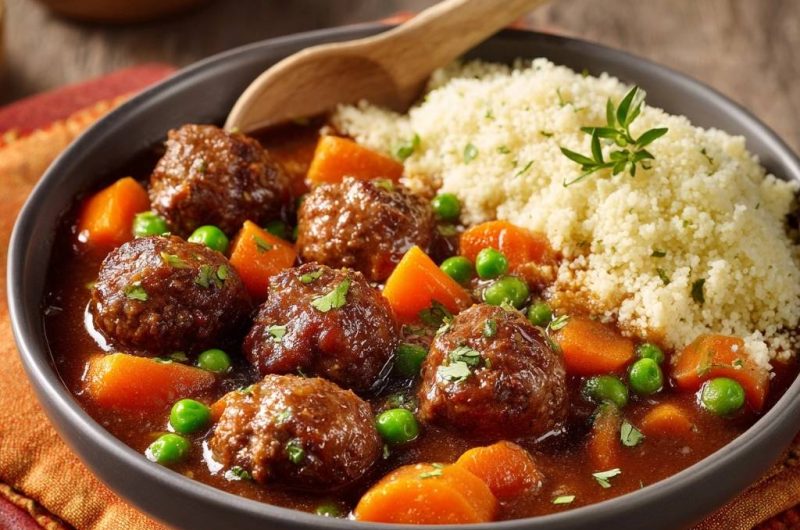
Juicy Beef Meatballs in Carrot-Pea Stew over Couscous
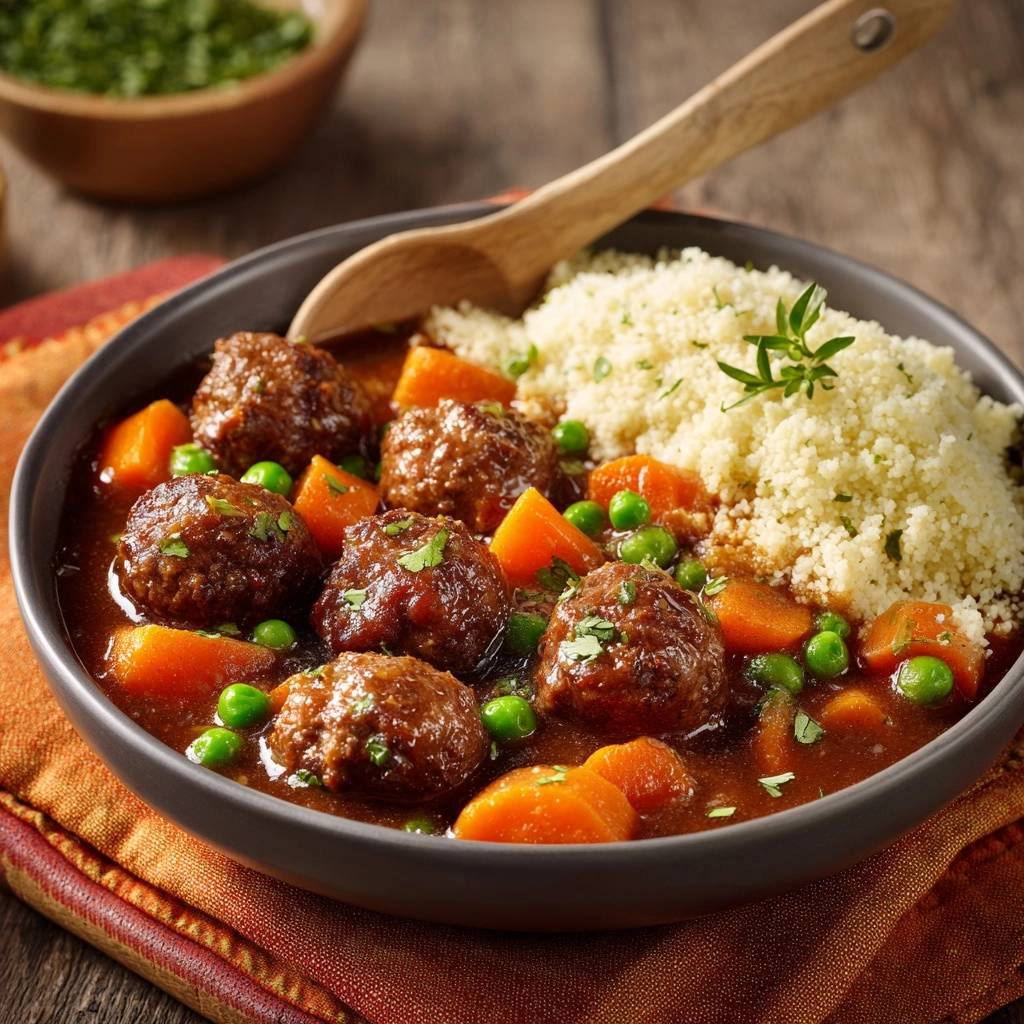
Why Grated Carrots Transform Dry Beef Meatballs
Ever bitten into a beef meatball in stew that felt like a hockey puck? You’re not alone. Most home cooks end up with dry, tough results because ground beef loses moisture during long simmers. However, this recipe changes everything with grated carrots mixed right into the meat.
Therefore, those carrots release their natural water content, about 88%, which steams the beef from the inside out. In addition, the pectin in carrots binds juices, keeping meatballs succulent. You’ll get tender bites that soak up the carrot-pea stew’s flavors without falling apart.
The real secret? Grate the carrots finely before mixing. This ensures even distribution and maximum moisture lock. Oh man, the first time I tried it, the difference blew me away, juicy every single time.
Key Ingredients for Juicy Beef Meatballs and Stew Base
You’ll need 1 pound ground beef, 4 large carrots (2 grated finely, 2 cut into chunks), 1 cup frozen peas, 1 1/2 cups couscous, 1 bunch fresh cilantro chopped (plus extra for garnish), a small bunch fresh parsley or thyme chopped, 2 tablespoons olive oil, 2 cups vegetable broth, 1 teaspoon ground cumin, 1 teaspoon paprika, and salt and pepper to taste.
Each plays a starring role. Firstly, the beef provides the hearty base. Then, grated carrots add moisture and subtle sweetness that prevents dryness. Meanwhile, chunked carrots give the stew body and texture.
Frozen peas bring pop and natural sugars that balance the beef’s richness. Fresh herbs like cilantro and parsley brighten everything, while cumin and paprika deliver warm depth. Use good quality broth too, it amplifies all those layers.
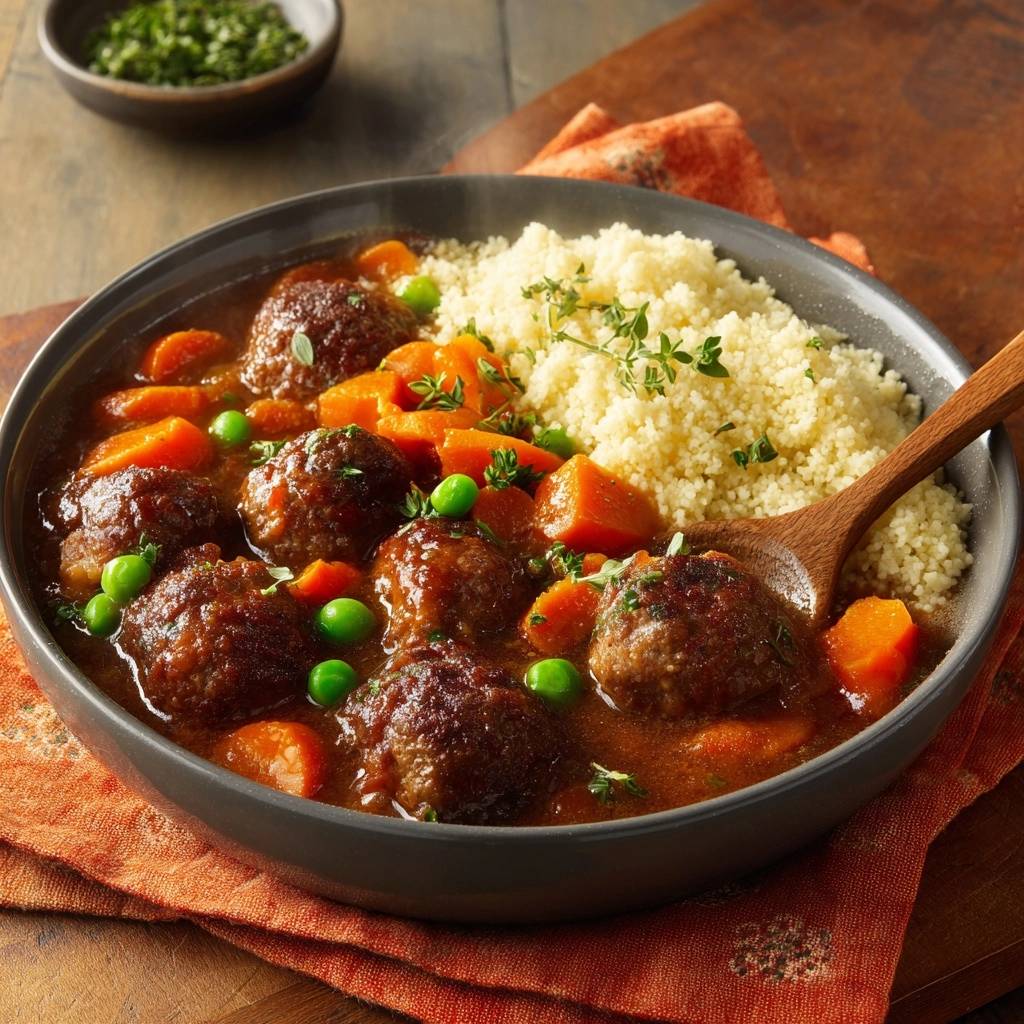
Ground Beef Selection for Maximum Juiciness
Pick 80/20 ground beef, meaning 80% lean and 20% fat. That fat renders during cooking, basting the meat for ultimate juiciness. Leaner cuts dry out fast in stews, so avoid them here.
Grass-fed beef tastes richer with the carrot-pea combo. However, any quality 80/20 works. Don’t skimp, it makes the meatballs shine.
Carrots and Peas: Moisture and Sweetness Duo
Grate two carrots finely into the meat mix. This breaks down cells, releasing juices that keep beef tender. Chunk the other two for stew heft and chew.
The same technique of grating vegetables to release their natural moisture works beautifully in this tender beef stew.
Frozen peas hold their shape better than fresh in simmering broth. They add bursts of sweetness that cut through beefiness. Perfect duo for balance.
Herbs and Spices Elevating Couscous Pairing
Chop cilantro and parsley or thyme fresh, right before using. They lose potency if prepped early. Stir half into meatballs, half into couscous for even flavor.
Cumin and paprika warm the beef without overpowering. Add salt and pepper last in mixing to avoid toughening proteins. Season stew boldly at the end.
Science of Juicy Meatballs in Carrot-Pea Stew
Ground beef proteins coagulate when heated, squeezing out moisture. Grated carrots counteract this with their high water content. Therefore, they create steam pockets inside meatballs during cooking.
In addition, carrot pectin gels mildly, trapping beef juices. Browning first triggers Maillard reaction, building savory crusts that seal everything in. Veggies’ mild acidity tenderizes further.
Moisture Lock from Grated Carrot Integration
Grating ruptures carrot cells, freeing liquid and pectin. Unlike breadcrumbs, it doesn’t soak up fat, just enhances it. Meatballs stay plump even after 20-minute simmers.
Browning Seals Juices Before Stewing
Medium heat sparks Maillard browning, forming flavor compounds. Cook in batches to avoid steaming, which keeps surfaces crisp. Juices stay locked until the stew finishes them.
Step-by-Step: Forming Juicy Beef Meatballs
Combine beef, grated carrots, half the cilantro, half the parsley or thyme, cumin, paprika, salt, and pepper in a bowl. Mix gently with your hands until just blended. Overmixing develops gluten-like toughness, so stop early.
Form into 1-inch balls. They should hold shape loosely. Chill 10 minutes, this firms them up for perfect browning. Pro tip: Wet hands prevent sticking.
Step-by-Step: Browning and Building Carrot-Pea Stew
Heat 1 tablespoon olive oil in a large pot over medium. Add meatballs in batches, turning every 4-5 minutes for even brown. Remove, they finish cooking in stew.
Add remaining oil and carrot chunks. Saute 5 minutes until soft and fragrant. Pour in broth, scrape browned bits, then simmer with peas and meatballs covered for 20 minutes. Smell that cozy aroma building?
Searing Meatballs Without Overcooking
Oil should shimmer, not smoke. Use tongs to rotate gently. Aim for deep color, not full doneness inside, around 160°F target later.
Layering Flavors in Vegetable Broth Base
Saute carrots build fond, those tasty browned bits. Deglaze fully with broth for umami punch. Low simmer keeps veggies vibrant, meatballs juicy.
Preparing Fluffy Couscous to Absorb Stew Juices
Boil 1 1/2 cups water in a saucepan. Stir in couscous, cover, remove from heat, stand 5 minutes. Fluff with fork and mix in remaining herbs.
This no-stir method prevents mush. Couscous soaks up stew’s spiced broth perfectly, cradling juicy beef meatballs. Texture contrast delights every bite. Don’t boil it, or it turns gummy.
If you enjoy braising beef until it’s spoon-tender, you’ll love this hearty beef and veggie stew made with the same low-and-slow approach.
Avoiding Dry Meatballs: Troubleshooting Stew Pitfalls
Dry meatballs? You likely overmixed or skipped chilling. High heat simmers boil juices out too. Firstly, mix minimally. Secondly, chill balls firm.
Watery stew means overcrowding the pot. Cook meatballs in batches. Tough peas come from early addition, so stir them in late. For altitude, add 5 extra simmer minutes.
Reheat gently with a broth splash to restore moisture. These fixes keep your juicy beef meatballs in carrot-pea stew perfect.
Overworked Meatball Fixes
Test texture: it should feel tacky, not pasty. Rest mix 5 minutes before forming. This relaxes proteins for tenderness.
Stew Simmer Temperature Control
Look for lazy bubbles, not rolling boil. Lid on traps steam. Probe thermometer at 160°F confirms juiciness.
Make-Ahead Guide for Juicy Beef Meatballs in Stew
Form raw meatballs, freeze on a tray, then bag. Thaw overnight, brown fresh. Cooked stew lasts 3 days in fridge.
Prep couscous day-of, it doesn’t hold well. Full meal: chill meatballs morning, simmer evening. Portion into singles for easy weeknights. Keeps everything juicy.
Freezing Meatballs and Carrot-Pea Stew
Flash-freeze raw balls 2 hours, transfer to airtight bags up to 3 months. Stew in containers, defrost in fridge, re-simmer 10 minutes.
Reheating Couscous with Stew Juiciness
Steam couscous loosely covered with broth splash. Microwave stew low, stir often. Avoid drying, taste like fresh.
Flavor Swaps for Juicy Beef Meatballs and Stew
Swap beef for ground turkey, add extra grated carrot for moisture. Lamb works too, amps earthiness. Broccoli for peas keeps texture.
Onion chunks boost savoriness. Coriander pairs with cumin. Try quinoa over couscous for chew, or rice. Keeps juicy beef meatballs in carrot-pea stew vibe.
What to Serve Alongside the Meatball Stew
These beef meatballs in a carrot-pea stew over couscous are hearty and savory, so a cool, crunchy side helps balance the plate. Try one of these slaws.
- For a creamy, tangy contrast, pair it with this Creamy Poppy Seed Coleslaw—the poppy seeds and crisp cabbage cut through the rich stew.
- If you prefer more texture, the Crunchy Creamy Southern Style
Pairing Sides with Carrot-Pea Stew over Couscous
Crisp green salad cuts richness. Yogurt sauce cools spices, adds creaminess. Roasted roots echo carrot sweetness.
Sparkling cranberry juice refreshes alongside. These contrasts make juicy beef meatballs pop brighter. Simple, balanced meal.
Common Questions on Juicy Beef Meatballs in Carrot-Pea Stew
Can Meatballs Bake Instead of Brown?
Yes, bake at 400°F for 10-12 minutes on a parchment-lined sheet until browned. However, pan-searing builds better flavor crust via Maillard reaction. It seals juices more effectively for the carrot-pea stew simmer. Still juicy, just less depth.
Vegetarian Version of Carrot-Pea Stew?
Swap beef for lentils or plant-based crumbles, mix with grated carrots for moisture. Use same spices and stew base. Serve over couscous. It mimics texture, stays hearty and flavorful without meat.
Adjusting Spices in Beef Meatball Stew?
Start with half cumin and paprika if mild preferred, taste stew before serving. Add chili flakes for heat. Fresh grated ginger boosts warmth. These tweaks keep juicy beef meatballs balanced in carrot-pea stew.
Storage Life for Cooked Couscous and Stew?
Store stew in airtight container fridge up to 4 days, meatballs stay juicy. Couscous separate, 3 days max, fluff with water when reheating. Don’t freeze couscous, gets mushy. Thaw stew overnight, simmer refresh.
Scaling Recipe for Family Servings?
Double ingredients for 4-6 people, use larger pot to avoid crowding. Brown meatballs in more batches. Same times work, couscous scales 1:1 water. Perfect juicy beef meatballs in carrot-pea stew for crowds, freezes extras easy.
Beef Meatballs
Course: Main CourseCuisine: AmericanDifficulty: easyYields4
servingsPrep Time20
minutesCook Time30
minutesCalories450
kcalTotal Time50
MinutesDry meatballs ruining your stew game? This recipe fixes it with one simple trick: grated carrot mixed right into the beef. It adds natural moisture and sweetness, locking in juices for tender, flavorful bites every time. Paired with chunky carrots, peas, and fluffy couscous, it’s a cozy weeknight win.
Ingredients
1 pound ground beef
4 large carrots (2 grated finely, 2 cut into chunks)
1 cup frozen peas
1 1/2 cups couscous
1 bunch fresh cilantro, chopped (plus extra for garnish)
1 small bunch fresh parsley or thyme, chopped
2 tablespoons olive oil
2 cups vegetable broth
1 teaspoon ground cumin
1 teaspoon paprika
Salt and pepper to taste
Directions
- Make the meatballs: In a bowl, combine ground beef, grated carrots (this is the key, it releases moisture during cooking to prevent dryness), half the chopped cilantro, half the parsley or thyme, cumin, paprika, salt, and pepper. Mix gently until just combined, do not overwork. Form into 1-inch balls and chill for 10 minutes to help them hold shape.
- Brown the meatballs: Heat 1 tablespoon olive oil in a large pot over medium heat. Add meatballs in batches and cook 4-5 minutes, turning to brown all sides without cooking through. Remove and set aside. This seals in juices.
- Build the stew: In the same pot, add remaining oil and carrot chunks. Saute 5 minutes until softened. Pour in vegetable broth, scraping up browned bits for flavor. Bring to a simmer, then add peas and browned meatballs. Cover and simmer gently 20 minutes. The grated carrot trick ensures meatballs stay ultra-juicy while absorbing the rich, spiced sauce.
- Cook couscous: While stew simmers, bring 1 1/2 cups water to a boil in a saucepan. Stir in couscous, cover, remove from heat, and let stand 5 minutes. Fluff with a fork and stir in remaining herbs. Cook until no pink remains and it reaches 160°F (71°C).
- Serve stew over couscous, garnish with extra cilantro. Enjoy tender meatballs that never dry out!
Notes
- The grated carrot is the key trick to prevent dry meatballs – it releases moisture during cooking for ultra-juicy results. Chill meatballs before browning to help them hold shape.