Mastering Pan-Seared Salmon with Herb Cream
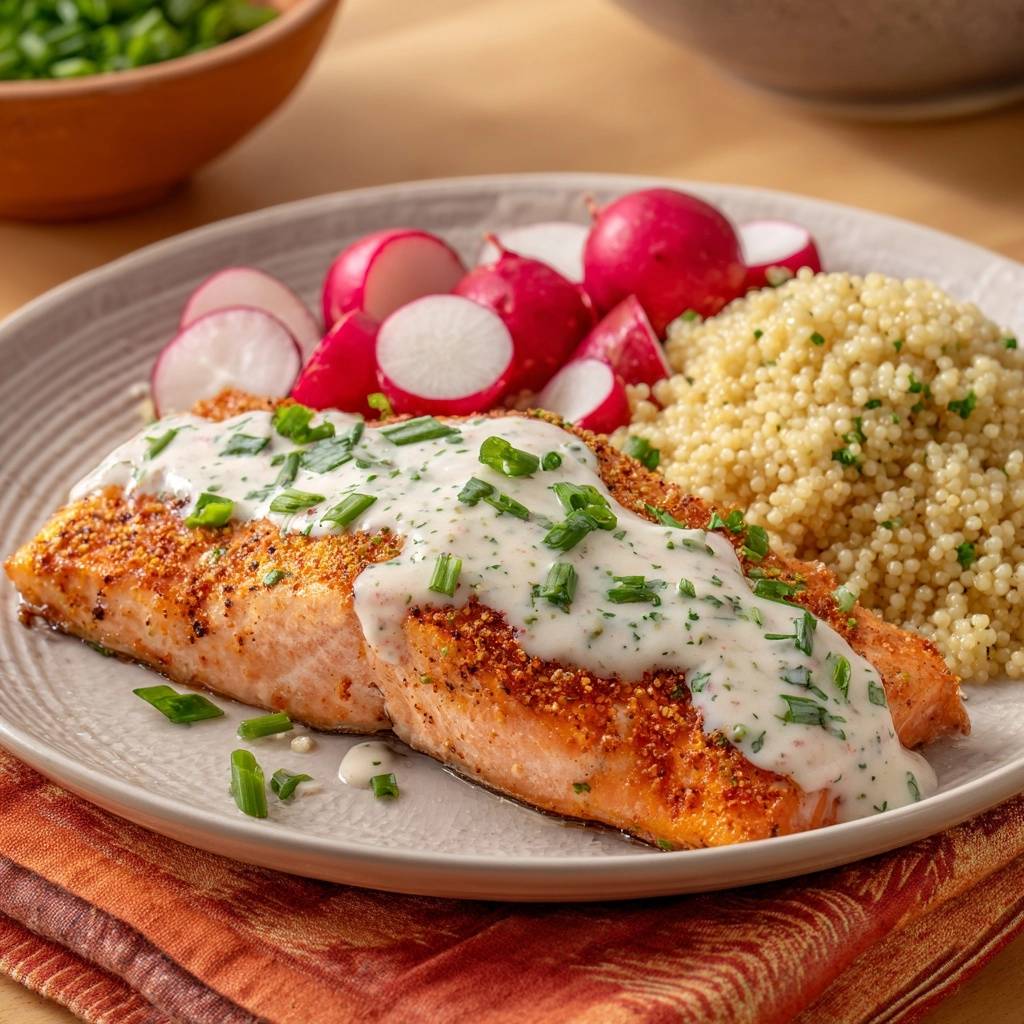
Imagine a fork sliding through a salmon fillet that shatters with a glass-like crunch on the outside, only to reveal a buttery, translucent center that melts the moment it hits your tongue. Most home cooks settle for “cafeteria-style” salmon—that grey, rubbery, and sadly steamed protein that lacks any real character. However, achieving a high-end restaurant sear isn’t about luck; it’s about mastering the moisture on the surface of the fish.
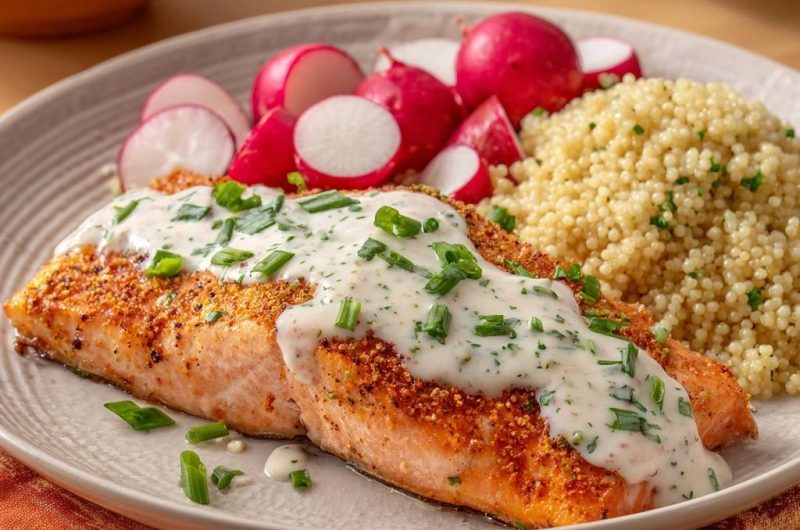
The goal of this Pan-Seared Salmon with Herb Cream is to create a dramatic contrast between the savory, spiced crust and the cooling, tangy herb sauce. Therefore, we focus on a specific high-heat technique that transforms the skin into a salty, crispy wafer. This dish isn’t just a meal; it’s a lesson in how to balance rich omega-3 fats with bright, acidic cream and peppery fresh vegetables.
The secret to that professional snap is moisture-wicking. If your salmon is even slightly damp when it hits the oil, it will steam rather than sear. I’ve found that letting the fillets sit uncovered for a few minutes after patting them dry is the only way to ensure the skin reaches the temperature needed for the Maillard reaction to work its magic.
The Physics of Crispy Salmon Skin
Cooking the perfect salmon is actually a battle against water. When you place a cold, wet piece of fish into a hot pan, the surface moisture immediately turns into a layer of steam. This steam acts as a thermal barrier, preventing the skin from ever reaching the high temperatures required for browning and crisping.
Furthermore, tempering your fish is vital. If you take a fillet straight from the fridge to the pan, the muscle fibers will seize up and contract violently. By letting the salmon sit at room temperature for about 10 to 15 minutes, you ensure the heat penetrates the center evenly without overcooking the exterior. This small window of time allows the proteins to relax, resulting in a much more tender flake.
Why Moisture-Wicking is Non-Negotiable
You must be aggressive with your paper towels. I recommend pressing down firmly on all sides of the salmon, including the edges, until the paper no longer shows damp spots. In addition, some chefs even use the back of a knife to gently scrape the skin, which pushes out deep-seated moisture from the pores.
Think of surface water as the enemy of flavor. Even a microscopic layer of liquid prevents the oil from making direct contact with the protein. If you want that golden-brown hue, the skin must be bone-dry before it ever touches the fat in your skillet.
Essential Components for Pan-Seared Salmon with Herb Cream
Quality matters immensely when you’re working with such a simple ingredient list. While Sockeye salmon offers a lean, intense flavor, I prefer Atlantic or King salmon for this recipe because their higher fat content provides a more forgiving window during the searing process. The extra marbling ensures the fish stays succulent even under high heat.
Choosing the right fat for the pan is equally important. I use a combination of olive oil and unsalted butter. The oil provides a higher smoke point, while the butter adds a nutty depth and helps the spices caramelize. Using unsalted butter allows you to control the seasoning perfectly without the risk of the salt burning in the pan.
If you enjoy the bright lift of lemon here, you’ll love this pan-seared lemon butter salmon for another citrusy take.
Selecting the Right Salmon Fillets
When you’re at the fish counter, look for fillets with a vibrant, saturated color and firm flesh that springs back when touched. Avoid any fish that has a strong “ocean” smell or visible liquid in the packaging. Most importantly, keep the skin on! The skin acts as a natural insulator, protecting the delicate flesh from the direct heat of the pan.
The Herb Cream Base: Yogurt vs. Sour Cream
The herb cream serves as the acidic anchor for the dish. Greek yogurt provides a sharp, fermented tang that cuts through the richness of the salmon beautifully. However, if you prefer a more decadent, velvety mouthfeel, sour cream is an excellent substitute. Both options create a thick base that holds the fresh herbs in place.
Fresh lemon juice is the “chemical brightener” here. It doesn’t just add flavor; it actually lightens the perception of the heavy fats in the fish. Always use fresh parsley and green onions rather than dried versions, as the volatile oils in fresh herbs provide a grassy, floral aroma that dried herbs simply cannot replicate.
The Spice Crust: Building a Flavor Profile
We use a blend of paprika, garlic powder, and onion powder to create a savory “rub” for the flesh side of the fish. The paprika provides a smoky base and a beautiful brick-red color, while the aromatics add depth. This isn’t just about seasoning; it’s about creating a physical crust that protects the meat.
When applying the spices, you must press them firmly into the salmon. Don’t just sprinkle them on top. By pressing the rub into the flesh, you ensure it adheres during the flip. This creates a concentrated layer of flavor that caramelizes against the hot metal of the skillet.
Step-by-Step: Achieving the Perfect Sear
Success in the kitchen often comes down to timing and heat management. You want to hear a loud, aggressive sizzle the moment the fish touches the pan. If the pan is quiet, your oil isn’t hot enough, and the skin will likely stick to the surface.
Phase 1: Preparing the Skillet and Fat
Start by heating your skillet over medium-high heat. I highly recommend a cast-iron pan for its incredible heat retention, though a heavy-bottomed stainless steel pan also works well. Add the oil first, then the butter. Wait for the butter foam to subside and the oil to shimmer; this is your cue that the temperature is perfect.
Phase 2: The Initial Skin-Side Contact
Place the salmon in the pan skin-side down. Immediately, use a flexible spatula to press down firmly on each fillet for at least 30 seconds. Fish skin naturally wants to curl when it hits heat because the proteins contract. Manual pressure ensures 100% of the skin stays in contact with the pan, leading to a uniform, potato-chip-like crunch.
If you enjoy the contrast of peppery radishes with the salmon, you’ll love this green herb sauce salmon paired with kale and crispy chickpeas.
Phase 3: Monitoring Internal Temperature
Cook the skin side for about 4 to 5 minutes. You’ll see the color of the fish change from the bottom up. Once you flip it, you only need another 2 to 3 minutes. I suggest pulling the salmon off the heat when it hits 135°F. Carry-over cooking will bring it up to a perfect 145°F while it rests, keeping the center moist and flaking easily.
Troubleshooting Common Searing Obstacles
If your salmon skin sticks to the pan, the most common reason is that you’re trying to flip it too early. The fish will naturally “release” from the surface once the crust has fully formed. Therefore, if you feel resistance, give it another 30 seconds. Patience is the key to a clean flip.
If your spice rub is burning or turning bitter, your heat is likely too high. You want a vigorous sizzle, but not a kitchen full of smoke. If the pan gets too hot, simply slide it off the burner for a moment to regulate the temperature. Also, ensure your fillets aren’t ice-cold, or the outside will burn before the center even begins to warm up.
Assembling the Herb Cream and Sides
While the salmon rests, you can quickly whisk together your sauce. This herb cream shouldn’t be cooked; it’s meant to be a cold, refreshing contrast to the hot fish. The heavy cream is used sparingly here just to reach a “drizzling” consistency so the sauce ribbons over the salmon elegantly.
Whisking the Emulsion
Combine the yogurt, lemon juice, and herbs in a small bowl. If the mixture feels too thick to pour, add the heavy cream one teaspoon at a time. You are looking for a texture similar to a thick salad dressing. This emulsion should be smooth and vibrant, providing a burst of freshness in every bite.
The Role of Fresh Radishes
We serve this salmon with halved fresh radishes for a specific culinary reason. The peppery, watery crunch of a raw radish acts as a palate cleanser. Between the rich salmon and the creamy sauce, your taste buds can become overwhelmed. The radish provides a sharp “snap” that resets your palate for the next savory forkful.
Flavor Variations and Ingredient Swaps
If you don’t have parsley on hand, fresh dill or chives are spectacular alternatives that pair naturally with seafood. For those avoiding dairy, a thick cashew cream mixed with lemon juice provides a similar richness and tang. You can also adjust the spice rub by adding a pinch of cayenne for heat or ground cumin for a more earthy, Mediterranean vibe.
Pearl (Israeli) couscous is my favorite base because its chewy, toasted texture mimics the “beads” of the salmon. However, if you’re out of couscous, quinoa or a simple jasmine rice will soak up the herb cream just as effectively. The goal is to have a grain that provides a soft bed for the crispy fish.
Pair These With Your Salmon
If you are making pan-seared salmon with herb cream, consider a cool, crunchy side and another salmon dish for leftovers.
- For a chilled, creamy option that mirrors the fresh herbs in the main dish, try this Creamy Dill Salmon Salad — it works as a light lunch the next day or a quick appetizer.
- A crunchy, tangy counterpoint to the rich salmon comes from this Creamy Poppy Seed Coleslaw
Expert Tips for Professional Presentation
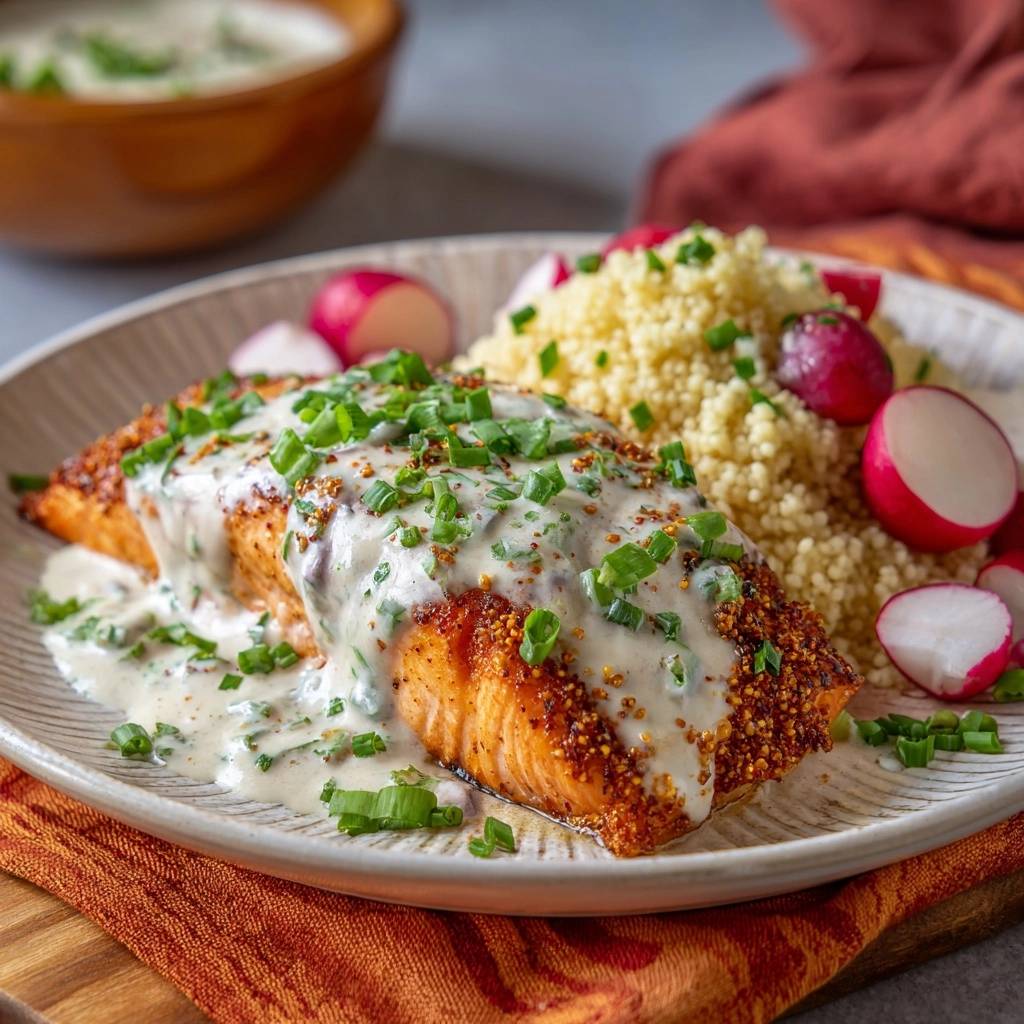
To plate like a chef, start with a wide, shallow bowl. Create a flat bed of pearl couscous and nestle the radishes to one side. Place the salmon fillet directly in the center, skin-side up, to show off that golden-brown texture you worked so hard to achieve.
When applying the herb cream, drizzle it in a thick line across the center of the fish rather than covering the whole fillet. This keeps the edges of the skin crispy while allowing the sauce to mingle with the couscous below. Finally, scatter the remaining green onions over the top for a pop of color and verticality.
Frequently Asked Questions
Can I use frozen salmon for this recipe?
Yes, you can use frozen salmon, but you must thaw it completely in the refrigerator overnight. Frozen fish often releases more moisture than fresh fish, so you will need to be extra diligent about patting it dry. I recommend letting thawed fillets sit on a wire rack in the fridge for an hour uncovered to help the skin dry out before cooking.
What if I don’t have a non-stick pan?
You can absolutely use a stainless steel pan, but you must utilize the “Leidenfrost effect.” Heat the dry pan until a drop of water beads up and rolls around like a marble. Only then should you add your oil and fish. This creates a temporary non-stick surface that prevents the delicate salmon skin from tearing.
How do I store leftovers without the skin getting soggy?
Store leftovers in an airtight container in the fridge for up to two days. Unfortunately, the skin will lose its crunch in the refrigerator. To revive it, avoid the microwave. Instead, place the salmon in an air fryer or under a broiler for 2 to 3 minutes. This will reheat the fish and crisp the skin back up without drying out the interior.
Can I use this searing method for other types of fish?
This method works beautifully for other fatty, skin-on fish like sea bass or snapper. However, for thinner white fish like tilapia or cod, you should reduce the cooking time significantly. White fish is much leaner and can go from perfectly cooked to dry and chalky in a matter of seconds.
Why did my salmon white stuff (albumin) come out?
That white substance is called albumin, a protein that gets pushed out of the muscle fibers when they contract too quickly. This usually happens if the heat is too high or if the fish is overcooked. By pulling the salmon at 135°F and letting it rest, you minimize the amount of albumin that escapes, keeping the fish prettier and juicier.
Optimal Side Dish Pairings
Beyond the pearl couscous, this salmon pairs wonderfully with vegetables that offer a bit of bitterness or acidity. Roasted asparagus with a squeeze of lemon or charred broccolini provides a great structural contrast to the soft fish. If you want something lighter, a cucumber and red onion salad with a vinegar-based dressing will complement the herb cream perfectly.
Avoid overly heavy or cheesy sides, as the salmon and herb cream are already quite rich. You want accompaniments that lift the dish rather than weigh it down. A simple arugula salad with a light vinaigrette is often all you need to turn this into a complete, restaurant-quality dinner.
Pan-Seared Salmon
Course: Main CourseCuisine: AmericanDifficulty: easyYields2
servingsPrep Time10
minutesCook Time12
minutesCalories485
kcalTotal Time22
MinutesA high-heat searing technique combined with a moisture-wicking method ensures perfectly crisp skin and tender flesh. Served with a bright herb cream, pearl couscous, and fresh radishes.
Ingredients
2 salmon fillets, skin on
1 tablespoon olive oil
1 tablespoon unsalted butter
1 teaspoon paprika
1/2 teaspoon garlic powder
1/4 teaspoon onion powder
Salt and black pepper to taste
1/4 cup Greek yogurt or sour cream
1 tablespoon heavy cream (for drizzling consistency)
1 tablespoon fresh lemon juice
3 tablespoons chopped green onions (divided)
1 tablespoon fresh parsley, minced
1 cup cooked pearl (Israeli) couscous
6 to 8 fresh radishes, halved
Directions
- The secret to crispy skin is dryness. Use paper towels to pat the salmon fillets completely dry on all sides. Let them sit at room temperature for 10 minutes. Moisture is the enemy of a good sear.
- In a small bowl, mix the paprika, garlic powder, onion powder, salt, and pepper. Press this spice rub firmly into the flesh side of the salmon to create a crust.
- Heat the olive oil and butter in a non-stick or cast-iron skillet over medium-high heat until the butter foam subsides and the pan is shimmering.
- Place the salmon in the pan, skin-side down. Use a spatula to press down firmly on each fillet for 30 seconds. This prevents the skin from curling and ensures even contact with the heat for maximum crunch.
- Cook for 4 to 5 minutes without moving the fish until the skin is deeply browned and crispy. Flip carefully and cook for another 2 to 3 minutes on the flesh side to brown the spice crust. Remove from heat when the internal temperature reaches 135°F.
- While the fish cooks, whisk together the yogurt (or sour cream), heavy cream, lemon juice, parsley, and half of the green onions to create a smooth, pourable herb cream.
- Serve the salmon immediately over a bed of fluffy pearl couscous with fresh radishes on the side. Drizzle the herb cream generously over the center of the fish and garnish with the remaining green onions.
Notes
- The secret to crispy skin is dryness. Moisture is the enemy of a good sear, so ensure the fish is patted completely dry before cooking.